Manduka GRP Adapt 2.0 vs Yoga Design Lab Combo: Which One Should You Buy?
Both of these mats are sold to people who sweat. Manduka's answer is a polyurethane top that pulls moisture off your palms; Yoga Design Lab's is an actual microfiber towel bonded to a rubber base, so there is nothing left to slide around. Eighteen dollars separate them. The measured grip does not put them close, which makes this a more one-sided page than the marketing suggests.
As an Amazon Associate, we earn from qualifying purchases made through links on this page. How this works
The quick answer
GearLab rated the GRP Adapt 2.0 9.5 out of 10 for dry grip and 8.5 wet, the best wet traction in its 19-mat lineup, and gave it the hot yoga award. It rated the Combo 4 out of 10 wet and dry, the lowest of any premium mat in the same test, and wrote that it was more slippery than they hoped for. The GRP is also 1.5 mm thicker and two inches wider.
The Combo's answer is the washing machine, a printed design, a pound less to carry, and $11. Those are real, and none of them is grip. If traction in a hot room is what you are shopping for, buy the GRP.
Get the GRP Adapt 2.0 if...
- You practice hot and want the best measured wet grip available
- You want more mat: 71″ × 26″ against 70″ × 24″, and 5 mm against 3.5
- You want a surface that works dry as well as soaked
- You want traction without depending on how much you sweat
Get the Combo if...
- Your practice is sweaty enough to wake a microfiber surface up
- Laundering the mat matters more to you than a higher grip score
- You want one of 19 printed designs rather than a plain colorway
- You want to save $11 and about a pound of carrying weight
Side by side
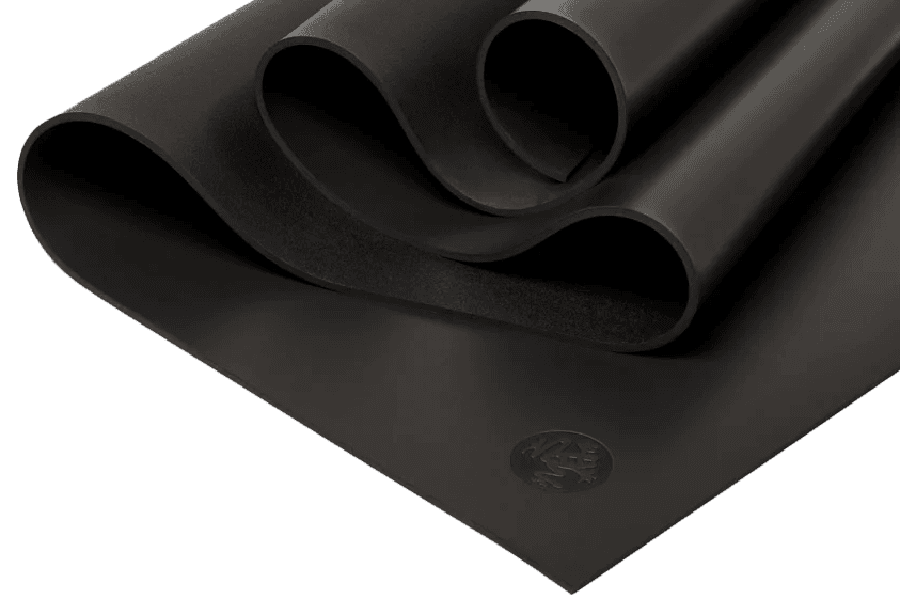
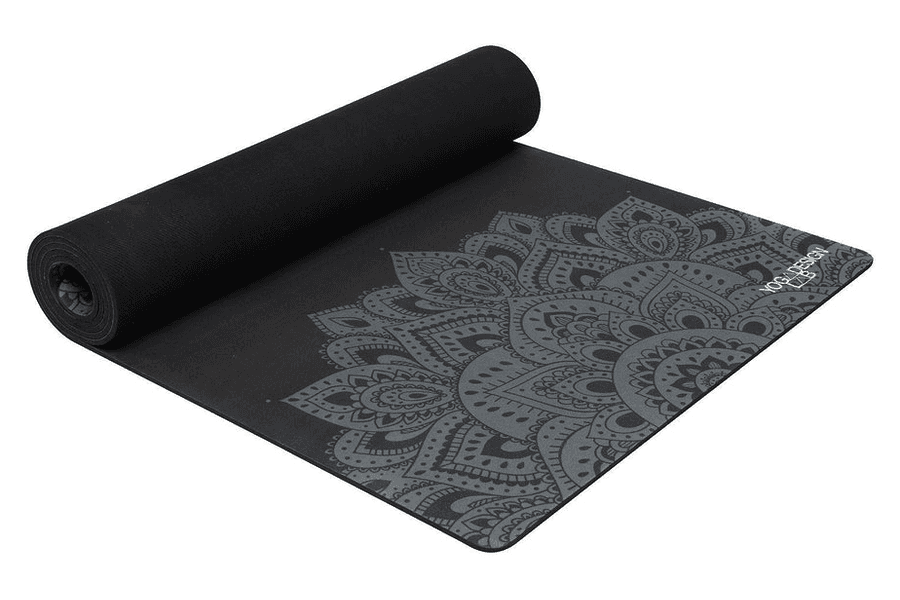
Price
The Combo lists for $11 less.
$128
List price · check price at manduka.com
$117
List price · check price at Amazon
Thickness
The GRP Adapt 2.0 is 43% thicker.
5 mm0.2″
3.5 mm0.14″
Weight
The Combo is 0.9 lbs lighter.
5.8 lbs2.6 kg
4.9 lbs2.2 kg
Size
The GRP Adapt 2.0 is 1″ longer; the GRP Adapt 2.0 is 2″ wider.
Same on both
- Natural rubber base under an absorbent top layer
- Grippy with no break-in period
- Both show marks or wear where hands and feet land
- Not safe for a latex allergy
- 30-day returns and no warranty from either brand
Full specs
Dimensions
Materials & build
Buying
Both are sold to people who sweat
Manduka’s GRP Adapt 2.0 and Yoga Design Lab’s Combo answer the same complaint from opposite directions. Manduka bonds a polyurethane skin to natural rubber so the mat pulls moisture off your hands. Yoga Design Lab bonds a recycled microfiber towel to natural rubber so there’s no separate towel left to slide around.
The pitches sound similar and the results aren’t. Eighteen dollars separate them, and one of the two has the best measured wet traction in the category while the other has the lowest.
Grip: the gap is larger than the price
GearLab tested both in the same 19-mat lineup. The GRP scored 9.5 out of 10 dry and 8.5 wet, the best wet figure in the field, and took the award for hot yoga grip. The Combo scored 4 out of 10 wet and dry, the lowest of any premium mat there, and finished 17th overall with the testers writing that it was more slippery than they hoped for during practice.
Yoga Design Lab’s own reviews tell a much warmer story, and there are thousands of them averaging close to five stars, plenty from people practicing hot. Both accounts can describe the same mat: a soaked microfiber surface grips well and a dry one slides, so the Combo depends on how much you sweat in a way the GRP doesn’t.
That’s the crux. The GRP works in a cool morning class and in a 105 degree room. The Combo needs the room to be doing its part.
Washing: the Combo’s real advantage
The Combo goes in a washing machine. Yoga Design Lab prefers hand washing to extend its life but permits a gentle cycle in a machine without a center agitator, using mild soap. For anyone laundering a yoga towel every week, that folds a recurring chore into the mat.
The GRP takes a cloth and a mild cleaner and nothing more, and GearLab noted it takes a while to dry fully because the top layer holds moisture. Two different solutions to the same hygiene problem, and the Combo’s is the one that suits a mat you genuinely soak.
Size and cushion
The GRP is 71″ × 26″ against the Combo’s 70″ × 24″, so two inches wider and one longer. GearLab listed narrowness among the Combo’s drawbacks, and 24 inches does feel tight in wide-stance work.
Thickness is the bigger gap: 5 mm against 3.5. Comfort and support scores landed at 8.5 and 6, and 3.5 mm is genuinely thin under wrists and knees on tile. If cushion is the sticking point, Yoga Design Lab sells the same Combo in 5.5 mm for about $14 more, which is a cheaper fix than changing brands.
Weight and carrying
The Combo lists at 4.9 pounds and weighed 4.6 on GearLab’s scale; the GRP lists at 5.8 and measured 5.5. Call it a pound, plus a carry strap that comes with the Combo and doesn’t come with the GRP.
Neither is heavy enough for this to decide anything. If you need more length, Manduka sells a 79 inch GRP for $10 more, which adds weight again.
How each one ages
The GRP shows sweat and traction marks over time where hands and feet land, and GearLab noted it can squeak under friction. Its polyurethane top slowly loses grip, which is how every mat in this construction ends. Manduka offers 30-day returns and no warranty.
The Combo is a textile bonded to rubber, and textiles pill, fade and lose loft with washing. The same testers rated its materials 5 of 10 and flagged that it collects lint. Yoga Design Lab takes returns on unused mats within 30 days and offers no warranty either, so once you have practiced on it, it’s yours.
Looks and options
The Combo is the more expressive mat and it isn’t close. Printed designs are the brand’s identity, applied with water-based inks, with 19 patterns to choose from in the 3.5 mm at last check. The same build also comes as a 1.5 mm travel mat and a 5.5 mm version.
The GRP came in four colorways at last count, all solid. Manduka treats it as equipment rather than decoration, which fits how it’s sold.
Price and where to buy
List prices are $128 and $117. The GRP is a direct purchase from manduka.com, with no reliable first-party Amazon listing. The Combo sells through yogadesignlab.com and Amazon, so it’s easier to buy on impulse and easier to return.
Worth naming the alternative comparison: if you were otherwise going to buy a mat plus a good yoga towel, the Combo is competing against that combined total rather than against the GRP alone, and it looks better from there.
Bottom line
Buy the GRP Adapt 2.0 if traction in a hot room is the reason you are shopping. It has the best wet grip anyone has measured, it’s bigger and thicker, and it doesn’t need you to be sweating before it works.
Buy the Combo if the washable, towel-free setup is specifically what you want, or if you want a mat that looks like something. Go in knowing testers found it slippery dry and that 3.5 mm is thin. For a fuller look at how the Combo stacks up in the premium field, our Liforme vs Combo comparison covers the alignment-mat alternative.
Manduka GRP Adapt 2.0
List price $128
Frequently Asked Questions
- Is the Combo really that slippery?
- It depends who you ask, and the split is worth seeing in full. Yoga Design Lab's own listings carry thousands of reviews averaging close to five stars, many from hot yoga practitioners who say the surface grips better the wetter it gets. GearLab's standardized testing scored it 4 out of 10 wet and dry, ranked it 17th of 19, and listed slippery grip first among its cons. A soaked microfiber towel does grip; a dry one slides. The mat rewards the practice it was designed for and frustrates everyone else.
- Can you machine wash the GRP Adapt 2.0?
- No. It is a wipe-down mat: a cloth, water or a mild cleaner, then air dry, and GearLab noted it takes a while to dry fully because the top layer holds moisture. The Combo is the only one of the two you can launder, with Yoga Design Lab recommending hand washing to extend its life but permitting a gentle cycle in a machine without a center agitator. If washing is the feature you want, only one mat here offers it.
- How much difference does 1.5 mm of thickness make?
- Enough to notice on a hard floor. GearLab scored the GRP 8.5 of 10 for comfort and support against 6 for the Combo, and 3.5 mm is thin under kneeling poses and wrists on tile or concrete. The same Combo exists in a 5.5 mm build at $131, and that thicker version closes most of the gap if padding is what is holding you back.
- Which one smells or shows wear first?
- Both show their mileage, differently. GearLab flagged that the GRP develops visible sweat and traction marks over time and can squeak under friction. The Combo is a textile, so it pills, fades and loses loft with washing, and the same testers noted it collects lint. Neither brand offers a warranty; Manduka gives you 30 days and Yoga Design Lab takes returns on unused mats within 30 days.
- Which is easier to carry?
- The Combo, and it comes with a strap. It lists at 4.9 pounds and weighed 4.6 on GearLab's scale, against 5.8 listed and 5.5 measured for the GRP. Neither is heavy enough for weight to decide this. If you want the GRP in a longer cut, Manduka sells a 79 inch version for $10 more, and it weighs more again.
- Which should I buy if I am new to hot yoga?
- The GRP, if you can stretch to it. It works whether or not you are sweating yet, which matters when your practice is still finding its level, and it is the mat testers picked specifically for heated rooms. The Combo makes more sense once you know you sweat enough to activate it and you are already tired of chasing a separate towel around the mat.
Related comparisons
- Manduka GRP Adapt 2.0 vs Lululemon The (Big) Mat 5mm
- Yoga Design Lab Combo 3.5mm vs b, halfmoon B Mat Everyday 4mm
- Lululemon The Mat 5mm vs Manduka GRP Adapt 2.0
- Lululemon The Mat 5mm vs Yoga Design Lab Combo 3.5mm
- Manduka PROlite vs Yoga Design Lab Combo 3.5mm
- Manduka PROlite Long vs Yoga Design Lab Combo 3.5mm
- JadeYoga Harmony 74" vs Yoga Design Lab Combo 3.5mm
- Manduka eKO Lite Long vs Yoga Design Lab Combo 3.5mm
- JadeYoga Harmony 74" vs Manduka GRP Adapt 2.0