Liforme Classic vs Gaiam Premium 6mm: Which One Should You Buy?
This is the widest price gap we cover between two mats people genuinely cross-shop, usually phrased as some version of whether a $165 mat can possibly be worth five times a $30 one. The short answer is that it depends entirely on what is going wrong with your current mat. The Gaiam Premium is a fine first mat that GearLab still recommends. The Liforme fixes the specific things that make people outgrow mats like it.
As an Amazon Associate, we earn from qualifying purchases made through links on this page. How this works
The quick answer
The Liforme grips far better, wet or dry, holds steadier under balance work, runs almost 5 inches longer and nearly 3 wider, and carries an etched alignment system that GearLab gave an award for. The Gaiam is thicker at 6 mm, softer under a knee, a lifetime guarantee at $29.98, and a mat that testers still recommend to beginners.
If your mat gets slippery when you sweat, wobbles in tree pose, or leaves your hands off the front edge, the Liforme fixes all three and the money is doing something. If none of that describes your practice, the Gaiam is not holding you back and the upgrade can wait.
Get the Liforme Classic if...
- Your hands slide once you start sweating
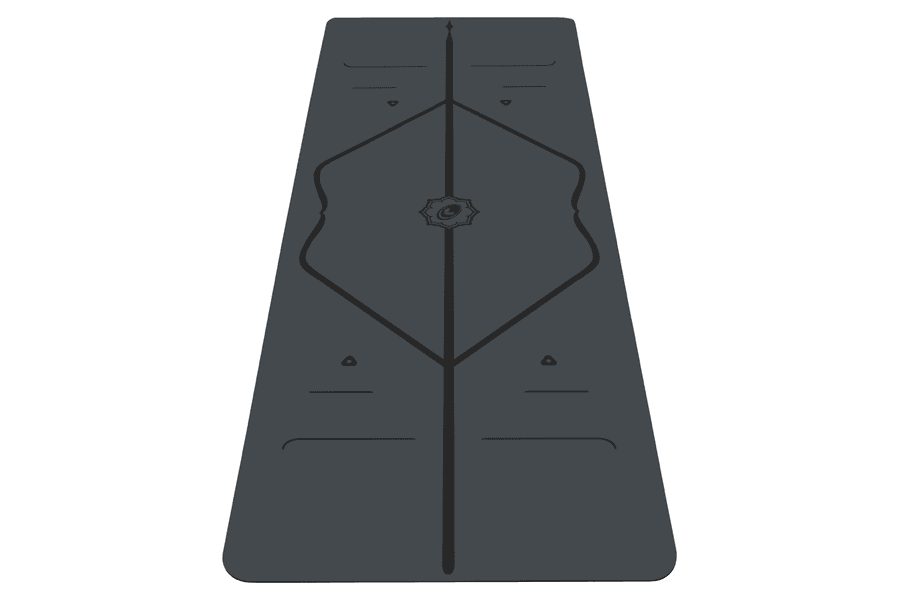
- You want alignment guides etched into the surface, not printed on it
- You want a bigger platform: 72.8″ × 26.8″ against 68″ × 24″
- You practice several times a week and the mat is doing real work
Get the Gaiam Premium if...
- You are starting out and $165 is a lot to gamble
- You want the softest cushion for knees in floor work
- You practice gently and unheated, where its grip is fine
- You want a lifetime guarantee for $29.98
Side by side
Price
The Gaiam Premium lists for about $135 less.
$165
List price · check price at Amazon
$29.98
List price · check price at Amazon
Thickness
The Gaiam Premium is 43% thicker.
4.2 mm0.17″
6 mm0.24″
Weight
The Gaiam Premium is 2.2 lbs lighter.
5.5 lbs2.5 kg
3.3 lbs1.5 kg
Size
The Liforme is 4.8″ longer; the Liforme is 2.8″ wider.
Same on both
- Both grip fine with dry hands in a cool room
- Both need gentle cleaning rather than harsh cleaners
- Both should stay out of extended sun
- Neither goes in a washing machine
Full specs
Dimensions
Materials & build
Buying
Can a mat be worth five times another mat?
$165 against $29.98 is the widest gap we cover between two mats people genuinely cross-shop, and the question usually arrives phrased exactly that way. The useful answer isn’t a number. It’s a list of things that go wrong with cheap mats, and whether any of them are happening to you.
The Gaiam Premium is a fine first mat that GearLab still recommends to beginners. The Liforme fixes the specific failures that make people outgrow mats like it: slipping when sweaty, wobbling under one leg, and running out of floor.
Grip: this is where the money actually goes
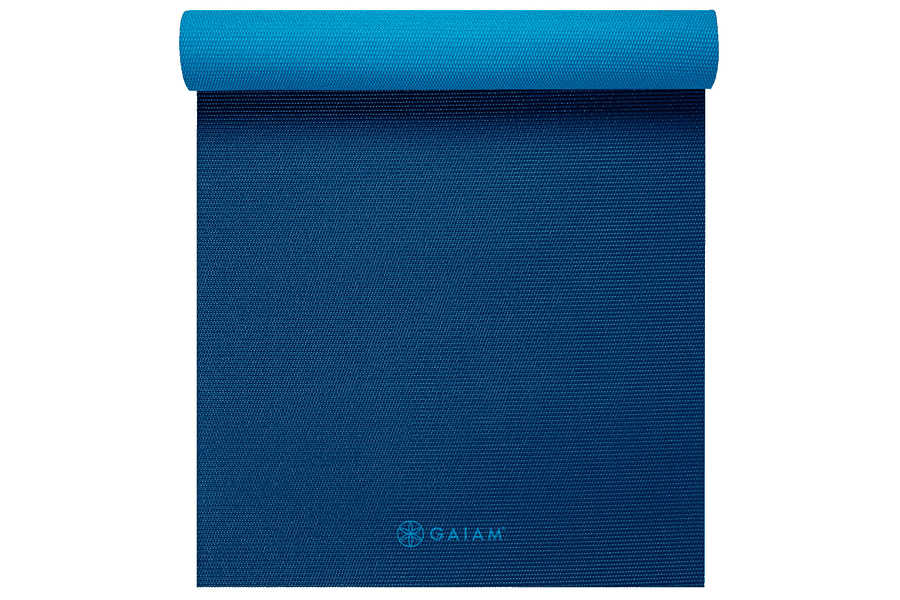
The Gaiam’s closed PVC surface absorbs nothing, so sweat sits on top and palms slide. GearLab rated it 6 out of 10 dry and 4 wet, and listed poor wet grip among its three drawbacks.
The Liforme’s eco-polyurethane top pulls moisture in rather than letting it bead, so traction holds as a class heats up. The same testers rated it 9 dry and 7 wet, described the stickiness as gecko-like, and noted a waterproof middle layer protecting the rubber base underneath.
If your hands creep forward in down dog by the third sun salutation, that’s the entire justification for this purchase, and no amount of extra foam will fix it.
Cushion: the surprise on this page
GearLab rated the Gaiam 6.5 of 10 for comfort and support and the Liforme 7. Nearly identical, despite 6 mm against 4.2 and a $135 difference.
Soft foam cushions a knee; dense rubber supports a body. They arrive at similar comfort by opposite routes, and the testers found the Liforme comfortable even on concrete and tile. So if pure padding under kneeling poses is what you want, the cheap mat is genuinely competitive and you should feel fine about keeping it.
Stability: thin and dense beats thick and soft
Standing on one leg is where the two mats separate most visibly. GearLab’s testers found the Gaiam’s soft foam unstable in balance postures and inversions, with a foot sinking and tilting, and noted that pressing a hand in leaves the print for a moment.
The Liforme’s 4.2 mm of firm rubber gives a millimeter and stops, which reads as a flat, predictable floor. If tree pose and warrior three feel less certain than they should, the mat is a plausible culprit, and thickness isn’t the fix.
The alignment system
The Liforme carries a center line, end-to-end markers and angled guides etched into the material rather than printed on it, so they don’t wear away. GearLab named it the best mat for fine-tuning alignment on the strength of them.
Their value depends on how you practice. Working at home from videos without anyone correcting you, or rebuilding form after an injury, they’re used constantly. In a class where a teacher is already adjusting you, most people stop noticing them within a month. Treat them as a bonus rather than the reason to spend $165.
Size and weight
The Liforme is 72.8″ × 26.8″ against the Gaiam’s 68″ × 24″. Nearly five inches longer and almost three wider is a different practice if you’re tall or broad shouldered, and the extra width is the part owners tend to mention first.
Weight goes the other way. The Gaiam is 3.3 pounds and the Liforme 5.5, though the Liforme ships with a fully enclosed carrying bag that makes the difference easier to manage.
Durability: both are consumables
Neither of these is a mat you hand down. The Gaiam’s foam compresses, which GearLab called its main durability concern; a casual practice gets years out of one, a daily practice flattens it in a couple. Gaiam covers it for life, which is unusual at this price and, like all such guarantees, addresses defects rather than foam softening.
The Liforme’s polyurethane top wears with heavy practice, and the testers rated it less durable than the top performers in the field. Liforme offers no warranty at all, deliberately, because the mat is designed to biodegrade in one to five years, with a 30-day money-back guarantee from its own site. Spending five times as much doesn’t buy you five times the lifespan.
What sits between them
Worth naming, because the honest recommendation for a lot of people is neither end. Natural rubber mats around $100 grip immediately and solve the sweat problem without the alignment system. Dense PVC mats solve the compression problem and last a decade. Our Manduka PRO vs Gaiam Premium comparison covers the longevity route, and Jade Harmony vs Gaiam Premium covers the rubber one.
Price and where to buy
List prices are $165 and $29.98, and both move around. Liforme prices vary by colorway on Amazon, so check the current Liforme price rather than paying list, and the Gaiam discounts frequently. One thing to watch on liforme.com: it quotes whichever currency matches the storefront it sends you to, so check you are looking at US dollars.
Bottom line
Buy the Liforme if your current mat is failing you in a specific way: slipping when you sweat, unsteady when you balance, or too small for your frame. It fixes all three, and the alignment guides are a real bonus for a self-directed practice.
Buy the Gaiam if you’re starting out, practice gently and unheated, or want the softest cushion for $29.98. It’s a fair product at a fair price with limits it doesn’t hide. Nobody practicing twice a month needs to spend $165, and anybody practicing five times a week will eventually understand exactly why the option exists.
Liforme Classic
List price $165
Gaiam Premium 6mm
List price $29.98
Frequently Asked Questions
- Is a $165 mat really five times better?
- No, and nobody should claim that. GearLab scored the Liforme 76 of 100 and the Gaiam 62, which is a meaningful gap rather than a chasm. Where the difference is stark is grip: 9 out of 10 dry and 7 wet for the Liforme, against 6 and 4 for the Gaiam, whose poor wet traction is one of its three listed downsides. You are paying for traction, stability, size and an alignment system, not for a mat that is five times as good at everything.
- Which one is more comfortable?
- This is the surprise. GearLab rated the Gaiam 6.5 of 10 for comfort and support and the Liforme 7, which is nearly the same despite 6 mm against 4.2 and a $135 gap. Soft foam cushions a knee well; dense rubber supports a body well. If pure padding under kneeling poses is what you want, the cheap mat is genuinely competitive, and testers found the Liforme comfortable even on concrete and tile.
- Will the Liforme fix a slippery practice?
- Yes, and it is the clearest reason to buy one. Its eco-polyurethane top absorbs sweat instead of letting it bead, so traction holds as a class heats up, and testers describe the stickiness as gecko-like with a waterproof middle layer protecting the rubber base. The Gaiam's closed PVC surface absorbs nothing, so palms slide the moment they are damp. Nothing about a thicker foam mat solves that.
- How long does each one last?
- Both are consumables, and neither is a decade mat. The Gaiam's soft foam compresses under regular use, which GearLab flagged as its main durability concern; a casual practice gets years, a daily one flattens it in a couple. The Liforme's polyurethane top wears with heavy practice, and Liforme offers no warranty at all because the mat is designed to biodegrade in one to five years, with 30-day returns from its own site. Gaiam's lifetime guarantee is real but covers defects rather than foam softening.
- What about stability in balance poses?
- The Liforme, clearly. Thin and dense reads as steady underfoot, and 4.2 mm of firm rubber gives your standing foot a flat, predictable platform. The Gaiam's soft foam sinks and tilts, which testers found unstable in balance postures and inversions. If tree pose and warrior three feel less certain than they should, the mat is a plausible culprit and thickness is not the fix.
- Should I buy something in between?
- Often, yes, and it is worth saying rather than pushing you to either end. The gap between $30 and $165 is full of good mats: natural rubber options around $100 that grip immediately, and dense PVC mats that last a decade. If the Liforme's alignment system is not the specific thing you want, the middle of the market probably serves you better than either mat on this page.
Related comparisons
- Gaiam Premium 6mm vs Gruper TPE 6mm
- Amazon Basics 1/4 Inch Thick TPE vs Gaiam Premium 6mm
- Gaiam Premium 6mm vs YogaAccessories Extra Thick Deluxe 1/4"
- JadeYoga Harmony XW vs Liforme Classic
- Liforme Classic vs Yoloha Unity Pro Cork
- Manduka PROlite Long & Wide vs Liforme Classic
- Alo Warrior vs Liforme Classic
- Manduka GRP Adapt 2.0 Long vs Liforme Classic
- Liforme Classic vs b, halfmoon B Mat Strong 6mm