Liforme Classic vs B Mat Strong: Which One Should You Buy?
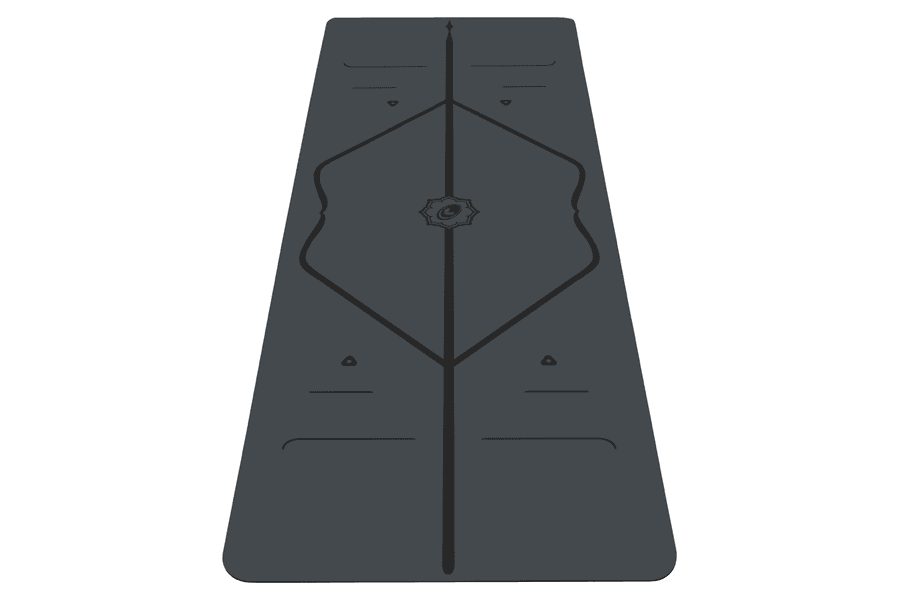
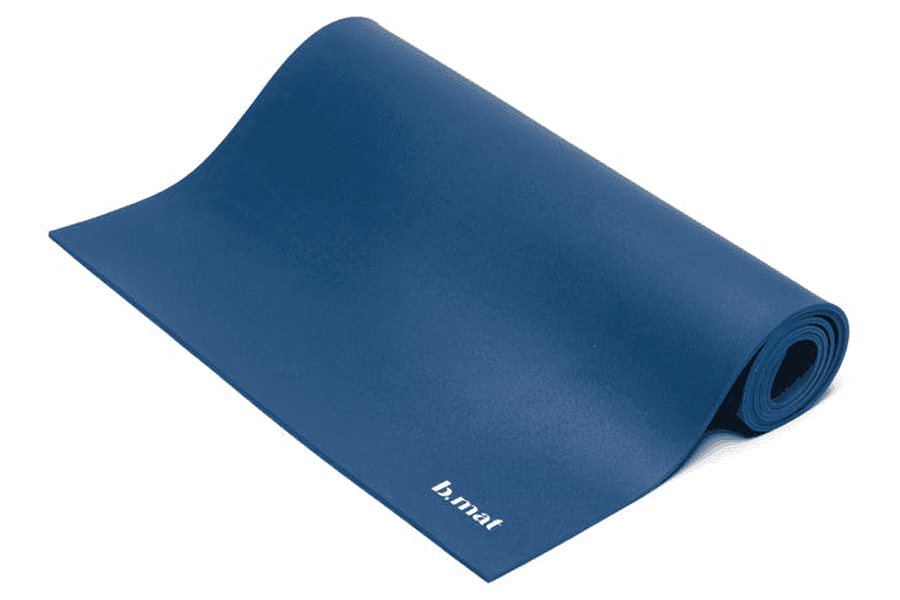
These are two of the most recommended premium mats that are not made by Manduka, and they solve grip in opposite ways. The Liforme Classic covers its rubber base with a smooth polyurethane top that absorbs sweat and carries etched alignment lines. The B Mat Strong is tacky rubber through and through, 6 mm of it, with an OEKO-TEX certificate and a one-year warranty. Both grip from the first class; the $21 between them buys features, not traction.
As an Amazon Associate, we earn from qualifying purchases made through links on this page. How this works
The quick answer
The Liforme is the more engineered mat: a bigger 72.8 by 26.8 inch platform, a sweat-absorbing surface GearLab rated among the best it tested for wet grip, and alignment lines you either will or will not use. The B Mat Strong is simpler and thicker, 6 mm against 4.2, with more cushion for knees, a warranty Liforme doesn't match, and a Long size the Liforme line doesn't offer.
If you sweat heavily or want the alignment lines, get the Liforme. If your knees are the complaint, or you want the tackier feel with certification and warranty paperwork behind it, get the B Mat Strong and keep $21.
Get the Liforme Classic if...
- You'd use the etched alignment lines, especially practicing at home without a teacher
- Sweaty palms are your problem; the polyurethane top absorbs moisture as it lands
- You want the bigger platform, 72.8″ × 26.8″ against 71″ × 26″
- You prefer a thinner, firmer surface for balance work
Get the B Mat Strong if...
- Your knees want 6 mm of rubber, not 4.2
- You want tacky, grab-your-hand rubber rather than a smooth top
- You'd rather keep $21 and get a one-year warranty in the bargain
- You might want the 85″ Strong Long; Liforme sells one size only
Side by side
Price
The B Mat Strong lists for $21 less.
$165
List price · check price at Amazon
$144
List price · check price at bhalfmoon.com
Thickness
The B Mat Strong is 43% thicker.
4.2 mm0.17″
6 mm0.23″
Weight
The B Mat Strong is 0.5 lbs lighter.
5.5 lbs2.5 kg
5 lbs2.27 kg
Size
The Liforme is 1.8″ longer; the Liforme is 0.8″ wider.
Same on both
- Natural rubber base
- Real grip from the first class, no break-in
- Not safe for a latex allergy
- Multi-year mats rather than decade mats
- Must stay out of direct sun
Full specs
Dimensions
Materials & build
Buying
- Strong Long85" × 26"
Grip: both excellent, by different mechanisms
Neither mat asks for a break-in, and neither will let you slide. The Liforme’s polyurethane top pulls moisture into the coating as your hands warm up, and GearLab rated that wet grip among the best it tested, describing the surface as gecko-like. The B Mat does not absorb anything; sweat pools on the rubber and the rubber grips through it. GearLab, testing the 4 mm B Mat with this same surface, rated it 9 out of 10 for traction and found it held even with a puddle under a palm.
The differences are at the edges. Heavy sweaters can saturate the Liforme’s top mid-class, at which point a towel wipe resets it. The B Mat’s tack can be too much for practices built on sliding transitions; GearLab’s testers switched to stepping between poses. Pick the feel you prefer, smooth or tacky, because the traction itself is a wash.
The alignment lines are the Liforme argument
The Liforme’s etched AlignForMe markers give consistent reference points for hand and foot placement, spacing, and centering, and GearLab named it the best mat for fine-tuning alignment in its March 2026 roundup. They are most valuable to home practitioners working without a teacher’s eye and to teachers demonstrating placement. Practitioners with a settled practice often report the lines fade from attention within a month.
The B Mat’s surface is plain. If the lines are why you are reading this page, only one of these mats has them, and no aftermarket sticker recreates etched markers you can feel. If the lines leave you cold, skip this section and the Liforme has to win on grip and footprint alone.
Cushion: 6 mm against 4.2, and knees notice
This is the B Mat argument. Its 6 mm of rubber is the thickest in b, halfmoon’s line, and the difference against the Liforme’s 4.2 mm shows up exactly where you would expect: kneeling poses, low lunges, anything that puts bone on floor. If your current mat leaves your knees complaining, the Strong fixes that and the Liforme mostly does not.
The Liforme’s thinness is a choice, not a corner cut. It reads firmer than 4.2 mm suggests, a deliberately stable platform for balance work where thick soft mats wobble. Standing-heavy practices will not miss the cushion; floor-heavy ones will.
Footprint and weight
The Liforme is the bigger platform at 72.8″ × 26.8″ against the B Mat’s 71″ × 26″, nearly two extra inches of length and almost an inch of width. Both are already more generous than the 24″ standard mat.
Weight is effectively a tie, 5.5 pounds for the Liforme and 5 for the B Mat, both fine on a shoulder daily. Above six feet tall, the lines diverge: the Liforme Classic comes in one size, while b, halfmoon sells an 85″ Strong Long at $154. Tall practitioners only have an option on one side of this page.
Durability: similar lifespans, different wear
Both are multi-year mats, not decade mats, and each brand says so in its own way. Liforme states openly that its materials are designed to biodegrade and lifespan depends on how you practice; the polyurethane top can stain or wear smooth in high-contact spots under hard daily use, and the company backs the mat for 30 days. b, halfmoon covers the B Mat for one year, describes its mats as built for two or more years of practice, and excludes the wear marks where hands and feet land; GearLab noted owner reports of peeling in those same spots.
Sunlight degrades both rubbers, so both live indoors. If ten years of service is the actual requirement, neither belongs on your shortlist; that conversation runs through the Manduka PRO vs Liforme page instead.
Materials, certifications, and the latex question
The B Mat has the better paperwork: made in Spain, OEKO-TEX Standard 100 certified on the finished product, PVC-free, from a certified B Corp. The Liforme pairs its natural rubber base with an eco-polyurethane top and materials designed to break down at end of life, but carries no third-party certification, so its claims rest on trust in the brand.
Both are built on natural rubber, which can hold trace latex proteins, so neither is safe for a genuine latex allergy. Care is the same gentle routine on both: damp cloth, mild soap, no sun. The B Mat’s tacky top collects lint and pet hair between wipes; the Liforme’s smooth top does not, but shows scuffs sooner.
Price and where to buy
The Liforme lists at $165 and sells through liforme.com and Amazon; check its current price at Amazon. It ships with a carry bag in the box, a small real credit at this price. The B Mat Strong lists at $144 and is best bought direct from b, halfmoon, since its old Amazon listings have gone dead and the one-year warranty follows the direct purchase.
If the Liforme formula appeals but the price does not, the $67 IUGA runs the same playbook for less, minus the lines and the finish quality.
Bottom line
Get the Liforme Classic if you would use the alignment lines or your practice is reliably sweaty. Those are its two standout features, both genuinely excellent, and it wraps them in the bigger footprint. Accept the thin, firm platform and the 30-day coverage as the terms.
Get the B Mat Strong if knees, cushion, or the tacky feel are what you are shopping for. It grips as well in most conditions, kneels far better, costs $21 less, and is the only one of the two with a warranty, a certification, and a long size. For most people who are not buying the lines, it is the more practical mat.
Liforme Classic
List price $165
B Mat Strong 6mm
List price $144
Frequently Asked Questions
- Are the Liforme alignment lines actually useful?
- For some people, genuinely. The etched markers give consistent reference points for hand and foot placement and spacing, and GearLab named the Liforme its best mat for fine-tuning alignment. They earn their keep for home practitioners working without a teacher's eye and for teachers demonstrating placement. Experienced practitioners with a settled practice often report they stop noticing the lines within a month. The B Mat has no equivalent, so if the lines are why you're here, only one of these mats has them.
- Which mat grips better in a sweaty class?
- Both are strong here, by different mechanisms. The Liforme's polyurethane top absorbs sweat as it lands and grips harder as your hands warm up; GearLab rated that wet grip among the best it tested and described the surface as gecko-like. The B Mat doesn't absorb; sweat pools on the rubber and the rubber grips through it, which GearLab confirmed held even with a puddle under a palm. Heavy sweaters may eventually saturate the Liforme's top mid-class and need a towel wipe to reset it. For most practices, either mat ends the slipping.
- Which lasts longer?
- Expect a similar multi-year lifespan from both, with different wear patterns. The Liforme's polyurethane top wears smooth or stains under hard daily use, and Liforme says openly that its materials are designed to biodegrade; the company backs the mat for 30 days. The B Mat's tacky surface can peel in the spots where hands and feet land, which GearLab noted from owner reports, and b, halfmoon covers it for one year while describing the mats as built for two or more years of practice. Neither is the mat you buy to forget about for a decade.
- Which is better for sore knees?
- The B Mat Strong. It carries 6 mm of rubber against the Liforme's 4.2 mm, and that difference is easy to feel in kneeling poses, low lunges, and anything that puts bone on floor. The Liforme's thinness is deliberate, a firm, stable platform tuned for balance work, and plenty of practitioners prefer exactly that. But if kneeling comfort is the reason you're replacing your current mat, the B Mat is the one solving your problem.
- Is either mat safe for a latex allergy?
- No. Both are built on natural rubber, which can carry trace latex proteins. The Liforme's polyurethane surface layer doesn't change what's underneath it, and the B Mat is rubber throughout. With a genuine latex allergy, shop PVC or TPE mats instead; the Manduka PRO is the usual premium answer.
- What sizes do these come in?
- The Liforme Classic comes in one size, 72.8 by 26.8 inches, which to be fair is already bigger than a standard mat, and it ships with a carry bag in the box. The B Mat Strong comes in the standard 71 by 26 inches plus an 85 inch Strong Long at $154 for tall practitioners. If you're over about six feet, the B Mat line is the only one of the two with a real answer.
Related comparisons
- b, halfmoon B Mat Strong 6mm vs Manduka PRO Terra 6mm
- Manduka PRO vs b, halfmoon B Mat Strong 6mm
- Manduka PROlite Long & Wide vs b, halfmoon B Mat Strong 6mm
- Manduka GRP Adapt 2.0 Long vs b, halfmoon B Mat Strong 6mm
- Yoloha Unity Pro Cork vs b, halfmoon B Mat Strong 6mm
- JadeYoga Harmony XW vs Liforme Classic
- JadeYoga Harmony XW vs b, halfmoon B Mat Strong 6mm
- Manduka GRP Adapt 2.0 vs b, halfmoon B Mat Strong 6mm
- Alo Warrior vs b, halfmoon B Mat Strong 6mm