Jade Voyager vs Gaiam Premium 6mm: Which One Should You Buy?
Two cheap mats that are good at opposite things. The Gaiam Premium 6mm is $29.98, thick, soft, sold in every sporting goods aisle in America, and it took OutdoorGearLab's Best First Yoga Mat award. The Jade Voyager is $49.95, 1.6 mm, and grips like mats costing three times as much. Neither is trying to be the other, and the cheaper one is the more useful mat for most people.
As an Amazon Associate, we earn from qualifying purchases made through links on this page. How this works
The quick answer
The Gaiam is the better first mat and the better only mat. It is 6 mm of soft PVC foam, comfortable to lie and stretch on, carries a lifetime guarantee, and GearLab ranked it 11th of 19 at 62 of 100 while naming it their Best First Yoga Mat. Its weakness is grip: 6 of 10 dry and 4 of 10 wet, which is soft. The Voyager is the opposite mat entirely. GearLab rated it 9 dry and 7 wet, the equal of the Manduka PRO, but scored its comfort 2 of 10 because 1.6 mm leaves nothing between you and the floor.
Buy the Gaiam if this is your mat. Buy the Voyager if you already have one and want something that folds into luggage.
Get the Jade Voyager if...
- You want the much grippier surface, 9 of 10 dry against 6
- You need a mat that folds flat into a suitcase
- You want natural rubber made in the USA rather than PVC foam
- You already own a full-thickness mat and this is the second one
Get the Gaiam Premium if...
- This is your only mat and it needs cushion under your knees
- You want to spend about $20 less
- You want GearLab's Best First Yoga Mat pick
- A lifetime guarantee at $30 appeals to you
Side by side
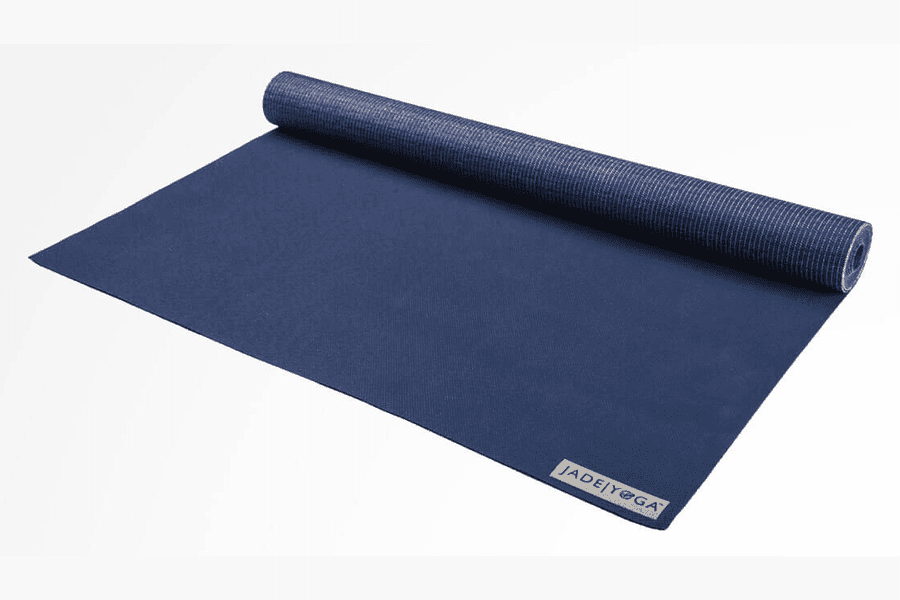
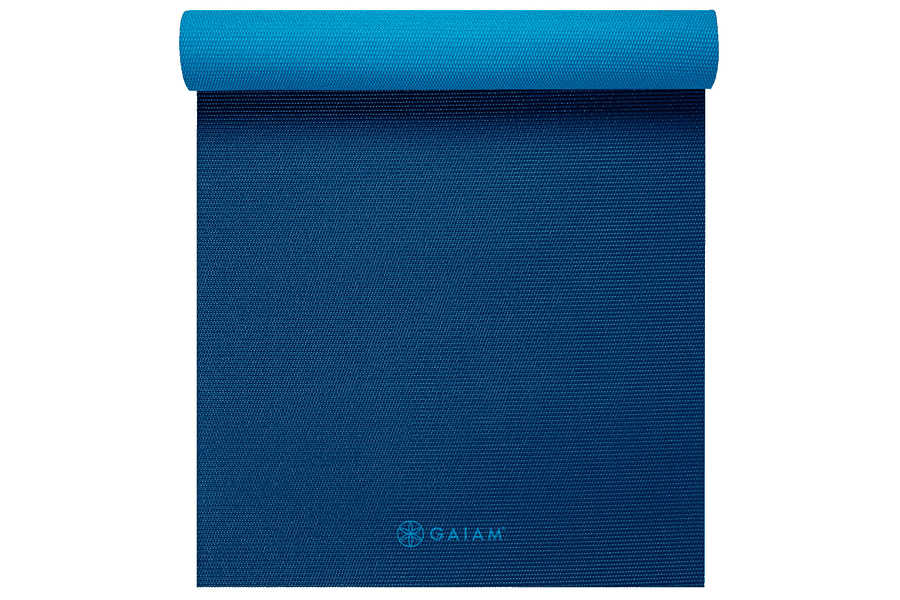
Price
The Gaiam Premium lists for about $20 less.
$49.95
List price · check price at jadeyoga.com
$29.98
List price · check price at Amazon
Thickness
The Gaiam Premium is 275% thicker.
1.6 mm0.06″
6 mm0.24″
Weight
The Voyager is 1.8 lbs lighter.
1.5 lbs0.68 kg
3.3 lbs1.5 kg
Size
Same length; same width.
Same on both
- Both are 68 by 24 inches, at the small end of standard
- Both are cheap enough to replace without much thought
- Both are widely available rather than niche products
- Neither is built for a heated room
Full specs
Dimensions
Materials & build
Buying
Two cheap mats that are good at opposite things
The Gaiam Premium 6mm is $29.98, sold in more sporting-goods aisles than any other mat we cover, and it took OutdoorGearLab’s Best First Yoga Mat award. The Jade Voyager is $49.95, 1.6 mm thick, and grips like mats costing three times as much.
Neither is trying to be the other. One is thick and slippery, the other is grippy and thin. If you want one mat to practice on, the cheaper mat is the better answer, which is not how these comparisons usually go.
The test scores in one place
GearLab put the Gaiam Premium 11th of 19 at 62 of 100: 6 of 10 dry grip, 4 wet, 6.5 for comfort and support, 8 for care and cleaning, 6 for materials. Middling across the board, with the Best First Yoga Mat award reflecting the price as much as the performance.
The Voyager placed 18th at 51 of 100, but the shape of its scorecard is different: 9 of 10 dry grip, 7 wet, and then 2 of 10 for comfort and 4 for materials. It beats the Gaiam handily on the one thing it does and trails it badly everywhere else.
The weighting explains the ranking gap. GearLab scores comfort and support at 35 percent of the total, grip at 30, materials at 20, and ease of use at 15. A mat that takes a 2 in the heaviest category cannot finish high whatever else it does. Read the individual columns rather than the overall number if you already know which one you care about.
Grip: 9 against 6, and the gap is bigger when wet
Traction comes from the surface rather than the thickness. Jade puts the same open-cell natural rubber on the Voyager that it uses on its full-size mats, and rubber is tacky by nature, so a thin sheet holds a palm as well as a thick one. No break-in, no waiting.
The Gaiam is soft PVC foam with a textured sticky finish. It works with dry hands and gives up quickly once there is moisture: 4 of 10 wet is genuinely weak, and a towel is what most Gaiam owners end up using in a warm class. If grip is the thing that has frustrated you before, the Gaiam will frustrate you again.
Worth being fair to the Gaiam here: 6 of 10 dry is not unusable, it is ordinary. It holds a slow, steady practice on a carpeted floor without incident. The complaint people have is that it gives up right when a class gets demanding, which is also when you least want to be thinking about your hands.
Cushion: the Gaiam is the only one offering any
Six millimeters of soft foam is forgiving under a knee, and that is what makes early kneeling and floor work bearable. GearLab scored the Gaiam 6.5 of 10 for comfort and support, held back by the foam compressing under a concentrated load rather than by a lack of thickness.
The Voyager scored 2 of 10. On hardwood or tile you feel the floor immediately and every pose with a bone against the ground wants something folded underneath. On carpet, or laid over a studio’s rental mat, that stops applying, which is the situation Jade designed it for.
Which one suits a complete beginner
The Gaiam, and GearLab agrees. Its Best First Yoga Mat award went to this mat for a reason: at $29.98 it does not punish you for finding out yoga is not your thing, and its thickness covers the discomfort that puts new practitioners off. Its weaknesses are the kind you can work around with a towel.
The Voyager is a specialist tool. Nearly all of its negative reviews come from people who bought it as a cheap first mat and then tried to kneel on a wood floor. Cushion is exactly what a beginner needs most, and it is the one thing the Voyager does not have.
There is a middle path worth knowing about. If you like the idea of Jade rubber but need something to actually practice on, Jade sells the Level One at 4 mm and the Travel at 3.2 mm, both of which keep the grip and add enough cushion to work on a hard floor. The Voyager is the thinnest thing Jade makes, not the default.
Packing and weight
The Voyager folds rather than rolls, down to roughly the size of a yoga block, so it lies flat in a suitcase. Jade lists it at just over 1.5 pounds and GearLab measured 1.8. Nothing at this price packs better.
The Gaiam is 3.3 pounds, confirmed on GearLab’s scale, and rolls thick because of the 6 mm. It straps to a bag easily enough and will not go inside one. Neither mat comes with a strap.
PVC foam against natural rubber
The Gaiam is latex-free PVC foam. GearLab scored its materials 6 of 10. It is cheap to make, comfortable, and not recyclable in any practical sense, which is the standard trade at this price.
The Voyager is natural rubber made in the USA, and Jade plants a tree for every mat it sells, more than two million so far. That is a program rather than a certification. GearLab scored its materials 4 of 10, which reflects how little material is there rather than the quality of the rubber. Jade also describes its rubber as 99 percent latex free, which is not the same as latex free if you have an allergy.
How long each one lasts
Both are short-horizon mats. The Gaiam’s foam takes a permanent compression under the standing spots and its surface thins where hands and feet land, typically giving a year or two of heavy use. Gaiam covers it with a lifetime guarantee, which addresses a mat that fails rather than a mat that wears, so it is worth less than it reads.
The Voyager loses tack slowly, creases along its fold lines, and tears at the edges if it snags. Jade covers it for a year and excludes sun damage and harsh cleaners, both of which genuinely degrade natural rubber. Neither of these is a mat you plan to keep.
Price and where to buy
$29.98 against $49.95, so the thicker mat is also the cheaper one by about $20. Gaiam sells the Premium through Amazon and everywhere else, in four reversible two-color combinations, so check the current Gaiam Premium price at Amazon before paying list.
The Voyager comes from jadeyoga.com or a yoga retailer in five colorways, and its price barely moves. Comparing these on value only makes sense if you are buying your single mat, and then the Gaiam wins on cost and thickness while asking you to accept a towel.
Bottom line
Buy the Gaiam Premium if this is your mat. It is thicker, cheaper, available everywhere, and it is the mat GearLab picked as the best first one. Plan on a towel for anything warm, because 4 of 10 wet grip is the real limitation and no amount of foam offsets it.
Buy the Voyager if you already have a mat and want a second one that folds into luggage. Its grip is the equal of mats at ten times the price, and that genuinely is worth $50 as a supplement. If you want Jade rubber with enough thickness to practice on, our Jade Level One vs Voyager comparison covers the step up.
Jade Voyager
List price $49.95
Gaiam Premium 6mm
List price $29.98
Frequently Asked Questions
- How can a travel mat grip better than a full mat?
- Because traction comes from the surface, not the thickness. Jade puts the same open-cell natural rubber on the Voyager that it uses on its full-size mats, and rubber is tacky by nature. The Gaiam is soft PVC foam with a textured sticky finish, which works with dry hands and gives up quickly once there is moisture. GearLab's numbers show the gap plainly: 9 and 7 for the Voyager against 6 and 4 for the Gaiam.
- Which is better for a complete beginner?
- The Gaiam, without hesitation, and GearLab agrees: it took their Best First Yoga Mat award. Six millimeters of forgiving foam is what makes early kneeling and floor work bearable, and at $29.98 it does not punish you for finding out yoga is not your thing. The Voyager is a specialist tool that will make a beginner on a hard floor miserable, which is where nearly all of its negative reviews come from.
- Is the Gaiam's grip a problem?
- In a warm room or a fast flow, yes. A 6 of 10 dry rating means it holds a steady practice fine and starts sliding once your palms get damp, and 4 of 10 wet is genuinely weak. A towel solves it, which is what most Gaiam owners end up doing. If grip is the thing you care about most and $30 is the budget, this is the mat's real limitation, and no amount of cushion offsets it.
- What does Gaiam's lifetime guarantee actually cover?
- A mat that fails, not a mat that wears. The usual outcome with a soft PVC mat is the surface thinning where hands and feet land and the foam taking a permanent dent under the standing spots, which reads as normal use. At $29.98 the mat is cheap enough that a replacement is a real remedy either way. Jade covers the Voyager for one year and excludes sun damage and harsh cleaners.
- Which is easier to travel with?
- The Voyager, and that is the entire point of it. It folds flat rather than rolling, down to roughly the size of a yoga block, and weighs about 1.5 pounds by Jade's count, 1.8 by GearLab's measurement. The Gaiam is 3.3 pounds and rolls thick, so it straps to a bag but will not go inside one. Neither comes with a carry strap.
- Which one lasts longer?
- Both are short-horizon mats. The Gaiam's foam compresses permanently and its surface thins where you practice, typically giving a year or two of heavy use; GearLab scored its materials 6 of 10. The Voyager is thin rubber that creases along the fold lines, loses tack slowly, and tears at the edges if it snags; GearLab scored its materials 4 of 10, one of the lower marks in the test. Neither is a mat you plan to keep.
Related comparisons
- Gaiam Premium 6mm vs Gruper TPE 6mm
- Manduka eKO Superlite vs JadeYoga Voyager
- Amazon Basics 1/4 Inch Thick TPE vs Gaiam Premium 6mm
- Gaiam Premium 6mm vs YogaAccessories Extra Thick Deluxe 1/4"
- Manduka eKO Superlite Long vs JadeYoga Voyager
- JadeYoga Voyager vs Manduka PRO Travel
- Manduka Begin vs Gaiam Premium 6mm
- Manduka Begin vs JadeYoga Voyager
- JadeYoga Voyager vs Gaiam Classic Print 4mm