Jade Level One vs Jade Voyager: Which One Should You Buy?
Same brand, same rubber, same 68 by 24 inch footprint, same factory in the USA, same one year warranty. The only real variable between the Jade Level One and the Jade Voyager is thickness, 4 mm against 1.6, and the $16.55 that goes with it. That makes this one of the cleaner decisions on the site, because almost nothing else is in play.
As an Amazon Associate, we earn from qualifying purchases made through links on this page. How this works
The quick answer
The Level One is a full mat and the Voyager is not, and the price gap does not reflect how different that makes them. At 4 mm the Level One works on hardwood or tile for a normal practice, kneeling included. At 1.6 mm the Voyager is a grip surface with the floor directly underneath it: OutdoorGearLab scored its comfort and support 2 of 10 and placed it 18th of 19 overall at 51 of 100. What the Voyager gives you instead is a mat that folds to roughly the size of a yoga block and weighs about 1.5 pounds.
If this is the mat you practice on, buy the Level One. If it is going in a suitcase alongside a mat you already own, buy the Voyager.
Get the Level One if...
- This is your main mat and it will sit on a hard floor
- You want cushion under knees, elbows, and sit bones
- You want the same Jade grip with enough mat to be comfortable
- You'd rather have a mat you can practice on daily than one you can pack
Get the Voyager if...
- You already own a full-thickness mat and need one that travels
- You want it to fold flat into luggage rather than roll
- You want to spend about $17 less
- You practice on carpet, or over a studio's rental mats
Side by side
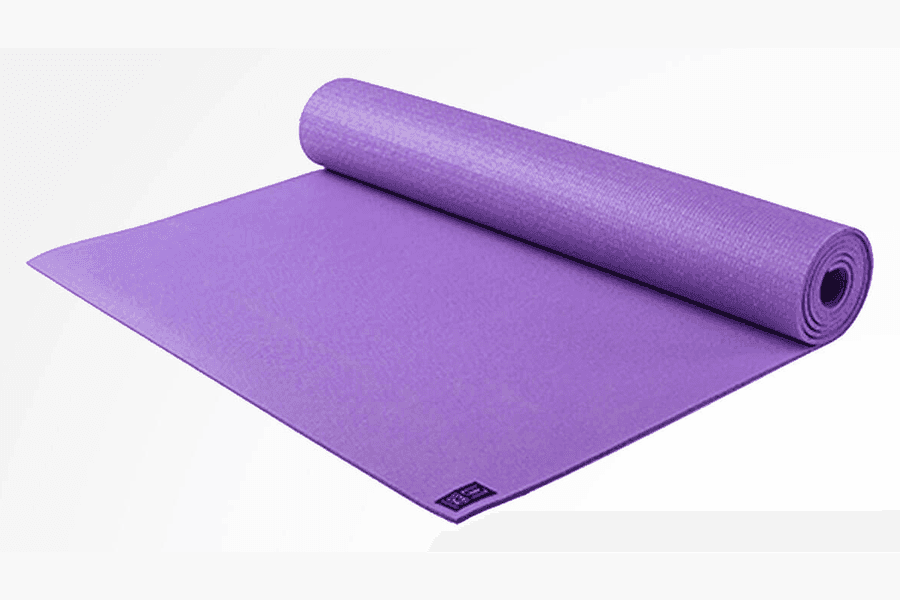
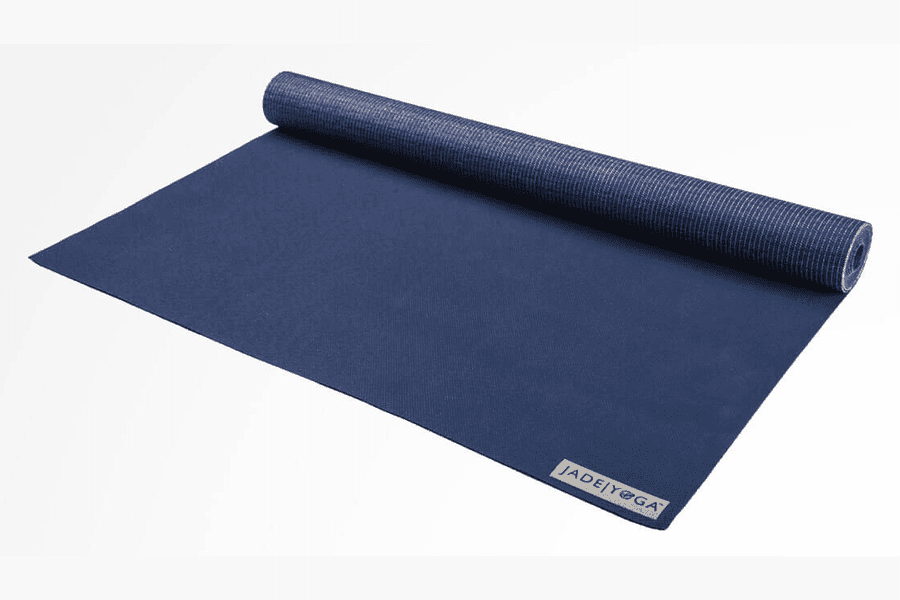
Price
The Voyager lists for about $17 less.
$66.50
List price · check price at jadeyoga.com
$49.95
List price · check price at jadeyoga.com
Thickness
The Level One is 150% thicker.
4 mm0.16″
1.6 mm0.06″
Weight
The Voyager is 2.5 lbs lighter.
4 lbs1.8 kg
1.5 lbs0.68 kg
Size
Same length; same width.
Same on both
- Identical 68 by 24 inch footprint
- The same open-cell natural rubber surface, made in the USA
- One year warranty, excluding sun damage and harsh cleaners
- A tree planted for every mat sold
Full specs
Dimensions
Materials & build
Buying
Same rubber, same footprint, one real variable
Same brand, same open-cell natural rubber, same 68 by 24 inch footprint, same factory in the USA, same one year warranty, same tree planted for every mat sold. Almost nothing separates the Jade Level One from the Jade Voyager except thickness: 4 mm against 1.6 mm, and the $16.55 that goes with it.
That makes this one of the cleaner decisions on the site. You are not weighing grip against comfort or price against durability. You are deciding how much mat you need underneath you, and where you plan to unroll it.
Grip is identical, and that is the point
Both use the same tacky open-cell rubber, which holds from the moment you unroll it with no break-in period. OutdoorGearLab rated the Voyager 9 of 10 dry and 7 wet. They did not test the Level One, but the Jade Harmony 2.0, which uses the same surface, scored 9.5 dry and 7 wet and was called an eco-friendly dry grip powerhouse.
Thickness does not change traction. A thin sheet of Jade rubber holds a palm exactly as well as a thick one, which is why the Voyager posts grip numbers level with mats costing three times as much. Everything that follows is about what happens underneath your hands rather than at them.
That also means neither mat has a break-in period, a salt scrub ritual, or a first month where you slide around wondering if you bought the wrong thing. Whatever else you weigh here, grip is not a risk on either, which is more than can be said for several mats at three times these prices.
Cushion: 4 mm is a mat, 1.6 mm is a surface
At 4 mm the Level One works for a normal practice on a wood floor: standing work, flows, and most floor sequences without thinking about it. Jade places it as slightly thinner than the Harmony and slightly thicker than its Travel mat, which is fair. On tile or concrete it is thin under a bare knee, and long kneeling sequences will want a folded blanket.
At 1.6 mm the Voyager has nothing to give. GearLab scored its comfort and support 2 of 10 and placed it 18th of 19 overall at 51 of 100, almost entirely on that basis. On hardwood you feel the floor within the first minute. On carpet, or laid over a studio’s rental mat, none of that applies and it is genuinely pleasant.
The other place thickness shows up is stability on an uneven surface. Four millimeters of rubber bridges small imperfections in a floor, so a seam in the boards or a ridge in a rug stops being something you notice. At 1.6 mm you feel every one of them, which is another reason the Voyager suits carpet and rental mats better than bare floors.
Weight and packing
The Voyager folds rather than rolls, which matters more than the weight. It lies flat along the bottom of a suitcase, and Jade compares the folded size to a yoga block. It lists at just over 1.5 pounds and GearLab measured 1.8 on their own scale.
The Level One is about 4 pounds and rolls like any normal mat. That is light by mat standards, half a Manduka PRO, and easy to carry to a class. It is not going inside luggage. Neither comes with a strap.
Care is identical, and demanding in the same way
Open-cell rubber pulls moisture in, so both have to dry fully before being rolled or folded away or they will develop odor. GearLab scored the Voyager 8 of 10 for care and cleaning, so the mat itself is easy to clean. It just needs the time.
Jade’s warranty excludes sun damage and harsh cleaners on both, and natural rubber genuinely does degrade in direct sunlight, so neither should live on a balcony. Diluted mild soap on a cloth is right for either and neither goes in a machine. The Voyager’s folding makes the drying rule more awkward on a trip, which is the one practical difference.
How each one ages
The Level One ages the way a normal rubber mat does: it loses tack gradually over years and the surface stays intact, since there is no synthetic top layer to wear through. Jade covers it for a year. It is not a decade mat, but it fails slowly and predictably.
The Voyager has two extra failure modes that come from being thin and folded. It takes permanent creases along the fold lines, and it can tear at the edges if it snags. GearLab scored its materials 4 of 10, one of the lower marks in the test, which reflects how little material is there rather than the quality of the rubber.
Colorways, where the cheaper mat wins
The Voyager comes in five colorways. The Level One comes in two, Classic Blue and Classic Purple. That is backwards from what you would expect and it is a fair signal of where the Level One sits in Jade’s range: the Harmony line gets the colors, the lengths, and the extra width.
If two colorways is a dealbreaker, the answer is not the Voyager, it is the Harmony, and our Harmony vs Level One comparison covers what else changes when you step up.
Where each one belongs
The Level One is a primary mat. It is what Jade sells to someone starting out who wants the brand’s grip without paying Harmony money, and it does that job well within its size limits. At 68 inches it is short, so anyone over about five foot eight will feel the ends.
The Voyager is a supplement. It exists so you can bring a surface you trust to a hotel room or a studio that only rents mats. Buying it as a cheap route into a first mat is the mistake that generates almost all of its negative reviews, because cushion is exactly what a new practitioner needs most.
Worth saying that this is not a knock on the Voyager. Within its job it is excellent, and GearLab’s grip numbers put it level with mats at ten times the price. The 51 of 100 overall score reflects a test that weights comfort and support at 35 percent, which is fair for a general yoga mat ranking and slightly unfair to a mat built to fold.
Price and where to buy
The Level One lists at $66.50 and the Voyager at $49.95, roughly $17 between them. Jade does not run an Amazon storefront for either, so both come from jadeyoga.com or a yoga retailer, and neither price moves much through the year.
$17 is not enough to decide this on. If you need a mat to practice on, spending less to get a third of the thickness is a false saving. If you need a mat that packs, spending more for cushion you will never unfold onto a hard floor is the same mistake in reverse.
Bottom line
Buy the Level One if this is the mat you practice on. It gives you Jade’s grip, USA manufacturing, and a year of coverage at a price that does not punish you for still figuring out whether yoga sticks. Watch the 68 inch length if you are tall.
Buy the Voyager if you already own a mat and want one that folds into a bag. Its grip is genuinely first rate rather than merely acceptable for a travel mat, which is why it holds its own against far more expensive competition. Our Manduka PRO vs Jade Voyager comparison shows how it stacks up against the other end of the market.
Jade Level One
List price $66.50
Jade Voyager
List price $49.95
Frequently Asked Questions
- Do these two grip the same?
- Yes, as far as anyone has measured. Both use Jade's open-cell natural rubber, which is tacky from the moment you unroll it with no break-in period. GearLab rated the Voyager 9 of 10 dry and 7 wet; they did not test the Level One, but the Jade Harmony 2.0, which shares the same surface, scored 9.5 dry and 7 wet. Thickness does not change traction. It changes everything else.
- Is 4 mm enough for daily practice?
- For most people on a wood floor, yes. Jade positions the Level One as slightly thinner than the Harmony and slightly thicker than its Travel mat, and 4 mm handles standing work, flows, and most floor sequences without complaint. On tile or concrete it is thin under a bare knee, and long kneeling sequences will want a folded blanket. If you know you need real padding, the Harmony at 5 mm is the step up rather than either of these.
- Can the Voyager be your only mat?
- Only if you practice on carpet, or always over a studio's rental mats. On a hard floor 1.6 mm puts your kneecap effectively on the ground, and that is the source of nearly every negative review it gets. Jade designed and markets it as a travel mat and it is very good at that job. Buying it as a cheap entry into a first mat is the mistake to avoid, because cushion is exactly what a new practitioner needs most.
- Which weighs less and packs smaller?
- The Voyager, by a wide margin, and it is the whole reason it exists. Jade lists it at just over 1.5 pounds and GearLab measured 1.8, and it folds rather than rolls, so it lies flat along the bottom of a suitcase. The Level One is about 4 pounds and rolls like a normal mat. Neither comes with a strap.
- How do the colors compare?
- The Voyager has more choice, which is backwards from what you would expect. Jade offers it in five colorways; the Level One currently comes in Classic Blue and Classic Purple only. Two colorways is a real limitation and a fair signal of where the Level One sits in Jade's range: the Harmony line gets the colors, the lengths, and the extra width.
- Do both need the same care?
- Yes, and both are demanding in the same way. Open-cell rubber pulls moisture in, so both have to dry fully before being rolled or folded away or they will develop odor. Jade's warranty excludes sun damage and harsh cleaners on both, and natural rubber genuinely does degrade in direct sun. Diluted mild soap on a cloth is right for either, and neither goes in a machine. The Voyager's folding makes the drying rule more awkward on a trip.
Related comparisons
- Manduka eKO Superlite vs JadeYoga Voyager
- JadeYoga Level One vs Gaiam Performance Dry-Grip 5mm
- Manduka eKO Superlite Long vs JadeYoga Voyager
- Manduka X vs JadeYoga Level One
- JadeYoga Level One vs IUGA Eco Friendly Non Slip PU
- Manduka Begin vs JadeYoga Level One
- JadeYoga Level One vs Gaiam Performance Dry-Grip Long & Wide
- JadeYoga Level One vs Manduka PRO Travel
- Manduka eKO Lite vs JadeYoga Level One