Manduka Begin vs Jade Voyager: Which One Should You Buy?
Both are light and both are cheap by the standards of decent mats, and they are answering different questions. One is a first mat. The other is a second mat you own alongside a real one. It is worth being clear about which you are shopping for.
As an Amazon Associate, we earn from qualifying purchases made through links on this page. How this works
The quick answer
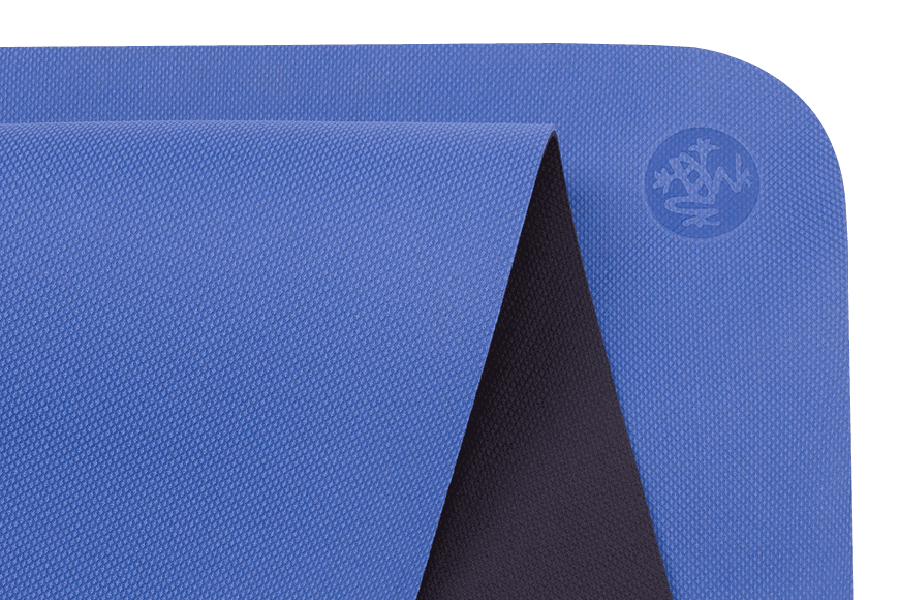
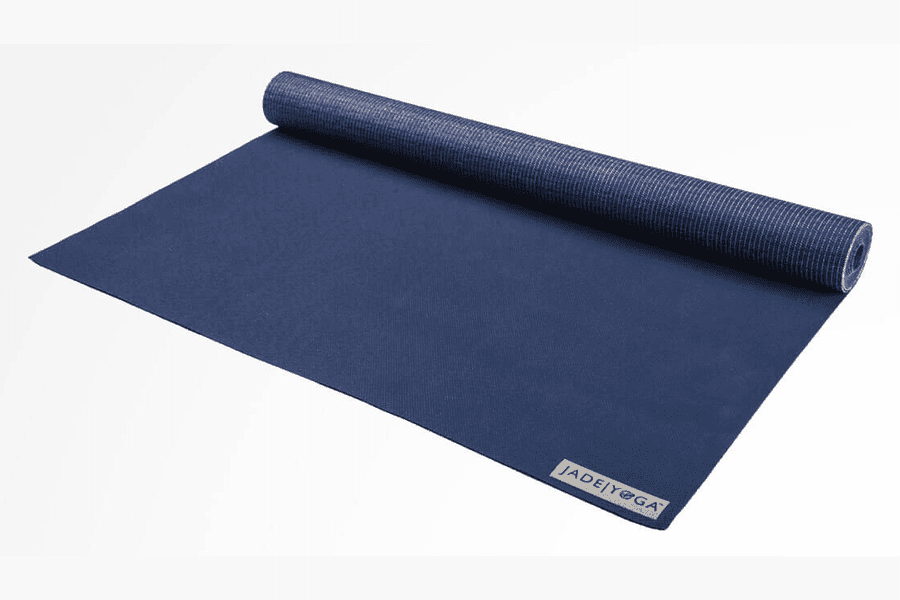
The Begin is 5 mm of soft-touch TPE with a center alignment stripe, 2.5 pounds, and it wipes clean in seconds. The Voyager is 1.6 mm of Jade's natural rubber, 1.5 pounds, folds flat into luggage, and grips far better: OutdoorGearLab scored it 8 of 10 for grip and 2 of 10 for comfort.
If this is your first mat, buy the Begin. If you already have a mat and want something for travel, buy the Voyager.
Get the Manduka Begin if...
- This is your first mat and you want one thing that works
- You want real cushioning at 5 mm rather than a topper
- The alignment stripe would help you set up poses at home
- You want a surface that wipes clean and never smells
Get the Jade Voyager if...
- You already own a main mat and need one for travel
- You want serious grip, at 9 dry and 7 wet in GearLab's testing
- You want to fold it flat into a suitcase at 1.5 pounds
- You'd rather practice on your own surface than a studio rental
Side by side
Price
The Voyager lists for about $12 less.
$62
List price · check price at Amazon
$49.95
List price · check price at jadeyoga.com
Thickness
The Begin is 213% thicker.
5 mm0.2″
1.6 mm0.06″
Weight
The Voyager is 1 lbs lighter.
2.5 lbs1.1 kg
1.5 lbs0.68 kg
Size
Same length; same width.
Same on both
- Both are 68" × 24"
- Both are light enough to carry without thinking
- Neither ships with a carry strap
- Neither carries a third-party certification
Full specs
Dimensions
Materials & build
Buying
Two light mats sold for very different reasons
The Manduka Begin is $62 for 5 mm of soft-touch TPE with an alignment stripe down the middle, aimed squarely at people taking their first classes. The Jade Voyager is $49.95 for 1.6 mm of natural rubber that folds to about the size of a yoga block.
Both are light, both are cheap by the standards of decent mats, and they are answering different questions. One is a first mat. The other is a second mat you own alongside a real one.
Cushioning: 5 mm against 1.6
OutdoorGearLab scored the Voyager 2 of 10 for comfort and support in its 2026 roundup, the joint lowest of nineteen mats, and said mats this thin work better as a topper over a studio mat than on their own. Its cons list opens with “too thin to provide comfort.”
The Begin is a normal 5 mm and it feels like one. It is soft rather than dense, so it does not support the way a premium mat does, but a kneeling lunge on it is not painful. For a beginner practicing on a wood floor, that is the relevant test and the Begin passes it.
Grip: the cheap Jade wins comfortably
The Voyager scored 8 of 10 for grip in the roundup, and 9 dry and 7 wet in GearLab’s separate testing, which puts its wet traction level with the Manduka PRO and the Liforme. Excellent dry and wet hand grip is the first item on its list of pros. That is Jade’s open-cell rubber doing what it does on every mat the brand makes.
The Begin is closed-cell TPE with a soft finish. Dry hands are fine. Once there is moisture on the surface it has nowhere to go, and owners describe it as slick in a heated room, which is normal for TPE at this price. If you sweat, plan on a towel or plan on a different mat.
How each one sits on the floor
The Begin is 2.5 pounds and lies flat straight out of the packaging. It is light but not so light that it travels with you across the room.
The Voyager is 1.5 pounds, and GearLab flagged that it shifts and wrinkles during practice. It also arrives with fold creases that take a few minutes to relax. On carpet it behaves; on a polished floor it slides.
Portability: both are easy, one is extraordinary
At 2.5 pounds the Begin is one of the lightest full-thickness mats anyone sells, and carrying it to a studio is a non-event.
The Voyager is in another category. GearLab weighed theirs at 1.8 pounds, the lightest mat in the lineup, and it folds flat rather than rolling, so it lies in a suitcase or a daypack instead of strapping to the outside. If you fly with a mat, nothing here competes.
The alignment stripe
The Begin’s center stripe is a genuine beginner feature. Lining your feet up to it in warrior two, or checking that your hands are even in down dog, is useful when nobody is watching you practice, and it costs nothing.
The Voyager is a plain surface. It also comes in five colorways against the Begin’s ten, so if you want a specific look the Manduka gives you more to pick from.
Durability and care
GearLab listed “not very durable” and “creases easily” among the Voyager’s downsides. Folding a rubber mat over and over eventually leaves permanent lines, and natural rubber degrades in sunlight, so it needs to be stored indoors. Jade’s one year warranty excludes sun damage and harsh cleaners.
The Begin wears by compressing. Expect flattened patches where your hands and feet land after a year or two of regular use. It is closed-cell TPE, so a wipe after class is the entire cleaning routine and it never develops a smell. Manduka offers a 30 day return window and no warranty.
Materials
The Begin is TPE made in Taiwan, latex free, with no certifications. TPE is recyclable in principle in a way PVC largely is not, though in practice that depends entirely on what your local facility accepts.
The Voyager is sustainably farmed natural rubber made in the USA, and Jade plants a tree for every mat sold, over two million so far. GearLab scored its materials 4 of 10, which reflects how heavily they weight longevity rather than the raw material. Jade describes its mats as 99 percent latex free, so an allergy rules it out.
Price and where to buy
$62 against $49.95. Manduka discounts Begin colorways on its own site, where one shade has been running around $50, and it sells through Amazon too, so check the current Manduka Begin price at Amazon.
The Voyager sells through jadeyoga.com rather than Amazon and holds its list price most of the year.
Bottom line
Buy the Begin if this is your first mat and you need one thing that works. It cushions, it lies flat, the stripe helps, and it costs $62. It is not a hot yoga mat and it will not last a decade, and at this price neither of those is a scandal.
Buy the Voyager if you already have a mat and you want something for hotel rooms, parks, and studios that hand out questionable rentals. It grips like a proper Jade and weighs nothing. Do not make it your only mat. If you want a packable Jade with actual cushion, the 3.2 mm Jade Travel is the middle option at $79.95.
Manduka Begin
List price $62
Jade Voyager
List price $49.95
Frequently Asked Questions
- Can the Jade Voyager be a beginner's only mat?
- We would not recommend it. GearLab scored it 2 of 10 for comfort and support, the joint lowest of nineteen mats, and described mats this thin as working better as a topper than on their own. On a hard floor, kneeling on a Voyager is kneeling on the floor, which is a discouraging way to start.
- Which grips better?
- The Voyager, clearly. GearLab scored it 8 of 10 for grip, and 9 dry and 7 wet in its separate testing, which puts its wet traction level with the Manduka PRO. The Begin is closed-cell TPE with a soft finish: fine with dry hands, and slick once there is moisture on it, which is normal for TPE at this price.
- Does the alignment stripe help?
- For a beginner practicing at home, yes. Lining your feet up to it in warrior two or checking that your hands are even in down dog is genuinely useful when nobody is watching you, and it costs nothing. The Voyager is a plain surface with no guidance at all.
- Does the Voyager slide during practice?
- GearLab flagged that it shifts and wrinkles during practice, and at 1.5 pounds there is not much holding it down. It also arrives with fold creases that take a few minutes to relax. On carpet it behaves; on a polished floor it moves. The Begin lies flat straight out of the packaging.
- How long does each one last?
- The Begin wears by compressing, so expect flattened patches where hands and feet land after a year or two of regular use, and Manduka offers a 30 day return window with no warranty. GearLab listed not very durable and creases easily among the Voyager's cons; Jade covers it for one year, excluding sun damage and harsh cleaners.
- Is there a Jade with more cushion that still travels?
- The Jade Travel, at 3.2 mm and 3 pounds for $79.95. It still folds for luggage but has enough cushioning that plenty of owners use it as their only mat. If you want a packable Jade you can practice on daily, that is the one.
Related comparisons
- Manduka Begin vs IUGA Eco Friendly Non Slip PU
- Manduka eKO Superlite vs JadeYoga Voyager
- Manduka eKO Superlite Long vs JadeYoga Voyager
- Manduka Begin vs Gaiam Performance Dry-Grip 5mm
- Manduka Begin vs Hugger Mugger Earth Elements 5mm
- Manduka Begin vs JadeYoga Level One
- Manduka Begin vs Gaiam Performance Dry-Grip Long & Wide
- Manduka Begin vs 42 Birds The Robin
- JadeYoga Voyager vs Manduka PRO Travel