Jade Fusion vs Gaiam Premium 6mm: Which One Should You Buy?
These two are only two millimeters apart, so the money is not buying thickness. It is buying grip, density, and a mat that is still the same mat in three years. OutdoorGearLab named the Gaiam its Best First Yoga Mat, and it is worth understanding what that award means and what it doesn't.
As an Amazon Associate, we earn from qualifying purchases made through links on this page. How this works
The quick answer
The Gaiam is a genuinely good $30 mat, and GearLab gave it a Best Buy award while scoring it 62 of 100. It is also 5 of 10 for grip, 6 dry and 4 wet, and its foam compresses with regular use. The Fusion is 8 mm of dense natural rubber that grips from the first class, made in the USA, and it holds its shape for years.
If you're starting out and practicing on a wood floor a couple of times a week, buy the Gaiam. If you practice often, practice hot, or need a surface that will not flatten, buy the Fusion.
Get the Jade Fusion if...
- You sweat, or practice in a heated room
- You practice most days and want a mat that holds its shape
- You want dense cushioning rather than soft foam
- You want natural rubber made in the USA
Get the Gaiam Premium 6mm if...
- You are starting out and $30 is the right amount to risk
- You want a mat that's easy to carry, at 3.3 pounds against 8
- You practice slower styles on a wood or carpeted floor
- You need a latex-free mat
Side by side
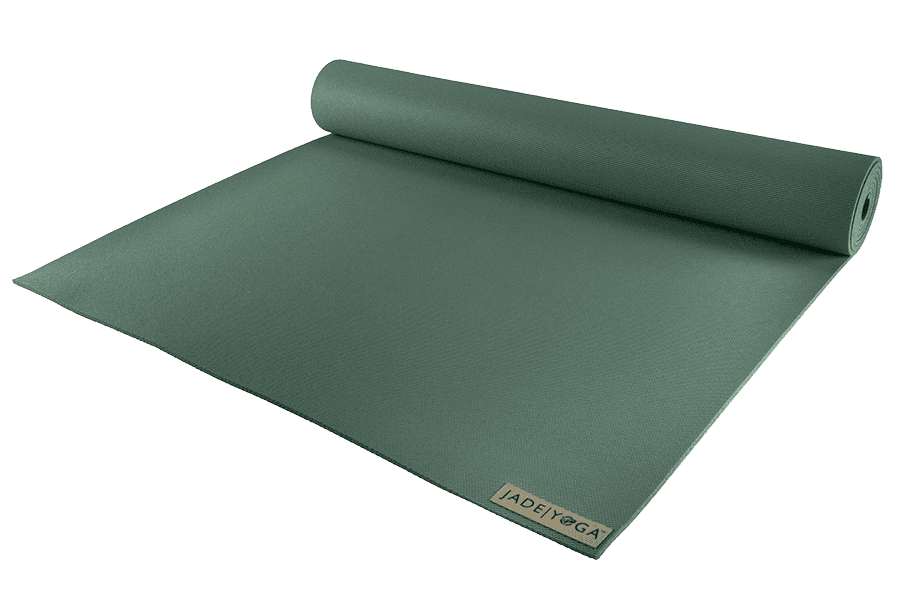
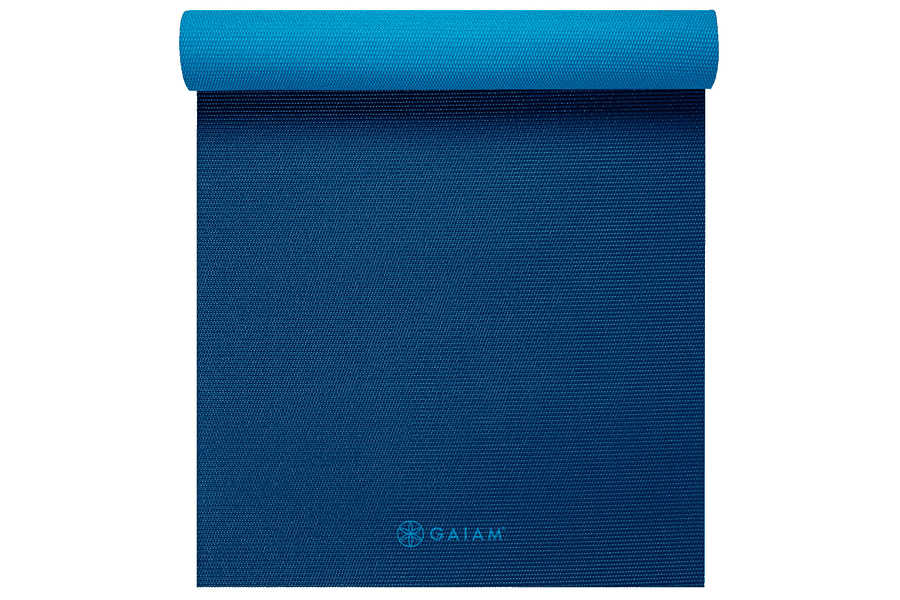
Price
The Gaiam Premium lists for about $145 less.
$174.95
List price · check price at Amazon
$29.98
List price · check price at Amazon
Thickness
The Fusion is 33% thicker.
8 mm0.31″
6 mm0.24″
Weight
The Gaiam Premium is 4.7 lbs lighter.
8 lbs3.6 kg
3.3 lbs1.5 kg
Size
Same length; same width.
Same on both
- Both are 68" × 24"
- Both are thick mats sold on cushioning
- Both lie flat without curling
- Neither carries a third-party certification
Full specs
Dimensions
Materials & build
Two thick mats, $145 apart
Both of these are sold on cushioning. The Gaiam Premium is $29.98 for 6 mm of soft PVC foam, and OutdoorGearLab named it Best First Yoga Mat in its 2026 roundup. The Jade Fusion is $174.95 for 8 mm of natural rubber made in the USA.
The gap is $145, which is nearly five Gaiams. What that money buys is not more thickness, since the two are within two millimeters of each other. It buys grip, density, and a mat that is still the same mat in three years.
Deep cushion and dense cushion are not the same
The Gaiam is genuinely comfortable when new. GearLab scored its comfort 6.5 of 10 and its testers praised the padding for kneeling poses, seated stretches, and long floor sequences. They also noticed the catch: press a hand into it and the handprint stays for a moment, and over time the foam shows compression, scuffs, and wear, especially with daily use.
Jade’s rubber does not do that. It is dense enough to push back, which is what makes eight millimeters usable in standing poses rather than just in floor work. GearLab’s standalone Fusion review scored its comfort a perfect 10, though that review is from 2013 and the Fusion is not in the current lineup.
Grip: the clearest gap between them
GearLab rated the Gaiam Premium 5 of 10 for grip, and separately 6 dry and 4 wet after pouring a liter of water on it. One tester described the foam surface becoming slippery as moisture built up, which left her less confident in poses that need real traction, like a wide-legged forward fold. Poor wet grip is the first item on GearLab’s list of cons.
The Fusion is open-cell natural rubber, tacky the moment you unroll it, and it absorbs sweat rather than letting it sit on top. GearLab’s older review scored it 9 dry and 9 wet. If you practice hot, or if slipping hands are the reason you are replacing a mat, this is the entire comparison.
Weight: the Gaiam is half the mat to carry
The Gaiam is 3.3 pounds, and GearLab weighed theirs at exactly that. Testers called it one of the easiest mats in the lineup to carry, which is a real advantage for a mat aimed at beginners commuting to a class.
The Fusion is 8 pounds. Portability was its weakest score in GearLab’s standalone review at 3 of 10, and eight pounds under an arm is exactly what that number means. If your mat travels, the cheap one is also the practical one.
Durability: where the price difference lands
The Gaiam compresses. GearLab listed moderate durability and compression among its downsides, and its testers saw wear appear with regular studio use. Gaiam does offer a lifetime guarantee, which is worth something, though a mat that has gone flat is not usually the kind of failure a guarantee gets invoked for.
The Fusion lasts longer, with one condition. Natural rubber breaks down in sunlight, and Jade’s one year warranty excludes sun damage and harsh cleaners specifically. Store it rolled and indoors and owners report years of use. One $175 mat that lasts five or six years costs less over that stretch than replacing a $30 mat every year, but only if you practice often enough for that to be true.
Cleaning
The Gaiam is easier here, and GearLab gave it 8 of 10 for care. PVC foam is closed-cell, so nothing soaks in and a wipe with a damp cloth handles it.
The Fusion drinks what you sweat on it, which is what makes it grip, and the cost is periodic deep cleaning and a slow dry afterwards. GearLab scored the Fusion 4 of 10 for ease of care. It also attracts dust and lint, as all Jade rubber does.
PVC against natural rubber
The Gaiam is latex-free PVC and Gaiam does not say where it is made. GearLab scored its materials 6 of 10. PVC is durable in the sense that it does not rot, and difficult in the sense that it is not recyclable in any practical way.
The Fusion is sustainably farmed natural rubber, manufactured in the USA, with no PVC or ozone-depleting substances, and Jade plants a tree for every mat sold. The catch is that it is 99 percent latex free rather than latex free, so it is out if you have an allergy. The Gaiam, being latex-free PVC, is the safe choice there.
Sizes and colors
Both are 68″ × 24″, so if you are near six feet, both will run short. The Gaiam comes in four reversible two-color combinations and Gaiam sells a wider range of prints across its other lines than any other brand here.
Jade sells the Fusion in four colorways plus a 74″ version and an 80″ × 28″ Fusion XW, so the size problem has an answer if you are willing to pay for it.
Price and where to buy
$29.98 against $174.95. The Gaiam is discounted at Amazon often enough that it is worth checking the current Gaiam Premium price at Amazon before paying list anywhere.
The Fusion mostly holds its price. Compare the current Jade Fusion price at Amazon with jadeyoga.com and take the lower one.
Bottom line
Buy the Gaiam if you are starting out, practicing a couple of times a week on a wood floor, and not sweating much. It is a lot of comfort for $30, GearLab picked it as the best first mat for good reason, and nobody regrets spending thirty dollars.
Buy the Fusion if you practice often, practice hot, or have joints that need real support from a surface that will not flatten. The grip is in a different class and so is the material. If $175 is more than you want to spend on Jade rubber, the Jade Level One is the same surface at 4 mm for $66.50.
Jade Fusion
List price $174.95
Gaiam Premium 6mm
List price $29.98
Frequently Asked Questions
- Is the Gaiam Premium slippery?
- When there is moisture on it, yes. GearLab rated it 5 of 10 for grip, and 6 dry and 4 wet in its separate testing, with poor wet grip first on its list of cons. One tester described the foam surface becoming slippery as moisture built up, which left her less confident in poses that need real traction like a wide-legged forward fold. Dry, it holds well enough for slow flows.
- The Gaiam is thicker in some listings. Is it more comfortable?
- They are close, 6 mm against 8 mm, and thickness is not the whole story. Soft foam compresses out of the way under a kneecap, and GearLab's testers noticed that a pressed handprint stays visible for a moment on the Gaiam. Jade's rubber is dense enough to push back, which is what makes 8 mm usable in standing poses rather than only in floor work.
- How long does a Gaiam Premium last?
- GearLab listed moderate durability and compression among its downsides and saw wear appear with regular studio use: scuffs, and flattened areas where hands and feet land. Gaiam does offer a lifetime guarantee, which is unusual at this price, though a mat that has gone flat is not usually the kind of failure a guarantee gets invoked for.
- Is the Fusion worth nearly five times as much?
- If you practice often, probably. One $175 mat that runs five or six years costs less over that stretch than replacing a $30 mat every year, and the grip difference is not subtle. If you practice twice a week on carpet and do not sweat much, the Gaiam does the job and nobody regrets spending thirty dollars.
- Which is better for a latex allergy?
- The Gaiam. It is latex-free PVC. Jade describes its mats as 99 percent latex free, which is not the same as latex free, so the Fusion is out if you react to latex.
- Which is easier to clean?
- The Gaiam, and GearLab scored it 8 of 10 for care. PVC foam is closed-cell, so nothing soaks in and a damp cloth handles it. The Fusion drinks what you sweat on it, which is what makes it grip, and the cost is periodic deep cleaning and a slow dry afterwards. GearLab scored the Fusion 4 of 10 for ease of care.
Related comparisons
- Gaiam Premium 6mm vs Gruper TPE 6mm
- Amazon Basics 1/4 Inch Thick TPE vs Gaiam Premium 6mm
- Gaiam Premium 6mm vs YogaAccessories Extra Thick Deluxe 1/4"
- Manduka PRO Long vs JadeYoga Fusion 68"
- JadeYoga Fusion 68" vs Yoloha Unity Pro Cork
- Manduka Begin vs Gaiam Premium 6mm
- Manduka X vs Gaiam Premium 6mm
- Manduka PRO vs JadeYoga Fusion 68"
- IUGA Eco Friendly Non Slip PU vs Gaiam Premium 6mm