Gaiam Premium 6mm vs Retrospec Solana 1/2": Which One Should You Buy?
These two are five dollars apart, which makes this one of the few comparisons where price is not the deciding factor. The Gaiam Premium is 6 mm of soft PVC and GearLab's Best First Mat for 2026. The Retrospec Solana 1/2" is twice as thick in NBR foam. Both are budget mats, and they fail in different places.
As an Amazon Associate, we earn from qualifying purchases made through links on this page. How this works
The quick answer
GearLab gave the Gaiam Premium 62 out of 100 and named it Best First Mat, with 6.5 for comfort and support, 6 for materials, 8 for care and cleaning, and grip of 6 dry and 4 wet. It is 3.3 pounds, reversible in two colors, and carries Gaiam's lifetime guarantee. The Solana 1/2" is 12.7 mm of NBR foam with a ribbed surface and a nylon strap, and 4.4 stars from roughly 9,200 Amazon buyers.
For yoga, take the Gaiam. It is thinner, steadier underfoot, grips better dry, and it is the mat an independent test recommends for beginners. Take the Solana if joint padding is the reason you are shopping and standing balance is not much of your practice.
Get the Gaiam Premium 6mm if...
- You want a mat for yoga rather than floor exercise
- You want steadier footing in standing poses
- You want a lifetime guarantee and a reversible color
- You want the mat GearLab named Best First Mat
Get the Retrospec Solana 1/2" if...
- Your knees or hips need twice the padding
- Your session is mostly stretching or floor work
- You want 72 inches of length instead of 68
- You want a carry strap included in the box
Side by side
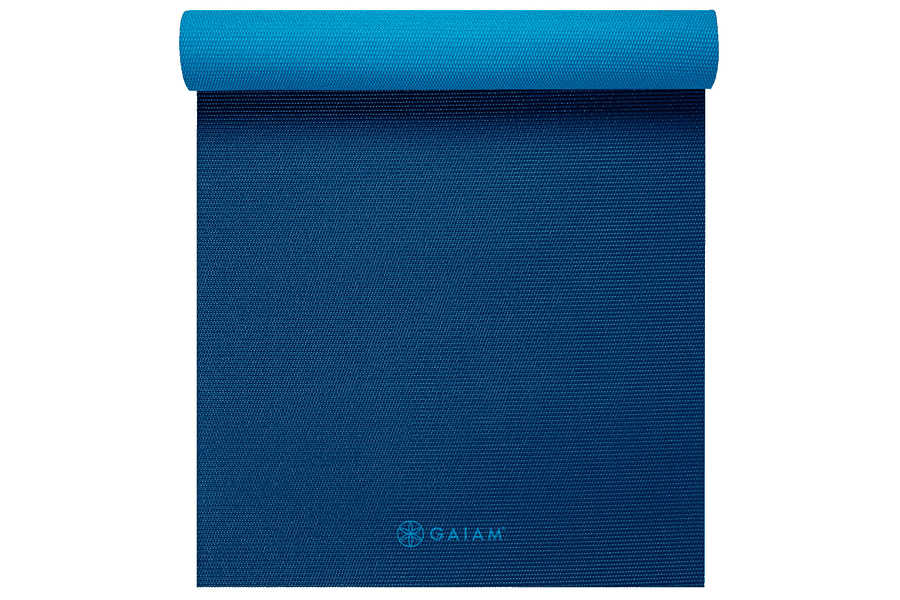
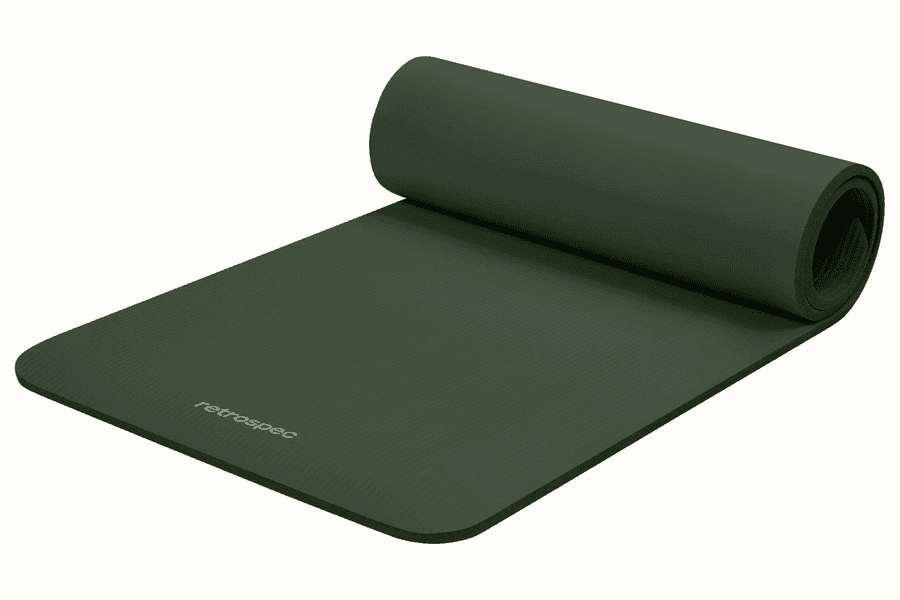
Price
The Solana 1/2" lists for about $5 less.
$29.98
List price · check price at Amazon
$24.99
List price · check price at Amazon
Thickness
The Solana 1/2" is 112% thicker.
6 mm0.24″
12.7 mm0.5″
Weight
The Solana 1/2" is 0.3 lbs lighter.
3.3 lbs1.5 kg
3 lbs1.36 kg
Size
The Solana 1/2" is 4″ longer; same width.
Same on both
- Both are budget mats under $35
- Closed-cell, so sweat sits on the surface
- Both need airing out before the first session
- Both are light at around 3 pounds
Full specs
Dimensions
Materials & build
Buying
Five dollars apart, which changes the question
Most of our comparisons involve a price gap doing half the arguing. Not this one: $29.98 against about $24.99. Both are budget mats, both are light, and neither will still be good in five years. What separates them is what they were designed to do.
The Gaiam Premium is a yoga mat. GearLab named it Best First Mat in its 2026 test, scoring it 62 out of 100. The Solana 1/2″ is an exercise pad that Amazon files alongside yoga mats, and it is twice as thick.
Why GearLab picked the Gaiam for beginners
Because it does enough of everything. It scored 6.5 for comfort and support, 6 for materials, 8 for care and cleaning, and grip of 6 dry and 4 wet. None of those are impressive numbers and none of them are a problem for someone in their first year of practice in a cool room.
It also has a lifetime guarantee on paper and a reversible two-color finish, and it is sold everywhere from Target to Amazon, which matters more than enthusiasts tend to admit when you just want a mat this week.
Twice as thick, and less stable for it
The Solana is 12.7 mm against the Gaiam’s 6, and both use soft foam. Doubling the depth of something that compresses does not make it more supportive; it makes more of it move. Under a standing foot the Solana sinks unevenly and your ankle spends the pose correcting for it.
The Gaiam is soft too. GearLab found its foam compresses under a hand and holds the impression for a moment, which tells you how much give there is in 6 mm. It is simply half as much give as the Solana offers.
Where the Solana wins
Kneeling on tile or hardwood. Half an inch of NBR foam is substantially kinder on a kneecap than 6 mm of PVC, and if your session is mostly seated, supine or on all fours, that comfort is worth more than any grip score.
It is also four inches longer, at 72″ against the Gaiam Premium’s 68″, which matters if you are over about five foot ten and tired of your head or heels landing on the floor.
Grip: mediocre against unmeasured
GearLab put the Gaiam Premium at 6 dry and 4 wet, which is unremarkable and at least measured. The textured sticky finish holds in a cool room with dry hands and gives up once you sweat, which is the standard PVC story.
The Solana has not been through an independent test we would cite. Its ribbed foam holds a dry bare foot well enough on a hard floor, and the foam moving underneath is a bigger issue than the surface itself. In a warm room, neither is a good answer.
Weight, straps and what is in the box
The Gaiam is 3.3 pounds and the Solana 3, so both are easy to move. The Solana includes a nylon carrying strap; the Gaiam Premium does not, and a sling is a separate purchase.
An inch-and-a-half difference in rolled thickness also matters for storage. The Solana rolls fatter and does not tuck behind a door as neatly, which is a small thing until you live in a small flat.
Both flatten, in different ways
The Gaiam’s soft PVC compresses where hands and feet land and loses its texture over months of steady practice; GearLab rated its materials 6 out of 10. Gaiam’s lifetime guarantee covers manufacturing defects rather than that kind of wear.
The Solana’s NBR takes permanent dents where knees, elbows and heels land, usually inside a year, and the edges tear before the middle fails. Retrospec warrants defects for six months with a 30 day return window. Treat both as one to two year mats in regular use.
Both smell out of the wrapper
Gaiam asks you to unroll the mat and air it for two to three days before your first session, and publishes a guide about removing the new-mat smell, which tells you how often the question comes up. It also warns that extended sun exposure makes the mat brittle.
Retrospec says the NBR foam may release a harmless odor and asks for a day or two of airing. Neither smell is permanent, and neither mat should live somewhere sunny.
Price and value
At $29.98 and about $24.99, the five dollars between these two is not going to decide anything. What should decide it is whether you are buying a yoga mat or a cushioning pad, because they are not the same product and the listings blur that.
Both hold about 4.4 to 4.5 stars on Amazon, the Gaiam across roughly 2,700 ratings on the listing we link and the Solana across roughly 9,200. Read a few of each before you order: the reviews sort themselves neatly into people doing yoga and people doing floor workouts.
Bottom line
Buy the Gaiam Premium 6mm if you are buying a mat for yoga. It is steadier underfoot, grips better dry, and an independent test named it the best first mat of 2026 for about $30.
Buy the Retrospec Solana 1/2″ if you want padding and length and your session happens on the ground. When you outgrow either, our Gaiam Premium vs Jade Harmony comparison covers the usual upgrade.
Gaiam Premium 6mm
List price $29.98
Retrospec Solana 1/2"
List price $24.99
Frequently Asked Questions
- Why did GearLab pick the Gaiam as Best First Mat?
- Because it does enough of everything for someone starting out. It scored 62 out of 100 overall, with 8 out of 10 for care and cleaning and 6.5 for comfort and support, and it costs about $30 with a lifetime guarantee. It is not good at grip, at 6 dry and 4 wet, but a beginner in a cool room will not hit that limit for a while.
- Twice as thick sounds better. Why isn't it?
- Because the Solana's foam is soft, and soft compresses unevenly under a standing foot. At 12.7 mm your ankle spends every balance pose keeping the surface level. The Gaiam's 6 mm is also soft, but there is half as much of it moving. Thickness measures how much material is there, not how it behaves under load.
- Which is more comfortable to kneel on?
- The Solana, clearly, and that is the point of it. Half an inch of NBR foam is much kinder on a kneecap on tile or hardwood. The Gaiam's 6 mm is a reasonable middle ground; GearLab found the foam compresses under a hand and holds the impression for a moment, which tells you how soft it is for a 6 mm mat.
- What about size?
- The Solana is 72 by 24 inches and the Gaiam Premium is 68 by 24, so the Solana is four inches longer. For anyone over about five foot ten, that is worth having. Gaiam's Performance Dry-Grip Long and Wide goes to 78 by 26 if you need considerably more room.
- Do the warranties mean anything?
- Not much on either. Gaiam's lifetime guarantee covers manufacturing defects rather than foam compressing, which is how a $30 mat actually ends. Retrospec warrants defects for six months and takes returns within 30 days. Treat both as insurance against a bad unit rather than a promise about longevity.
- Do both smell out of the wrapper?
- Yes. Gaiam asks you to unroll and air the mat for two to three days before use and publishes a guide about removing the new-mat smell. Retrospec says the NBR foam may release a harmless odor and recommends airing it for a day or two. Neither smell is permanent.
Related comparisons
- Gaiam Premium 6mm vs Gruper TPE 6mm
- Amazon Basics 1/2 Inch Extra Thick vs Retrospec Solana 1/2"
- Amazon Basics 1/4 Inch Thick TPE vs Gaiam Premium 6mm
- Gaiam Premium 6mm vs YogaAccessories Extra Thick Deluxe 1/4"
- Retrospec Solana 1/2" vs Gaiam Essentials Fitness Mat 10mm
- Manduka Begin vs Gaiam Premium 6mm
- IUGA Eco Friendly Non Slip PU vs Gaiam Premium 6mm
- Manduka X vs Gaiam Premium 6mm
- JadeYoga Level One vs Gaiam Premium 6mm