Jade Level One vs Gaiam Premium 6mm: Which One Should You Buy?
These two are exactly the same size, 68 by 24 inches, which makes this the cleanest demonstration we can offer of what rubber actually buys you. The Gaiam Premium is 6 mm of soft PVC foam for $29.98, and GearLab still calls it the best first yoga mat. The Jade Level One is 4 mm of USA-made natural rubber for $66.50. The thinner, more expensive mat is the better one, and the reason is grip.
As an Amazon Associate, we earn from qualifying purchases made through links on this page. How this works
The quick answer
The Gaiam is thicker, softer, lighter and cheaper, with a lifetime guarantee attached. What it is not is grippy or steady: GearLab rated its traction 6 out of 10 dry and 4 wet, listed poor wet grip among its three drawbacks, and found the soft foam unstable under balance poses. It also compresses with use.
The Level One gives up 2 mm of foam and gains rubber that is tacky from the first minute and keeps holding when your palms are damp, plus a written one-year warranty and a firmer platform. If you are past the trial stage of yoga, that $36.50 buys the thing you actually notice.
Get the Jade Level One if...
- You want grip that works when your hands get damp
- You do standing balances, where soft foam gets unhelpful
- You want a written warranty and USA-made rubber
- You expect to keep practicing and want the surface to keep up
Get the Gaiam Premium if...
- You are still finding out whether yoga will stick
- Your practice is mostly seated, restorative, or stretching
- You want the thickest cushion here for knees and wrists
- You want to spend $29.98 and keep the rest
Side by side
Price
The Gaiam Premium lists for about $37 less.
$66.50
List price · check price at jadeyoga.com
$29.98
List price · check price at Amazon
Thickness
The Gaiam Premium is 50% thicker.
4 mm0.16″
6 mm0.24″
Weight
The Gaiam Premium is 0.7 lbs lighter.
4 lbs1.8 kg
3.3 lbs1.5 kg
Size
Same length; same width.
Same on both
- Identical 68″ × 24″ footprint
- Both are light enough to carry without thinking
- Both are widely recommended as first mats
- Wipe-clean care; neither goes in a washing machine
- Neither comes in a longer size
Full specs
Dimensions
Materials & build
Buying
Identical size, so the only variable is material
Both mats are 68″ × 24″. Not similar, identical. That makes this the cleanest demonstration we can offer of what natural rubber actually buys, with size and shape taken out of the argument entirely.
The Gaiam Premium is 6 mm of soft PVC foam for $29.98, and testers still call it the best first yoga mat. The Jade Level One is 4 mm of USA-made natural rubber for $66.50. The thinner, more expensive mat is the better one, and grip is why.
Grip: the whole reason to spend more
The Gaiam’s textured sticky finish holds well enough in a dry, cool room that you won’t think about it. GearLab measured 6 out of 10 dry and 4 wet and listed poor wet grip among its three drawbacks, with hands slipping noticeably once things got sweaty. A closed PVC surface absorbs nothing, so the moment your palms are damp there’s nowhere for it to go.
Jade rubber is tacky from the first minute, needs no break-in, and its open-cell surface takes light sweat into the mat rather than letting it bead. Traction survives a warm class. The trade is that the moisture going in is what makes the mat need washing more often.
If your hands creep forward in down dog by the third sun salutation, that’s the signal, and no amount of extra foam fixes it.
Stability: thin and dense beats thick and soft
Six millimeters of light foam gives under a knee and keeps giving, which feels genuinely kind in floor work. Stand on one leg and it turns against you: GearLab’s testers found the Gaiam unstable under balance poses, with a foot sinking and tilting, and noted that pressing a hand into the foam leaves the print for a moment. They rated its comfort and support 6.5 of 10 on that basis.
The Level One’s 4 mm of dense rubber gives a little and then holds, which is a flatter, more predictable platform for tree pose and warrior three. Less mat, steadier footing.
Where the Gaiam genuinely wins
Cushion, and it’s worth being fair about. If your practice is largely seated, restorative or stretching, or if kneeling on a hard floor is the thing that hurts, the Gaiam’s extra two millimeters of soft foam are more comfortable than Jade’s rubber and nothing about grip changes that.
It’s also lighter at 3.3 pounds against 4, easier to clean, latex-free, and carries a lifetime guarantee that Jade’s single year can’t match on paper. For a genuinely casual practice, none of the Level One’s advantages get used.
How each one ends
The Gaiam’s foam takes a set under regular use, which GearLab called its main durability concern. A few sessions a month can get years out of one; daily practice flattens it inside a couple, and the cushion you bought it for is exactly what disappears. Gaiam’s lifetime guarantee is real and unusual at this price, and like every guarantee at every price it addresses defects rather than foam softening from normal use.
Natural rubber softens and sheds instead, faster with sweat and daily practice. Jade covers the Level One for a year, excluding sun damage and harsh cleaners, and rubber wants more care generally: no hot cars, no direct sun, gentle cleaners only. If you want rubber that lasts longer than either, that argument belongs to dense PVC, which our PROlite vs Level One comparison covers.
Materials, latex, and the eco angle
The Gaiam is latex-free PVC, which makes it the safe choice with a latex allergy; Jade is explicit that its mats are 99% latex free rather than latex free.
Otherwise Jade has the stronger story: tapped tree rubber, made in the USA, no PVC or synthetic rubber in the build, and a tree planted for every mat sold, past two million by its own count. Both smell when new. Gaiam tells buyers to leave the mat unrolled for two to three days first and keeps a page up about removing the odor; Jade’s rubber smell fades over the first week or two with ventilation.
Colors, stock, and where to buy
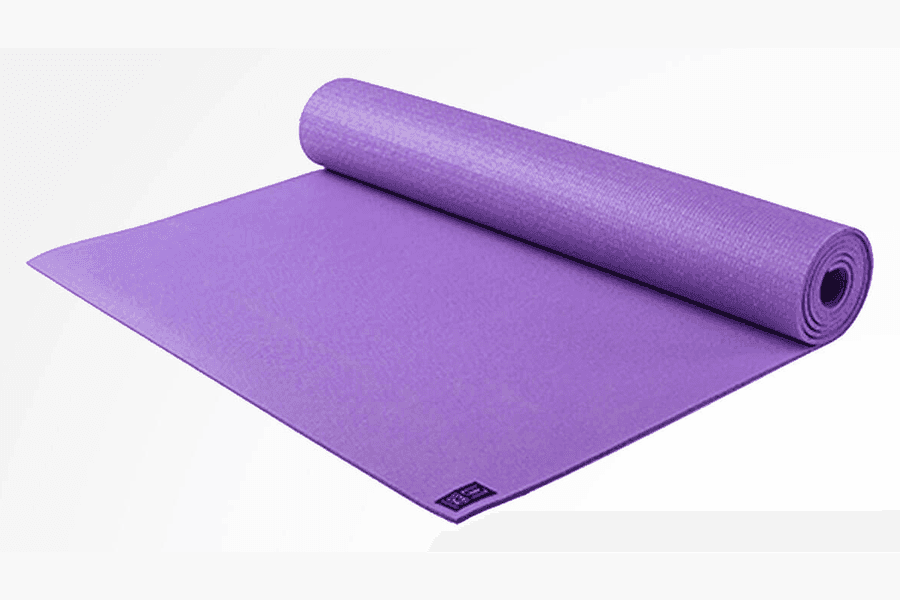
The Level One comes in Classic Blue and Classic Purple, and one of the two is regularly sold out, so availability may make this decision for you. It’s a direct purchase from jadeyoga.com.
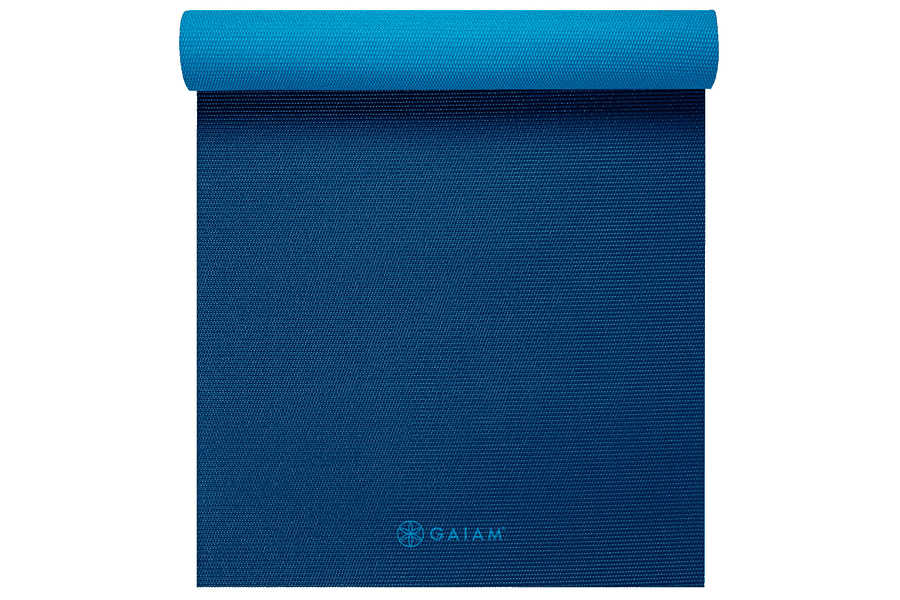
The Gaiam sells through Amazon and gaiam.com in four reversible color combos at last count, discounts frequently, and prices vary by colorway on the same listing. Easy to buy, easy to return, easy to replace.
Bottom line
Get the Gaiam if you’re still finding out whether yoga will stick, or if your practice is gentle and unheated. It’s a fair $29.98 product, the softest landing here, and nobody should feel undersold owning one.
Get the Level One if you have started sweating, started wobbling, or started practicing often enough that a flattening foam mat is a recurring purchase. Same footprint, better surface, $36.50. If you want the rubber upgrade in a bigger size, the Jade Harmony is the next step up and the more common recommendation.
Jade Level One
List price $66.50
Gaiam Premium 6mm
List price $29.98
Frequently Asked Questions
- The Gaiam is thicker. Why is the Jade better?
- Because thickness is not the thing that fails on cheap mats. Six millimeters of soft foam gives under a knee and keeps giving, which is comfortable in floor work and unstable the moment you stand on one leg; GearLab's testers found exactly that and rated it 6.5 of 10 for comfort and support. The Level One's 4 mm of dense rubber gives a little and holds, and its surface grips where the Gaiam's slides. You are buying material, not height.
- Which one is better for hot yoga?
- The Jade, though neither is a specialist. Its open-cell rubber absorbs light sweat rather than letting it bead, so traction survives a warm class; the trade is that it needs more washing because the moisture goes into the mat. The Gaiam's closed PVC surface absorbs nothing and gets slick as soon as your palms are damp, which GearLab measured at 4 out of 10 wet. For a genuinely heated room, both are the wrong shelf.
- How long does each one last?
- The Gaiam's foam takes a set under regular use, which GearLab flagged as its main durability concern. A casual practice a few times a month can get years out of one; daily use flattens it inside a couple, and the cushion you bought it for is what disappears. Natural rubber softens and sheds instead, faster with sweat, and Jade covers the Level One for a year excluding sun damage and harsh cleaners. Gaiam's lifetime guarantee is real but addresses defects rather than foam softening from normal use.
- Is the Level One worth more than twice the price?
- If you practise regularly, yes, and it is the cheapest way to find out what a proper mat feels like. If you are on a mat twice a month for stretching, no; the Gaiam will do that job for years and nothing about rubber improves it. The clearest signal to upgrade is your hands creeping forward in down dog, because no amount of foam fixes that and rubber does.
- What are the Jade's downsides?
- Three worth knowing. It comes in Classic Blue and Classic Purple only, and one is regularly sold out. It is a direct purchase from jadeyoga.com rather than an Amazon one, so returns take a conversation. And because it is open-cell rubber it needs washing more often than a closed foam mat, plus it should stay out of hot cars and direct sun. It is also not safe with a latex allergy, where the Gaiam is latex-free PVC.
- Do either of them smell when new?
- Both can. Gaiam's own instructions say to air the mat out for a couple of days before your first session, and the company maintains a separate guide on dealing with the odor. Jade's rubber has a distinct tree-rubber odor for the first week or two that airs out on its own. Neither is a defect, and both fade with use and ventilation.
Related comparisons
- Gaiam Premium 6mm vs Gruper TPE 6mm
- Amazon Basics 1/4 Inch Thick TPE vs Gaiam Premium 6mm
- Gaiam Premium 6mm vs YogaAccessories Extra Thick Deluxe 1/4"
- JadeYoga Level One vs Gaiam Performance Dry-Grip 5mm
- Manduka X vs JadeYoga Level One
- JadeYoga Level One vs IUGA Eco Friendly Non Slip PU
- Manduka Begin vs JadeYoga Level One
- JadeYoga Level One vs Gaiam Performance Dry-Grip Long & Wide
- JadeYoga Level One vs Manduka PRO Travel