Gaiam Dry-Grip vs Liforme Classic: Which One Should You Buy?
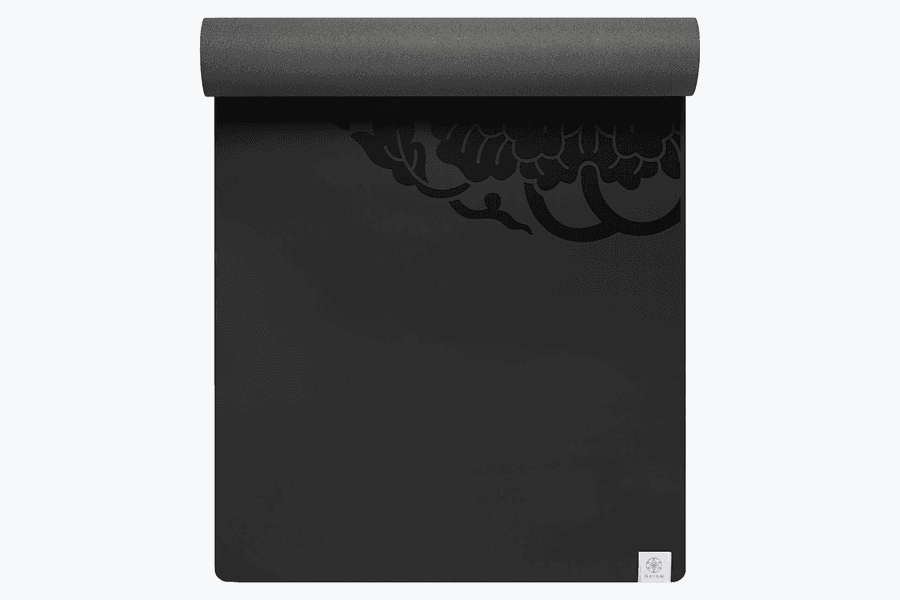
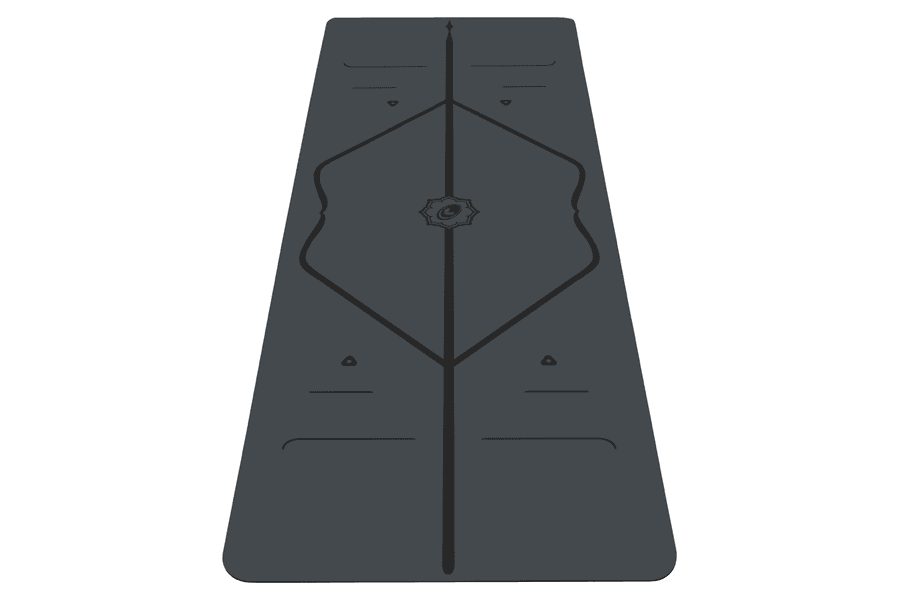
Put these two side by side in photos and they read as the same product: smooth tops, muted colors, yoga-brand logos. The prices say otherwise, $69.98 for Gaiam's Performance Dry-Grip and $165 for the Liforme Classic, and so does the testing. This is a comparison about what the extra $95 buys, and whether your practice would ever collect on it.
As an Amazon Associate, we earn from qualifying purchases made through links on this page. How this works
The quick answer
The Liforme is the real thing: an eco-polyurethane surface that GearLab scored 9 of 10 dry and 7 wet, with etched alignment markers that earned it the Best for Fine-Tuning Alignment award, on a roomy 72.8 by 26.8 inch cut. The Dry-Grip's coated PVC scored 6.5 dry and 3.5 wet in the same test, near the bottom of the lineup once sweat arrived. It is a dry-hands mat wearing a wet-hands name.
Pay for the Liforme if you sweat, want the alignment system, or need the bigger cut. Buy the Gaiam if your practice is slow and dry, a latex allergy rules out rubber bases, or $165 is simply not on the table. And if budget is the obstacle rather than the allergy, the roughly $67 IUGA gets you most of the Liforme's construction for Gaiam money.
Get the Gaiam Dry-Grip if...
- You'd rather keep about $95 and your practice stays dry and slow
- A latex allergy makes the Liforme's rubber base a non-starter
- A lifetime guarantee appeals more than Liforme's 30 day window
- You want the softer, more cushioned feel for floor-based practice
Get the Liforme Classic if...
- You sweat, and you want grip that tested at 7 of 10 wet instead of 3.5
- Etched alignment markers would get daily use in your practice
- You want the bigger mat: 72.8″ × 26.8″ against 68″ × 24″
- You want the mat GearLab ranked 76 to the Gaiam's 62 overall
Side by side
Price
The Dry-Grip lists for about $95 less.
$69.98
List price · check price at Amazon
$165
List price · check price at Amazon
Thickness
The Dry-Grip is 19% thicker.
5 mm0.2″
4.2 mm0.17″
Weight
The Dry-Grip is 1.3 lbs lighter.
4.25 lbs1.9 kg
5.5 lbs2.5 kg
Size
The Liforme is 4.8″ longer; the Liforme is 2.8″ wider.
Same on both
- Both grip confidently with dry palms
- No break-in period on either
- Sold on Amazon with the brands behind the listings
- Damp-cloth care only; neither tolerates machine washing
Full specs
Dimensions
Materials & build
Buying
They photograph alike; they test apart
In thumbnails these two read as the same product: smooth muted-color tops, minimal branding, yoga-first design. The prices disagree, $69.98 for Gaiam’s Performance Dry-Grip against $165 for the Liforme Classic, and so does the testing. OutdoorGearLab scored them 62 and 76 of 100 in the same 19-mat lineup, and the gap widens dramatically once palms get damp.
So this page is about what the extra $95 buys, where the Gaiam genuinely holds its own, and the cheaper mat that does a more faithful Liforme impression than the Dry-Grip does.
Grip: the split that decides most buyers
With dry hands, both are secure, and the Gaiam does a fair impression of the expensive mat: smooth, stable, no break-in. GearLab scored the Liforme 9 of 10 dry against the Gaiam’s 6.5, but at a normal practice pace with dry palms you would need both mats side by side to feel it.
Sweat ends the impression. The Liforme’s eco-polyurethane top absorbs moisture as it lands and kept its traction wet or dry in GearLab’s testing, scoring 7 of 10 wet. The Dry-Grip’s coating scored 3.5, with testers finding traction fell apart in sweaty sessions; GearLab steers it toward stretch practice and slower flows. The name promises a condition the surface can’t deliver, which is the single most useful thing to know about this mat.
Alignment: etched lines the Gaiam does not have
The Liforme’s other headline feature has no counterpart on the Gaiam at all. Its AlignForMe markers are etched into the surface, not printed, giving consistent references for hand and foot placement that never wear off, and GearLab named it the best mat for fine-tuning alignment on their strength. Home practitioners and teachers get value from them daily; long-settled practitioners eventually stop looking down.
If the markers are most of what draws you to the Liforme, note that they are also what you keep paying for; plenty of grippy mats without etching cost less. If they would just be decoration for you, weight this section at zero.
Size: the Liforme is bigger, but Gaiam sells bigger still
The Liforme Classic comes in one generous size, 72.8″ × 26.8″, noticeably roomier than the Dry-Grip’s standard 68″ × 24″ in both directions, and it ships with a zippered carry bag. For most bodies under six feet the Liforme is the more comfortable territory, and its 26.8″ width is something you feel in wide stances.
Gaiam’s counter is the Dry-Grip Long & Wide at 78″ × 26″ for about $75, the cheapest genuinely large smooth-top mat we cover. If square footage is your first priority and sweat is not, that version quietly beats both mats on this page.
Cushion and feel
The Gaiam is the softer, thicker mat at 5 mm against 4.2, and its cushion rates well for the floor-heavy practice it suits; knees and hips get a kinder landing on it. The Liforme is thinner and firmer, which reads as stability under standing balances, and GearLab flagged it as thin enough that sensitive joints may want more under them for long kneeling holds.
Neither is plush, and neither wobbles. If maximum cushion is the actual requirement, both lose to thicker rubber like the Jade Fusion, and this comparison is the wrong aisle.
Materials, allergies, and eco stories
The Gaiam is latex-free PVC marketed as free of six common phthalates, which makes it the only safe choice here for a genuine latex allergy; the Liforme’s natural rubber base can carry trace latex proteins. That one fact overrides every score above for affected buyers.
The Liforme’s eco story is the more ambitious one: its materials are designed to biodegrade within one to five years in landfill conditions, a claim GearLab likes and also names as the reason the mat is less durable than others at its price. Neither mat carries a third-party certification.
Durability and warranty
Plan on a few good years from either, for different reasons. The Liforme’s top slowly trades looks for mileage, with staining the most common owner complaint, and its biodegradable build is deliberately not forever. The Dry-Grip’s coating is its weak point, flagged for limited long-term durability, and its dye can transfer onto clothing when new, so give a fresh one a damp-towel buff.
On paper the cheap mat wins: Gaiam’s lifetime guarantee against Liforme’s 30-day window. As ever, lifetime coverage means manufacturing defects, not the wear described above, so treat it as a pleasant tiebreaker.
Price, and the mat between them
Check current prices on the Dry-Grip at Amazon and the Liforme at Amazon; the Gaiam also sits on big-box shelves if you want to see it in person. Between their prices lives the mat that makes this page harder for both: the roughly $67 IUGA runs the Liforme’s polyurethane-over-rubber construction at Gaiam money, and GearLab gave it a Best Value award. Our Liforme vs IUGA and Dry-Grip vs IUGA pages cover it from both sides.
Bottom line
Pay for the Liforme if you sweat, want grip that tested at the top of its class wet or dry, would actually use the etched alignment markers, or want the bigger cut with the bag included. It is the better mat by a wide, documented margin, priced accordingly.
Buy the Dry-Grip if your practice is slow and dry, a latex allergy rules out rubber, or the budget simply stops at $70; within those lines it is a comfortable, secure mat with a lifetime guarantee. And if the budget is the only obstacle, get the IUGA instead of either and pocket the change.
Liforme Classic
List price $165
Frequently Asked Questions
- Is the Gaiam Dry-Grip a good cheap alternative to the Liforme?
- With dry hands, it does a fair impression: both tops are smooth, secure, and pleasant. The impression ends when you sweat. GearLab scored the Liforme's wet grip 7 of 10 and praised its traction wet or dry; the Dry-Grip scored 3.5 and was recommended for stretch practice and slower flows instead. The closer budget stand-in for a Liforme is the IUGA at about $67, which uses the same polyurethane-over-rubber construction.
- Are the Liforme's alignment markers worth it?
- For home practitioners and teachers, genuinely yes. The etched AlignForMe guides give consistent references for hand and foot placement, the kind of feedback that otherwise needs a teacher watching you, and GearLab named the Liforme its best mat for fine-tuning alignment. Practitioners with a settled practice often stop noticing them. The Dry-Grip has no equivalent; Gaiam's version of alignment help lives on other mats in its range.
- Which mat handles hot yoga?
- The Liforme. Its absorbent polyurethane top takes on sweat as it lands and keeps gripping, which is why it shows up in hot studios despite its price. The Dry-Grip's coating handles light moisture at best; GearLab found traction fell apart in sweaty sessions, so a heated class on it means a towel over the mat, at which point you've bought the towel's grip, not the mat's.
- What about latex allergies?
- The Gaiam is the safe pick: latex-free PVC, marketed as free of six common phthalates too. The Liforme is built on a natural rubber base, and rubber can carry trace latex proteins, so it's ruled out for a genuine allergy. No grip score or award outweighs that; if latex is a medical issue, this comparison has one answer.
- How long does each mat last?
- Plan on a few good years from either, for different reasons. Liforme designs its materials to biodegrade within one to five years in landfill conditions, which is the flip side of its eco story; GearLab flags it as less durable than others at its price, and staining is the most common complaint. The Dry-Grip's weak points are its coating, flagged for limited long-term durability, and dye that can transfer onto clothing when new. Gaiam's lifetime guarantee covers defects, not this kind of wear.
- Do these mats come in other sizes?
- The Liforme Classic comes in its one 72.8 by 26.8 inch size, already larger than most standard mats, and ships with a zippered carry bag. The Dry-Grip's standard cut is 68 by 24, and Gaiam also sells a Long and Wide version at 78 by 26 for about $75, which is the cheapest way in this comparison to get a genuinely large mat.
Related comparisons
- Manduka X vs Gaiam Performance Dry-Grip 5mm
- JadeYoga Level One vs Gaiam Performance Dry-Grip 5mm
- Gaiam Performance Dry-Grip 5mm vs IUGA Eco Friendly Non Slip PU
- Manduka Begin vs Gaiam Performance Dry-Grip 5mm
- Gaiam Performance Dry-Grip 5mm vs Hugger Mugger Earth Elements 5mm
- JadeYoga Harmony XW vs Liforme Classic
- Liforme Classic vs Yoloha Unity Pro Cork
- Manduka GRP Adapt 1.0 vs Gaiam Performance Dry-Grip 5mm
- Gaiam Performance Dry-Grip 5mm vs Suga SugaMat