Gaiam Performance Dry-Grip vs Premium Reversible: Which One Should You Buy?
Gaiam sells enough similar-looking mats that half the job here is telling two of them apart. The Performance Dry-Grip is the step-up mat sold to people who sweat; the Premium Reversible is the printed one sold on how it looks. OutdoorGearLab tested both in the same round, so for once we can point at numbers rather than impressions.
As an Amazon Associate, we earn from qualifying purchases made through links on this page. How this works
The quick answer
The Dry-Grip finished twelfth in GearLab's 19 mat test at 62 out of 100; the Premium Reversible finished fifteenth at 54. The gap is mostly cushion and stability, where the firmer Dry-Grip scored 8 out of 10 for comfort and support against 6.0, and grip, where the Reversible rated 4 out of 10, the weakest Gaiam in the lineup. Both mats transfer dye when new, both carry Gaiam's lifetime guarantee, and both slide once you sweat.
Get the Dry-Grip if you do standing and balancing yoga. Get the Premium Reversible if the artwork is what gets you onto the mat and your practice is slow and floor-heavy.
Get the Dry-Grip if...
- You do standing poses and balances
- You want the firmer, more supportive surface
- You want the better grip with dry hands
- You want the mat that scored eight points higher at GearLab
Get the Premium Reversible if...
- One of the ten printed designs is what gets you practicing
- It's a gift and artwork will land better than a solid color
- Your practice is slow, seated and floor-heavy
- You'd rather keep about $30
Side by side
Price
The Gaiam Reversible lists for about $30 less.
$69.98
List price · check price at Amazon
$39.98
List price · check price at Amazon
Thickness
The Gaiam Reversible is 20% thicker.
5 mm0.2″
6 mm0.24″
Weight
The Gaiam Reversible is 1 lbs lighter.
4.25 lbs1.9 kg
3.3 lbs1.5 kg
Size
Same length; same width.
Same on both
- Latex-free PVC
- Gaiam's lifetime guarantee
- 68" x 24" size
- Dye that can transfer onto clothes when new
- Slippery once your hands are wet
- No stated country of origin or certification
Full specs
Dimensions
Materials & build
Buying
Gaiam’s step-up mat against its prettiest one
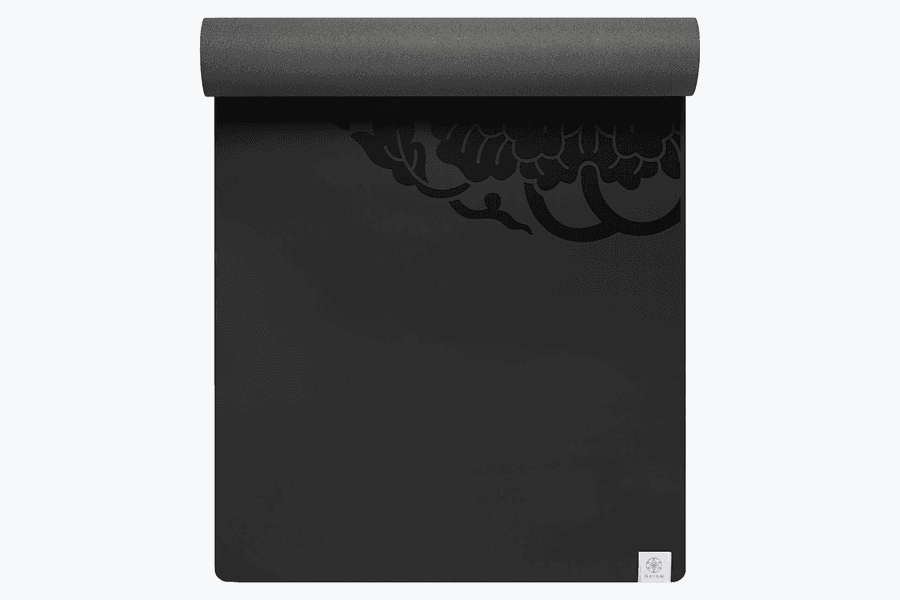
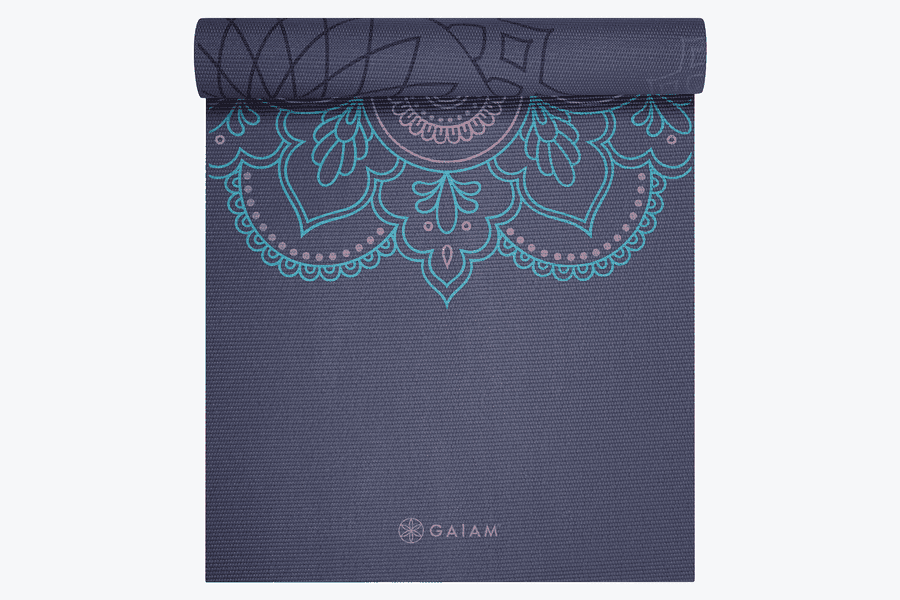
Gaiam sells enough similar-looking mats that half the job of this page is telling two of them apart. The Performance Dry-Grip is $69.98, sold as the upgrade for people who sweat. The Premium Reversible is $39.98, sold on artwork, with a different printed design on each face.
Both are latex-free PVC, both are 68″ × 24″, and both carry Gaiam’s lifetime guarantee. OutdoorGearLab tested both in the same 19 mat round, which makes this one of the few budget matchups where we can point at numbers instead of impressions.
What the independent test found
The Dry-Grip scored 62 out of 100 and finished twelfth. The Premium Reversible scored 54 and finished fifteenth. That is a real gap for two mats from the same brand, and the categories underneath explain where it came from: comfort and support went 8 out of 10 to the Dry-Grip against 6.0 for the Reversible, and the Reversible’s grip rated 4 out of 10, the lowest of the three Gaiams in the lineup.
The Dry-Grip does not win everything. Its materials scored 4 out of 10, one of the two lowest results in the whole field, against the better half of the Gaiam range. So the extra $30 buys a better mat to practice on and not a better-made one.
Cushion: softer is not the same as better
The Reversible is 6 mm of genuinely soft foam and the Dry-Grip is 5 mm of firmer PVC, so the cheaper mat is thicker and squishier. For kneeling poses, stretching, restorative classes and workout videos, that squish is pleasant, and it is most of why the Premium line makes such a common first mat.
The same softness is the weakness. GearLab found the Premium foam went squishy and sacrificed stability in balance poses like tree, and the surface compresses visibly where hands and feet land over time. The Dry-Grip’s firmer 5 mm was described as ideal cushion: good on the joints, supportive, and it does not budge on the floor. If your balances feel wobbly on a Gaiam, this is the fix.
Grip: the name on the box oversells it
Gaiam markets the Dry-Grip as a no-slip mat ideal for hot yoga with a topcoat that wicks moisture away as class heats up. GearLab measured 6.5 out of 10 dry and 3.5 wet, and the wet figure is third from the bottom of the entire test. Its verdict was that this is not the grippiest sticky mat but a lovely choice for a stretch practice, which is a fair description of a mat whose name promises otherwise.
The Reversible is worse: 4 out of 10 overall for grip, the weakest Gaiam tested, with one tester describing a loss of confidence in a wide-legged forward fold as moisture built up. The recurring owner complaint about printed Gaiam mats is exactly this.
So the Dry-Grip is meaningfully better dry and both are unusable bare-handed once you are properly sweating. A towel patches either one. If sweaty practice is the actual plan, the honest move is tacky rubber like the Jade Harmony or a polyurethane top, not a different Gaiam.
Looks: the Reversible’s whole reason to exist
The Reversible carries printed artwork on both faces, patterns like Purple Illusion and Lunar Wave, ten designs at last count. The Dry-Grip comes in black, purple, and blue, and that is the list. If the mat lives unrolled in a room you care about the look of, this is not a trivial difference.
One thing to be clear on before paying for it: reversible means two designs, not two surfaces. Both faces have the same texture and grip, so flipping the mat changes how it looks and nothing else. Some brands sell genuinely dual-surface mats; this is not one of them.
Durability, dye, and a lifetime guarantee on both
Both mats transfer dye onto clothing when new, which is an unusual thing to have in common. GearLab flagged staining clothing among the Reversible’s drawbacks and recommends buffing the Dry-Grip with a towel before first use for the same reason. Give either one a damp-towel wipe and skip pale leggings for a week.
Beyond that they wear differently. The Reversible’s soft foam packs down where you stand and the printed texture polishes smooth after a year or two of steady practice. The Dry-Grip has a topcoat to lose instead, and GearLab flagged its limited long-term durability alongside that 4 out of 10 materials score. Amazon ratings put the Dry-Grip around 4.2 stars; the Reversible sits near 4.6 across more than 15,000 ratings, which tells you how many first mats it has been.
Gaiam’s lifetime guarantee covers both, and it covers manufacturing defects rather than the compression and surface wear that actually retire these mats. It is genuinely unusual at these prices and narrower than it sounds.
Materials and the latex advantage
Both are latex-free PVC that Gaiam markets as free of the six worst phthalates, with no stated country of origin and no third-party certification. PVC is the least-loved material in the category environmentally, and neither mat has an answer to that.
The flip side is real and rarely advertised. Nearly every mat that grips well when wet is built on natural rubber, which rules it out for anyone with a latex allergy. If that describes your household, these two are on a short list of options, and the Dry-Grip is the better of them.
Price and where to buy
$69.98 against $39.98, about $30 apart, and both are perennial discount items at big-box retailers, so the street gap is often narrower. Check current prices for the Dry-Grip and the Premium Reversible.
While you are shopping, watch the catalog. Gaiam’s Classic, Essentials, Premium, and Performance lines all look alike in thumbnails and are not the same mat. The Essentials is a lesser mat despite the family resemblance, so read the product name before assuming a cheap listing is a deal on one of these.
Bottom line
Get the Dry-Grip if you are doing yoga in the standing, balancing, flowing sense. It is firmer, more stable, better on the joints by GearLab’s scoring, and eight points better overall than the mat it is sold above. Buy it for the cushion and the stability, not for the word on the label.
Get the Premium Reversible if the print is what gets you onto the mat, if it is a gift, or if your practice is slow and floor-heavy and you would rather keep $30. It is one of the cheapest decent mats sold and it has been a fine first mat for an enormous number of people. Either way, the upgrade conversation starts the first time you sweat, and our Manduka PRO vs Premium Reversible page covers where that path leads.
Gaiam Premium Reversible 6mm
List price $39.98
Frequently Asked Questions
- Is the Gaiam Performance Dry-Grip worth $30 more than the Premium Reversible?
- If you do standing yoga, yes. It's firmer and more stable, GearLab scored its comfort and support 8 out of 10 against the Reversible's 6.0, and it grips better dry. If your practice is slow, seated and floor-heavy, the extra money buys you very little, and the Reversible's softer 6 mm is arguably the nicer surface to lie on.
- Does reversible mean two different surfaces?
- No. Both faces of the Premium Reversible have the same texture and the same grip; flipping it changes which printed design shows and nothing else. Some brands do sell genuinely dual-surface mats with one grippier face and one softer one. This isn't one of them, and it's worth knowing before checkout rather than after.
- Which Gaiam mat is best for hot yoga?
- Neither of these. GearLab measured the Dry-Grip at 3.5 out of 10 wet, second from the bottom of its 19 mat test, and rated the Premium Reversible's grip 4 out of 10 overall, the weakest of the three Gaiams it tested. One tester described losing confidence in a wide-legged forward fold as moisture built up. A towel patches either, but for genuinely sweaty practice the answer is tacky natural rubber or a polyurethane top, not a different Gaiam.
- Do Gaiam mats stain your clothes?
- Both of these can when new. GearLab listed staining clothing among the Premium Reversible's drawbacks and recommends buffing the Dry-Grip with a towel before first use for the same reason. Give either one a damp-towel wipe out of the box and skip pale leggings for a week. Gaiam also suggests airing a new mat unrolled for two to three days to clear the smell.
- What does the Gaiam lifetime guarantee actually cover?
- Manufacturing defects, on both mats. That is genuinely unusual at these prices and narrower than it sounds, because the way these mats actually die is compression where you stand and texture wearing smooth after a year or two of steady practice, which is wear rather than a defect. Read it as a statement of confidence more than insurance.
- How do I tell Gaiam mats apart when the listings look identical?
- Read the product name, not the thumbnail. Gaiam sells Classic, Essentials, Premium, Premium Reversible and Performance lines that look similar in photos and are not the same mat, at prices from about $20 to $70. The Essentials in particular is a lesser mat despite the family resemblance, so a cheaper listing that looks like one of these two is often a different product entirely.
Related comparisons
- Manduka X vs Gaiam Performance Dry-Grip 5mm
- JadeYoga Level One vs Gaiam Performance Dry-Grip 5mm
- Gaiam Performance Dry-Grip 5mm vs IUGA Eco Friendly Non Slip PU
- Gaiam Premium Reversible 6mm vs Gruper TPE 6mm
- Manduka Begin vs Gaiam Performance Dry-Grip 5mm
- Amazon Basics 1/4 Inch Thick TPE vs Gaiam Premium Reversible 6mm
- Gaiam Premium Reversible 6mm vs YogaAccessories Extra Thick Deluxe 1/4"
- Gaiam Performance Dry-Grip 5mm vs Hugger Mugger Earth Elements 5mm
- Manduka GRP Adapt 1.0 vs Gaiam Performance Dry-Grip 5mm