Jade Harmony vs Gaiam Premium Reversible: Which One Should You Buy?
Same footprint, same shelf at the studio, $60 apart. The Jade Harmony is natural rubber made in the USA, and the grip is the whole reason people buy it. The Gaiam Premium Reversible is a 6 mm printed PVC mat with a second design on the underside, and it is one of the cheapest mats that still looks like a real mat. This comes down to whether the surface matters enough to you to pay for it.
As an Amazon Associate, we earn from qualifying purchases made through links on this page. How this works
The quick answer
The Harmony grips and the Gaiam does not, and that is most of the story. OutdoorGearLab put the Gaiam Premium Reversible at 54 out of 100 and rated its grip 4 of 10, with poor cushion and a tendency to stain clothing in the cons column. Jade's rubber is tacky from the first minute and stays that way when your palms get damp.
Buy the Gaiam if the mat is for occasional stretching, a guest room, or a print you actually love, and you would rather keep the $59.97. Buy the Harmony if you practice regularly enough that sliding hands would ruin the session.
Get the Jade Harmony if...
- You want grip that holds when your hands get damp
- You practice often enough to wear out a $40 mat
- You want USA-made natural rubber rather than PVC
- You may want a 74″ or 80″ version later; Jade makes both
Get the Gaiam Premium Reversible if...
- You want a usable mat for under $40
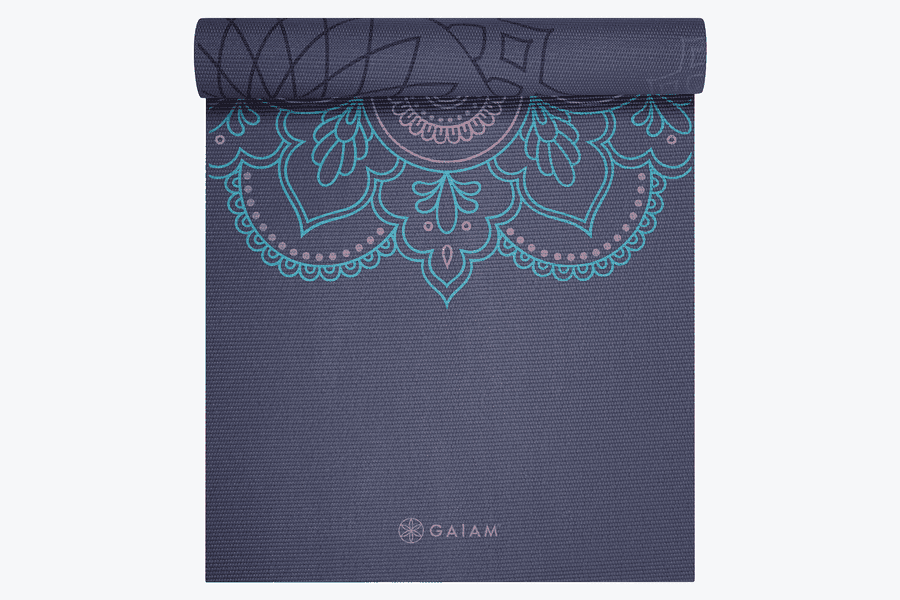
- You want a printed design, and a second one on the back
- Your practice is gentle, unheated, and occasional
- You want the lighter mat to carry at 3.3 pounds against 4.8
Side by side
Price
The Gaiam Reversible lists for about $60 less.
$99.95
List price · check price at Amazon
$39.98
List price · check price at Amazon
Thickness
The Gaiam Reversible is 25% thicker.
4.8 mm0.19″
6 mm0.24″
Weight
The Gaiam Reversible is 1.5 lbs lighter.
4.8 lbs2.2 kg
3.3 lbs1.5 kg
Size
Same length; same width.
Same on both
- Identical 68″ × 24″ footprint
- Grippy enough dry from the first session, with no break-in
- Wipe-clean care; neither belongs in a washing machine
- Both sold in a spread of colors rather than plain black
Full specs
Dimensions
Materials & build
Buying
Two mats that share a size and nothing else
Both of these are 68″ × 24″, both come in colors rather than plain black, and both sit on the same rack at a sporting goods store. After that they stop having anything in common.
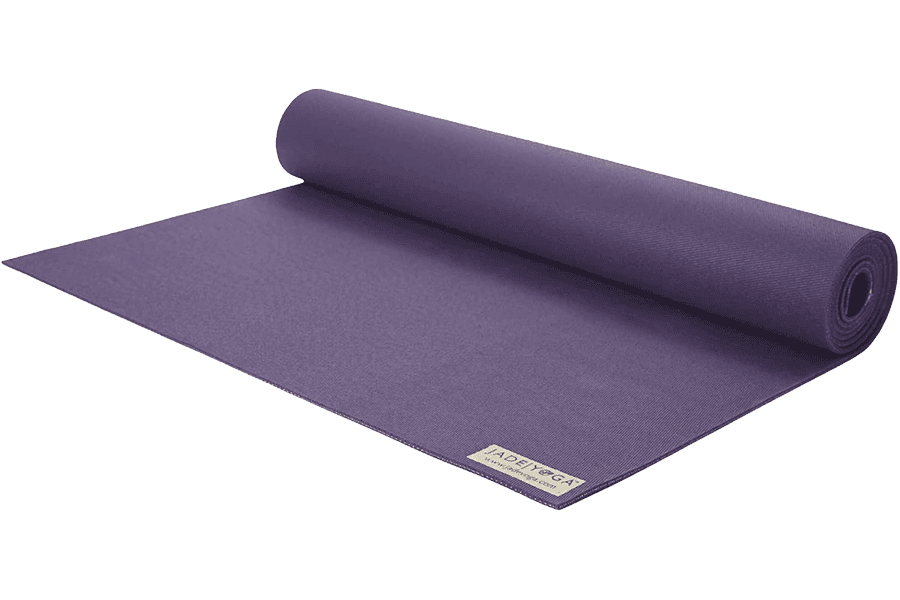
The Jade Harmony is 4.8 mm of natural rubber made in the USA, and Jade has been building it more or less unchanged for two decades because the surface works. The Gaiam Premium Reversible is 6 mm of soft PVC foam with a printed design on each face, at $39.98, which is roughly what a month of studio classes costs.
The decision is not really Jade against Gaiam. It is whether you practice often enough that a mediocre surface would get in your way.
Grip is what you are actually paying for
Jade’s rubber is open-cell, which means it takes on a little moisture instead of letting sweat bead on the surface. In practice that means it feels tacky from the first minute, with no break-in, and it keeps holding as a room warms up and your palms get damp. That single property is why the mat costs what it does and why teachers keep recommending it.
The Gaiam’s sticky PVC finish grips fine when everything is dry, and it gives up quickly when it isn’t. OutdoorGearLab rated its grip 4 out of 10 and put slippery when wet in its cons, alongside a note that the printed surface can transfer color onto clothing. Its overall score was 54 out of 100, near the bottom of a 19 mat test.
If your practice is gentle stretching in a cool room, you may never reach the point where this matters. If you do a vinyasa class and your hands creep forward in down dog, you will notice on the first day and every day after.
The thicker mat is not the more comfortable one
On paper the Gaiam wins here: 6 mm against 4.8. In use it is more complicated. Soft foam compresses under exactly the points you load most, so the depth you feel when you press it with a thumb in the shop is not the depth under your kneecap in a lunge. GearLab listed poor cushion among the Gaiam’s cons despite its 6 mm spec.
Jade’s rubber is denser, so less of it does more work. The Harmony reads firmer under a knee and considerably steadier in a standing balance, where the Gaiam gives underfoot and makes you work harder to hold still.
If joint padding is genuinely your priority, neither mat is the answer and you want something thicker and denser than both. For everyone else, the Harmony’s firmness is a feature rather than a compromise.
How long each one lasts
The warranties point the wrong way. Gaiam advertises a lifetime guarantee on a $39.98 mat; Jade writes one year and excludes sun damage and harsh cleaners. Neither policy is likely to help you, because these mats do not fail with a defect you can claim on. They wear out, and the Gaiam wears out first.
The foam flattens where your hands and heels land, and once it does the mat is thinner in the two places you need it most. Owners typically get a year or two of regular use before that becomes obvious. A Harmony practiced on several times a week will run for several years before the surface loses its tack, provided you keep it out of hot cars and direct sunlight, both of which degrade rubber.
Weight, carrying, and sizes
The Gaiam is 3.3 pounds and the Harmony is 4.8, a gap of a pound and a half. That is not nothing on a long walk to a studio, though neither mat is heavy by the standards of the category, where 7 and 8 pound mats exist.
Sizes are where Jade pulls ahead. The Harmony also comes in a 74″ Long and an 80″ × 28″ Harmony XW, which matters above about five foot eight or if you like room to move sideways. The Gaiam Premium Reversible is sold in one size only.
Rubber, PVC, and the allergy question
The Harmony is tapped tree rubber with no PVC in it, made in the USA, and Jade plants a tree for every mat it sells, past two million by its own count. That is a program rather than a certification, but it is a real one and it is one of the reasons people choose the brand.
The catch is allergies. Jade describes its mats as 99% latex free rather than latex free, so the Harmony is not safe if you have a genuine latex allergy. The Gaiam is latex-free PVC and is the safe option, which for some buyers settles this comparison before grip enters into it.
New rubber also smells. A fresh Harmony can be strong for a week or two before it fades with use and air. The Gaiam has a lighter plastic smell that clears faster.
Prints, colors, and the reversible trick
This is the Gaiam’s home ground. It comes in around ten printed designs at last count, and both faces are printed, so one mat gives you two looks. Nothing Jade makes is as decorative; the Harmony comes in solid colors, 12 colorways at last count, and looks like a piece of equipment rather than a furnishing.
Worth knowing before you buy on looks: because both Gaiam faces are finished the same way, the reversibility is cosmetic rather than functional. You are not getting a grippy side and a cushioned side, just two patterns.
What the $59.97 actually buys
Put plainly: better traction, a denser platform, several extra years of life, USA manufacturing, and access to longer and wider versions. What it does not buy is more cushion, a lighter carry, or a nicer looking mat.
Both change price often, so check the current Harmony price at Amazon and the current Gaiam price at Amazon before deciding. Gaiam discounts heavily and often, and the Harmony occasionally dips in less popular colors.
If the Gaiam appeals but the grip worries you, the plain Gaiam Premium 6mm scored better in the same test and costs less. And if you want to see how the Harmony fares against that one directly, we compared the Harmony and the Premium 6mm too.
Bottom line
Buy the Gaiam Premium Reversible if the mat is for occasional stretching, a guest room, a kid, or a print you genuinely like, and the $59.97 is better spent elsewhere. It is a usable mat and nobody should feel bad about owning one.
Buy the Jade Harmony if you practice weekly or more, especially if you flow. The grip is the upgrade people notice first and keep noticing, and at $99.95 it is the cheapest way into the category of mats that do not slide under you. Unless you have a latex allergy, in which case the Gaiam wins by default and you should look at PVC mats built to last, like the Manduka PROlite.
Jade Harmony
List price $99.95
Gaiam Premium Reversible 6mm
List price $39.98
Frequently Asked Questions
- Is the Jade Harmony worth three times the price?
- If you practice weekly or more, yes, and the reason is traction rather than status. Jade's open-cell rubber takes on light sweat instead of letting it bead, so your hands stay put as a class warms up. OutdoorGearLab rated the Gaiam Premium Reversible 4 out of 10 for grip and 54 out of 100 overall, near the bottom of a 19 mat test. If you stretch twice a month in a cool room, the Gaiam is enough mat and the $59.97 is real money.
- The Gaiam is 6 mm and the Jade is 4.8 mm. Isn't the Gaiam more comfortable?
- Thicker, yes; more supportive, no. The Gaiam's extra depth is soft PVC foam that compresses under a knee or a hand, which is why OutdoorGearLab lists poor cushion among its cons despite the 6 mm claim. Jade's rubber is denser, so less of it does more work. On tile the Gaiam is kinder under kneeling poses; in a standing balance the Harmony is the steadier platform.
- Did OutdoorGearLab test this exact Jade Harmony?
- No, and it matters. GearLab's award for dry grip went to the Jade Harmony 2.0, which is a different mat: made in Spain, listed at $110, carrying certifications the original does not. The mat on this page is the original USA-made Harmony at $99.95. The two share a material and a name, so the 2.0's results are a reasonable indication rather than a measurement of this mat. We would rather say that plainly than borrow the score.
- Which one holds up longer?
- The Harmony, by a wide margin, though neither brand's paperwork tells you that. Jade writes a one-year warranty that excludes sun damage and harsh cleaners. Gaiam advertises a lifetime guarantee on a $39.98 mat, which sounds better and is worth less, because the failure mode here is the foam flattening under your hands and heels rather than a defect. Expect a few years of regular practice from the Jade and considerably less from the Gaiam.
- Does the Jade Harmony smell?
- New ones smell of rubber, sometimes strongly, and it fades over a few weeks of use and airing out. It is the same smell you get from any natural rubber mat and it is not a defect. The Gaiam has a lighter plastic smell that also fades. If a rubber smell is a dealbreaker in a small apartment, that is a genuine reason to look elsewhere.
- Can I use either for hot yoga?
- The Harmony, with a towel, and the Gaiam not really. Jade's rubber handles light sweat well and heavy sweat less well, which is why heavy drippers put a towel on top. The Gaiam's sticky PVC surface turns slick as soon as moisture pools on it, and GearLab called it slippery when wet. Neither is a hot yoga specialist; if that is your main practice, look at absorbent polyurethane mats instead.
- Is either safe with a latex allergy?
- The Gaiam is; it is latex-free PVC. The Harmony is tapped tree rubber, and Jade states its mats are 99% latex free rather than latex free, so it is not safe with a genuine allergy. That single line settles this comparison for some buyers regardless of grip.
Related comparisons
- JadeYoga Harmony 68" vs Suga SugaMat
- JadeYoga Harmony 68" vs Manduka eKO Lite
- Manduka PROlite vs JadeYoga Harmony 68"
- JadeYoga Harmony 68" vs Manduka GRP Adapt 1.0
- Gaiam Premium Reversible 6mm vs Gruper TPE 6mm
- JadeYoga Harmony 68" vs Manduka eKO Lite Long
- Amazon Basics 1/4 Inch Thick TPE vs Gaiam Premium Reversible 6mm
- Gaiam Premium Reversible 6mm vs YogaAccessories Extra Thick Deluxe 1/4"
- JadeYoga Harmony 68" vs Lululemon The Mat 5mm