Gaiam Dry-Grip vs Alo Warrior: Which One Should You Buy?
One of these costs $69.98 at a big-box store and the other $148 from a boutique fashion brand, and OutdoorGearLab's 19-mat test scored them exactly the same: 62 of 100. That coincidence makes this an unusually clarifying comparison. The Gaiam Performance Dry-Grip and the Alo Warrior are both smooth-topped mats sold on the promise of composure when things get sweaty, and both deliver only part of it.
As an Amazon Associate, we earn from qualifying purchases made through links on this page. How this works
The quick answer
The tie in overall score hides two different shapes. The Warrior is the better mat to touch: a true polyurethane-over-rubber build, plush underfoot, 74.4 by 26.4 inches against the Gaiam's standard 68 by 24. The Dry-Grip is the better mat on paper: $78 cheaper, half the weight, latex-free, with a lifetime guarantee against Alo's 30 days. On the promise both make, GearLab's wet-grip scores were 3.5 for the Gaiam and 4.5 for the Alo, mediocre either way.
If you want this style of mat for a mostly dry practice, the Gaiam covers it and keeps $78 in your pocket. If you want the premium feel, the size, and the looks, the Warrior is the nicer object in every tactile way. If actual sweat performance is the point, skip both; the IUGA at about $67 and Manduka's GRP Adapt 2.0 both tested far better.
Get the Gaiam Dry-Grip if...
- You'd rather keep $78 for a mat that scored the same overall
- A latex allergy rules out rubber-based mats; the Gaiam is latex-free PVC
- You want the lighter carry, 4.25 pounds against about 8
- A lifetime guarantee beats a 30 day window for your peace of mind
Get the Alo Warrior if...
- You want the bigger cut: 74.4″ × 26.4″ fits taller bodies and wider poses
- Plush cushioning for knees and floor work is worth paying for
- You prefer genuine polyurethane over rubber to coated PVC
- The look and feel of the mat in your space genuinely matters to you
Side by side
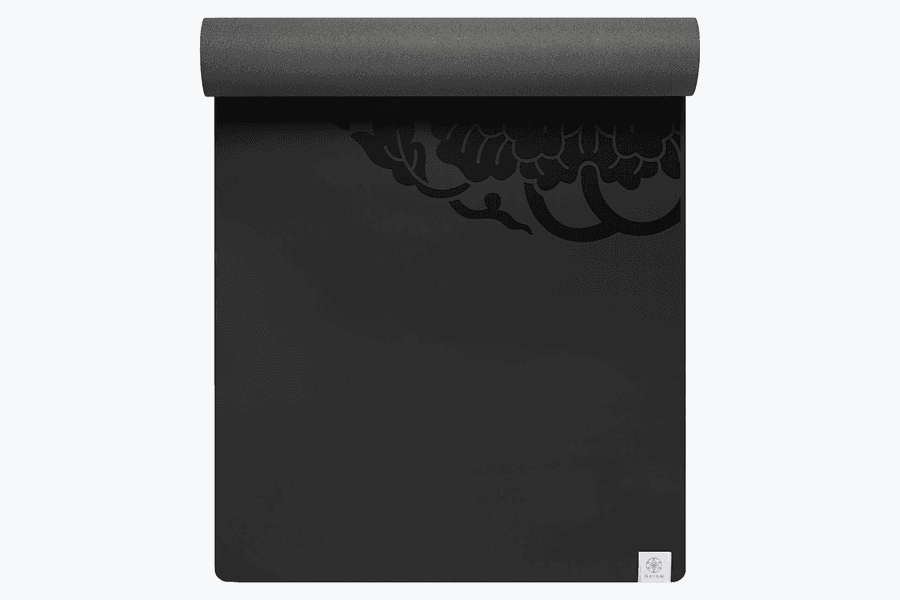
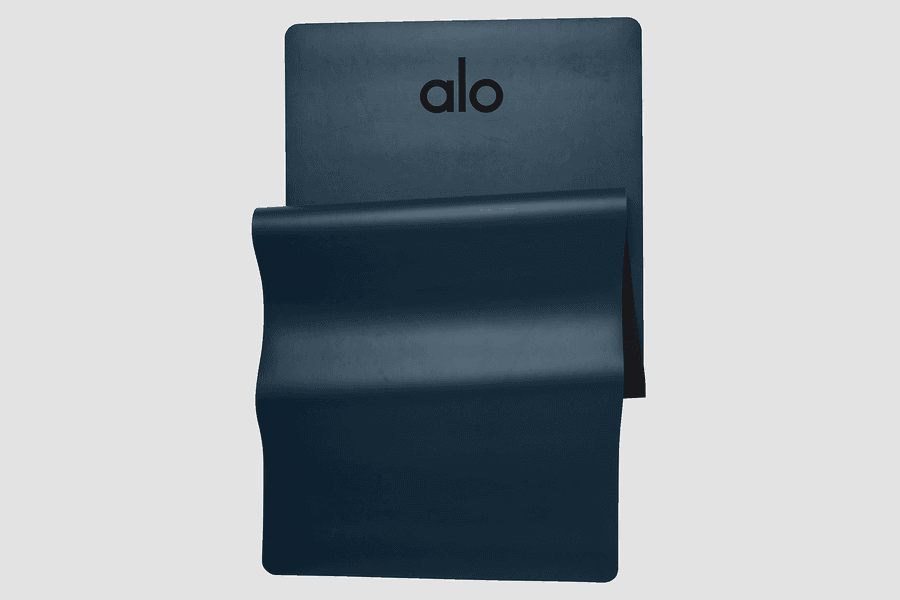
Price
The Dry-Grip lists for about $78 less.
$69.98
List price · check price at Amazon
$148
List price · check price at aloyoga.com
Thickness
Identical thickness.
5 mm0.2″
5 mm0.2″
Weight
The Dry-Grip is 3.8 lbs lighter.
4.25 lbs1.9 kg
8 lbs3.6 kg
Size
The Warrior is 6.4″ longer; the Warrior is 2.4″ wider.
Same on both
- Smooth tops that hold confidently with dry palms
- Identical 62 of 100 overall scores in GearLab's 19-mat test
- Below-average wet-grip results in that same test
- 5 mm thick on both
Full specs
Dimensions
Materials & build
Buying
A $70 mat and a $148 mat that tested identically
OutdoorGearLab’s current 19-mat test scored the Gaiam Performance Dry-Grip and the Alo Warrior exactly the same, 62 of 100, which is the most clarifying fact we can put on this page. One costs $69.98 at big-box stores; the other costs $148 from a boutique fashion label. Both are smooth-topped mats sold on the promise of composure when your palms get damp.
The tie doesn’t mean they are the same mat. They earn their 62s in completely different places, and once you see where, choosing between them gets easy. It also raises the fair question of whether you should buy either, which we answer at the end.
The shared weakness: neither delivers when wet
Start with the promise both mats make. The Dry-Grip’s moisture-wicking topcoat handles light dampness at best; GearLab scored its wet grip 3.5 of 10, found traction fell apart in sweaty sessions, and steers the mat toward stretch practice and slower flows. The Warrior did marginally better at 4.5, with a split record: T3’s reviewer praised its hold through sweaty flows and HIIT, while the standardized wet-grip test rated it below the lineup average.
With dry palms, both surfaces are secure and pleasant, and for unheated practice either will serve for years. But if you are shopping this pair specifically because you sweat, the test data says look elsewhere: the IUGA at about $67 and Manduka’s GRP Adapt 2.0 both handled wet conditions far better, and our Dry-Grip vs IUGA page covers the budget version of that upgrade.
Feel: where the Warrior earns its price
Touch both and the $78 gap starts making sense. The Warrior is a true polyurethane-over-natural-rubber build, the construction premium mats use, and it is plush in a way the Gaiam is not: a soft, spongy give that flatters kneeling poses, floor work, and long holds, under a smooth matte surface with a faint leather feel. It reads as an expensive object because it is one.
The Dry-Grip is PVC under a coating, and to its credit it is one of the more comfortable mats in Gaiam’s range, with GearLab rating its cushion highly for exactly the slow, floor-based practice it grips well enough to serve. It is a good version of an ordinary construction; the Warrior is a mid-tier version of a premium one.
Size and weight: a real gap in both directions
The Warrior is bigger everywhere: 74.4″ × 26.4″ against the Gaiam’s standard 68″ × 24″. The extra length matters above about five foot eight, and the width keeps hands on the mat in wide-legged poses. Gaiam’s answer for bigger bodies is the separate Dry-Grip Long & Wide at 78″ × 26″, which is the cheapest genuinely large mat in this conversation.
Weight runs the other way. The Gaiam is 4.25 pounds, an easy carry to any class. The Warrior is about 8 by Alo’s spec, a mat that stays home. If your mat commutes daily, that difference alone could settle this page.
Materials and the latex allergy answer
The Gaiam is latex-free PVC, marketed as free of six common phthalates, which makes it the only safe pick here for anyone with a latex allergy. The Warrior sits on natural rubber, and rubber can carry trace latex proteins. For affected buyers that single fact ends the comparison, whatever the other sections say.
For everyone else the materials trade the other way: real polyurethane and rubber age more gracefully as a practice surface than a coating over PVC, and GearLab flagged the Dry-Grip’s coating for limited long-term durability along with dye that can transfer onto clothing when the mat is new.
Warranties run backwards from the prices
Gaiam covers its $69.98 mat for life against manufacturing defects. Alo backs its $148 mat for about 30 days. That inversion is worth a raised eyebrow but not much more, because lifetime guarantees cover defects rather than the gradual wear that actually retires mats, and both of these wear their smooth tops first.
Plan on a few good years from either mat under regular practice, more under occasional use, and treat the paper as a tiebreaker rather than a promise.
Price and where to buy
The Gaiam sells everywhere its brand does: check the current price of the Dry-Grip at Amazon, and big-box stores stock it if you want to see it first. The Warrior sells through Alo’s site and Alo stores; Amazon listings for it are third-party resellers without Alo behind them.
Is the Warrior worth $78 more? For measured performance, no, the test says you would pay $78 to land in the same place. For plushness, size, materials, and looks, it can be, if those are what you are actually buying and an unheated practice is what you run.
Bottom line
Get the Dry-Grip if you want this style of mat at the sensible price: same overall test score, half the weight, latex-safe, lifetime paper, $78 kept. Its job is dry, slower practice, and it does that job well.
Get the Warrior if the premium feel, the oversized cut, and the brand matter to you and your practice stays mostly unheated. And if you were drawn to either mat because you sweat, buy neither; the GRP Adapt 2.0 vs Warrior page shows what a purpose-built hot yoga surface looks like against the Alo, and the IUGA does the same work at Gaiam money.
Alo Warrior
List price $148
Frequently Asked Questions
- Is either mat good for hot yoga?
- Not really, and that's the surprise given how both are marketed. GearLab scored the Dry-Grip's wet grip 3.5 of 10 and found traction fell apart in sweaty sessions; the Warrior did marginally better at 4.5, with T3 reporting good grip through sweaty flows but the standardized test disagreeing. For regularly heated practice, the mats that actually tested well are Manduka's GRP Adapt 2.0, which holds the hot yoga award, and the budget IUGA.
- How can a $70 mat tie a $148 mat in testing?
- They earn the same total differently. The Gaiam picks up points on comfort, price, and its lifetime guarantee, and loses them on wet grip and coating durability. The Warrior earns them on materials, size, and plush feel, and loses them on weight, a 30 day warranty, and the same wet-grip weakness. The overall number says they're equally good mats; it doesn't say they're the same mat.
- Which one works with a latex allergy?
- Only the Gaiam. It's latex-free PVC, marketed as free of six common phthalates as well. The Warrior sits on a natural rubber base, and rubber can carry trace latex proteins, so it's out for a genuine allergy regardless of how it grips. This is one of the two situations where the cheaper mat is simply the correct one.
- Is the Warrior worth the extra $78?
- For measured performance, no; the test says you'd be paying $78 for the same overall result. For everything the test doesn't measure, maybe: the Warrior is bigger in both directions, noticeably plusher under knees, and made of the materials premium mats actually use rather than a coating over PVC. Buyers who love their Warriors love them for how they feel and look, not for lab numbers.
- What's the weight difference in practice?
- Large. The Gaiam is 4.25 pounds, an easy shoulder carry to a class across town. The Warrior is about 8 pounds by Alo's spec, which lands it firmly in stays-at-home territory; that heft does help it lie flat and stay put, but you stop wanting to commute with it quickly. If the mat travels daily, the weight alone might decide this.
- What about the warranties?
- They run backwards from the prices. Gaiam covers the $70 mat for life against manufacturing defects; Alo backs the $148 mat for about 30 days. As always, lifetime guarantees cover defects rather than the gradual wear that actually retires mats, and both of these wear their smooth tops as the first failure point. Treat the paper as a tiebreaker, not a lifespan promise.
Related comparisons
- Manduka X vs Gaiam Performance Dry-Grip 5mm
- JadeYoga Harmony XW vs Alo Warrior
- Manduka PROlite Long & Wide vs Alo Warrior
- JadeYoga Level One vs Gaiam Performance Dry-Grip 5mm
- Gaiam Performance Dry-Grip 5mm vs IUGA Eco Friendly Non Slip PU
- Manduka PRO vs Alo Warrior
- Manduka Begin vs Gaiam Performance Dry-Grip 5mm
- Manduka GRP Adapt 2.0 Long vs Alo Warrior
- Manduka eKO Long vs Alo Warrior