Manduka PROlite Long & Wide vs Alo Warrior: Which One Should You Buy?
These premium mats cost almost the same and weigh within a pound of each other. The PROlite Long & Wide gives you a larger 79 by 30 inch practice area and a lifetime guarantee. The Alo Warrior offers immediate polyurethane grip, softer support and a more studio-friendly 74.4 by 26.4 inch footprint.
As an Amazon Associate, we earn from qualifying purchases made through links on this page. How this works
The quick answer
The PROlite Long & Wide offers about 21 percent more floor area, firm PVC support and much clearer long-term coverage for $144. It is also latex-free and easy to wipe clean. Its surface needs several weeks of use before the grip improves and remains a poor match for uncovered hot yoga.
Choose the Manduka for space and durability. Choose the $148 Warrior for day-one grip, a softer feel and a roll that fits studios more easily. Alo's polyurethane top needs gentler care and has only a 30-day return window behind it.
Get the PROlite Long & Wide if...
- You need a 79 by 30 inch mat
- You prefer firm support for balance
- You need latex-free materials
- You want long-term warranty coverage
Get the Alo Warrior if...
- You want strong grip from the first practice
- You prefer a softer feel under knees
- You want a large mat that fits studio rows more easily
- You want more color choices
Side by side
Price
The Long & Wide lists for $4 less.
$144
List price · check price at Amazon
$148
List price · check price at aloyoga.com
Thickness
The Warrior is 6% thicker.
4.7 mm0.19″
5 mm0.2″
Weight
The Long & Wide is 1 lbs lighter.
7 lbs3.2 kg
8 lbs3.6 kg
Size
The Long & Wide is 4.6″ longer; the Long & Wide is 3.6″ wider.
Same on both
- Premium mats priced within four dollars
- Between 4.7 and 5 mm thick
- Seven to eight pounds
- Larger than a standard 68 by 24 inch mat
Full specs
Dimensions
Materials & build
Two premium mats separated by four dollars
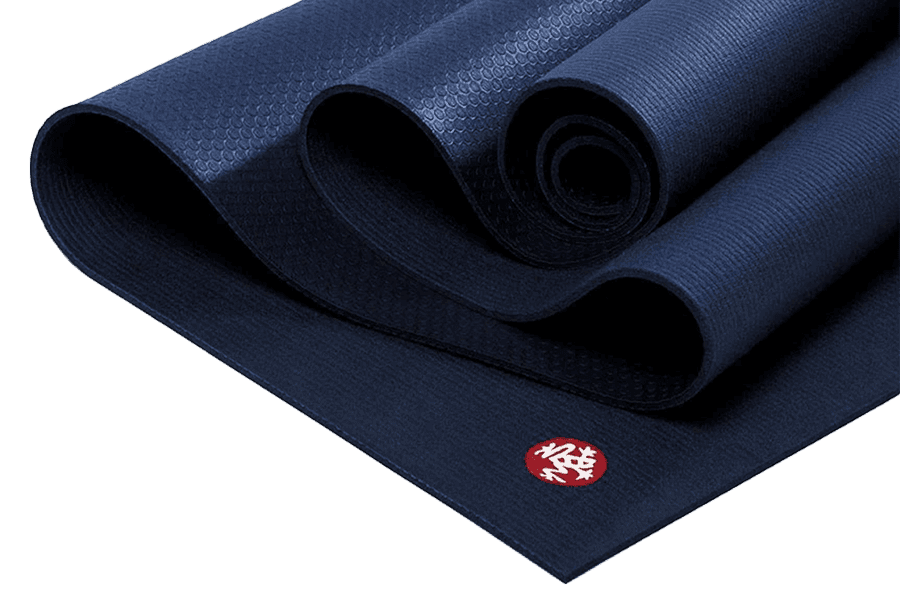
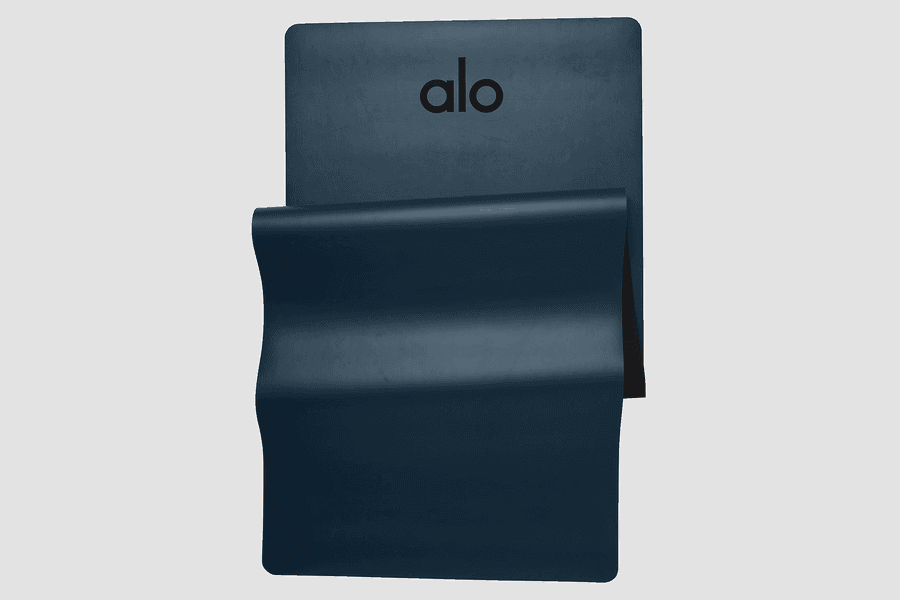
The PROlite Long & Wide and Alo Warrior sit almost level on price and weight. Manduka asks $144 for a 79″ × 30″ PVC mat weighing 7 pounds. Alo asks $148 for a 74.4″ × 26.4″ polyurethane-topped rubber mat weighing about 8 pounds.
The similarity ends when hands meet the surface. Manduka offers a firm, sealed mat that takes time to break in and is designed for a long working life. Alo offers immediate grip, more give under the joints and a finish that needs gentler ownership. Size and surface, rather than budget, decide this comparison.
Manduka gives tall and broad bodies more room
The PROlite Long & Wide adds 4.6 inches of length and 3.6 inches of width over the Warrior. That works out to about 21 percent more practice area. The difference shows in savasana, wide-legged folds and transitions where hands otherwise land beyond the side edge.
Alo’s 74.4″ × 26.4″ footprint is already larger than a standard mat and fits normal studio rows more easily. The 30-inch Manduka can feel intrusive in a busy room and may not fit a standard storage rack. At home the extra area is useful; in class, the Warrior’s more moderate size can be the better compromise.
The Warrior works immediately; the PROlite needs practice
Alo’s matte polyurethane surface feels secure from the first session and absorbs moisture rather than leaving every drop on top. The brand’s current owner reviews repeatedly praise its grip, though heavy sweaters still report using a towel in hot classes. There is no break-in period to plan around.
The PROlite’s closed-cell PVC can feel slick when new. Manduka’s current advice is regular use, and the dry grip improves over the following weeks. Sweat continues to sit on the sealed face after break-in, so heated practice calls for a towel. The Warrior is the easier recommendation when grip is the reason for replacing a mat.
Alo feels softer despite nearly equal thickness
Only 0.3 mm separates them on paper. The Warrior’s rubber base and polyurethane face compress more readily, creating a softer landing for knees and forearms. The PROlite’s dense PVC gives less and keeps the foot closer to a firm floor.
That makes Alo more comfortable for slow floor work and Manduka steadier for balance. Neither is a plush rehabilitation mat, and sensitive knees may still want a blanket on tile. Buyers should choose the feel they prefer rather than treating five millimeters as meaningfully thicker than 4.7.
One pound matters less than the rolled width
The PROlite weighs 7 pounds and the Warrior about 8. Both are reasonable for a car and tiring on a long walk. The Manduka’s 30-inch roll is the more awkward object in doorways, on transit and beside a crowded studio bench.
The Alo is shorter across the shoulder but still heavy enough to discourage a daily commute. If portability matters more than room, the standard PROlite versus Warrior comparison is more relevant: the regular PROlite drops to 4.6 pounds and a 24-inch roll.
Manduka tolerates more casual ownership
The PROlite keeps moisture at the surface and wipes clean quickly. Its dark PVC resists visible staining, and the material does not require protection from latex oxidation. Roll it top side out and avoid untested cleaners, but day-to-day care is uncomplicated.
Alo recommends wiping the Warrior with a microfiber cloth and applying diluted oil-free soap or vinegar to the cloth rather than directly to the mat. Lotions, jewelry and sharp cubby edges can mark the polyurethane top. It should dry completely before storage, with the top facing outward when rolled.
The written coverage strongly favors Manduka
Dense PVC is the durability specialist in this category. Manduka’s lifetime guarantee describes about ten years of regular use and one replacement, with proof of purchase from an authorized seller. The surface generally improves rather than wears smooth during the first years.
Alo’s coated top can accumulate scuffs and stains sooner, and the brand publishes a 30-day return policy rather than a comparable long-term mat warranty. Owner reviews include plenty of durable examples, but the paperwork does not promise that outcome. A buyer who expects daily use for many years has a clearer case for the PROlite.
Materials matter more than the four-dollar gap
The PROlite is German-made PVC, certified to OEKO-TEX Standard 100 and latex-free. Check its current Amazon price, making sure the seller is authorized if warranty coverage matters. It comes in black or midnight at last count.
The Warrior uses a polyurethane-leather top over rubber, is PVC-free and currently comes in five colors. Buy it from Alo’s website or a store rather than a marketplace reseller. Natural rubber can contain latex proteins, so a true latex allergy makes the Manduka the appropriate choice.
Bottom line
Get the PROlite Long & Wide if the larger footprint solves a body-size or movement problem and you want defined coverage for long ownership. It is firm, simple to clean and latex-free, with a slick opening period that requires patience.
Get the Warrior if you want immediate traction and a softer surface in a size that still feels generous without reaching 30 inches wide. It costs almost the same, looks more refined on day one and asks for more careful cleaning over its life.
Alo Warrior
List price $148
Frequently Asked Questions
- Which mat is bigger?
- The PROlite Long & Wide. It measures 79 by 30 inches against 74.4 by 26.4 for the Warrior, giving the Manduka about 21 percent more total area. The Alo is still larger than a conventional yoga mat and easier to fit into a busy studio.
- Which mat has better grip?
- The Warrior has better grip when new and handles damp hands more effectively through its absorbent polyurethane top. The PROlite improves after several weeks of use, but its closed-cell surface leaves sweat on top and needs a towel in heated practice.
- Which mat is more comfortable for knees?
- The Warrior feels softer even though it is only 0.3mm thicker. Its rubber base compresses more readily than Manduka's dense PVC. The PROlite feels firmer and gives a more stable base for standing balance.
- Can either mat be carried to class?
- Both can travel by car. The seven-pound Manduka is one pound lighter, but its 30-inch roll is more awkward than the 26.4-inch Alo on transit or in a studio rack. Neither is ideal for a long daily walking commute.
- Which mat lasts longer?
- The PROlite has the stronger long-term case. Dense PVC wears slowly, and Manduka defines its lifetime guarantee as about ten years of regular use with one replacement. Alo publishes a 30-day return window rather than a comparable mat warranty.
- Which mat is safer for a latex allergy?
- The PROlite. It is latex-free PVC and carries OEKO-TEX Standard 100 certification. The Warrior uses a rubber base, so someone with a genuine latex allergy should avoid it.
Related comparisons
- Manduka PROlite Long & Wide vs JadeYoga Harmony XW
- JadeYoga Harmony XW vs Alo Warrior
- Manduka PRO vs Alo Warrior
- Alo Warrior vs Manduka PRO Terra 6mm
- Manduka GRP Adapt 2.0 Long vs Alo Warrior
- Manduka PROlite Long & Wide vs Lululemon The (Big) Mat 5mm
- Manduka PROlite Long & Wide vs Hugger Mugger Para Rubber 5mm
- Manduka PROlite Long & Wide vs Yoga Design Lab Infinity 5mm
- Manduka eKO Long vs Alo Warrior