Amazon Basics 1 Inch vs Gaiam Premium 6mm: Which One Should You Buy?
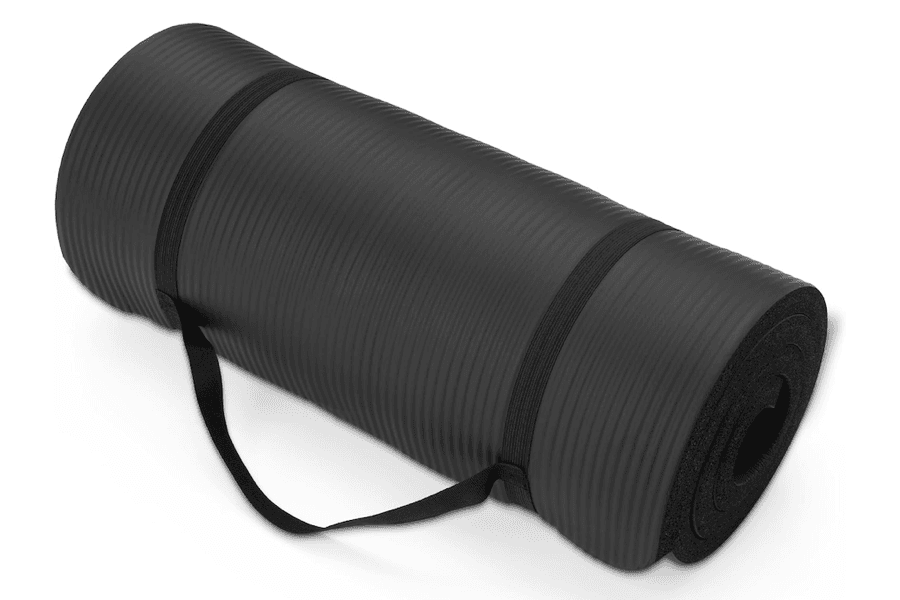
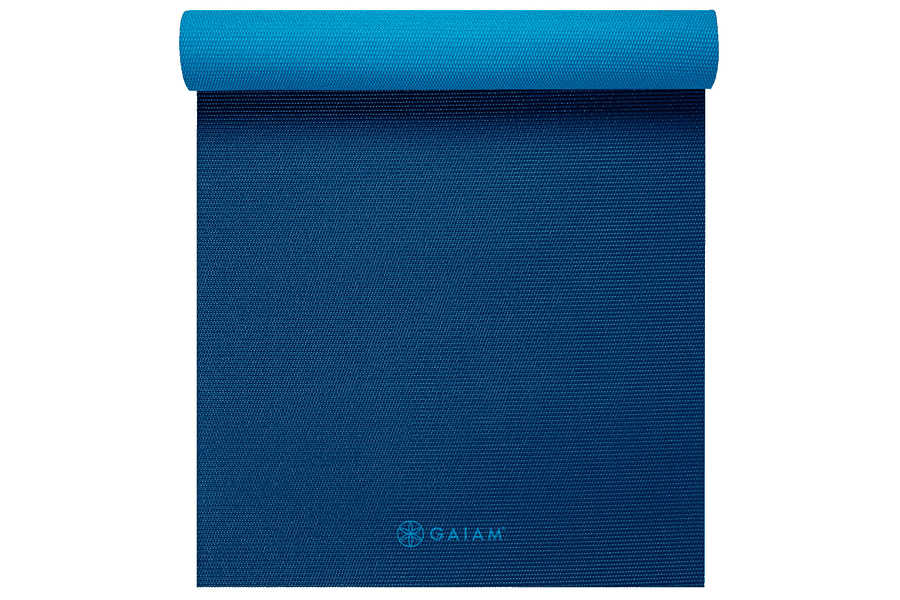
Two mats under $40 that answer the question differently. The Amazon Basics 1 Inch Extra Thick is exactly what it says: 25.4 mm of soft NBR foam. The Gaiam Premium 6mm is 6 mm of sticky PVC and holds OutdoorGearLab's Best Buy award as Best First Yoga Mat. An inch sounds like an obvious win at $8.42 more, and for yoga specifically it usually is not.
As an Amazon Associate, we earn from qualifying purchases made through links on this page. How this works
The quick answer
A full inch of soft foam is wonderful under a knee, a hip, or a spine, and unhelpful under a standing foot. You sink in, your ankle keeps correcting, and poses that need a stable base get harder. That is not a defect; it is what an exercise mat is designed to do, and the Amazon Basics is an exercise mat that yoga shoppers keep finding.
The Gaiam is the actual yoga mat of the two, and GearLab liked it enough to give it an award, with cushion compresses and slippery wet grip among the honest cons. Buy the Gaiam for yoga. Buy the Amazon Basics if your floor is hard and your work is mostly on your knees, back, or elbows.
Get the Amazon Basics 1 Inch if...
- Knees, hips, or spine on a hard floor is the problem
- Your work is mostly floor-based, pilates, or physio
- You want 74″ of length rather than 68″
- You have a latex allergy and want maximum padding
Get the Gaiam Premium 6mm if...
- You are doing actual yoga, including standing poses
- You want a stable base for balances
- You want the lighter mat at 3.3 pounds against 4.6
- You want a mat an independent test actually recommends
Side by side
Price
The Gaiam Premium lists for about $8 less.
$38.40
List price · check price at Amazon
$29.98
List price · check price at Amazon
Thickness
The Amazon Basics is 323% thicker.
25.4 mm1″
6 mm0.24″
Weight
The Gaiam Premium is 1.3 lbs lighter.
4.6 lbs2.1 kg
3.3 lbs1.5 kg
Size
The Amazon Basics is 6″ longer; same width.
Same on both
- Both are under $40
- Both are latex-free with no natural rubber in them
- Both grip acceptably dry and slide once your hands are damp
- Both are 24″ wide
- Wipe-clean care with no special products
Full specs
Dimensions
Materials & build
Buying
Two mats under $40 answering different questions
The Amazon Basics 1 Inch Extra Thick is exactly what the name says: 25.4 mm of soft NBR foam, at $38.4. The Gaiam Premium 6mm is 6 mm of sticky PVC at $29.98, and it holds OutdoorGearLab’s Best Buy award as Best First Yoga Mat.
Four times the thickness for $8.42 more looks like an easy call, and for yoga specifically it usually is not. Understanding why is the useful part of this page, because it applies to every thick foam mat sold with yoga in the title.
What a full inch of foam is actually good at
Kneeling on tile. Lying on a spine during core work. Hips on a hard floor during long seated holds. Physio exercises on a concrete basement floor. In all of those, an inch of soft foam is a genuine comfort and a 6 mm mat simply is not in the conversation.
That is what these mats are designed for, and they sell well because the need is real. The problem is that they are marketed as yoga mats and bought by people who then try to do warrior three on one.
And what it is bad at
Standing on one leg. Soft foam compresses unevenly under a foot, so your ankle corrects, overshoots a little, and corrects again. In a balance that is the difference between holding a pose and hopping out of it, and over a long standing sequence it is simply tiring.
Most people read this as their balance being worse than they thought. It is worth naming, because the fix is a firmer mat rather than more practice.
The Gaiam is soft foam too, and it is 6 mm rather than 25.4, so there is a quarter as much of it to sink into. GearLab still listed cushion compresses among its cons, which tells you the direction the material wants to go.
How good the Gaiam actually is
Better than $29.98 suggests. OutdoorGearLab gave it a Best Buy award as Best First Yoga Mat and praised it as budget-friendly, beginner-friendly, portable, with soft cushion and fun designs.
It also scored 62 out of 100 overall and 5 out of 10 for grip, with slippery wet grip, cushion compresses and moderate durability in the cons. Read together, that is a good entry mat you will outgrow rather than one that will let you down now, which is exactly what you want at this price.
Grip: the Gaiam, but do not get excited
Sticky PVC has some tack to it when dry, which textured foam does not really have at all; foam works through friction instead. GearLab rated the Gaiam 6 out of 10 dry and 4 wet.
Once you sweat, both give up, so a warm room or a fast flow will defeat either. Shoppers who care most about traction should skip this whole price bracket and look at rubber or an absorbent polyurethane surface.
Length to the Amazon Basics, weight to the Gaiam
The Amazon Basics is 74″ against the Gaiam’s 68″, six extra inches, which is unusual at this price and genuinely useful above about five foot eight. Both are 24″ wide.
The Gaiam is lighter at 3.3 pounds against 4.6, largely because there is four times as much material in the Amazon Basics. Neither is heavy, and the thick mat is the bulkier roll of the two.
Neither lasts long, and both say otherwise
Amazon Basics gives a one-year warranty. Gaiam advertises a lifetime guarantee. Neither covers what happens, which is compression and surface wear rather than a defect anyone will replace a mat for.
Soft NBR foam packs down under the points that carry weight, and its edges give up early if you drag the mat around. The Gaiam’s PVC thins under hands and heels instead, which is the moderate durability GearLab flagged. Budget for replacing either inside a couple of years of regular use.
Both are latex-free
Neither contains a scrap of natural rubber: the Amazon Basics is synthetic nitrile foam and the Gaiam is latex-free PVC. If an allergy is what steered you away from rubber mats, both of these are open to you.
That is worth knowing because most of the mats that solve the grip problem properly are built on natural rubber, and this whole price bracket is one of the few places where latex-free is the default rather than the exception.
The answer a lot of people land on
Put a thin grippy mat on top of the thick foam one. Traction where your hands are, padding underneath for your knees, and it costs less than most single mats that try to do both.
It is not elegant and it is what a lot of home practitioners actually do on concrete or tile. If that appeals, the Amazon Basics is the better base of these two, and the mat that goes on top wants to be rubber rather than more foam. The Jade Harmony is the usual pick for that job.
Bottom line
Buy the Gaiam Premium 6mm if you are doing yoga, including standing poses. It is the mat an independent test actually recommends for beginners, it is lighter, and it is $8.42 cheaper. You will outgrow it in a year or two and that is fine.
Buy the Amazon Basics 1 Inch if your floor is hard and your work is mostly on knees, back, or elbows, or if you are buying it as a base layer for something grippier. Just go in knowing that the inch which makes it comfortable is the same inch that makes balances harder, and check the current price at Amazon along with the Gaiam, since both discount often.
Amazon Basics 1 Inch Extra Thick
List price $38.40
Gaiam Premium 6mm
List price $29.98
Frequently Asked Questions
- Is a 1 inch mat too thick for yoga?
- For standing poses, yes, and it is worth understanding why rather than just being told. Soft foam compresses unevenly under a foot, so your ankle and knee keep making small corrections to stay upright. Tree pose and warrior three get noticeably harder. On your knees, back or elbows the same inch is a genuine comfort, which is why these mats sell well to people doing floor work and physio.
- Is the Gaiam actually good, or just cheap?
- Genuinely good for the money. OutdoorGearLab gave it a Best Buy award as Best First Yoga Mat and praised it as budget-friendly, beginner-friendly, with soft cushion and fun designs. It scored 62 out of 100 with 5 out of 10 for grip, and its cons were slippery wet grip, cushion compresses, and moderate durability. A good entry mat you will outgrow rather than one that will let you down now.
- Which one grips better?
- The Gaiam, though not by a lot and neither is impressive. Sticky PVC has some tack when dry, which textured foam does not really have at all, and both slide once a film of sweat forms. GearLab rated the Gaiam 6 out of 10 dry and 4 wet. If grip is your priority, both are the wrong purchase and a rubber or polyurethane mat is the right one.
- How much bigger is the Amazon Basics?
- 74″ against 68″, so six inches of length and the same 24″ width. That is a real advantage if you are tall, and it is unusual to find at this price. It is also 4.6 pounds against 3.3, partly because there is simply four times as much material in it.
- Which lasts longer?
- Neither for long. Soft NBR foam at this price compresses and tears at the edges, especially if you drag it, and the Gaiam's PVC foam thins where your hands and heels land, which GearLab flagged as moderate durability. Amazon Basics gives a one-year warranty and Gaiam advertises a lifetime guarantee, and neither treats ordinary compression as a defect. Budget for replacing whichever you choose.
- Are both safe with a latex allergy?
- Yes. The Amazon Basics is NBR foam, a synthetic nitrile with no natural rubber in it, and the Gaiam is latex-free PVC. If an allergy is what steered you away from rubber mats, both of these are open to you.
- Can I use the 1 inch mat under a yoga mat?
- That is arguably its best use, and it is what a lot of people end up doing. A thin grippy mat on top for traction, the thick foam underneath for padding on tile or concrete. It costs more than one mat, obviously, but it solves both problems properly instead of asking one mat to do two incompatible jobs.
Related comparisons
- Amazon Basics 1 Inch Extra Thick vs Retrospec Solana 1"
- Gaiam Premium 6mm vs Gruper TPE 6mm
- Amazon Basics 1/4 Inch Thick TPE vs Gaiam Premium 6mm
- Gaiam Premium 6mm vs YogaAccessories Extra Thick Deluxe 1/4"
- Manduka Begin vs Gaiam Premium 6mm
- Manduka X vs Gaiam Premium 6mm
- IUGA Eco Friendly Non Slip PU vs Gaiam Premium 6mm
- JadeYoga Level One vs Gaiam Premium 6mm
- Hugger Mugger Earth Elements 5mm vs Gaiam Premium 6mm