Alo Warrior vs IUGA PU Mat: Which One Should You Buy?
The IUGA is what the internet recommends every time someone asks for a cheaper Alo Warrior: the same polyurethane-over-rubber idea, the same 5 mm, the same promise of grip when you sweat, for $81 less. Usually the dupe loses on the thing that matters. This time independent testing puts the cheap mat ahead of the expensive one on grip, and the Alo's case rests on size, looks, and feel instead.
As an Amazon Associate, we earn from qualifying purchases made through links on this page. How this works
The quick answer
OutdoorGearLab tested both in the same 19-mat lineup and ranked the IUGA 8th at 75 of 100 with a Best Value Upgrade award, and the Alo Warrior 13th at 62. Grip is where they split: the IUGA scored 7 of 10, with testers finding hands and feet kept an excellent hold even on a surface saturated with water, while the Alo scored 5 and carries slippery when wet among its listed drawbacks, along with stains easily, heavy, and durability concerns. The IUGA also weighs 2.1 pounds against the Alo's 8.1 and ships with a carry strap.
Get the IUGA unless you specifically want what the Alo sells. The Warrior's real advantages are size and finish: 73.5 by 26 inches of oversized mat that testers enjoyed spreading out on, a matte suede-like surface, and the brand's look. Those are legitimate reasons to spend $148. Better grip isn't one of them.
Get the Alo Warrior if...
- You want the oversized 73.5 by 26 inch footprint
- You want the matte, suede-like surface and the Alo look
- Your practice is mostly dry, where its grip is fine
- The mat lives at home, so 8 pounds doesn't matter
Get the IUGA if...
- You sweat: it held grip on a soaked surface in testing
- You carry your mat, at 2.1 pounds with a strap included
- You want the better-rated mat of the two
- You'd rather keep about $81
Side by side
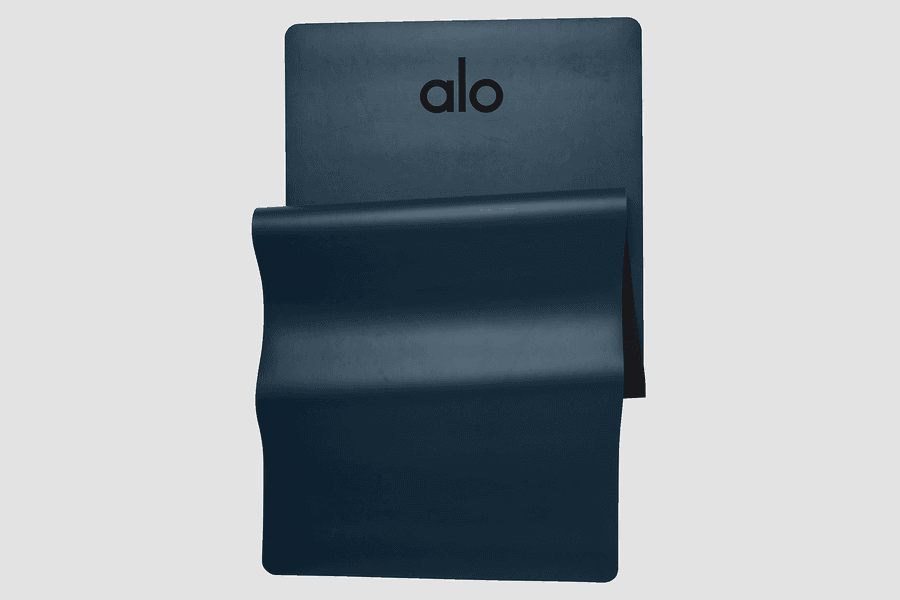
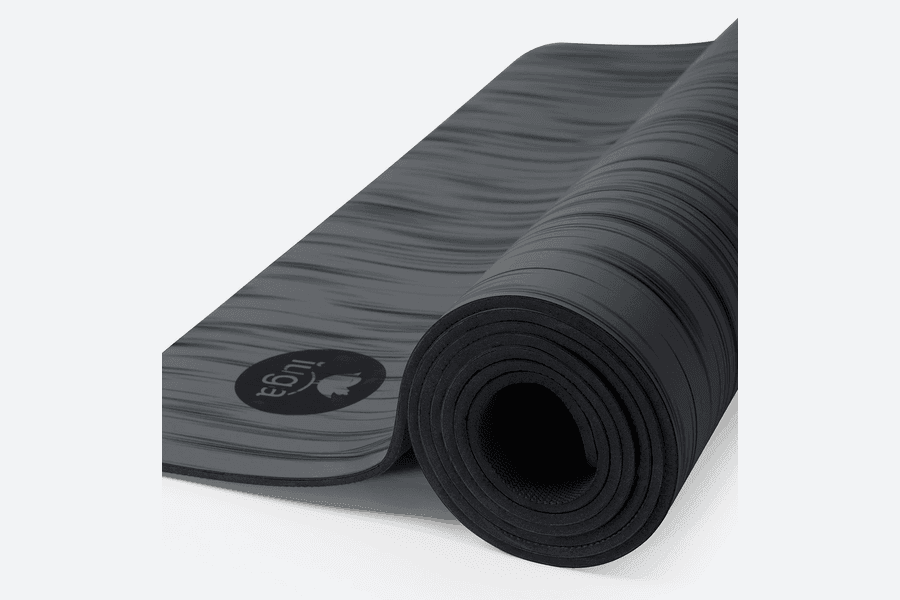
Price
The IUGA lists for about $81 less.
$148
List price · check price at aloyoga.com
$66.99
List price · check price at Amazon
Thickness
Identical thickness.
5 mm0.2″
5 mm0.2″
Weight
The IUGA is 5.9 lbs lighter.
8 lbs3.6 kg
2.1 lbs0.95 kg
Size
The Warrior is 2.4″ longer; the Warrior is 0.4″ wider.
Same on both
- Polyurethane top over a natural rubber base
- 5 mm thick, firm rather than plush
- Larger than the standard 68 by 24 inch cut
- Trace latex, so neither suits a latex allergy
- No warranty beyond a return window
Full specs
Dimensions
Materials & build
Buying
- Long84" × 26"
The dupe question, and an unusual answer
Ask for a cheaper Alo Warrior and the IUGA is what comes back. The construction is the same idea: an absorbent polyurethane top over a natural rubber base, 5 mm thick, sold on the promise of grip when your hands get wet. The Warrior costs $148 and the IUGA $66.99.
Usually the budget copy loses on the thing that matters and wins on price. Here the order is reversed. OutdoorGearLab tested both in the same 19-mat lineup and put the IUGA eighth at 75 of 100 with a Best Value Upgrade award, and the Warrior thirteenth at 62. What the Alo still sells is size, surface finish, and the way it looks in a studio, which are real things worth paying for. Grip is not one of them.
Grip: the cheaper mat wins the category both are sold on
The IUGA scored 7 of 10 for grip. Testers found excellent, zero slippage traction with dry hands and, more importantly, that hands and feet could still find an excellent hold on a surface saturated with water. That is the behavior an absorbent top is supposed to deliver, and it is why GearLab points sweaty practitioners at this mat specifically.
The Warrior scored 5, and slippery when wet sits on its list of drawbacks. Alo markets it with moisture-wicking and anti-odor language, and testers did like its floor traction, which is a different thing: the mat itself stays put when you jump or roll. What it does not do reliably is keep your palms in place once they are wet.
If your practice is dry, both mats are fine and this section barely matters. If you sweat, the $81 you saved also bought better performance.
Size: the Warrior’s best argument
GearLab measured the Warrior at 73.5″ × 26″, two inches wider and five inches longer than a standard mat, and its testers enjoyed spreading out on it. If you drift off the edge of ordinary mats or you are tall enough that 68 inches is a joke, this is a genuine reason to buy one.
The IUGA is no small mat either at 72″ × 26″, which is already bigger than the usual cut, and GearLab called out those wide, long dimensions as one of its advantages. The Warrior gives you roughly another inch and a half of length. Worth having if you need it, easy to live without if you don’t.
Weight: 8 pounds against 2
This is the largest practical difference between them. GearLab weighed the Warrior at 8.1 pounds, the heaviest mat in a 19-mat test, heavier even than the Manduka PRO. Heavy mats stay put and feel planted, and they also stop leaving the house.
The IUGA weighs 2.1 pounds and includes an adjustable shoulder strap; testers carried it to class and flew with it repeatedly without it becoming a burden. The one cost of that lightness is that it occasionally wrinkles slightly when you roll over your toes from up dog into down dog, where the Warrior never moves.
Feel and finish
The Warrior’s surface is its identity: a matte, suede-like top that feels expensive under the hands and photographs beautifully. GearLab’s testers found it comfortable for joints in most poses, though slightly thinner-feeling than average, and some wished the surface were a little more elastic so energy could move through the hands.
The IUGA is plainer and a bit firmer. GearLab found its cushion thick enough to protect knees on hard floors and firm enough to hold steady in single-leg balance poses, which is the right compromise for a mat this light. Nobody is buying an IUGA for the way it looks, and nobody has to.
Durability, stains, and coverage
Both wear at the top layer, which is the price of an absorbent surface. GearLab lists durability concerns and easy staining among the Warrior’s drawbacks. For the IUGA, its research points to flaking and wear marks appearing where hands and feet land after several years of hard practice, and it notes the mat degrades faster if you practice on abrasive surfaces like pavement.
Neither company stands behind the mat for long: 30 day returns from Alo, 45 days from IUGA, and no warranty after that on either. Both also need real drying time after a sweaty class, away from direct sun. Spending $148 does not buy a longer promise here, which is worth knowing before checkout.
Materials and the latex caution
Alo builds the Warrior PVC-free and markets it as 100% formaldehyde-free and non-toxic. The IUGA pairs polyurethane with a natural rubber base and describes itself as eco-friendly and SGS-certified, without a certification we can independently verify, so treat that as marketing rather than a credential.
Both sit on natural rubber, which means trace latex proteins, so neither suits a genuine latex allergy. If that is your situation, you want PVC or TPE instead, and neither of these mats belongs on your list regardless of how they score.
Price and where to buy
The IUGA sells through Amazon with the usual price drift by colorway. The Warrior sells through aloyoga.com and Alo stores, and it isn’t on Amazon, so what you see is what you pay.
Buying two IUGAs over the life of one Warrior still costs less than the Warrior, and independent testing rates the cheaper mat higher. That is the whole financial argument, and it only loses if the Warrior’s size or look is what you actually want.
Bottom line
Get the IUGA unless you specifically want what Alo is selling. It grips better wet, weighs a quarter as much, comes with a strap, is nearly big enough to match, and scored thirteen points higher in the same test. For a sweaty practice or a mat that commutes, it is not a compromise.
Get the Warrior for the oversized footprint, the matte finish, and the way it feels to own, with clear eyes about its wet grip. If you like the Alo idea but want a mat that holds up when you sweat, our The Mat vs Alo Warrior and Alo vs Liforme pages cover the two premium mats that do.
Alo Warrior
List price $148
Frequently Asked Questions
- Is the IUGA really a good Alo Warrior dupe?
- It's a dupe that outperforms the original in the category both mats are sold on. Both use a polyurethane top over natural rubber at 5 mm, and in GearLab's testing the IUGA scored 7 of 10 for grip against the Alo's 5, holding traction even when testers saturated the surface with water. The Alo's cons list includes super-slippery when wet. Where the copy falls short is size, surface feel, and the brand, which for some buyers is the entire point.
- Which is better for hot yoga?
- The IUGA, by the test results. Its absorbent top is why GearLab recommends it for sweaty practice, and it kept grip in the wet-surface test. The Alo Warrior is marketed with moisture-wicking and anti-odor language, but testers rated its wet grip near the bottom of the lineup. If heated classes are your normal practice and you want to spend more than the IUGA, the mats to look at are Lululemon's The Mat or Manduka's GRP Adapt 2.0, not the Warrior.
- How much bigger is the Alo Warrior?
- Meaningfully bigger, and it's the Warrior's best argument. GearLab measured it at 73.5 by 26 inches, calling it two inches wider and five inches longer than standard mats, and its testers enjoyed the extra room. The IUGA is 72 by 26, so it's already larger than the usual 68 by 24, but the Alo gives you another inch and a half of length. If you're tall or you drift off the edge of ordinary mats, that's real.
- Why is the Alo so heavy?
- Density and size. GearLab measured the Warrior at 8.1 pounds, the heaviest mat in its 19-mat test, ahead of even the Manduka PRO at 7.5. That weight comes from a thick natural rubber base under the polyurethane top, spread across a bigger footprint. The IUGA weighs 2.1 pounds and includes an adjustable shoulder strap, which GearLab's testers used for class and air travel. If your mat commutes, this difference is the one you'll feel most.
- How long will each mat last?
- Neither is a long-haul purchase, and both wear at the top layer. GearLab lists durability concerns and easy staining among the Alo's drawbacks; for the IUGA, its research found flaking and wear marks where hands and feet land after several years of hard practice, plus a long dry time after sweaty classes. Coverage is thin on both sides: 30 day returns from Alo, 45 days from IUGA, no warranty from either. At $66.99 that's easier to accept than at $148.
- Do either of them smell when new?
- The IUGA does, despite the odorless claim on the box; GearLab's testers noted a strong initial smell, and owners report the same. A few days unrolled in a ventilated room clears it. Alo markets the Warrior as anti-odor and formaldehyde-free, and new-mat smell is a smaller complaint there. Neither smell is a defect, and neither should send a mat back in week one.
Related comparisons
- Manduka Begin vs IUGA Eco Friendly Non Slip PU
- JadeYoga Harmony XW vs Alo Warrior
- Manduka X vs IUGA Eco Friendly Non Slip PU
- Manduka PROlite Long & Wide vs Alo Warrior
- Gaiam Performance Dry-Grip 5mm vs IUGA Eco Friendly Non Slip PU
- Manduka PRO vs Alo Warrior
- IUGA Eco Friendly Non Slip PU vs Hugger Mugger Earth Elements 5mm
- Manduka GRP Adapt 2.0 Long vs Alo Warrior
- JadeYoga Level One vs IUGA Eco Friendly Non Slip PU