Alo Warrior vs Gaiam Premium 6mm: Which One Should You Buy?
Here is an uncomfortable fact to open with: in GearLab's most recent 19-mat test, the Alo Warrior and the Gaiam Premium 6mm scored identically, 62 out of 100, and tied for thirteenth place. That does not make them the same mat, and it does not make the Warrior a bad one. It does mean the case for spending $118 more has to rest on things a scorecard does not measure.
As an Amazon Associate, we earn from qualifying purchases made through links on this page. How this works
The quick answer
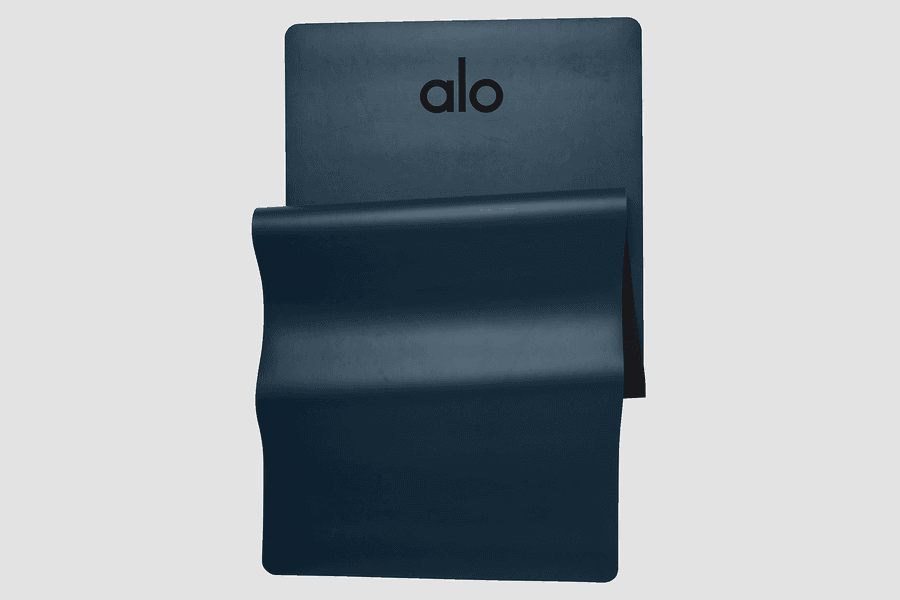
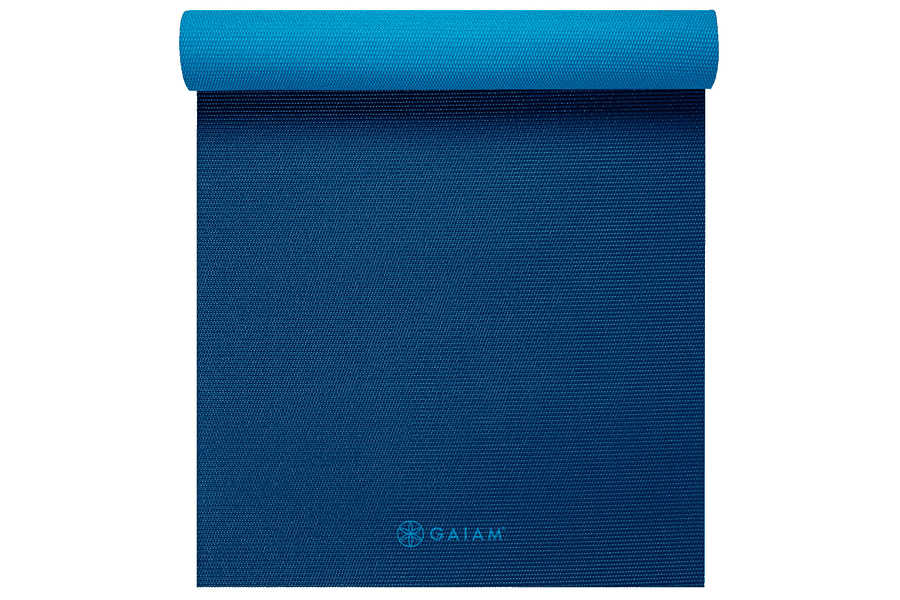
The Warrior is the better object: a bigger footprint at 74.4 by 26.4 inches, a plush polyurethane leather surface that feels genuinely expensive, and a matte finish that looks the part in a home studio. The Gaiam is 68 by 24 inches of soft PVC foam that testers still recommend as a first mat, with a lifetime guarantee at $29.98.
On measurables they are closer than the price suggests. Grip scored 5 of 10 for both, comfort 7 against 6.5, materials 6 against 6, and the Gaiam actually beat the Warrior on care and cleaning. Buy the Warrior for how it feels and looks, not for what it does.
Get the Alo Warrior if...
- You want the plush, cushioned surface and the look that comes with it
- You want a bigger mat: 74.4″ × 26.4″ against 68″ × 24″
- You want a mat that stays planted rather than one that compresses
- The mat lives at home and 8 pounds never has to move
Get the Gaiam Premium if...
- You are starting out, or practice casually a few times a month
- You want the lighter carry at 3.3 pounds against about 8
- You want a lifetime guarantee rather than a 30-day return window
- You would rather keep $118
Side by side
Price
The Gaiam Premium lists for about $118 less.
$148
List price · check price at aloyoga.com
$29.98
List price · check price at Amazon
Thickness
The Gaiam Premium is 20% thicker.
5 mm0.2″
6 mm0.24″
Weight
The Gaiam Premium is 4.7 lbs lighter.
8 lbs3.6 kg
3.3 lbs1.5 kg
Size
The Warrior is 6.4″ longer; the Warrior is 2.4″ wider.
Same on both
- Identical 62 of 100 overall score in GearLab's 19-mat test
- Grip rated 5 of 10 on both
- Both slide once your palms are genuinely wet
- Neither is a mat you would call durable under daily practice
Full specs
Dimensions
Materials & build
Buying
- Long84" × 26"
They scored exactly the same
Start with the uncomfortable number. In GearLab’s most recent 19-mat test, the Alo Warrior and the Gaiam Premium 6mm both scored 62 out of 100 and tied for thirteenth place. One costs $148 and the other $29.98.
That doesn’t make them the same mat, and it doesn’t make the Warrior a bad one. It does mean the case for spending $118 more has to rest on things a scorecard can’t measure, and it’s worth knowing that before you spend it.
Where the scores actually landed
Comfort and support: 7 for the Warrior, 6.5 for the Gaiam. Grip: 5 for both. Materials: 6 for both. Care and cleaning: 7 for the Warrior, 8 for the Gaiam, which is the one category the cheap mat wins outright.
The wet and dry grip chart tells the same story with more detail. The Warrior rated 7 dry and 4.5 wet, with super-slippery when wet listed among its drawbacks. The Gaiam rated 6 and 4. Neither mat is holding you up once your palms are genuinely damp.
What the extra $118 does buy
Feel, first. The Warrior’s polyurethane leather is smooth, matte and noticeably cushioned in a way soft foam isn’t; it reads as a premium object the moment you put a hand on it. The Gaiam feels like what it is, and GearLab noted that pressing a hand into its foam leaves the print for a moment.
Size, second: 74.4″ × 26.4″ against 68″ × 24″, which is 6.4 inches longer and 2.4 wider. And stability, third: at about 8 pounds the Warrior doesn’t budge on the floor, which testers liked, where the Gaiam’s soft foam sinks and tilts under a standing foot.
What it doesn’t buy
Grip, on the numbers. Durability: GearLab listed durability concerns and staining against the Warrior, and Alo offers a 30-day return window and no warranty, while Gaiam puts a lifetime guarantee on a $29.98 mat. Ease of care: the Warrior’s absorbent top stains where hands and feet land and picks up dirt and lint, and it takes a cloth with diluted mild soap and air drying, nothing more.
Portability, emphatically not. GearLab weighed the Warrior at 8.1 pounds, higher than anything else in its field including the Manduka PRO, against 3.3 for the Gaiam. If your mat leaves the house, this is the wrong end of the comparison.
Who each mat is actually for
The Gaiam is a starter mat and a good one. GearLab gave it a best buy award as the best first yoga mat, and that framing is right: buy it when you aren’t yet sure yoga will stick, when class is a weekly experiment, or when the mat mostly supports stretching and floor work.
The Warrior is a home-studio object. It’s for someone who practices barefoot and unheated, wants the nicest-feeling surface in the room, and is buying appearance and touch on purpose. That’s a legitimate thing to want. It’s just not a performance upgrade.
If you want a real upgrade instead
Buy a fix for a specific failure. If grip when sweaty is the problem, a polyurethane-topped mat built for heat or a natural rubber mat solves it, and both are available for less than the Warrior costs; our GRP Adapt 2.0 vs Gaiam Premium comparison covers that path from the same starting point.
If longevity is the problem, dense PVC runs about a decade and our Manduka PRO vs Gaiam Premium page covers it. Either route buys something measurable, which is more than this page can promise.
Care and the first week
Gaiam asks you to unroll its mats and air them out for two to three days before the first session, and publishes a guide on removing the new-mat smell, which is a fair signal of how often people ask. After that it wipes clean and prefers to stay out of extended sun.
The Warrior wants a cloth with diluted mild soap, air drying, no machine washing, and no hot cars or direct sun for the rubber underneath. Its top marks over time, so darker use patterns show, and regular wiping slows it rather than preventing it.
Price and where to buy
Bottom line
Get the Gaiam if you’re starting out or practicing casually. Two mats that scored identically, and one costs $29.98. It’s soft, light, easy to clean, guaranteed for life, and honest about being a beginner mat.
Get the Warrior if you want its feel and its looks and you’re deciding that on purpose. It’s a genuinely lovely surface, bigger than the Gaiam, and a mat you’ll enjoy owning. Just know that on grip, durability and portability the testing doesn’t reward the extra $118.
Alo Warrior
List price $148
Gaiam Premium 6mm
List price $29.98
Frequently Asked Questions
- Did the two mats really score the same?
- Yes. GearLab's 2026 roundup gave both 62 of 100, placing them jointly thirteenth of 19. The category breakdown is close too: comfort and support 7 for the Warrior against 6.5, grip 5 for both, materials 6 for both, and care and cleaning 7 against 8, where the Gaiam wins. That is a striking result for a $118 price gap, and it is the single most useful thing to know before you buy either.
- So is the Alo Warrior a bad mat?
- No. It is a good mat that costs more than its performance justifies. Testers praised its non-slip dry grip, its extra width, its soft surface, and the fact that it does not budge on the floor. What they flagged were staining, durability concerns, weight, and slipperiness when wet. If you want the nicest-feeling surface in your living room and you are buying that deliberately, it delivers. It just does not out-perform a $30 mat by anything like $118.
- Which one is better for hot yoga?
- Neither, and this is where both fall down. GearLab's wet and dry chart has the Warrior at 7 and 4.5, with slipperiness under moisture called out in its cons, and the Gaiam a notch below at 6 and 4. Both leave sweat sitting on the surface. If heated classes are your practice, the mats worth your money are polyurethane-topped performance mats or natural rubber, and this comparison is the wrong shelf entirely.
- How different do they feel?
- Quite different, even at similar scores. The Warrior's polyurethane leather is smooth, matte and noticeably cushioned, the thing people love about it, and it stays planted because it weighs 8.1 pounds. The Gaiam's foam is squishier and lighter, kind to knees and unstable under a standing foot; GearLab noted that pressing a hand into it leaves the print for a moment. One feels like equipment, the other like a starter mat, and the scores do not capture that.
- Which lasts longer?
- Probably the Warrior, but neither impresses. The Gaiam's soft foam compresses under regular use, which GearLab flagged as its main durability concern, and Gaiam's lifetime guarantee covers defects rather than foam softening. The Warrior stains where hands and feet land and drew durability concerns of its own, with Alo offering only a 30-day return window. At $148 that is thin coverage.
- What should I buy instead if I want a real upgrade?
- Something that fixes a specific problem. If grip when sweaty is the issue, a polyurethane-topped mat built for heat or a natural rubber mat solves it, and both are available for less than the Warrior costs. If longevity is the issue, dense PVC runs a decade. The Warrior is worth buying when you want its feel and its looks; it is not the mat to buy when you want measurably better performance.
Related comparisons
- Gaiam Premium 6mm vs Gruper TPE 6mm
- Amazon Basics 1/4 Inch Thick TPE vs Gaiam Premium 6mm
- Gaiam Premium 6mm vs YogaAccessories Extra Thick Deluxe 1/4"
- JadeYoga Harmony XW vs Alo Warrior
- Manduka PROlite Long & Wide vs Alo Warrior
- Manduka PRO vs Alo Warrior
- Manduka GRP Adapt 2.0 Long vs Alo Warrior
- Manduka eKO Long vs Alo Warrior
- Alo Warrior vs Lululemon The (Big) Mat 5mm