Manduka eKO Long vs Alo Warrior: Which One Should You Buy?
These two match up almost exactly on paper: both 5 mm, both around eight pounds, both premium mats over a natural rubber base, $24 apart. The gap shows up in testing. GearLab ranked the eKO second out of 19 mats and the Alo Warrior joint eleventh, and the reason is grip.
As an Amazon Associate, we earn from qualifying purchases made through links on this page. How this works
The quick answer
The eKO Long wins the rows that matter and costs less. GearLab scored its dry grip a perfect 10, the highest of anything it tested, its comfort and support 9, and its materials 8, for 87 points overall. The Warrior scored 7 dry and 4.5 wet, 62 overall, and GearLab's testers flagged it slipping once sweat arrived. The eKO Long is also four and a half inches longer.
Buy the eKO Long unless you have handled both and prefer the Alo. The Warrior is comfortable and good-looking, and it is the more expensive mat for reasons that do not show up in testing.
Get the eKO Long if...
- You want the best dry grip in independent testing
- You want grip on day one with no break-in
- You want the longer mat at 79 inches
- You'd rather keep $24
Get the Warrior if...
- You've tried both and prefer how the Alo feels
- Your classes are unheated and you don't sweat much
- You want a slightly wider mat at 26.4 inches
- A latex allergy is not a concern but rubber smell is
Side by side
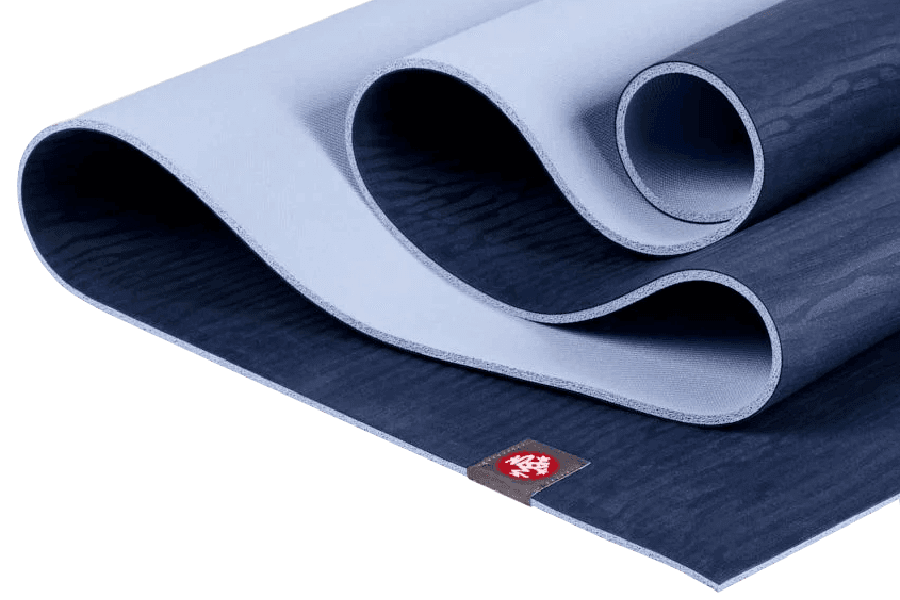
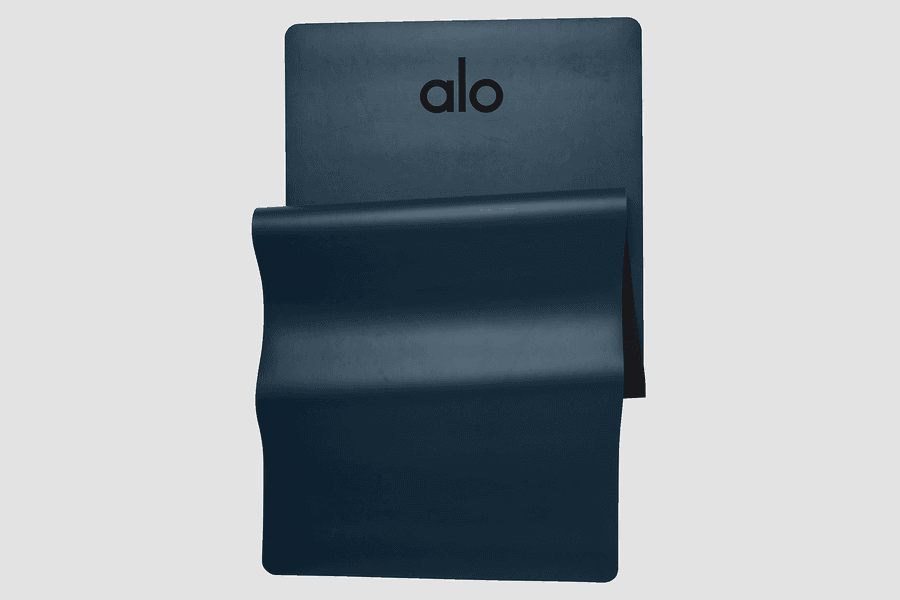
Price
The eKO Long lists for $24 less.
$124
List price · check price at Amazon
$148
List price · check price at aloyoga.com
Thickness
Identical thickness.
5 mm0.2″
5 mm0.2″
Weight
Identical weight.
8 lbs3.6 kg
8 lbs3.6 kg
Size
The eKO Long is 4.6″ longer; the Warrior is 0.4″ wider.
Same on both
- 5 mm thick
- About 8 pounds
- Natural rubber base
- 30-day returns, no warranty
- Roll rather than fold
Full specs
Dimensions
Materials & build
Buying
Same thickness, same weight, $24 apart
These two line up unusually well on paper. Both are 5 mm thick, both weigh about eight pounds, both are premium mats built on a natural rubber base, and only $24 separates $124 from $148. The eKO Long is the 79 inch version of Manduka’s rubber flagship; the Warrior is Alo’s studio mat with a polyurethane leather top.
Where they part company is performance under a sweaty hand, and the gap there is wider than the price suggests. GearLab ranked the eKO second out of 19 mats with 87 points and the Warrior joint eleventh with 62.
Grip: the widest gap between them
The eKO’s textured rubber scored a perfect 10 for dry grip in GearLab’s testing, the highest of anything it tested, and 7 wet. It works from the first unroll with no break-in and no ritual, which is most of why the mat sits so high in the rankings.
The Warrior’s surface looks like the sweat-absorbing polyurethane tops on Liforme and Lululemon mats and does not behave like them. GearLab rated it 7 out of 10 dry and 4.5 wet, and testers flagged it slipping once sweat arrived. In an unheated class with dry hands it is fine. In a warm room it is the wrong mat, and no amount of wiping fixes that mid-flow.
Five millimeters each, and the eKO feels firmer
GearLab scored the eKO 9 out of 10 for comfort and support against 7 for the Warrior, which matches how they read underfoot. The eKO is dense rubber that stays put when you push into it; the Warrior is softer and more forgiving, which some people prefer for kneeling and others find vague in a lunge.
Both are thick enough that knees on a hardwood floor are not something you think about. If you want more than 5 mm from either brand, neither line offers it, and Jade’s 8 mm Fusion is the mat people move to when joints are the reason they are shopping.
Length against width
The eKO Long is 79″ × 26″. The Warrior is 74.4″ × 26.4″, so it gives up about four and a half inches of length and takes back about half an inch of width. For most people length is the one that matters, and the eKO Long is the roomier mat.
Both brands go longer still. Alo sells an 84 inch Warrior, and Manduka sells the 71″ standard eKO at $114 if the Long is more mat than you need.
Eight pounds either way
Manduka lists the eKO Long at 8 pounds and Alo lists the Warrior at 8; GearLab’s scale put the Warrior at 8.1, the heaviest mat in a 19-mat lineup. Neither of these is a commuting mat. They are mats you put in a room.
Neither ships with a carry strap, and Alo sells one separately. If you carry a mat to class more than occasionally, look at the 5.8 pound Manduka GRP Adapt 2.0 or the 5.3 pound Jade Harmony instead of either of these.
Rubber against polyurethane leather
The eKO is natural rubber made in Taiwan. It smells strongly for the first week or two, it is not safe with a latex allergy, and it is designed to biodegrade eventually. GearLab scored its materials 8 out of 10, behind only the Manduka PRO.
The Warrior is a polyurethane leather top over a rubber base, made in China, and GearLab scored its materials 6. The practical concern owners raise is scuffing: the smooth face marks more visibly than a textured rubber one, especially in lighter colorways, and marks do not buff out.
Thirty days on both sides
Neither mat carries a warranty. Manduka gives the eKO line 30 days of returns because the rubber is meant to wear and break down, and Alo gives the Warrior a 30-day return window and nothing after. If long-term coverage is what you want from a premium mat, the Manduka PRO family is the only place to find it.
In practice the eKO wears the way rubber wears, thinning at the hands and feet over a few years of daily use. The Warrior’s failure mode is cosmetic first: the surface marks, and the grip was never its strength to begin with.
Price, colors and where to buy
$124 against $148. Alo does not sell through Amazon, so the Warrior comes from aloyoga.com and Alo stores and rarely discounts. The eKO Long is on manduka.com and Amazon, where colorway pricing moves: check the eKO Long at Amazon before paying list.
Color is a wash and neither is generous. The eKO Long is midnight only at last count, and the Warrior comes in black plus a few muted options.
Bottom line
Buy the eKO Long. It grips better, it tested better, it is longer, and it costs less. The things you give up are color choice, a warm rubber smell for the first couple of weeks, and the option if latex is a problem in your house.
Buy the Warrior if you have handled both and prefer how the Alo looks and feels, and if your classes are unheated. It is a comfortable mat and a good-looking one, and it is the more expensive of the two for reasons that do not show up in testing. Our standard eKO vs Warrior page covers the same decision at 71 inches.
Manduka eKO Long
List price $124
Alo Warrior
List price $148
Frequently Asked Questions
- Which mat is better for hot yoga?
- The eKO, though neither is a specialist. GearLab measured the eKO at 10 out of 10 dry grip and 7 wet, against 7 and 4.5 for the Warrior, and testers specifically flagged the Alo slipping once sweat arrived. The eKO is closed-cell, so sweat still sits on the surface rather than soaking in; its texture is what keeps you steady. For a genuinely hot room the Manduka GRP Adapt 2.0 measured 8.5 wet, the best in the group.
- How heavy are they?
- Manduka lists the eKO Long at 8 pounds and Alo lists the Warrior at 8, with GearLab's scale reading 8.1 for the Warrior, the heaviest of the 19 mats it tested. Neither ships with a carry strap and Alo sells one separately. If you carry a mat to class regularly, look at the 5.8 pound Manduka GRP Adapt 2.0 or the 5.3 pound Jade Harmony 74 instead.
- Does the eKO smell?
- Yes, strongly of rubber for the first week or two, fading with airing and use. It is natural rubber, so it is also not suitable if anyone in the house has a latex allergy. The Warrior's rubber base is bonded under a polyurethane leather top, so it smells much less, and its own issue is that the smooth surface scuffs visibly, especially in lighter colors.
- Do either come with a warranty?
- No. Manduka gives its rubber eKO line 30 days of returns because the material is meant to wear and eventually biodegrade, and Alo gives the Warrior a 30-day return window and nothing after. Within Manduka's range, only the PRO family carries the lifetime guarantee.
- Which is bigger?
- The eKO Long, on the axis most people care about: 79 by 26 inches against 74.4 by 26.4. The Warrior takes back about half an inch of width, which you will not feel. Alo sells an 84 inch Warrior and Manduka sells the 71 inch standard eKO at $114.
- Is the Warrior worth the extra $24?
- On measurements, no. It scored 62 out of 100 at GearLab, level with the $30 Gaiam Premium and behind several cheaper mats, with low wet grip and eight pounds pulling it down. If you want the mat for how it looks and feels and your practice is unheated, that is a legitimate reason to buy it, but it is not the better-performing mat.
Related comparisons
- Manduka eKO Long vs Lululemon The (Big) Mat 5mm
- JadeYoga Harmony XW vs Alo Warrior
- Manduka PROlite Long & Wide vs Alo Warrior
- Manduka PRO vs Alo Warrior
- Manduka GRP Adapt 2.0 Long vs Alo Warrior
- Lululemon The Mat 5mm vs Manduka eKO Long
- Alo Warrior vs Lululemon The (Big) Mat 5mm
- Alo Warrior vs Yoloha Unity Pro Cork
- Alo Warrior vs b, halfmoon B Mat Strong 6mm