Manduka GRP Adapt 2.0 vs Gaiam Premium 6mm: Which One Should You Buy?
This is the upgrade question in its clearest form. The Gaiam Premium is the mat testers hand beginners: 6 mm of soft PVC foam for $29.98, with a best buy award attached. The Manduka GRP Adapt 2.0 is what you move to when the cheap mat stops working, usually because you started sweating. It costs $128 and it holds traction that nothing else in the field matched.
As an Amazon Associate, we earn from qualifying purchases made through links on this page. How this works
The quick answer
The gap is almost entirely about grip and stability. GearLab rated the GRP 9.5 out of 10 dry and 8.5 wet, the best wet figure in its 19-mat test, and gave it the hot yoga award. The Gaiam came in at 6 and 4, with poor wet grip among its three listed downsides and soft foam that testers found unstable under balance poses.
If your hands slide once you sweat, or your standing leg wobbles, the GRP fixes both and the money is doing real work. If you practice gently, unheated, a few times a month, the Gaiam is not holding you back and $98 stays in your pocket.
Get the GRP Adapt 2.0 if...
- You practice hot, or you sweat enough that grip is the problem
- You want a firm, stable platform for balance work and inversions
- You want the bigger mat: 71″ × 26″ against 68″ × 24″
- You are on the mat several times a week and it has real work to do
Get the Gaiam Premium if...
- You are starting out and $128 is a lot to gamble
- Gentle floor work is most of what happens on your mat
- Thick, forgiving foam under knees and wrists is the priority
- A lifetime guarantee on a $29.98 mat appeals to you
Side by side
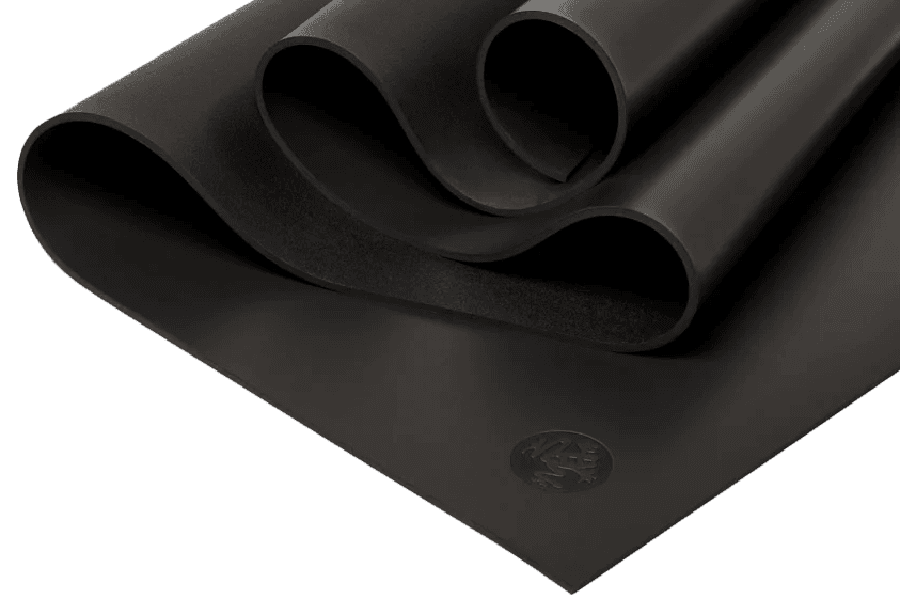
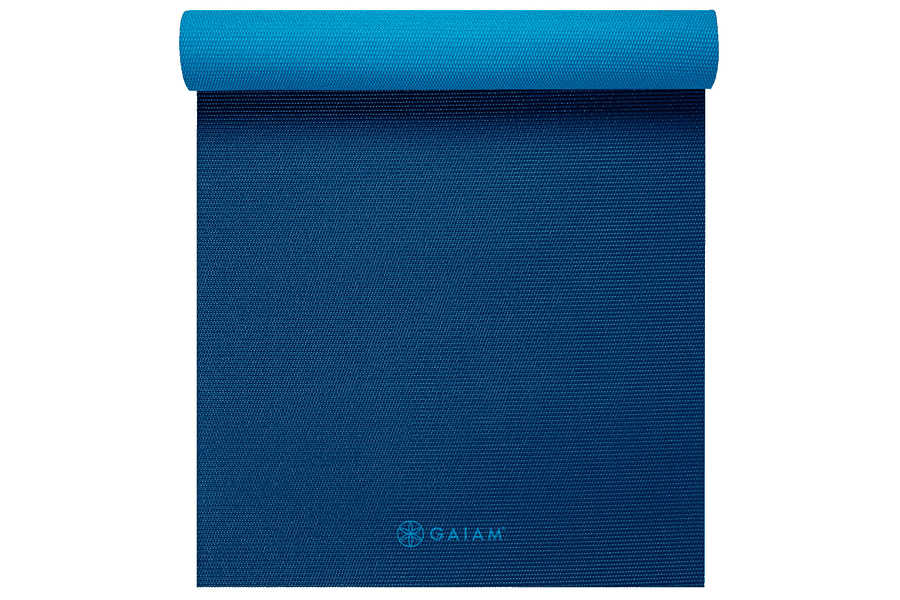
Price
The Gaiam Premium lists for about $98 less.
$128
List price · check price at manduka.com
$29.98
List price · check price at Amazon
Thickness
The Gaiam Premium is 20% thicker.
5 mm0.2″
6 mm0.24″
Weight
The Gaiam Premium is 2.5 lbs lighter.
5.8 lbs2.6 kg
3.3 lbs1.5 kg
Size
The GRP Adapt 2.0 is 3″ longer; the GRP Adapt 2.0 is 2″ wider.
Same on both
- Both grip fine with dry hands in a cool room
- Both are easy carries, at 5.5 and 3.3 pounds measured
- Wipe-clean care; neither goes in a washing machine
- Both prefer to stay out of extended sun
Full specs
Dimensions
Materials & build
Buying
The upgrade question, in its clearest form
The Gaiam Premium is the mat testers hand beginners: 6 mm of soft PVC foam for $29.98, with a best buy award attached and a lifetime guarantee behind it. The Manduka GRP Adapt 2.0 is what people move to when the cheap mat stops working, which usually means when they start sweating.
The gap is $128 against $29.98. Whether that is worth paying depends entirely on which of the Gaiam’s limits you are actually hitting.
Grip: this is what the money buys
GearLab rated the GRP 9.5 out of 10 dry and 8.5 wet. That wet number is the highest of the 19 mats it measured and it earned Manduka the award for hot yoga grip; the testers described excellent traction without a towel.
The Gaiam came in at 6 dry and 4 wet, with poor wet grip listed among its three drawbacks. Its closed PVC surface absorbs nothing, so palms slide the moment they’re damp, and no amount of extra foam changes that. A towel over a slippery mat is a workaround rather than a fix.
If your hands creep forward in down dog by the third sun salutation, this section is the entire justification for the purchase.
Stability: the second reason people upgrade
Six millimeters of soft foam gives under a knee and keeps giving, which feels kind in floor work. Stand on one leg and it becomes the problem: GearLab’s testers found the Gaiam unstable under balance poses, with a foot sinking and tilting, and noted that pressing a hand in leaves the print for a moment.
The GRP is 5 mm of denser build that gives a little and then holds, and it scored 8.5 of 10 for comfort and support against the Gaiam’s 6.5. So the thinner mat is both the steadier one and the better-rated one for comfort, which is the part that surprises people looking at thickness numbers.
Size
The GRP is 71″ × 26″ against the Gaiam’s 68″ × 24″. Three more inches of length and two of width is the modern default against the old one, and the width is what you notice first if you have broad shoulders.
Manduka also sells a 79 inch GRP for $10 more. Gaiam doesn’t offer a longer Premium, though its Essentials listing runs 72 inches for less money if length is all you want.
Where the Gaiam actually wins
Two places, and both are worth naming. Care and cleaning: GearLab rated the Gaiam 8 of 10 against 7 for the GRP, because a closed foam surface just wipes down, while the GRP’s absorbent top takes a while to dry and can show sweat and traction marks over time.
Coverage: Gaiam puts a lifetime guarantee on a $29.98 mat, while Manduka gives the GRP a 30-day return window and no warranty at all. Both guarantees address manufacturing defects rather than the way these mats really end, but the asymmetry is striking at this price gap.
Durability: both are consumables
Neither of these is a decade mat. The Gaiam’s foam takes a set under regular use, which GearLab called its main durability concern; a casual practice a few times a month gets years out of one, while daily use flattens it inside a couple.
The GRP’s polyurethane top gradually loses grip and marks where hands and feet land. Expect a few good years and then a replacement. If longevity rather than grip is your problem, the answer is dense PVC rather than either mat here, and our Manduka PRO vs Gaiam Premium comparison covers that route.
Materials and allergies
The Gaiam is latex-free PVC, so it’s safe with a latex allergy. The GRP sits on natural rubber under its polyurethane top, and tree rubber carries trace latex proteins, so it isn’t.
GearLab rated the GRP 8 of 10 on materials, second only to the Manduka PRO in its lineup, against 6 for the Gaiam. Gaiam also asks you to air its mats out for two to three days before first use, and keeps a page up about removing the smell, which tells you how often the question comes in.
Price and where to buy
The GRP is a direct purchase from manduka.com, with no reliable first-party Amazon listing; Manduka discounts on its own site often enough to be worth watching. The Gaiam sells through Amazon and gaiam.com and frequently goes below list, with prices varying by colorway on the same listing.
Worth saying plainly: the space between $29.98 and $128 is full of good mats. Natural rubber around $100 grips immediately without the GRP’s drying time. If sweat isn’t your problem, that middle ground is better value than either end of this page.
Bottom line
Buy the GRP Adapt 2.0 if grip is what is failing you. It has the best measured wet traction available, it’s steadier underfoot, it’s bigger, and it’s the mat testers picked for heated rooms. Accept the drying time, the marks, and the absence of any warranty.
Buy the Gaiam if you practice gently, unheated, a few times a month. It’s a fair $29.98 product with limits it doesn’t hide, and it’s easier to clean than the mat that costs four times as much. When it flattens or turns slippery, that’s the signal to move, and this page is where to start.
Manduka GRP Adapt 2.0
List price $128
Gaiam Premium 6mm
List price $29.98
Frequently Asked Questions
- Is a $128 mat really four times better?
- No, and the overall scores say so: GearLab put the GRP at 82 of 100 and the Gaiam at 62. Where the difference is stark is the two things that make people replace cheap mats. Grip: 8.5 out of 10 wet against 4. And stability: the Gaiam's soft foam sinks and tilts under a standing foot where the GRP stays flat. You are buying fixes for specific failures, not a mat that is four times better at everything.
- The Gaiam is thicker. Isn't 6 mm more comfortable than 5?
- Not in the way the number implies. GearLab rated the GRP 8.5 of 10 for comfort and support and the Gaiam 6.5, despite the Gaiam being a millimeter thicker. Soft foam gives under a knee and keeps giving, which feels kind in floor work and unstable everywhere else; the GRP's denser build gives a little and then holds. If pure padding for kneeling is all you want, the cheap mat is genuinely competitive.
- Which is better for hot yoga?
- The GRP, and it is not a close call. Its polyurethane top absorbs sweat instead of letting it pool, it took GearLab's award for hot yoga grip, and the testers described excellent traction without a towel. The Gaiam's closed PVC surface absorbs nothing, so palms slide the moment they are damp. No amount of extra foam changes that, and a towel over a slippery mat is a workaround rather than a fix.
- How long does each one last?
- Both are consumables and neither is a decade mat. The Gaiam's foam takes a set under regular use, which GearLab called its main durability concern; a casual practice gets years out of one, a daily practice flattens it inside a couple. The GRP's polyurethane top gradually loses grip and shows sweat and traction marks, and Manduka backs it with 30-day returns and no warranty. Gaiam's lifetime guarantee is real but covers defects rather than foam softening from normal use.
- What are the GRP's downsides?
- Worth knowing before you spend. GearLab listed slow drying first, since an absorbent top has to give the moisture back somewhere, plus visible sweat and traction marks over time and an occasional squeak under friction. It also has no third-party certification and no warranty. The Gaiam, for its part, actually scored higher on care and cleaning, 8 of 10 against 7, because a closed foam surface just wipes.
- Should I buy something in between?
- Often, yes. The stretch between $30 and $128 holds natural rubber mats around $100 that grip immediately, and dense PVC mats that outlast everything. If sweat is not your problem and you simply want a firmer, longer-lasting mat, those are better value than either end of this page. The GRP earns its price specifically when heat and sweat are what you are solving for.
Related comparisons
- Gaiam Premium 6mm vs Gruper TPE 6mm
- Manduka GRP Adapt 2.0 vs Lululemon The (Big) Mat 5mm
- Amazon Basics 1/4 Inch Thick TPE vs Gaiam Premium 6mm
- Gaiam Premium 6mm vs YogaAccessories Extra Thick Deluxe 1/4"
- Lululemon The Mat 5mm vs Manduka GRP Adapt 2.0
- JadeYoga Harmony 74" vs Manduka GRP Adapt 2.0
- JadeYoga Harmony XW vs Manduka GRP Adapt 2.0
- Manduka GRP Adapt 2.0 vs b, halfmoon B Mat Everyday 4mm
- Manduka GRP Adapt 2.0 vs b, halfmoon B Mat Strong 6mm