Manduka X vs Jade Voyager: Which One Should You Buy?
Both of these get bought as a second mat, and for different second lives. The Manduka X is a closed-cell TPE mat built for gym floors, garages, and driveways, the kind you can hose off. The Jade Voyager is a 1.6 mm rubber sheet that folds into a backpack. They cost within $22 of each other and almost nothing else about them lines up.
As an Amazon Associate, we earn from qualifying purchases made through links on this page. How this works
The quick answer
The X is the more useful mat for more of the week. It has 5 mm of dense TPE, a crosshatch texture on both sides, and a closed-cell surface that wipes or hoses clean, so it handles HIIT, weights, stretching, and outdoor use as readily as yoga. The Voyager is a specialist. At 1.5 pounds and 1.6 mm it packs where nothing else does, and it grips well: GearLab rated it 9 of 10 dry, on par with mats costing three times as much. What it cannot do is cushion anything, which is why it scored 2 of 10 for comfort.
Get the X if the mat lives in a gym bag or a car trunk. Get the Voyager if it lives in a suitcase.
Get the Manduka X if...
- You want a mat for training, not just yoga, and 5 mm of joint protection
- You'll use it outdoors or on concrete and want to hose it off after
- You want a longer surface, 71 inches against the Voyager's 68
- You want a closed-cell mat that doesn't soak up sweat or hold odor
Get the Voyager if...
- You need a mat that folds into a carry-on, not a 3.4 pound roll
- You want natural rubber grip rather than a synthetic texture
- You want to spend about $22 less
- You practice on carpet, or over a studio's rental mats, where cushion is already covered
Side by side
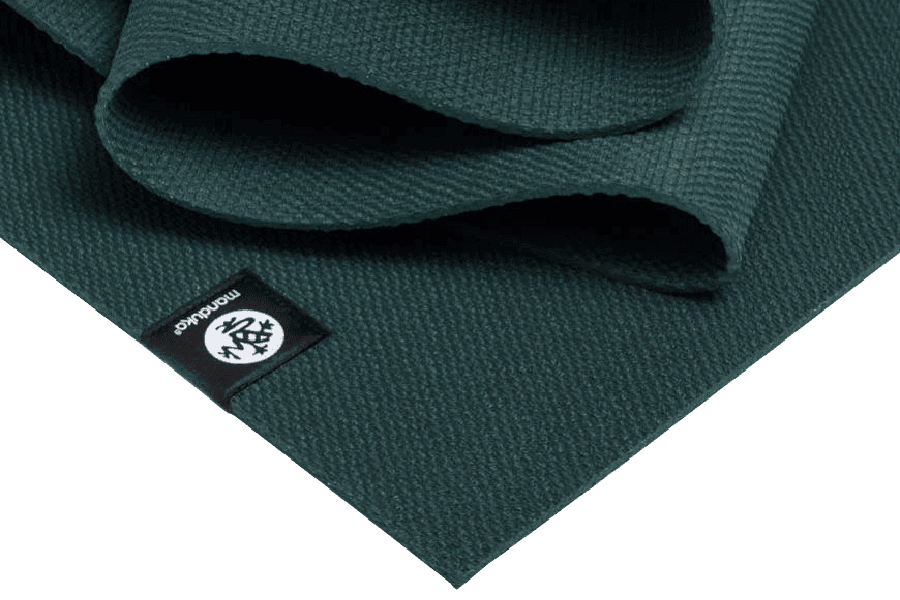
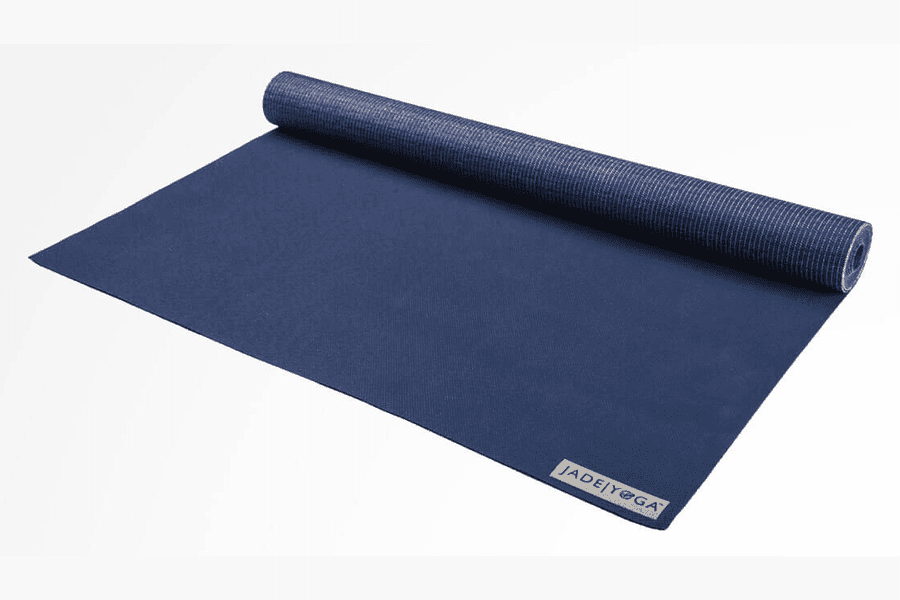
Price
The Voyager lists for about $22 less.
$72
List price · check price at Amazon
$49.95
List price · check price at jadeyoga.com
Thickness
The X is 213% thicker.
5 mm0.2″
1.6 mm0.06″
Weight
The Voyager is 1.9 lbs lighter.
3.4 lbs1.5 kg
1.5 lbs0.68 kg
Size
The X is 3″ longer; same width.
Same on both
- Both are 24 inches wide, narrower than a standard 26 inch mat
- Neither is a hot yoga mat
- Both are cheaper than the mats they sit beside in a bag
- No long-term warranty from either brand
Full specs
Dimensions
Materials & build
Buying
Two mats people buy second
Hardly anyone buys the Manduka X or the Jade Voyager as their only mat. The X is a 5 mm closed-cell TPE mat that Manduka sells for cross-training, and it is the one that lives in a car trunk or a garage and gets hosed off in a driveway. The Voyager is 1.6 mm of natural rubber that folds into a backpack for a trip.
They cost $72 and $49.95, close enough that price will not decide it. What decides it is where the mat is going to spend its life.
TPE against natural rubber
The X is high-density TPE built around what Manduka calls a Double-Weave scrim, textured with a crosshatch pattern on both faces so it does not matter which side lands up. It is closed-cell, which means sweat and dirt stay on the surface. Manduka makes it in Taiwan and pitches it for pavement, gym floors, and outdoor workouts as readily as for yoga.
The Voyager is open-cell natural rubber made in the USA, the same compound Jade uses on its full-size mats, rolled thin enough to fold. It absorbs rather than repels, which is good for grip and bad for drying time. Jade plants a tree for every mat it sells and describes its rubber as 99 percent latex free, which is not the same as latex free if you have an allergy.
Grip: one tested surface and one contested one
The Voyager has the cleaner record. OutdoorGearLab rated it 9 of 10 dry and 7 wet, which is as good as mats at three times the price, and rubber tack does not need a break-in period.
The X was not in that lineup, so the evidence is owner reviews, and they split hard along one line: sweat. Plenty of owners say the crosshatch texture holds fine even while they are dripping. Plenty of others say it turned slippery in a heated class and they bought a towel to use with it. With dry hands nobody complains. If most of your practice is warm, that split is a reason to be cautious with the X.
The Voyager has its own weak spot, and it is not the surface. With almost nothing holding it down, owners report it creeping and bunching on deep pile carpet under a planted foot. On hardwood, tile, and the flat industrial carpet in most hotel gyms it stays put. That is the practical limit of a 1.5 pound mat, and rubber tack does not fix it.
Cushion: the X is the only one offering any
Five millimeters of dense TPE is real support. Manduka rates the X for impact absorption, which is what you want if the mat is going to see jumping, kneeling, or a set of dumbbells, and it is firm rather than soft, so it does not bottom out under a knee.
The Voyager has none. GearLab scored its comfort and support 2 of 10, and on hardwood or tile that number is accurate. It works over carpet, and it works beautifully as a clean layer over a studio’s rental mats where the padding is already there. Trying to use it as a primary mat on a hard floor is the mistake that generates its bad reviews.
Packing and weight
The Voyager folds flat. That is the difference, more than the weight. It lies along the bottom of a suitcase at about 1.5 pounds by Jade’s count, 1.8 on GearLab’s scale, and Jade compares the folded size to a yoga block.
The X rolls like a normal mat at 3.4 pounds and 71 inches. That is light for a full-thickness mat, less than half a Manduka PRO, and easy to strap to a bag or throw across a back seat. It is not going in luggage without a fight.
Cleaning, odor, and the outdoors
The X is the low-maintenance one. Closed-cell TPE keeps everything on the surface, so a wipe handles a class and a hose handles a driveway session. Nothing soaks in, so nothing sits in the mat developing a smell. That is most of why Manduka sells it as an outdoor-capable mat.
It also makes the X the better mat to share or to leave somewhere. A closed-cell surface wipes down between users without anything having soaked in, which is why gyms and physical therapy rooms tend to stock mats built this way rather than open-cell rubber ones.
The Voyager needs more attention. Open-cell rubber pulls moisture in and has to dry completely before it gets folded away, which is awkward on a trip. Natural rubber also degrades in direct sun and Jade’s one year warranty says so explicitly, so it is not a mat to leave out on a deck. GearLab still scored its care and cleaning 8 of 10, so this is a matter of habits rather than a defect.
Which one wears out first
The X should outlast the Voyager. It is built on a woven scrim, rated for HIIT and outdoor use, and owners report months of five-day-a-week training with little visible wear. TPE fails by compressing over years rather than by tearing, which is a slow, forgiving kind of failure.
Thin rubber is more fragile. The Voyager tears at the edges if it snags, takes permanent creases along the folds, and loses tack gradually. Jade covers it for a year; Manduka gives the X 30 day returns and nothing more, since the lifetime guarantee belongs to the PRO line rather than to everything with a Manduka label. At these prices, replacing either one is not a catastrophe.
Price and where to buy
The X lists at $72 and turns up discounted on Amazon fairly often, sometimes on a single colorway, so it is worth checking the current Manduka X price at Amazon against Manduka’s own site. Manduka itself has been running one colorway well below the others.
The Voyager lists at $49.95 and sells through jadeyoga.com and yoga retailers rather than Amazon, with five colorways at last count and a price that rarely moves. The $22 gap is not what this decision turns on.
Who ends up with each one
The X gets bought by people whose training is not only yoga. It takes a set of kettlebell swings, a stretching session on a garage floor, and a vinyasa class on the same surface, and it is cheap enough and tough enough that none of that counts as abuse. Manduka sells it as a hybrid fitness mat rather than a yoga mat, and the 24 inch width is a clue to that. A training mat does not need to catch a wide-legged stance.
The Voyager gets bought by people who already have a mat they like and got tired of hotel-gym rentals. It is a supplement, and Jade prices it that way at $49.95. Where people go wrong is treating it as a cheap way into a first mat, because the thing it gives up is the thing beginners need most. If you want one mat that does both jobs reasonably well, neither of these is it, and a mid-weight rubber mat is the better answer.
Bottom line
Get the X if the mat is going to be used hard: weights, intervals, stretching, a driveway, a hotel gym floor. It is the only one of the two with real cushion, it cleans up with a hose, and it is tough enough that the abuse does not matter. The caveat is sweat, where owner opinion divides sharply.
Get the Voyager if the problem is luggage. Nothing else packs like it, and its grip is genuinely first rate rather than merely acceptable for a travel mat. If you do not already own a full-thickness mat, buy the X first; it can be the only mat you own in a way the Voyager cannot. Our Manduka X vs Jade Level One comparison covers the closest full-size rubber alternative.
Manduka X
List price $72
Jade Voyager
List price $49.95
Frequently Asked Questions
- Which one is actually better for yoga?
- The X, on a hard floor, because 5 mm of cushion matters more than the last bit of grip. Its texture holds well with dry hands, though owner reviews split badly on sweat: some report no slipping even while dripping, others say it turns slick in a heated room and they added a towel. The Voyager's rubber grips better, 9 of 10 in GearLab's dry test, but at 1.6 mm every kneeling pose is a negotiation with the floor.
- Which packs smaller?
- The Voyager, by a wide margin, and it's the reason to buy it. It folds rather than rolls, down to roughly the size of a yoga block, so it lies flat inside a suitcase. The X rolls into a normal mat roll at 3.4 pounds and 71 inches long, which straps to a bag but won't disappear into one.
- Is TPE as durable as natural rubber?
- In this pairing, the X is the tougher mat. Manduka builds it around what it calls a Double-Weave scrim and rates it for cross-training, and owners report months of five-day-a-week use with minimal wear. Thin natural rubber like the Voyager's is more delicate: it can tear at the edges, it creases where it folds, and Jade's one-year warranty excludes sun damage. TPE's weak point is compression over years rather than tearing.
- Can either one be used outdoors?
- The X, comfortably. Manduka pitches it for pavement and outdoor workouts, and the closed-cell surface means you can hose it down and wipe it dry. The Voyager can go outside, but natural rubber degrades in direct sun and Jade's warranty says so explicitly, so leaving it on a deck through an afternoon is a real risk.
- Which is easier to clean?
- The X. Closed-cell TPE keeps sweat and dirt on the surface, so a wipe-down handles it and a hose handles the rest. The Voyager's open-cell rubber pulls moisture in, which is good for grip and bad for odor: it needs to dry fully before it gets folded away, and GearLab noted that mats like it need cleaning more often.
- Should you own both?
- A lot of people effectively do, because they solve different problems. If you already have a full-thickness mat at home, the Voyager is the travel piece and the X is redundant. If you don't have a home mat yet, buy the X first; it can be your only mat in a way the Voyager cannot.
Related comparisons
- Manduka X vs Gaiam Performance Dry-Grip 5mm
- Manduka eKO Superlite vs JadeYoga Voyager
- Manduka X vs Gaiam Performance Dry-Grip Long & Wide
- Manduka X vs IUGA Eco Friendly Non Slip PU
- Manduka eKO Superlite Long vs JadeYoga Voyager
- Manduka X vs Hugger Mugger Earth Elements 5mm
- Manduka X vs JadeYoga Level One
- Manduka X vs 42 Birds The Robin
- Manduka X vs JadeYoga Travel 68"