Manduka X vs Gaiam Premium Reversible: Which One Should You Buy?
These two land in the same shopping cart a lot: a mat for a beginner, a spare room, or a gym bag, under $75. The Gaiam Premium Reversible is 6 mm of printed PVC at $39.98, backed by a lifetime guarantee that costs Gaiam very little to offer. The Manduka X is 5 mm of dense TPE at $72, sold as a cross-training mat rather than a yoga one. Thickness favors the cheaper mat; almost everything else does not.
As an Amazon Associate, we earn from qualifying purchases made through links on this page. How this works
The quick answer
The Gaiam is thicker, cheaper, prettier, and covered for life, and it is the weaker mat. GearLab put it 15th of 19 at 54 of 100, with 5 of 10 for dry grip and 5 for wet, and 6 of 10 for comfort despite the 6 mm, because soft PVC foam compresses under a knee instead of supporting it. The Manduka X trades a millimeter for density: a firmer 5 mm that holds its shape, a crosshatch texture on both faces, and a closed-cell surface you can hose off. It costs $32 more and comes with 30 day returns instead of a lifetime guarantee.
Buy the Gaiam if you want the most mat for the least money and your practice is gentle. Buy the X if the mat is going to be worked, indoors or out.
Get the Manduka X if...
- You want firm, dense cushioning rather than soft foam that bottoms out
- Your mat sees weights, intervals, or outdoor use as well as yoga
- You want the longer mat, 71 inches against 68
- You want a surface you can hose down and wipe dry
Get the Gaiam Reversible if...
- You want to spend about $32 less
- You want the extra millimeter, 6 mm against 5
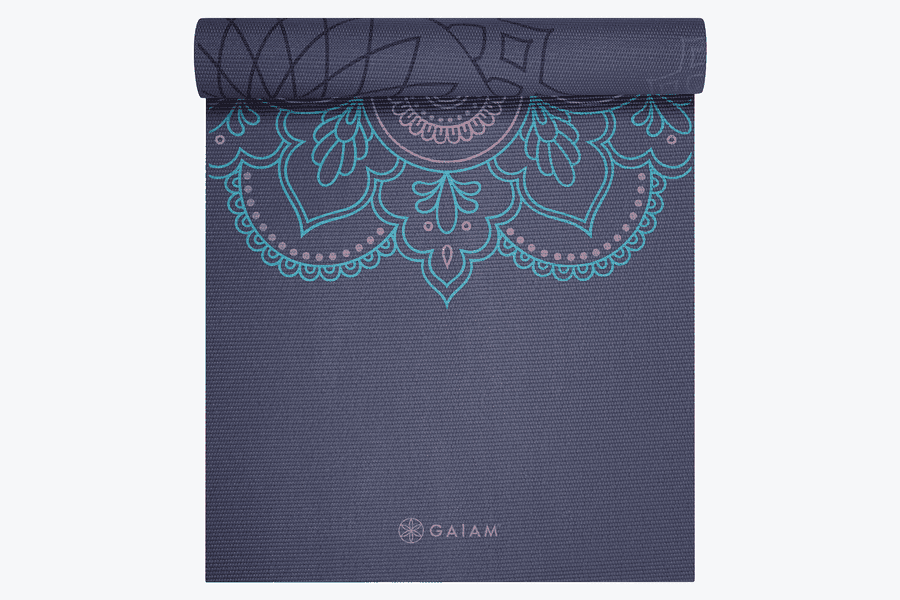
- You want a printed design and a second one on the back
- Gaiam's lifetime guarantee appeals to you more than 30 day returns
Side by side
Price
The Gaiam Reversible lists for about $32 less.
$72
List price · check price at Amazon
$39.98
List price · check price at Amazon
Thickness
The Gaiam Reversible is 20% thicker.
5 mm0.2″
6 mm0.24″
Weight
The Gaiam Reversible is 0.1 lbs lighter.
3.4 lbs1.5 kg
3.3 lbs1.5 kg
Size
The X is 3″ longer; same width.
Same on both
- Both are 24 inches wide, narrower than a standard 26 inch mat
- Both are usable on either side
- Both are light, around 3.3 pounds
- Neither absorbs sweat; both wipe clean
Full specs
Dimensions
Materials & build
Buying
Thicker and cheaper against firmer and tougher
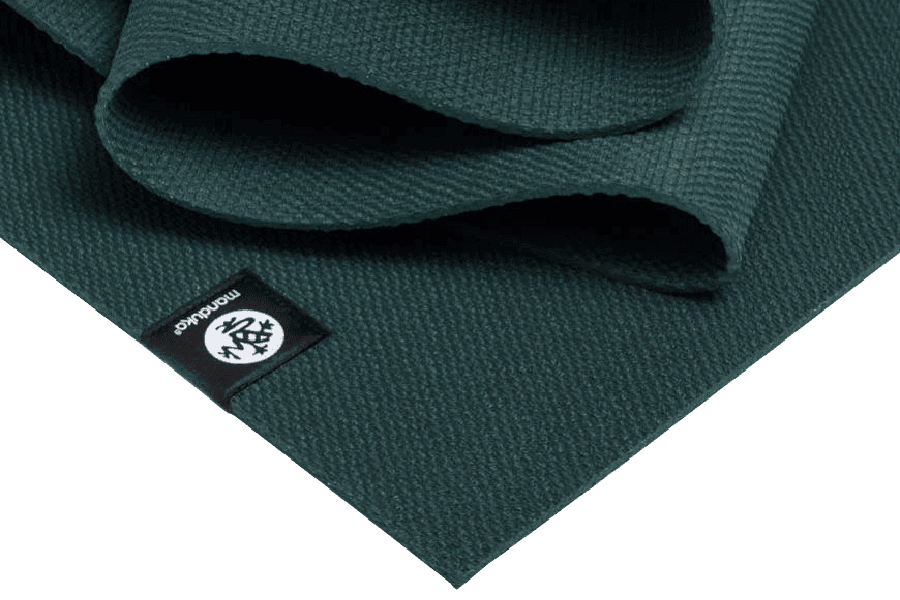
The Gaiam Premium Reversible is 6 mm of printed PVC at $39.98, with a different design on each side and a lifetime guarantee. The Manduka X is 5 mm of high-density TPE at $72, textured on both faces, sold as a cross-training mat and covered for 30 days.
On the spec sheet the cheap one is thicker, prettier, and better protected. On a floor it is the weaker mat, and the reason is density rather than millimeters.
Why 6 mm can feel thinner than 5
OutdoorGearLab scored the Gaiam Reversible 6 of 10 for comfort and support despite its 6 mm, and put it 15th of 19 overall at 54 of 100. Soft PVC foam compresses under a concentrated load, so a kneecap or an elbow presses straight through to the floor even though the mat measures thicker than most of the field. Lying on it feels generous. Kneeling on it does not.
The X trades that millimeter for density. Manduka rates it for impact absorption and it holds its shape under a point load, which is what you want on tile or concrete. For gentle stretching on a carpeted room the Gaiam is perfectly pleasant, and it is cheap enough that this is a real answer for some people. For anything with weight on a small area, the X is the more supportive mat.
The way to test this in a store, or in your living room in the first week, is to kneel on one knee and shift your weight forward. A dense mat holds its thickness under that load. A soft one collapses to almost nothing and you feel the floor through it. The Gaiam collapses; the X does not. On a carpeted room the floor underneath is doing enough of the work that this stops mattering, which is why the Gaiam has plenty of happy owners.
Grip: neither is a standout, one is a problem
GearLab rated the Gaiam Reversible 5 of 10 dry and 5 wet, near the bottom of their lineup. Part of that is the print: the reversible version has a smoother finish than the plain Gaiam Premium, which scored better and took their Best First Yoga Mat award. If you want a cheap Gaiam and grip matters, the plain one is the better buy, and our Gaiam Premium vs Premium Reversible comparison goes through that choice.
The X was not in GearLab’s test. Its crosshatch texture holds well with dry hands, which is the consistent thread in owner reviews, and the disagreement starts with sweat: some owners report no slipping at all, others say it turned slick in a heated room and they added a towel. Neither of these mats is a hot yoga mat, and the Gaiam is not close.
Nothing about either mat handles a heated room. The X keeps sweat on the surface with nowhere for it to go, and the Gaiam’s printed PVC gets slick with very little moisture at all. If your classes are hot, both of these need a towel, and a mat built for sweat would serve you better than either.
PVC foam against high-density TPE
The Gaiam is latex-free PVC foam, the material most cheap mats are made of, and GearLab scored its materials 5 of 10. It is soft, it takes ink well, which is why the prints look good, and it holds a dent where you stand.
The X is TPE built around what Manduka calls a Double-Weave scrim, made in Taiwan, closed-cell so nothing soaks in. It is recyclable in principle, which PVC largely is not, and it is noticeably firmer in the hand. Neither material is a natural one; if that matters, both of these are the wrong shelf.
Size and weight
Both are 24 inches wide, which is narrow, and in wide-legged poses a foot ends up on the floor on either mat. Length is where they differ: the X is 71 inches to the Gaiam’s 68. Three inches sounds trivial and is not, if you are tall enough that your head or heels already hang off a standard mat.
Weight is a wash: 3.4 pounds against 3.3, with GearLab measuring the Gaiam at 3.2. Both carry easily and neither comes with a strap.
What wears out, and how fast
The Gaiam’s failure mode is predictable: the printed top layer thins and flakes where hands and feet land, and the foam takes a permanent compression under the standing spots. Heavy practice gets you a year or two. Light practice gets you longer.
The X is built for abuse. Owners report months of five-day-a-week training with minimal visible wear, and it wipes or hoses clean rather than needing careful treatment. Roughly two Gaiams cost one X, which is the fair way to weigh the $32 gap: if the cheap mat gets replaced twice, it was not the cheap mat.
A lifetime guarantee against 30 days
Gaiam covers the Reversible for life and Manduka covers the X for 30 days, and on paper that is not close. In practice the guarantee is worth less than it reads: it addresses a mat that fails, not a mat whose print wears thin, which is what actually happens. Manduka’s well-known lifetime guarantee belongs to the PRO line, not to everything the brand sells, and the X is outside it.
The honest version is that neither mat is bought for its coverage. At $39.98 the Gaiam is cheap enough that replacing it is easier than claiming, and at $72 the X is durable enough that the question rarely comes up.
Price and where to buy
$39.98 against $72, about a $32 gap, and both discount on Amazon by design or colorway. Check the current Gaiam Reversible price at Amazon and the current Manduka X price at Amazon before paying list on either.
Gaiam sells the Reversible in ten printed designs at last count, which is most of its appeal and a legitimate reason to prefer it. The X comes in seven solid colorways and looks like gym equipment, because it is.
Prints, colorways, and how each one ages visually
The Gaiam’s prints are most of why people choose it. Ten designs at last count, with a different one on each face, and they photograph well. The catch is that the print is the wear surface: the areas under hands and feet dull and thin first, so the mat looks used before it stops working. On a solid-colored mat that same wear is nearly invisible.
The X comes in seven solid colorways and is unapologetically plain. It scuffs like any TPE mat, but scuffs on a solid surface read as texture rather than damage. If you want a cheap mat that still looks good in two years, that is a point for the plain one, and our Gaiam Premium vs Premium Reversible comparison covers the same tradeoff inside Gaiam’s own line.
Bottom line
Buy the Gaiam Reversible if the budget is the constraint and the practice is gentle. It is thick, soft, cheap, and it comes in prints people actually like, and for stretching or a class or two a week at home it does the job. Go in knowing the grip is weak and the surface will show its age.
Buy the X if the mat is going to be worked. It is firmer where it counts, three inches longer, tough enough for training and outdoor use, and it cleans with a hose. For $32 more it is the mat that will still be usable in three years. If you want the cheap Gaiam with better grip, look at the plain Gaiam Premium 6 mm against the X instead.
Manduka X
List price $72
Gaiam Premium Reversible 6mm
List price $39.98
Frequently Asked Questions
- Is the Gaiam Premium Reversible's 6 mm actually more cushioned?
- On paper yes, in practice not really. GearLab scored its comfort and support 6 of 10 and the softer PVC foam is the reason: it compresses under a concentrated load, so a knee or an elbow presses through to the floor even though the mat measures thicker. Dense mats at 5 mm often feel more supportive than soft mats at 6. That said, for gentle stretching and floor work on a carpeted room, 6 mm of soft foam is perfectly pleasant.
- Which one grips better?
- The X, though neither is a grip standout. GearLab rated the Gaiam Reversible 5 of 10 dry and 5 wet, near the bottom of their lineup, and the printed surface is part of the problem: the finish is smoother than the plain Premium. The X wasn't in that test, but its crosshatch texture holds well with dry hands. Owner reviews split on sweat, with some reporting no slipping and others saying it turns slick in a heated room.
- Does Gaiam's lifetime guarantee mean much?
- Less than the word suggests, but it isn't nothing. Gaiam will replace a mat that fails, and at $39.98 the mat is cheap enough that a replacement is a real remedy rather than a claims process. What it doesn't cover is the thing that actually happens: the printed surface wearing thin and flaking where your hands and feet land, which reads as normal use. Manduka gives the X 30 days and no more, so if paperwork coverage matters, the cheaper mat wins it.
- Which is better for a beginner?
- The Gaiam, if the budget is tight and the practice is a class or two a week at home. It's cheap, thick, and comes in prints people like, and GearLab's Best First Yoga Mat award went to its sibling, the plain Gaiam Premium 6 mm, which scores better on grip. The X makes more sense for a beginner whose routine already includes strength work, or who wants a mat that will last past the first year.
- Which one lasts longer?
- The X, comfortably. Manduka builds it on a woven scrim and rates it for cross-training, and owners report months of five-day-a-week use with minimal wear. The Gaiam's usual failure is the printed top layer flaking and the foam taking a permanent dent where you stand. GearLab scored its materials 5 of 10 against a category top of 10. You can buy roughly two Gaiams for one X, which is the fair way to think about it.
- Can either one be used outdoors?
- The X, without hesitation. Manduka pitches it for pavement and outdoor workouts and the closed-cell TPE takes a hose. The Gaiam will survive a lawn or a patio, but PVC foam picks up grit in its texture and the print fades in sun, so it's better kept indoors.
Related comparisons
- Manduka X vs Gaiam Performance Dry-Grip 5mm
- Manduka X vs Gaiam Performance Dry-Grip Long & Wide
- Manduka X vs IUGA Eco Friendly Non Slip PU
- Gaiam Premium Reversible 6mm vs Gruper TPE 6mm
- Manduka X vs Hugger Mugger Earth Elements 5mm
- Manduka X vs JadeYoga Level One
- Amazon Basics 1/4 Inch Thick TPE vs Gaiam Premium Reversible 6mm
- Gaiam Premium Reversible 6mm vs YogaAccessories Extra Thick Deluxe 1/4"
- Manduka X vs 42 Birds The Robin