Manduka X vs Gaiam Classic Print: Which One Should You Buy?
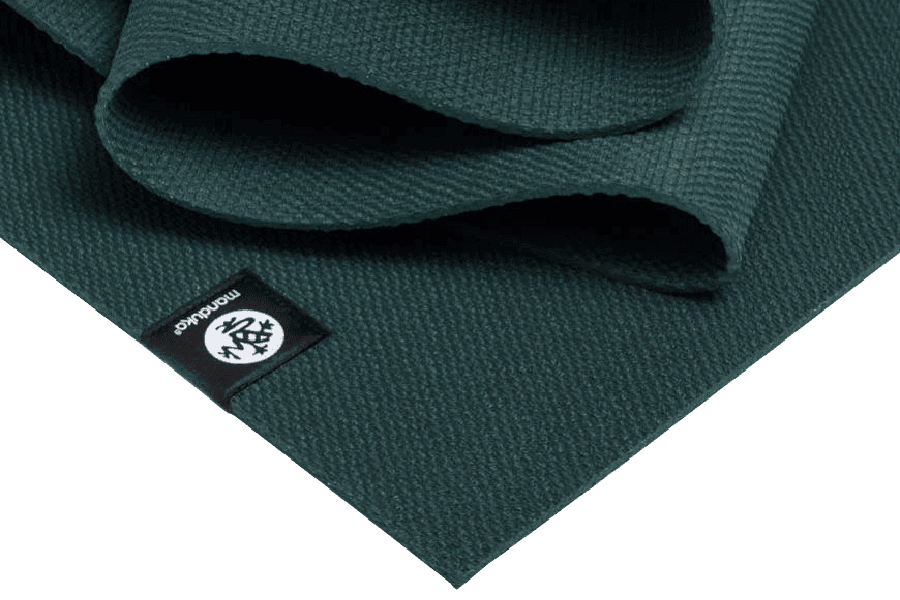
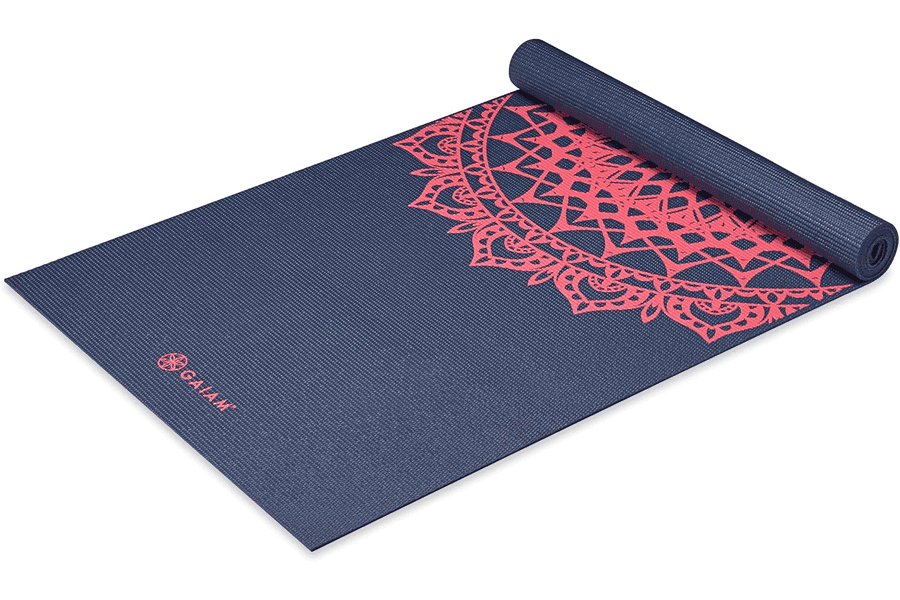
The Manduka X is not really a yoga mat, or not only one. Manduka sells it as a hybrid fitness mat: 5 mm of dense TPE, textured on both faces, built to take shoes, dumbbells and jumping. The Gaiam Classic Print is a yoga mat and nothing else, at $24.98. If your mat only ever sees yoga, this comparison ends quickly. If it also has to survive a home gym, it does not.
As an Amazon Associate, we earn from qualifying purchases made through links on this page. How this works
The quick answer
For yoga alone, the $47.02 gap is hard to justify. The X's textured TPE is competent with dry hands and gives up once you sweat, which is exactly what the Gaiam does, and $72 buys genuinely better yoga surfaces elsewhere. What the X adds is 3 extra inches of length, a millimeter more cushion, and a build that shrugs off treatment that would finish the Gaiam in a month.
So buy on what else happens on the mat. Weights, HIIT, planks, kids, a garage floor: the X. Yoga in a living room and nothing else: the Gaiam, and put the difference toward a rubber mat later.
Get the Manduka X if...
- The same mat has to handle strength or HIIT work
- You want a mat you can be careless with
- You want 71″ of length rather than 68″
- You want texture on both faces so either side works
Get the Gaiam Classic Print if...
- The mat only ever sees yoga
- You want to spend $24.98 and put the rest toward an upgrade
- You carry your mat; 2.1 pounds beats 3.4
- You want a printed design rather than a plain color
Side by side
Price
The Classic Print lists for about $47 less.
$72
List price · check price at Amazon
$24.98
List price · check price at Amazon
Thickness
The X is 25% thicker.
5 mm0.2″
4 mm0.16″
Weight
The Classic Print is 1.6 lbs lighter.
3.7 lbs1.7 kg
2.1 lbs0.95 kg
Size
The X is 3″ longer; same width.
Same on both
- Both are latex-free and safe with a rubber allergy
- Closed-cell surfaces, so sweat sits on top rather than soaking in
- Both grip dry from the first session and slip once damp
- Both are 24″ wide
- Wipe-clean care with no special products
Full specs
Dimensions
Materials & build
Buying
One of these is not really a yoga mat
Manduka sells the X as a hybrid fitness mat, and the design follows through: 5 mm of dense TPE, textured on both faces, built to take shoes, dumbbells and repeated jumping. It does yoga because it is a mat, not because yoga was the brief.
The Gaiam Classic Print is a yoga mat and nothing else, at $24.98. Printed sticky PVC, 4 mm, 2.1 pounds.
So this comparison turns on a question that has nothing to do with yoga: what else happens on the mat?
What the X survives that the Gaiam does not
Dense TPE takes a kettlebell set down on it without denting. It takes trainers. It takes being dragged across a garage floor, folded into a car, and left there. The texture on both faces means there is no wrong side up, which matters when a mat gets flipped around during a circuit.
The Gaiam’s light PVC foam does none of that well. Point loads dent it, edges tear if you drag it, and shoes mark it. That is not a criticism of a $24.98 yoga mat, which is asked to lie flat in a living room and be stood on barefoot. It is just a different job.
This is the clearest difference between them and the main thing the $47.02 is buying.
For yoga specifically, grip is a wash
Here is the part that should stop anyone buying the X purely for yoga. Its textured TPE grips competently with dry hands and lets go once your palms are damp. The Gaiam’s sticky PVC does the same thing, at the same point, for a third of the money.
Neither material keeps sweat off the surface, so neither has an answer for a warm room. If traction is the reason you are shopping, both of these are the wrong mats and natural rubber or an absorbent polyurethane top is what you actually want.
Cushion, density, and three extra inches
The X is 5 mm against the Gaiam’s 4, and more importantly its TPE is dense enough to hold that thickness rather than compressing away over the first year. On tile during kneeling work, and on any floor after twelve months, that gap widens.
The X is also 71″ long against 68″. Three inches is not much, but it is the difference between your heels being on the mat and off it when you lie down. Neither comes in a longer size, so above about five foot ten both run short.
The Gaiam is the easier carry
2.1 pounds against 3.7. Neither is heavy by the standards of a category where 7 and 8 pound mats exist, but the Gaiam is close to the lightest full-size mat you can buy and the X is a normal mat on a shoulder.
If the mat commutes daily and only ever does yoga, that reinforces everything else on this page in the Gaiam’s favor.
The $25 mat has the longer guarantee
Manduka gives the X a 30 day return window and no warranty. Gaiam advertises a lifetime guarantee on the Classic Print. On paper the cheap mat is better protected, which is worth knowing before you assume the price buys peace of mind.
In practice neither covers what actually happens. Mats at this level end by compressing and wearing thin, and no guarantee treats that as a defect. The difference is that the X takes far longer to get there, which is protection of a more useful kind.
Both are latex-free
The X is TPE and the Classic Print is PVC, and neither contains natural rubber. If a latex allergy is what pushed you away from Jade or Manduka’s own eKO line, both of these are open to you.
That is part of why Manduka keeps TPE in a lineup otherwise built on rubber and dense PVC. The eKO Superlite comparison covers the other side of that choice within their range.
Care, storage, and neglect
Both are closed-cell, so sweat sits on top and wipes off with water or a very diluted mild soap. Neither goes in a washing machine and neither needs special products.
Neither has the rubber problem of needing to stay out of hot cars and direct sun, which makes both unusually tolerant of being forgotten about. The X is the more forgiving of the two simply because there is more material there to abuse.
Prices and where to buy
Check the current X price at Amazon and the current Classic Print price at Amazon. Manduka discounts colorways it is clearing, and the X turns up meaningfully below its $72 list often enough to be worth a week’s patience.
The X comes in seven colorways and one size; the Classic Print in a rotating set of prints, also one size.
Bottom line
Buy the Gaiam Classic Print if the mat only ever does yoga. It grips the same as the X, weighs less, costs $47.02 less, and leaves money toward a rubber mat when you decide you want real traction.
Buy the Manduka X if the same piece of foam also has to handle weights, HIIT, a garage floor, or a household that treats it badly. It is thicker, three inches longer, latex-safe, and close to indestructible. Just do not pay for it expecting a better yoga surface, because you will not get one.
Manduka X
List price $72
Gaiam Classic Print 4mm
List price $24.98
Frequently Asked Questions
- Is the Manduka X a good yoga mat?
- It is a competent one rather than a special one. The design priorities show: durability, texture on both sides, and enough thickness to kneel on, rather than the tacky grip a yoga-first mat aims for. For a mixed week of yoga and strength work it makes real sense. For pure yoga, $72 buys better surfaces, including from Manduka.
- Which grips better?
- There is not much between them, and neither is good once you sweat. The Gaiam's textured sticky PVC and the X's textured TPE both work with dry hands and both let go when your palms get damp. If grip is the reason you are shopping, natural rubber is the material and neither of these has any.
- How much tougher is the X really?
- Enough to change what you can do on it. Dense TPE takes shoes, dumbbells, and repeated jumping without denting or tearing, which is why it survives a gym floor. The Gaiam's light foam dents under a kettlebell and tears at the edges if you drag it. This is the single clearest difference between them and it is worth the money if you need it.
- Which is more comfortable?
- The X, modestly, at 5 mm against 4, and its denser TPE holds that thickness rather than compressing away over the first year. On carpet you will barely notice. On tile during kneeling work, and after a year of use, the gap is real.
- What warranty do you get?
- This one runs backwards. Manduka gives the X a 30 day return window and no warranty. Gaiam advertises a lifetime guarantee on the $24.98 Classic Print. Neither covers how these mats actually end, which is surface wear and compression, but it is worth knowing that the expensive mat here comes with less paperwork rather than more.
- Are both safe with a latex allergy?
- Yes. The X is TPE, the Classic Print is PVC, and neither contains natural rubber. Manduka keeps the X and the Begin in its line partly for exactly this reason, since its eKO mats are tree rubber and are not an option with a genuine allergy.
- What about size and weight?
- The X is 71″ × 24″ against the Gaiam's 68″ × 24″, so three extra inches of length and no extra width. Neither comes in a longer version, so above about five foot ten both run short. On weight the Gaiam wins at 2.1 pounds against 3.4, though neither is heavy enough to be a problem.
Related comparisons
- Manduka X vs Gaiam Performance Dry-Grip 5mm
- Manduka X vs Gaiam Performance Dry-Grip Long & Wide
- Manduka X vs IUGA Eco Friendly Non Slip PU
- Manduka X vs JadeYoga Level One
- Manduka X vs Hugger Mugger Earth Elements 5mm
- Amazon Basics 1/4 Inch Thick TPE vs Gaiam Classic Print 4mm
- Gruper TPE 6mm vs Gaiam Classic Print 4mm
- Manduka X vs 42 Birds The Robin
- Manduka X vs JadeYoga Travel 68"