Manduka X vs Amazon Basics 1 Inch: Which One Should You Buy?
A hybrid fitness mat and an inch-thick foam pad both promise to upgrade a home workout, from opposite directions. The Manduka X firms up your footing: 5 mm of dense TPE that holds poses, landings, and loaded carries steady. The Amazon Basics 1 inch softens your landing pad: 25 mm of plush NBR for the parts of a workout spent on the floor. Neither does the other's job even passably, which keeps this simple.
As an Amazon Associate, we earn from qualifying purchases made through links on this page. How this works
The quick answer
The X is the trainable surface. Yoga flows, bodyweight circuits, kettlebell work, jump rope: anything requiring balance or footing wants dense and thin, and the X adds shoe tolerance and a double-sided build to survive all of it for years. An inch of soft foam under any of that is somewhere between annoying and unsafe; feet sink, ankles roll, and the foam itself tears under dynamic loads.
The Amazon Basics is the recovery surface. Stretching, mobility work, physical therapy movements, and long core sessions on a hard floor genuinely benefit from its plushness, and at about $38 it's cheap comfort. If your training is mostly upright, buy the X. If your mat time is mostly on your back, buy the foam and save the difference.
Get the Manduka X if...
- You train standing: yoga, circuits, weights
- You want stable footing more than padding
- Shoes and equipment will touch the mat
- You want years of service from one surface
Get the Amazon Basics if...
- Your mat time is stretching, PT, or core work
- Maximum cushioning on hard floors is the goal
- You're spending about $38, not $72
- You want the strap for hauling it to a gym
Side by side
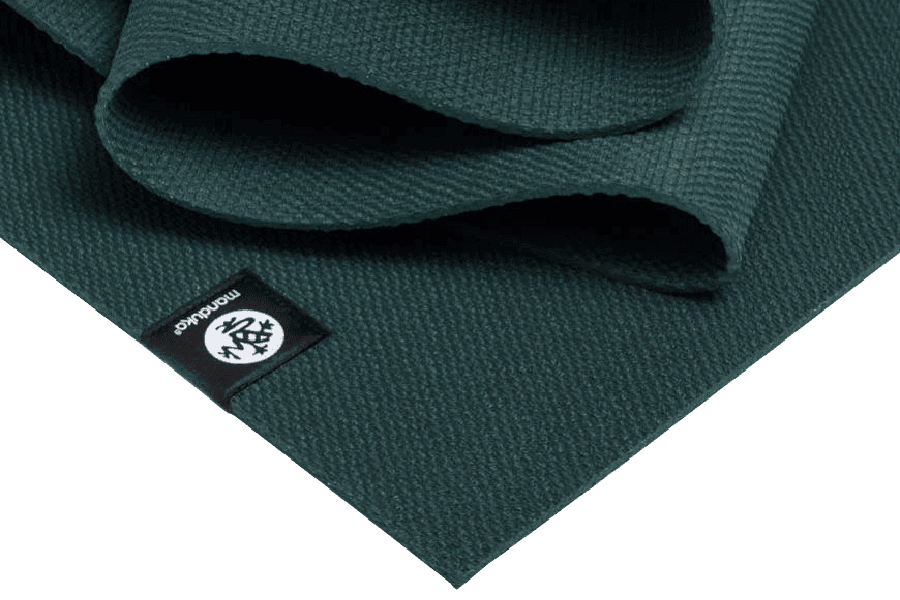
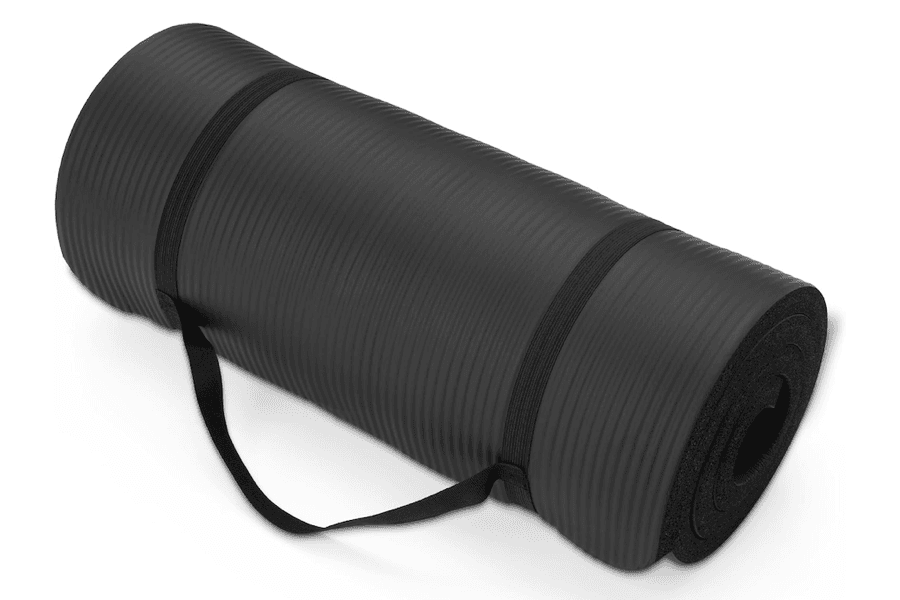
Price
The Amazon Basics lists for about $34 less.
$72
List price · check price at Amazon
$38.40
List price · check price at Amazon
Thickness
The Amazon Basics is 408% thicker.
5 mm0.2″
25.4 mm1″
Weight
The X is 1.2 lbs lighter.
3.4 lbs1.5 kg
4.6 lbs2.1 kg
Size
The Amazon Basics is 3″ longer; same width.
Same on both
- Same 24" width
- Handle gentle floor work equally well
Full specs
Dimensions
Materials & build
Buying
Two upgrades pointed in opposite directions
Both of these improve on a bare floor; they just disagree about what was wrong with it. The Manduka X thinks the floor was fine and your gear wasn’t: it adds a grippy, shoe-proof 5 mm training deck that keeps footing honest through flows and circuits. The Amazon Basics 1 inch thinks the floor was too hard: it piles 25 mm of soft NBR between you and the ground and calls the job done.
One costs $72, the other about $38, and the wrong choice is whichever one is aimed at a problem you don’t have.
The case for the X: everything upright
Yoga with standing poses, HIIT, kettlebell and dumbbell sessions, jump rope, mobility drills done standing: all of it runs on the X as intended use. The dense double-sided TPE keeps landings flat and balance poses predictable, shoes don’t faze it, and at 3.4 pounds it commutes to a gym without complaint. An inch of soft foam under the same workload is a liability: feet sink to unpredictable depths, and the material itself fails early under dynamic loads, torn seams and flattened patches being the usual endings in its reviews.
The case for the foam: everything horizontal
Reverse the workout and the foam collects everything. Long stretching holds, physical therapy movements, sit-up circuits, foam-rolling sessions where you’re down on knees and elbows: an inch of plush NBR makes concrete irrelevant in a way no dense 5 mm mat can. It ships with a strap, spans a generous 74″, and costs about $38. It’s weak under load and excellent as padding, so used as a giant cushion it has no complaints coming.
Grip and sweat, briefly
The X grips better in every dry condition, bare feet or shoes, and its texture holds through quick transitions. The foam’s soft surface grips gently and shears under hard lateral push. Neither absorbs sweat, so a dripping session beats both; keep a towel nearby either way, and keep heated yoga on absorbent-top mats built for it.
Lifespan and the fine print
Treated to its designed workload, the X delivers a few years of service before its TPE wears, with only Manduka’s 30 day returns behind it. The foam typically flattens or tears inside a year or two of real exercise, matching its 1 year warranty, though it lasts far longer as occasional stretching padding. The foam also needs several airing-out days for its NBR smell; the X arrives essentially odor-free.
Bulk, storage, and carrying
The X rolls slim and slings into any mat bag. The 1 inch rolls into a 4.6 pound cylinder the diameter of a small drum; its strap is mandatory equipment, and it wants real shelf space. Home-gym mats that never leave the room can ignore all this. Mats that ride to classes can’t, and the X is the only practical commuter of the two.
Price and value
List prices are $72 for the X and about $38.40 for the Amazon Basics 1 inch. Check current prices on the Manduka X and the Amazon Basics 1 inch. A thinner, cheaper 1/2 inch version covers most of the same floor-comfort jobs for less.
The $34 gap reads differently by buyer. For a trainer, it buys years of stable footing, obviously worth it. For a stretcher, it buys firmness they didn’t want, obviously not. The only bad outcome is the crossover purchase: foam bought for training fails fast, and an X bought for cushioning disappoints from day one.
Bottom line
Training of any standing kind, yoga included: the Manduka X, without hesitation. It’s built for exactly that week and priced fairly for how long it lasts.
Comfort for the floor-bound share of fitness: the Amazon Basics 1 inch, and enjoy the plushness. Two different problems, two right answers, and no mat here that solves both.
Manduka X
List price $72
Amazon Basics 1 Inch Extra Thick
List price $38.40
Frequently Asked Questions
- Can I lift weights or do circuits on the 1 inch foam?
- You shouldn't. An inch of soft foam under a loaded or moving body is an unstable base; feet and hands sink, ankles improvise, and anything explosive risks a roll. It also destroys the foam, which compresses and tears under concentrated dynamic loads. The X is built for exactly that use, shoes and all.
- Is the X thick enough for floor comfort?
- It's adequate, not plush. Five millimeters of dense TPE supports knees and hips honestly, and most people find it fine for core work and stretching. If your routine involves long kneeling or lying stretches on concrete, that's the case where the foam pad's full inch is a real upgrade, and some households simply keep one of each.
- Which one for yoga?
- The X, and it isn't close. It's a genuine 5 mm yoga surface with day-one dry grip and stable footing. An inch of soft foam turns standing sequences into balance drills you didn't sign up for, and planks bury your wrists. Only a fully restorative, floor-based practice works on the foam.
- How do the lifespans compare?
- The X gives a few years of mixed training before its TPE surface wears; Manduka backs it with 30 day returns only. The foam flattens permanently where it's loaded and can tear within a year or two of hard use, with a 1 year warranty that matches. Under gentle stretching duty either lasts far longer.
- How different are they to carry and store?
- The X rolls slim at 3.4 pounds and fits any mat bag. The 1 inch weighs 4.6 pounds and rolls into a fat cylinder that needs its included strap and a shelf of its own. If the mat commutes, the X is the practical choice; if it lives unrolled in a home gym, bulk stops mattering.
- What's the budget version of this decision?
- Amazon's 1/4 inch TPE mat at about $26 plays the X's role on a budget: firm, light, workable for yoga and bodyweight training, though it wears faster under shoes and gear. Its 1/2 inch foam sibling at about $22 plays the plush role. The same standing-versus-floor logic picks between them at half the money.
Related comparisons
- Amazon Basics 1 Inch Extra Thick vs Retrospec Solana 1"
- Manduka X vs Gaiam Performance Dry-Grip 5mm
- Manduka X vs Gaiam Performance Dry-Grip Long & Wide
- Manduka X vs IUGA Eco Friendly Non Slip PU
- Manduka X vs Hugger Mugger Earth Elements 5mm
- Manduka X vs JadeYoga Level One
- Manduka X vs 42 Birds The Robin
- Manduka X vs JadeYoga Travel 68"
- Manduka X vs Suga SugaMat