Amazon Basics 1/2 Inch vs 1 Inch: Which One Should You Buy?
Same brand, same 74" × 24" footprint, same soft NBR foam, same included strap; the only decisions here are thickness, weight, and about $16. The half-inch is the version most people mean when they say exercise mat. The 1 inch doubles the padding and the weight for people whose floors, knees, or workouts demand it. Neither is a yoga mat, whatever the listing says.
As an Amazon Associate, we earn from qualifying purchases made through links on this page. How this works
The quick answer
For most floor exercise, the half-inch is the better buy. It's already plush enough for stretching, core work, and PT movements, it's half the weight to carry and roll, it's a little less unstable when you stand on it, and it costs about $16 less. The full inch earns its extra money in narrower cases: very hard floors, bony joints that ache on anything thinner, kneeling-heavy routines, or bodies that simply want more between them and concrete.
If you're unsure, buy the half-inch. The people who need the 1 inch usually know it already, because they've tried a thinner pad and their knees or hips told them.
Get the 1/2 inch if...
- You want the lighter 2.2 pound roll to carry
- Your floor work needs padding, not a mattress
- You might occasionally stand or balance on it
- You'd rather keep about $16
Get the 1 inch if...
- Your knees or hips ache on thinner padding
- You work out on concrete or the hardest floors
- Your routine is kneeling and lying, rarely standing
- Maximum plushness is worth doubled bulk to you
Side by side
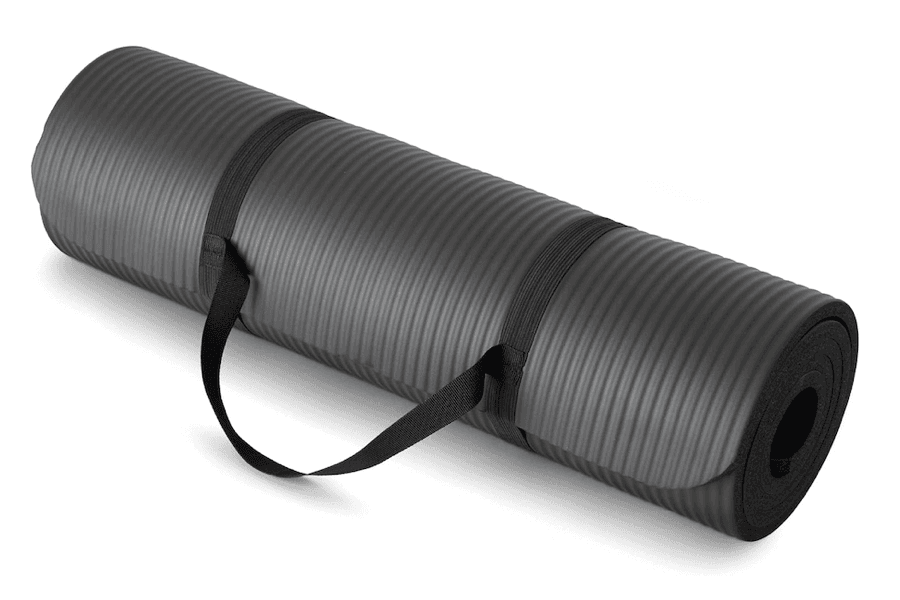
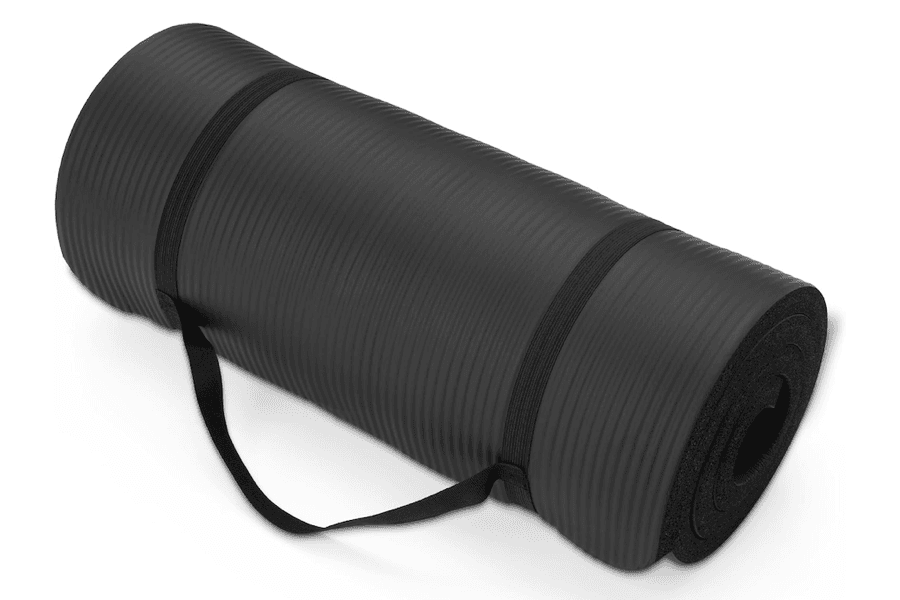
Price
The Amazon Basics lists for about $16 less.
$22.48
List price · check price at Amazon
$38.40
List price · check price at Amazon
Thickness
The Amazon Basics is 100% thicker.
12.7 mm0.5″
25.4 mm1″
Weight
The Amazon Basics is 2.4 lbs lighter.
2.2 lbs1 kg
4.6 lbs2.1 kg
Size
Same length; same width.
Same on both
- Same 74" × 24" footprint
- Same soft NBR foam construction
- Carry strap included
- 1 year warranty
- 3 colorways at last count
- Too soft for standing yoga poses
Full specs
Dimensions
Materials & build
One pad, two doses
This is the simplest comparison on our site: the same Amazon Basics NBR foam pad, the same 74″ × 24″ footprint, the same included strap and 3 colors and 1 year warranty, in a half-inch dose or a full-inch one. The half-inch weighs 2.2 pounds and lists around $22; the inch weighs 4.6 and lists around $38.
So the whole decision is how much foam your body and floor actually call for, and whether the extra costs in weight, bulk, and dollars are worth it. For most buyers, they aren’t, but the exceptions are real.
How much foam do you actually need?
Half an inch of soft foam is already a lot; it makes tile and concrete comfortable for stretching, sit-up circuits, and physical therapy movements, which is the job description for both mats. The second half inch adds comfort mainly in edge cases: kneeling-heavy routines, bony joints that complain on anything thinner, floors with no give at all, or bodies that want more between hip and ground during long floor sessions.
Comfort has diminishing returns, and the step from floor to half inch is far bigger than the step from half inch to full. If you can’t name the reason you need the second step, you don’t.
The stability cost of thickness
Every added millimeter of soft foam makes standing on the pad less predictable. On the half-inch, a standing stretch or a transition through a lunge is wobbly but manageable; on the inch, feet sink until ankles do the balancing. Push-up and plank hands tell the same story, sinking deeper on the thicker pad. Neither is a yoga mat, but the half-inch is the one that tolerates the occasional standing moment with more grace.
Carrying and storing them
Rolled up, the half-inch is a light, manageable bundle that fits behind a door. The inch becomes a duffel-sized cylinder, over twice the bulk and weight, and its strap goes from convenience to necessity. If the pad travels to a gym, a class, or a physical therapy appointment every week, the half-inch is the one that won’t wear out its welcome in your trunk or on your shoulder.
Foam lifespan, and the smell
Being the same material, they age the same way: soft NBR compresses permanently where knees and heels land, and owner reviews of both report flattening, tears at stress points, and surface shedding with hard use inside a year or two. Gentle stretching duty stretches the lifespan well past that. Both also arrive with NBR’s signature rubbery smell; the inch, having twice the foam, has more to off-gas, and owners report days to a few weeks of airing out either one.
If yoga is anywhere in the plan
Neither of these is the answer. Soft foam at any thickness turns standing poses into ankle exercises, and balance work is worse on the thicker pad. Amazon’s own lineup solves this for similar money: the firm 1/4 inch TPE mat lists around $26 and is a legitimate starter yoga mat. Buy foam for floor comfort, buy firm for practice, and don’t ask either to moonlight.
Price and value
List prices run about $22.48 for the half-inch and about $38.40 for the inch, both drifting with Amazon’s pricing. Check current prices on the 1/2 inch and the 1 inch.
The $16 difference is modest, which is exactly why it’s worth resisting by default; you’re also paying in bulk and stability, not just dollars. Upgrade when your joints or your floor give you a specific reason. Plenty of owners buy the inch for one sore knee and end up wishing they had the lighter roll.
Bottom line
Buy the half-inch. It covers stretching, core work, and PT comfortably, carries at half the weight, costs less, and handles the occasional standing moment better. It’s the right default for almost everyone shopping this pad.
Buy the inch only with a reason in hand: kneeling routines, joints that ache on the half-inch, or the hardest floors. For that buyer the extra foam is genuine relief, and the bulk is a fair trade.
Amazon Basics 1/2 Inch Extra Thick
List price $22.48
Amazon Basics 1 Inch Extra Thick
List price $38.40
Frequently Asked Questions
- Which thickness is better for yoga?
- Honestly, neither. Soft NBR foam at any thickness compresses too much under standing feet for balance poses to feel stable, and the inch version is worse than the half. If yoga is the goal, Amazon's own 1/4 inch TPE mat is the right product at about $26: firm, light, and actually built for standing practice. These two are exercise pads.
- Is the 1 inch worth $16 more?
- Only if you have a specific reason: joints that ache on the half-inch, a concrete floor, or a routine that's almost entirely kneeling and lying down. The half-inch is already plusher than most exercise pads, and the 1 inch costs you in bulk and stability as well as dollars. Comfort has diminishing returns; the second half inch buys less than the first.
- How different are they to carry and store?
- More than the specs suggest. The half-inch rolls to a manageable 2.2 pound bundle; the 1 inch is 4.6 pounds and rolls into a duffel-sized cylinder that genuinely needs its strap. If the mat travels to a gym or class regularly, the half-inch is the one you'll still be carrying in six months.
- Do these mats flatten over time?
- Yes, both. Soft foam compresses permanently where weight concentrates, usually under knees and heels, and owner reviews of both thicknesses report flattening, tears at stress points, and surface shedding with heavy use. A year or two of regular service is a fair expectation, which the 1 year warranty roughly matches. Gentle stretching use stretches that considerably.
- Can I use one as a sleeping or camping pad?
- People do, and the 1 inch is the one they pick; it's the plusher surface and the closest thing to a camping pad in this comparison. It's still open-cell foam with no insulation rating, so it's a spare-bedroom and guest-floor solution, not backpacking gear. For occasional guests it's a reasonable double-duty purchase.
- Do they smell out of the box?
- Usually, yes. NBR foam ships with a rubbery chemical smell, and with twice the foam the 1 inch has more to off-gas. Owners report it fading over days to a few weeks unrolled in a ventilated room. Air either mat out before you spend an hour lying on it.
Related comparisons
- Amazon Basics 1 Inch Extra Thick vs Retrospec Solana 1"
- Amazon Basics 1/2 Inch Extra Thick vs Retrospec Solana 1/2"
- Amazon Basics 1/2 Inch Extra Thick vs Gaiam Essentials Fitness Mat 10mm
- Amazon Basics 1/2 Inch Extra Thick vs YogaAccessories Extra Thick Deluxe 1/4"
- Amazon Basics 1/2 Inch Extra Thick vs Gruper TPE 6mm
- Amazon Basics 1/2 Inch Extra Thick vs Gaiam Essentials 6mm
- Amazon Basics 1/2 Inch Extra Thick vs Gaiam Premium 6mm
- Amazon Basics 1/2 Inch Extra Thick vs Gaiam Classic Print 4mm
- Amazon Basics 1/2 Inch Extra Thick vs Gaiam Premium Reversible 6mm