Manduka PRO vs Yoga Design Lab Combo: Which One Should You Buy?
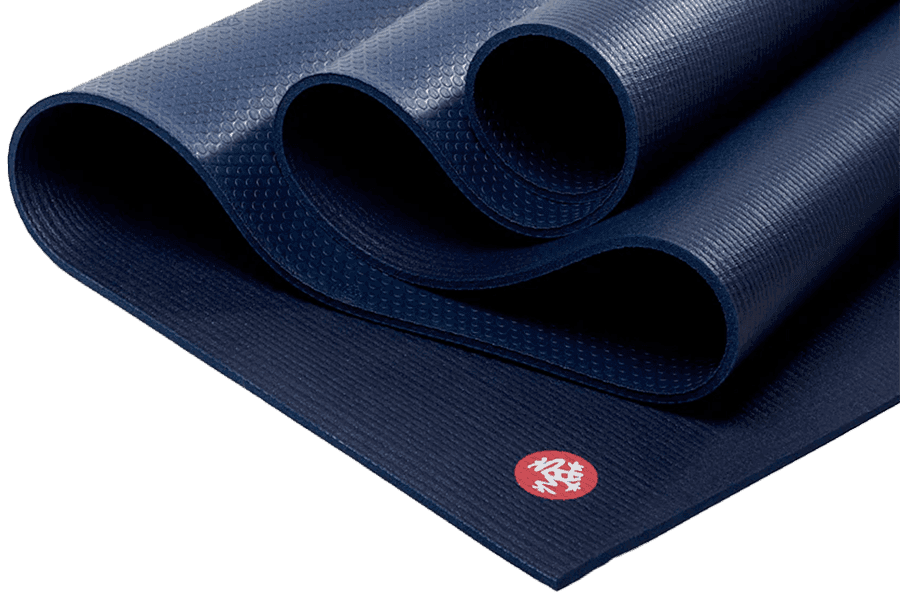
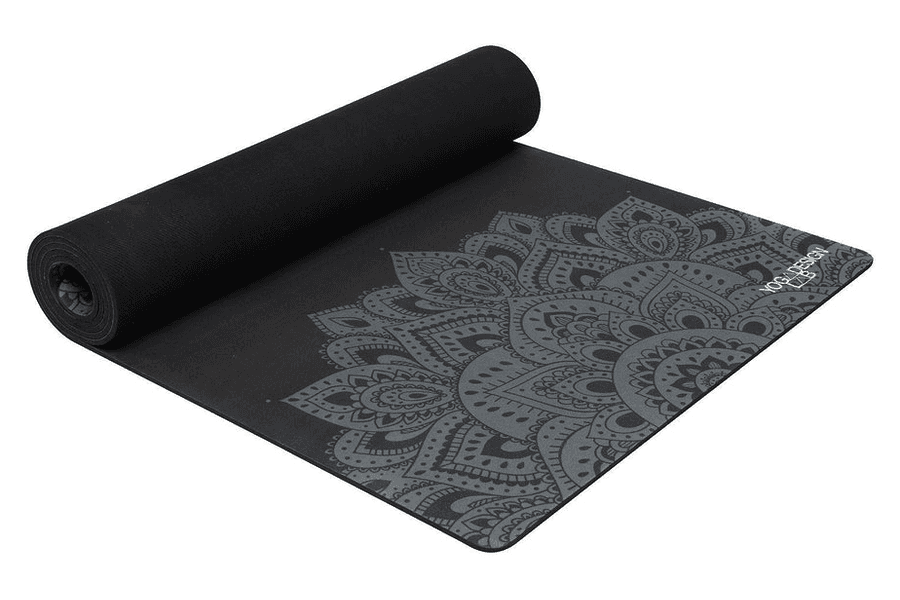
These two barely belong in the same category. The Manduka PRO is 6 mm of dense PVC, 7.5 pounds, engineered to still be in service in ten years. The Yoga Design Lab Combo bonds a recycled microfiber towel to a 3.5 mm rubber base, prints it with a design, and lets you put the whole thing in a washing machine. One is a piece of equipment; the other is closer to a mat and towel you never have to align again.
As an Amazon Associate, we earn from qualifying purchases made through links on this page. How this works
The quick answer
The Combo solves a specific problem well: if you already practice on a towel over a mat, it collapses two items into one washable layer for $117, and the prints are genuinely nice. What it doesn't do is grip like a mat. GearLab scored its traction 4 out of 10 dry and 4 wet, the lowest of any premium mat in a 19 mat test, and ranked it 17th overall. It's also thin at 3.5 mm and narrow at 24 inches.
Buy the Combo if the washing machine and the towel-free setup are what you actually want. Buy the PRO if you want a mat that supports you, grips once broken in, and outlasts several Combos.
Get the Manduka PRO if...
- You want a firm, stable platform for balance work and inversions
- You want a mat measured in decades rather than seasons
- You practice on hard floors and want 6 mm of dense support
- You have a latex allergy; the PRO is PVC and the Combo has a rubber base
Get the Yoga Design Lab Combo if...
- You already practice on a towel and want to stop chasing it around
- You want a mat you can machine wash on a gentle cycle
- You want 4.9 pounds instead of 7.5, and a strap in the box
- You want a printed design rather than a slab of black
Side by side
Price
The Combo lists for $27 less.
$144
List price · check price at Amazon
$117
List price · check price at Amazon
Thickness
The PRO is 71% thicker.
6 mm0.24″
3.5 mm0.14″
Weight
The Combo is 2.6 lbs lighter.
7.5 lbs3.4 kg
4.9 lbs2.2 kg
Size
The PRO is 1″ longer; the PRO is 2″ wider.
Same on both
- Both are firm rather than plush
- Neither should sit in direct sun for long
- Both sell on Amazon as well as direct
- Neither is reversible; each has a definite top side
Full specs
Dimensions
Materials & build
Buying
- Short68" × 26"
- Long85" × 26"
- Long & Wide79" × 52"
- Squared78" × 78"
- Combo 5.5mm70" × 24"
- Combo Flow 1.5mm70" × 24"
These aren’t really the same product
The Manduka PRO is 6 mm of dense German PVC weighing 7.5 pounds, sold on the promise that it will still be in service in a decade. The Yoga Design Lab Combo bonds a recycled microfiber towel to a 3.5 mm rubber base, prints a design on it, and lets you put the whole thing through a washing machine.
One is a piece of long-term equipment. The other is a mat and towel merged into a single layer so you stop chasing a towel across the floor mid-flow. If you’re cross-shopping them, you’re probably deciding whether you want that towel setup at all.
Grip: a genuinely split record
Yoga Design Lab’s pitch is that the microfiber gets grippier as it absorbs sweat, and its own listings carry thousands of reviews averaging close to five stars, with hot yoga owners among the happiest. That’s a lot of people who aren’t wrong about their own practice.
Professional testing disagreed sharply. GearLab rated the Combo 4 of 10 for grip both wet and dry, the lowest of any premium mat in its 19-product test, placed it 17th overall, and wrote that it was more slippery than they hoped for during practice. Its listed cons are blunt: slippery for dry and wet grip, collects lint, narrow.
Our read is that both accounts describe the same mat. A damp microfiber towel grips well and a dry one slides, so the Combo rewards the sweaty practice it was designed for and frustrates everyone else. The PRO is the mirror image: slick when new, needs a few weeks of practice to come good, and then grips well for years with dry hands while giving up entirely once sweat pools. GearLab scored the PRO 8 of 10 for grip and 9 dry.
Cushion: 6 mm of dense PVC against 3.5 mm of anything
This one isn’t close. GearLab gave the PRO a perfect 10 for comfort and support and ranked it first of 19 mats largely on that planted, supportive density; the Combo scored 6. Three and a half millimeters is thin under kneeling poses and wrists on a hard floor, and the microfiber layer adds texture rather than padding.
If you want the Combo concept with more under you, Yoga Design Lab sells the same mat in a 5.5 mm version for about $14 more, and that is the one to look at if your floors are unforgiving. Nothing in the Combo line matches the PRO for support.
The washing machine is the Combo’s real advantage
Yoga Design Lab recommends hand washing to extend the mat’s life, but permits machine washing on a gentle cycle in a machine without a center agitator, using mild soap. For anyone whose current setup involves laundering a yoga towel every week, that folds a chore into the mat itself, and it’s a genuine quality-of-life feature.
The PRO is a wipe-down product and always will be: a cloth, water or a mild cleaner, air dry. It also never needs more than that, because a closed PVC surface absorbs nothing in the first place. Two different solutions to the same hygiene problem, and the Combo’s is the one that suits a mat you sweat into heavily.
Size and weight
The PRO is 71″ × 26″ and the Combo 70″ × 24″, so the Combo is an inch shorter and two inches narrower. GearLab listed narrowness among its drawbacks, and 24 inches does feel tight in wide-stance work if you have broad shoulders.
Weight runs the other way, and decisively for anyone who carries a mat. The Combo lists at 4.9 pounds and weighed 4.6 on GearLab’s scale; the PRO is 7.5 and is the mat owners admit stopped leaving the house. A carry strap comes in the Combo’s box; the PRO comes with nothing. If portability matters and you want the Manduka build, the PROlite is the mat to compare instead.
Durability: decades against seasons
GearLab’s testers came across instructors’ PRO mats between five and twenty years old and still in service, and Manduka’s lifetime guarantee makes that contractual: roughly ten years of regular use with one replacement in the fine print, from an authorized seller, and on Amazon only when sold and shipped by Amazon itself.
The Combo is a textile bonded to rubber, and textiles pill, fade and lose loft with washing. GearLab rated its materials 5 of 10 and noted the surface collects lint. Yoga Design Lab offers 30-day returns on unused mats and no warranty, so once you practice on it, it’s yours. Owners report several good years from one; nobody reports a decade.
Looks, sizes, and materials
Prints are the reason Yoga Design Lab exists, and there were 19 designs available in the 3.5 mm at last check, printed with water-based inks on recycled PET microfiber over a natural rubber base. The line also runs a 1.5 mm travel version around $83 and the 5.5 mm at about $131.
The PRO comes in black plus 13 more colorways, and looks the same in year five as in month one because nothing soaks into it. One materials note that can decide the page outright: the Combo sits on natural rubber, so it isn’t safe with a latex allergy. The PRO is PVC and is.
Price and value
List prices are $144 for the PRO and $117 for the Combo, and both sell on Amazon as well as direct. Check the current price of the PRO at Amazon and the Combo at Amazon before deciding.
The $27 gap understates the difference in what you get. The PRO’s price includes a decade of coverage; the Combo’s includes a strap and a print. If you were otherwise going to buy a mat plus a good yoga towel, though, the Combo is competing against that combined total rather than against the PRO alone, and it looks a lot better from that angle.
Bottom line
Buy the PRO if you want support, stability and a mat you stop thinking about for ten years. It’s firmer, wider, latex free, and the highest-scoring mat in the most thorough test we can find. Accept the break-in period, the 7.5 pounds, and a towel in heated rooms.
Buy the Combo if the towel-free, washable setup is specifically what you want and you sweat enough to activate the surface. Go in knowing testers found it slippery when dry and that 3.5 mm is thin. If it’s sweat you’re solving for rather than laundry, our PRO vs GRP Adapt 2.0 comparison covers the mat GearLab actually picked for hot yoga.
Manduka PRO
List price $144
Frequently Asked Questions
- Is the Combo actually grippy?
- The record is split, and we'd rather show you both halves. Yoga Design Lab's pitch is that the microfiber gets grippier as it absorbs sweat, and its own listings carry thousands of reviews averaging close to five stars, with owners praising it in hot classes. GearLab disagreed sharply: it rated the Combo 4 out of 10 for grip both wet and dry, put it 17th of 19 mats, and wrote that it was more slippery than they hoped for during practice. Our read: a damp microfiber towel grips well, a dry one slides, so the mat rewards the sweaty practice it was built for and frustrates everyone else.
- Can you really put it in the washing machine?
- Yes, with conditions. Yoga Design Lab recommends hand washing to extend the mat's life, and says machine washing is fine on a gentle cycle in a machine without a center agitator, using mild soap. That's a real advantage over the PRO, which you wipe down and never soak. If your current setup involves washing a yoga towel every week, the Combo folds that chore into the mat itself.
- Is 3.5 mm enough cushion?
- For a lot of practices, no. GearLab rated the Combo 6 of 10 for comfort and support against a perfect 10 for the PRO, and 3.5 mm on a hard floor is thin under kneeling poses and wrists. Yoga Design Lab does sell the same mat in a 5.5 mm version for $131, which is the one to look at if cushion matters to you. The PRO's 6 mm of dense PVC is the firmest, most supportive platform in this comparison by a wide margin.
- How long will each mat last?
- Not remotely the same. The PRO is a decade mat: GearLab found instructors' PROs five to twenty years old still in service, and Manduka's lifetime guarantee works out to roughly ten years of regular use with one replacement. The Combo is a textile bonded to rubber, and textiles pill, fade and lose loft with washing; GearLab rated its materials 5 of 10 and noted it collects lint. Yoga Design Lab offers 30-day returns on unused mats and no warranty.
- What sizes and prints does the Combo come in?
- The mat is 70 by 24 inches, a little shorter and narrower than the PRO's 71 by 26. Yoga Design Lab sells it in three thicknesses at last check: 1.5 mm for travel at $83, this 3.5 mm at $117, and a 5.5 mm at $131. Prints are the point of the brand, and there were 19 designs available in the 3.5 mm when we checked. A carry strap is included, which the PRO doesn't do.
- Which one should a beginner buy?
- Neither, necessarily. The Combo asks you to already know that you practice with a towel, and the PRO asks for a break-in period and $144 before you know whether yoga will stick. A beginner who sweats might be happier with a straightforward rubber mat, and a beginner on a budget is well served by a $30 starter mat. Both mats here are for people who've figured out what they need.
Related comparisons
- Yoga Design Lab Combo 3.5mm vs b, halfmoon B Mat Everyday 4mm
- Manduka PRO vs b, halfmoon B Mat Strong 6mm
- Manduka PRO vs Alo Warrior
- Manduka PRO vs Yoloha Unity Pro Cork
- Lululemon The Mat 5mm vs Yoga Design Lab Combo 3.5mm
- Manduka PROlite vs Yoga Design Lab Combo 3.5mm
- Manduka PROlite Long vs Yoga Design Lab Combo 3.5mm
- JadeYoga Harmony 74" vs Yoga Design Lab Combo 3.5mm
- Manduka eKO Lite Long vs Yoga Design Lab Combo 3.5mm