Manduka PRO vs Gaiam Performance Dry-Grip Long & Wide: Which One Should You Buy?
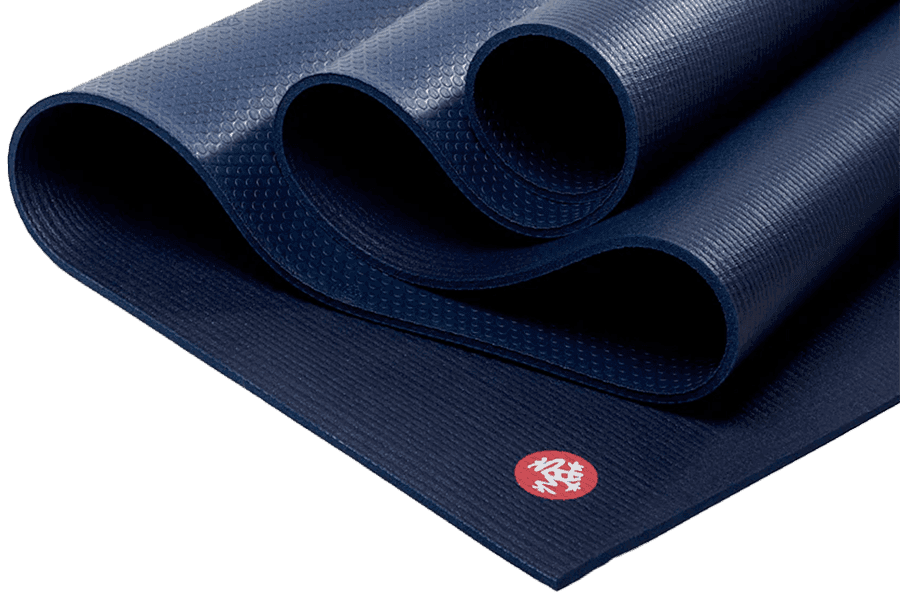
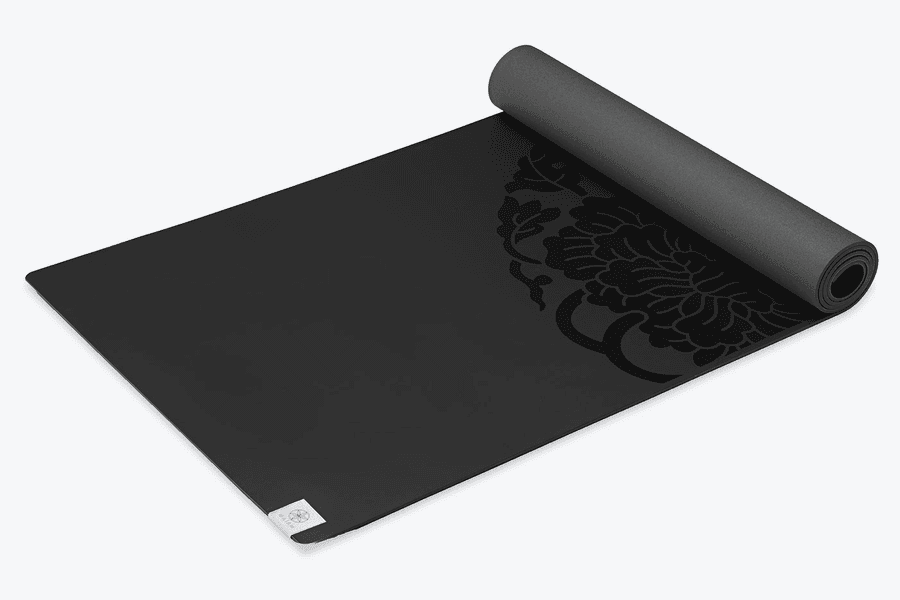
Gaiam's Long & Wide Dry-Grip is one of the few big mats under $80, at 78 by 26 inches against the PRO's 71 by 26. Both are PVC, both carry lifetime guarantees on paper, and both weigh about 5 pounds or more. The seven extra inches are real, and so is the reason the Gaiam costs half as much.
As an Amazon Associate, we earn from qualifying purchases made through links on this page. How this works
The quick answer
The PRO is the better mat: denser, firmer, first of 19 in GearLab's 2026 test at 91 out of 100, and built to last a decade. The Gaiam's advantage is size and price. You get 78 inches of length and 26 of width for $74.98, which is a genuinely hard combination to find, plus a moisture-wicking topcoat and Gaiam's lifetime guarantee.
If you are tall and the PRO's 71 inches leaves your head or heels off the mat, the Gaiam solves that for half the money and you should take it seriously. Otherwise the PRO is the mat we would buy, and if you want length from Manduka the 85 inch PRO Long exists at a price.
Get the Manduka PRO if...
- You want the firmest, most stable surface of the two
- You practice often and want a mat that lasts ten years
- You want dense PVC rather than a coated foam
- 71 inches is enough length for you
Get the Gaiam Dry-Grip Long & Wide if...
- You're tall and need 78 inches rather than 71
- You want a big mat without paying big-mat prices
- You want a lighter mat at 5 pounds against 7.5
- You'd rather keep about $69
Side by side
Price
The Dry-Grip L&W lists for about $69 less.
$144
List price · check price at Amazon
$74.98
List price · check price at Amazon
Thickness
The PRO is 20% thicker.
6 mm0.24″
5 mm0.2″
Weight
The Dry-Grip L&W is 3 lbs lighter.
8 lbs3.6 kg
5 lbs2.27 kg
Size
The Dry-Grip L&W is 7″ longer; same width.
Same on both
- PVC, latex-free
- 26 inches wide
- Closed-cell surfaces, so sweat sits on top
- Lifetime guarantees on paper
Full specs
Dimensions
Materials & build
Buying
The Gaiam is the cheapest big mat here
At 78″ × 26″ for $74.98, the Long & Wide Dry-Grip is one of the few genuinely large mats under $80. The PRO gives you 71″ × 26″ for $144. Same width, seven inches less length, twice the money.
Both are PVC, both are latex-free, both come with lifetime guarantees printed on the box. What differs is density, what the top surface is trying to do, and how much of the marketing survives independent testing.
Who actually needs 78 inches
If you are over about six foot, a 71 inch mat means your heels or your head are on the floor in savasana, and a long lunge puts your back foot off the end. The Gaiam fixes that, and it is the reason people buy this cut rather than the standard 68 inch Dry-Grip. Two extra inches of width over a normal mat helps in wide-legged stances.
If you are average height, the extra length mostly costs you floor space and a slightly fatter roll. Manduka’s own answer is the PRO Long at 85″ × 26″, which is longer than the Gaiam and considerably more expensive, at around nine pounds.
Gaiam says hot yoga; the testing says otherwise
Gaiam’s listing describes the Dry-Grip as ideal for hot yoga, with a topcoat that wicks moisture and grips harder as temperatures rise. GearLab tested the standard Dry-Grip, which is the same construction in a smaller cut, and scored it 3.5 out of 10 for wet grip. That was second from the bottom in a field of 19 mats. Dry grip came in at 6.5.
The PRO is better and still not a hot yoga mat: 9 dry, 7 wet, with slickness when really wet listed as one of its two drawbacks. If you practice in a heated room regularly, the honest recommendation is a towel over either mat, or a mat with an absorbent top such as the GRP Adapt 2.0.
Feel: dense slab against coated foam
The PRO packs 8 pounds into 6 mm across a smaller footprint. The Gaiam spreads 5 pounds across a bigger one at 5 mm. You feel that as a softer, slightly less planted surface under a standing foot, and as more give when you kneel.
GearLab gave the PRO a perfect 10 for comfort and support and rated the standard Dry-Grip 8, so this is not a disaster on Gaiam’s side. The bigger gap is materials, where the PRO scored 10 and the Dry-Grip scored 4.
The topcoat is the part that wears out
A dry-grip topcoat is a thin layer bonded to the PVC underneath, and it is doing all the work on the surface you touch. Coatings of this kind thin out where your hands and feet land, and once the coat goes the mat underneath is just PVC. That is the practical meaning of GearLab’s 4 out of 10 for materials.
The PRO has no coating. The fabric-like finish is the material itself, which is why it improves rather than degrades over the first few years, and why it is slick when brand new. Manduka retired its salt-scrub break-in advice; the current position is that regular use sorts it out.
Care: air it out, keep it out of the sun
Gaiam asks you to unroll the mat and air it for two to three days before the first session, because PVC releases a strong odor when first unwrapped, and the company publishes a guide about getting rid of the smell, which tells you how often it comes up. It also warns that extended sun exposure makes the mat fade and turn brittle.
The PRO arrives with a milder version of the same smell and then asks very little. Wipe it down, keep it out of the sun, and nothing soaks in because the surface is closed-cell. Neither mat should be deep cleaned with anything aggressive.
Two lifetime guarantees that cover different things
Manduka’s covers the mat against defects and wear for what the fine print calls roughly ten years of regular use, with one replacement and proof of purchase from an authorized seller. Amazon purchases count only when the mat is sold and shipped by Amazon itself. People do claim on it.
Gaiam’s covers manufacturing defects. A topcoat wearing thin or foam compressing is not a defect, and those are the two ways this mat actually ends. The warranty terms line up with how the two materials hold up in practice.
Price and value
List prices are $144 and $74.98. Check the current price on the PRO at Amazon and the Dry-Grip at Amazon, where the listing carries the size options and holds a 4.2 star average across roughly 2,500 ratings.
For a tall person the Gaiam is the better purchase at half the price, because no amount of density fixes a mat that is too short. For everyone else the PRO is the mat we would buy, and Gaiam’s standard 68 inch Dry-Grip is $5 cheaper again if length is not the point.
Bottom line
Buy the Gaiam Performance Dry-Grip Long & Wide if you are tall and need the room. Nothing else gives you 78 by 26 inches for $75, and the size advantage outweighs a lot of the spec-sheet argument if a standard mat leaves your feet on the floor.
Buy the Manduka PRO if 71 inches is enough and you want the mat to last. It won GearLab’s 2026 test at 91 out of 100 with perfect scores for comfort and materials. Just do not buy either one expecting it to handle a hot room without a towel.
Manduka PRO
List price $144
Frequently Asked Questions
- Is the Gaiam Dry-Grip actually good for hot yoga?
- Gaiam's listing says it is, and the independent testing says otherwise. GearLab tested the standard Dry-Grip, which is the same construction in a smaller cut, and scored it 3.5 out of 10 for wet grip, the second worst result in a field of 19. Dry grip came in at 6.5. The topcoat does wick some moisture, but it is not the hot yoga solution the packaging suggests. The PRO scored 7 wet, which is better and still not great.
- How much difference do seven inches make?
- More than people expect if you are over about six foot. On a 71 inch mat a tall person in savasana has heels or head on the floor, and in a long lunge the back foot ends up off the edge. At 78 by 26 the Gaiam fixes both. If you are average height, the extra length mostly costs you floor space and a little more mat to roll up.
- Why does the Gaiam cost half as much?
- Density and construction. The PRO is compressed PVC that weighs 7.5 pounds in a smaller footprint; the Gaiam is lighter foam with a polyurethane-style topcoat, at 5 pounds across a bigger area. GearLab rated the standard Dry-Grip 4 out of 10 for materials against the PRO's perfect 10. You feel it as a softer, slightly less planted surface, and you see it in how the mat ages.
- Both say lifetime guarantee. Do they mean the same thing?
- No. Manduka's fine print works out to roughly ten years of regular use, one replacement, and proof of purchase from an authorized seller. Gaiam's covers manufacturing defects, which is not the same as the topcoat wearing thin or the foam flattening, and wear is how these mats actually end. The warranty terms line up with how the two materials hold up.
- Does the Gaiam need airing out?
- Yes, and Gaiam says so directly: unroll the mat and air it for two to three days before the first session, because PVC mats release a strong odor when first unwrapped. Gaiam also warns that long sun exposure makes the mat brittle. The PRO arrives with a milder smell and asks for less.
- What if I want a long Manduka?
- The PRO Long is 85 by 26 inches, which is longer than the Gaiam and considerably more expensive, and it weighs around 9 pounds. The PROlite Long is 79 by 24 and much easier to carry. Whether the extra cost is worth it comes down to the same question as the standard sizes: how many years you expect to be on the mat.
Related comparisons
- Manduka X vs Gaiam Performance Dry-Grip Long & Wide
- Manduka PRO vs Alo Warrior
- Manduka PRO vs b, halfmoon B Mat Strong 6mm
- Manduka PRO vs Yoloha Unity Pro Cork
- Hugger Mugger Earth Elements 5mm vs Gaiam Performance Dry-Grip Long & Wide
- Manduka GRP Adapt 1.0 vs Gaiam Performance Dry-Grip Long & Wide
- Suga SugaMat vs Gaiam Performance Dry-Grip Long & Wide
- JadeYoga Level One vs Gaiam Performance Dry-Grip Long & Wide
- IUGA Eco Friendly Non Slip PU vs Gaiam Performance Dry-Grip Long & Wide