Manduka PRO vs Amazon Basics 1/4 Inch TPE: Which One Should You Buy?
The Amazon Basics TPE mat is different from Amazon's thick foam exercise pads: it's a real yoga mat, 6 mm, textured, and firm enough to stand on. That makes this a straightforward budget-versus-premium comparison, with the same thickness on both sides and about $120 between them. The Manduka PRO's price buys density, decades of durability, and a guarantee. The Amazon Basics gives you a perfectly workable practice surface for the price of a class pass.
As an Amazon Associate, we earn from qualifying purchases made through links on this page. How this works
The quick answer
These are both 6 mm yoga mats, and the Amazon Basics TPE is a legitimately usable one: light at 2 pounds, gripped well by owners from day one, strap included, about $26. What it doesn't have is what the $144 buys on the PRO side: PVC dense enough to support joints and hold balance poses rock steady, a surface that improves for years instead of compressing, and a lifetime guarantee. Budget TPE foam softens and wears with regular practice, and a 1 year warranty says as much.
If you're starting out or practice occasionally, buy the Amazon Basics and spend the difference on classes; it's the right first mat. If you practice regularly and know it, buy the PRO once instead of replacing cheap mats every year or two.
Get the PRO if...
- You practice several times a week and want one mat for a decade
- You want dense cushioning that protects knees on hard floors
- You want a 26" wide mat instead of 24"
- The lifetime guarantee matters to you
Get the Amazon Basics TPE if...
- You're new to yoga and aren't sure it will stick
- You want grip that works on day one, no break-in
- You carry your mat and 2 pounds beats 7.5
- You'd rather keep about $120
Side by side
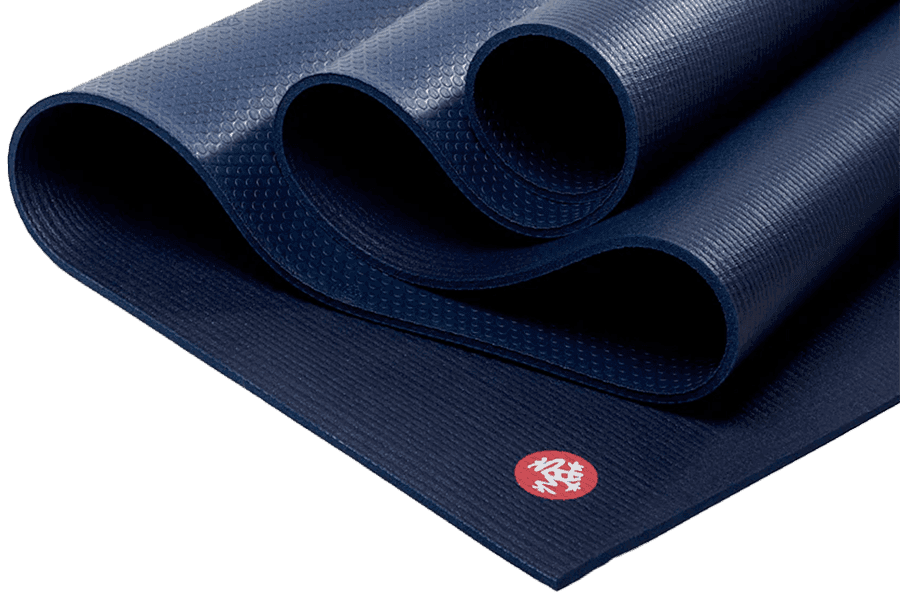
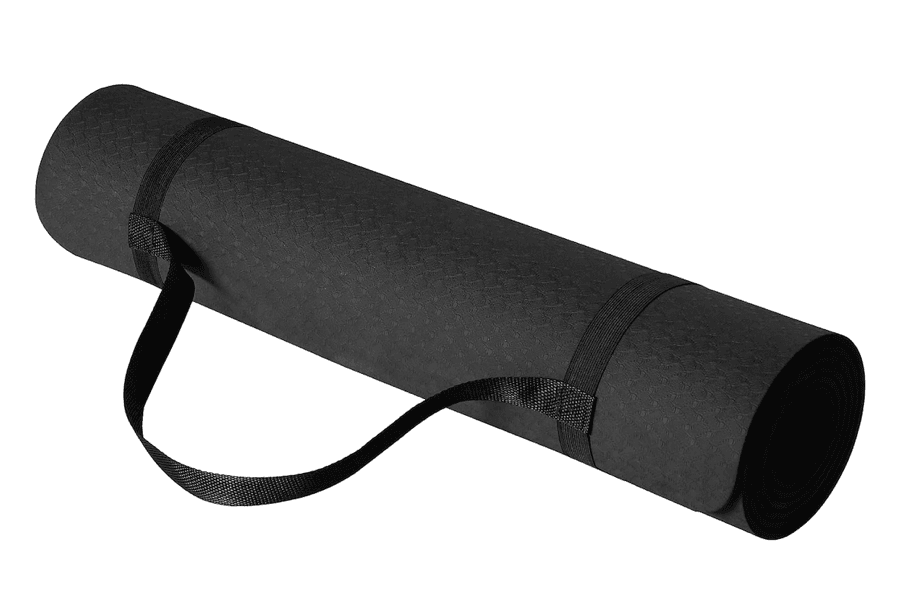
Price
The Amazon Basics lists for about $118 less.
$144
List price · check price at Amazon
$26.36
List price · check price at Amazon
Thickness
Identical thickness.
6 mm0.24″
6 mm0.24″
Weight
The Amazon Basics is 5.5 lbs lighter.
7.5 lbs3.4 kg
2 lbs0.9 kg
Size
The Amazon Basics is 2.6″ longer; the PRO is 2″ wider.
Same on both
- About 6 mm thick
- Firm enough for standing poses
- Textured surfaces that wipe clean
- Neither absorbs sweat
Full specs
Dimensions
Materials & build
Buying
Finally, a fair fight at the price extremes
Most budget mats that get compared to the Manduka PRO are thick foam pads that can’t actually hold a yoga practice. This one can. The Amazon Basics TPE is a standard 6 mm yoga mat: textured, firm enough to stand on, 73.6″ × 24″, 2 pounds, strap included, about $26. Which makes this page the honest version of the question people usually mean: what does $144 buy that about $26 doesn’t, when both mats are the same thickness?
The short answer: density, longevity, and a guarantee. The longer answer depends on who you are, because for one large group of readers the cheap mat is genuinely the right purchase, and we’ll be specific about who that is.
Same 6 mm, very different material inside it
The whole comparison hides inside the weight spec. Both mats are about 6 mm thick, but the Amazon Basics weighs 2 pounds and the PRO weighs 7.5. That missing weight is missing density: TPE is a light foam, and the PRO is PVC packed nearly as hard as it can be packed.
Density is what you feel. The PRO barely compresses, so knees on a hard floor stay supported and balance poses sit on a steady base; OutdoorGearLab ranked it first of the 19 mats it tested with a perfect comfort and support score. Budget TPE gives more underfoot: testers of comparable budget TPE mats note the cushion reads as squishy and gives up some stability in balance poses. It’s a workable surface, clearly better than thick foam pads, just not the planted feel the PRO sells.
Grip: the cheap mat wins the first month
Out of the box, the Amazon Basics is the grippier mat, which surprises people. Its textured TPE surface works from the first practice, and owner consensus on grip is solidly positive for slow and moderate flows. The PRO ships slick, takes a few weeks of regular practice to break in, and that break-in remains the most common complaint about an otherwise beloved mat; Manduka’s current position is that the slickness simply resolves with use.
Play the tape longer and the PRO passes it: a broken-in PRO grips well dry and keeps improving for years, while TPE texture wears smooth with use. And neither mat absorbs sweat, so a hot or sweaty practice means a towel on either. If wet grip is the priority, the right answer is a different mat entirely, like Manduka’s GRP Adapt 2.0.
Two pounds vs seven and a half
The Amazon Basics is the easiest mat to live with that we cover: 2 pounds, rolls small, strap included, no thought required. The PRO is 7.5 pounds that mostly stays where you unroll it; commuting with it is a known lifestyle decision. If your mat rides a bike rack or a shoulder to class several times a week, the weight column alone could justify the cheap mat, and light commuter mats are exactly where TPE earns its place in the market.
The PRO answers with width: 26″ against 24″. Two inches sounds like nothing and isn’t; wide-armed poses and anything with lateral movement use every bit of it.
Durability: the $120 is mostly buying years
Budget TPE mats are consumables. The foam compresses with regular practice, the texture wears, and the 1 year warranty is a fair statement of the design life; expect a couple of years of steady use, less if it’s daily. Nothing about that is a scandal at about $26. It’s simply what light foam does.
The PRO is the category’s proof that a mat can be a durable good: GearLab found instructors’ PROs still in service after five to twenty years, and the lifetime guarantee, roughly ten years of regular use with one replacement in the fine print, backs it with proof of purchase from an authorized seller; Amazon counts when the mat is sold and shipped by Amazon itself. Practice three times a week and the PRO’s cost per year quickly undercuts a parade of replaced budget mats.
The two-mat strategy is legitimate
Here’s the advice we’d give a friend starting from zero: buy the Amazon Basics first. It’s a real yoga mat at nearly a disposable price, and its job is to answer a question no spec sheet can, which is whether you’ll still be practicing in six months. If the answer turns out to be yes, buy the PRO, or whichever premium mat your practice has taught you to want, and retire the TPE mat to travel duty or a relative.
The people who should skip the cheap first chapter are the ones who already know: you practice regularly on studio PROs, you like the firm feel, and the only thing between you and the mat is the price tag. Buying a $26 placeholder on the way to an inevitable PRO just costs you $26.
Price and value
List prices are $144 for the PRO and about $26 for the Amazon Basics TPE, and the Amazon number wanders week to week, so check the current price on the PRO and the Amazon Basics TPE mat before you decide.
Both are priced honestly for what they are. The TPE mat is the cheapest legitimate practice surface we cover, and its colorway lineup, 4 at last count, even includes options beyond gym-mat black. The PRO’s premium buys the decade, the density, and the guarantee. You could buy six of the cheap mat for one PRO; whether that sounds like a good deal or like six mats you’ll keep replacing is most of what decides this page.
Bottom line
Get the Amazon Basics TPE if you’re starting out, practice casually, or need a light mat that goes everywhere. It’s a real 6 mm yoga mat with day-one grip for about the price of a single studio class, and recommending it to beginners is easy.
Get the PRO if yoga is already part of your week. The density under your knees, the width, the years, and the guarantee are all real, and they’re exactly the things a budget mat can’t fake. It’s the difference between buying a mat and buying your mat.
Manduka PRO
List price $144
Amazon Basics 1/4 Inch Thick TPE
List price $26.36
Frequently Asked Questions
- Is the Amazon Basics TPE mat good for beginners?
- Yes, and it's the audience we'd recommend it to. It's a standard 6 mm thickness, light enough to carry anywhere, grips acceptably from the first use, and costs about $26 with a carrying strap included. A beginner gets everything they need to find out whether yoga sticks. The things it gives up, long-term durability and dense joint support, matter most to people practicing several times a week.
- If both mats are 6 mm, why does the PRO feel so different?
- Density. The PRO's 6 mm is dense PVC that barely compresses, so it supports joints and holds balance poses steady; OutdoorGearLab gave it a perfect comfort and support score. Budget TPE is a light foam, which is why the whole mat weighs 2 pounds, and testers of comparable budget TPE mats note the cushion gets squishy and gives up some stability in balance poses.
- How long does the Amazon Basics TPE mat last?
- Expect a couple of years of regular practice, less if it's daily. Budget TPE compresses and wears with use, and the 1 year warranty is a fair signal of the design life. At about $26 that's an acceptable deal, but for committed practitioners the PRO works out cheaper: one $144 mat that runs a decade or more beats replacing a $26 mat every year or two.
- Which mat grips better?
- In the first month, the Amazon Basics: its textured TPE surface works out of the box, while the PRO ships slick and needs a few weeks of practice to break in, which is the most common complaint about it. After break-in the PRO's dry grip is excellent and keeps improving. Neither mat handles heavy sweat well; both have non-absorbent surfaces, so hot yoga calls for a towel or a purpose-built mat either way.
- What sizes and colors does each come in?
- The Amazon Basics TPE comes in one size, 73.6" × 24", in 4 colorways at last count. The PRO is 71" × 26" in around 14 colorways, and the PRO line adds Long, Long & Wide, and Squared sizes if you need more mat. The 2 extra inches of width are one of the PRO's quieter advantages; you notice them in wide-armed poses.
- Should I buy the cheap mat first and upgrade later?
- It's a sensible path, and we'd endorse it for anyone unsure about their practice. Start on the Amazon Basics, and if you're still practicing when it starts to compress or shred, buy the PRO with confidence that you'll use it for a decade. The only people who should skip straight to the PRO are those already practicing regularly on studio mats and sure of what they want.
Related comparisons
- Amazon Basics 1/4 Inch Thick TPE vs Gruper TPE 6mm
- Amazon Basics 1/4 Inch Thick TPE vs Gaiam Premium 6mm
- Amazon Basics 1/4 Inch Thick TPE vs Gaiam Essentials 6mm
- Manduka PRO vs b, halfmoon B Mat Strong 6mm
- Amazon Basics 1/4 Inch Thick TPE vs YogaAccessories Extra Thick Deluxe 1/4"
- Manduka PRO vs Alo Warrior
- Manduka PRO vs Yoloha Unity Pro Cork
- Amazon Basics 1/4 Inch Thick TPE vs Gaiam Premium Reversible 6mm
- Amazon Basics 1/4 Inch Thick TPE vs Gaiam Classic Print 4mm