Manduka PRO Squared vs Amazon Basics 1 Inch: Which One Should You Buy?
The Amazon Basics is the thickest mat we cover, a full inch of soft NBR foam. The PRO Squared is the biggest, a 78 inch square of dense 6 mm PVC that installs in a room as a permanent practice floor. Between them sit about $312 and a spec-sheet trap: the $38 pad is four times thicker than the $350 floor, and that extra depth is exactly what makes it unusable for standing yoga.
As an Amazon Associate, we earn from qualifying purchases made through links on this page. How this works
The quick answer
The Amazon Basics gives you an inch of plush foam for about $38: genuinely lovely under knees, elbows, and backs, light at 4.6 pounds, carry strap included. It also sinks and sways under any pose that loads hands or feet, and owner reports are split, with some mats ripping or turning slippery early. The Squared is the opposite object: 26 pounds of dense PVC covering a 78 inch square, stable under anything, guaranteed for roughly a decade of regular use, and never leaving the room you unroll it in.
Buy the Basics for floor exercise, physical therapy movements, and stretching, where deep soft foam is the whole point. Buy the Squared only for a serious standing practice at home with a room to give it. If what you actually want is yoga on a budget, skip both and get a firm mat in the $60 to $150 range.
Get the PRO Squared if...
- You run a real standing practice at home and have the floor space
- You want stability under balance poses, not sink
- You're buying a practice surface for the next decade
- You want a mat that's always down, flat, and ready
Get the Amazon Basics if...
- Your floor time is stretching, core work, or PT exercises
- You want maximum padding under knees and back for about $38
- You need something light that rolls away into a closet
- You'd rather replace a cheap pad someday than commit $350
Side by side
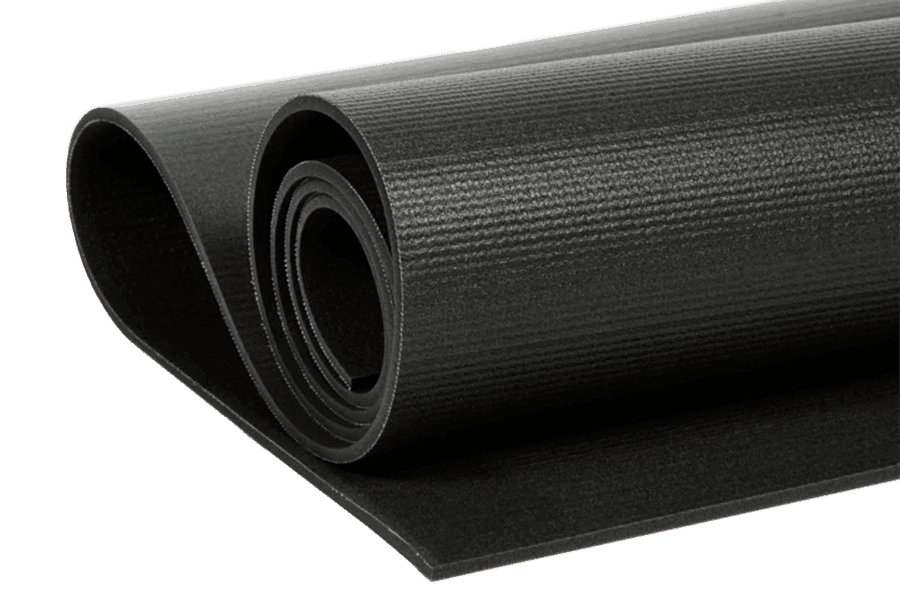
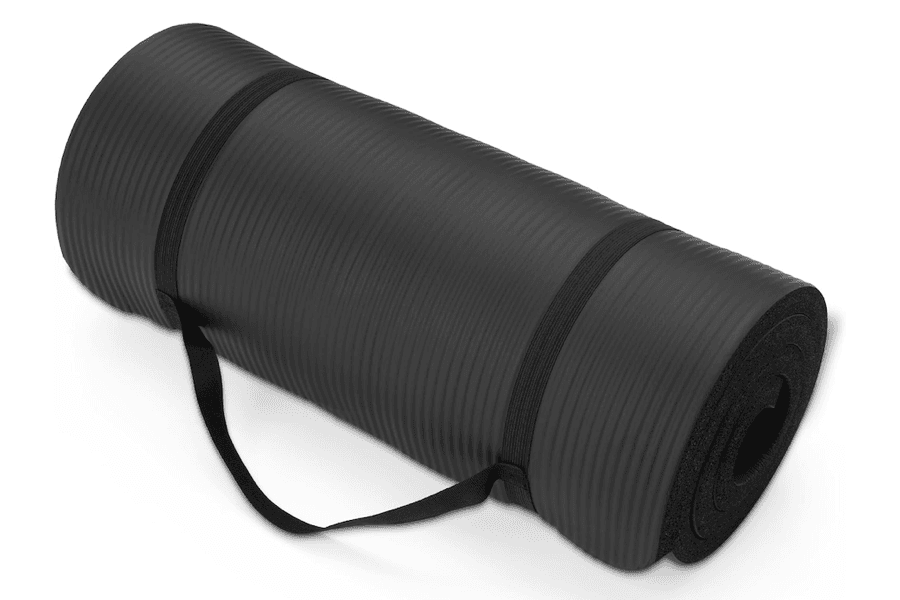
Price
The Amazon Basics lists for about $312 less.
$350
List price · check price at Amazon
$38.40
List price · check price at Amazon
Thickness
The Amazon Basics is 323% thicker.
6 mm0.24″
25.4 mm1″
Weight
The Amazon Basics is 21.4 lbs lighter.
26 lbs11.8 kg
4.6 lbs2.1 kg
Size
The Squared is 4″ longer; the Squared is 54″ wider.
Same on both
- Much thicker than a standard yoga mat
- Surfaces that wipe clean
- Neither absorbs sweat
Full specs
Dimensions
Materials & build
Buying
The thickest mat we cover meets the biggest
These two mats each take one spec to its extreme. The Amazon Basics is the thickest thing on this site, a full inch of soft NBR foam, 74″ × 24″, 4.6 pounds, with a carry strap and a price around $38. The PRO Squared is the largest, a 78 inch square of dense 6 mm PVC weighing 26 pounds, sold as a permanent practice floor for a home studio.
The trap in the spec sheet is that the cheap mat looks more generous: four times the thickness for about a ninth of the money. But an inch of soft foam and 6 mm of dense PVC are built for opposite jobs, and the depth that makes the Basics so pleasant to lie on is the very thing that keeps it from holding a standing yoga pose.
Depth vs density under a loaded joint
What protects a knee or a wrist on a hard floor is not how much material sits under it but how much that material pushes back. The Squared’s PVC barely compresses, so a kneeling joint stays suspended above the floor; that density is why the PRO construction earned a perfect comfort and support score at OutdoorGearLab. The Basics’ foam does the opposite: press a knee in and it travels through most of that inch until the floor stops it.
Spread your weight out, though, and the foam is the nicer place to be. Lying flat, the load is distributed and nothing bottoms out, which is why owners doing physical therapy routines and long stretching sessions rate it so highly. The honest split: resting bodies prefer the foam, loaded joints prefer the PVC.
Standing poses settle the yoga question
An inch of soft foam moves under a standing foot. Tree pose wobbles from the ground up as the surface gives, lunges land vaguely, and anything on one leg becomes a test of the mat rather than of you. OutdoorGearLab, reviewing a comparable 1 inch foam mat, put it plainly: that much cushioning simply doesn’t provide a stable surface for balancing. No price makes that acceptable for standing practice, because softness is what the product is.
The Squared sits at the far opposite end of yoga surfaces: dense enough to read as sprung flooring, planted enough that nothing shifts mid-pose, with 78 inches of run in every direction so flowing sequences never step off an edge. If standing work is your practice, the comparison ends in this section.
A year in, the gap widens
Soft foam loses a little loft with every compression, and the Basics’ owner reviews reflect it: opinions split between mats that hold up fine and mats that rip or turn slippery with use. Amazon backs it for 1 year, which is longer than most budget mats get and a fair statement of what to expect. At this price, replacement is part of the plan, not a failure.
The Squared is built for the opposite timeline. GearLab keeps finding PRO-family mats still in service after five to twenty years, and Manduka’s lifetime guarantee stands behind it, defined in the fine print as roughly ten years of regular use with one replacement, proof of purchase from an authorized seller required. Nothing about a foam pad and a PVC floor ages the same way.
One rolls into a closet, one becomes the room
Day to day they demand completely different things from your home. The Basics weighs 4.6 pounds, rolls up with its strap, and disappears into a closet or a car trunk. Its one arrival ritual is odor: Amazon’s own listing recommends airing the mat out for 48 hours to let the new-foam smell fade, and owner reviews agree it does.
The Squared is a one-time installation. You need a clear 78 by 78 inch patch of floor, ideally a spare room or a garage corner, and once the 26 pound roll is flattened out it stays. That permanence is the appeal for daily practitioners, no setup, always flat, but it means the Squared cannot be the mat you take anywhere, ever. Its PVC is made under OEKO-TEX Standard 100 certification, and odor complaints are rare.
If budget yoga is the goal, buy neither
A reader torn between these two prices usually wants a third mat. For actual yoga on a budget, a firm 5 to 6 mm mat in the $60 to $150 range does the job the foam pad cannot and the Squared over-serves: the Manduka Begin at $62, the Manduka X at $72, or the standard PRO at $144, which is the Squared’s exact construction in a portable size. Our PRO Squared vs Amazon Basics 1/2 Inch comparison covers the thinner sibling of this same foam pad.
Price and value
List prices are $350 for the Squared and about $38 for the Amazon Basics, whose price moves with colorway and season the way Amazon pricing does. Check the current price on the PRO Squared and the Amazon Basics 1 inch mat before deciding.
Judged inside their own categories, both prices are fair. The Basics is one of the cheapest ways to put deep cushioning on a hard floor, and the Squared’s cost spread across a guaranteed decade of daily practice is ordinary mat money per year. The mistake is paying either price for the other mat’s job: foam for poses, or a $350 floor for crunches.
Bottom line
Buy the Amazon Basics for what its own listing describes: floor workouts, physical therapy exercises, stretching, and padding a hard or cold floor. It is soft, cheap, easy to store, and comfortable in exactly the positions where a yoga mat is overkill. Expect to replace it in a couple of years and don’t ask it to hold a standing pose.
Buy the PRO Squared only if a serious home practice has outgrown a normal mat and you have a room to give it. It is the most stable, most durable, most permanent yoga surface we cover, and the least flexible purchase: 26 pounds, one location, $350. Households that do both kinds of floor work sometimes end up with one of each, and at these prices that combination still costs less than many single premium mats.
Amazon Basics 1 Inch Extra Thick
List price $38.40
Frequently Asked Questions
- Isn't an inch of cushioning better for bad knees than 6 mm?
- Only when you're resting on it. Kneeling or lying, the deep foam feels wonderful, and owners doing physical therapy routines praise it for exactly that. Under a loaded joint the soft foam compresses until your knee is nearly on the floor anyway, while the Squared's dense PVC barely compresses and keeps the joint suspended. Comfort at rest favors the foam; support under load favors the dense mat.
- Can you do yoga on the Amazon Basics 1 inch mat?
- Seated, supine, and restorative work, comfortably. Standing practice is where it falls apart: an inch of soft foam shifts under a standing foot, so balance poses wobble from the ground up, and OutdoorGearLab said of a comparable 1 inch foam mat that its extreme cushioning simply doesn't provide a stable surface for balancing. No mat this soft holds Warrior poses, at any price.
- How is this different from the Amazon Basics 1/2 inch mat?
- Same soft NBR foam at double the depth, sold as options on the same listing. The 1/2 inch version is the one outlets like Forbes and CNN Underscored actually reviewed as a budget comfort pick, and it rolls into a more manageable bundle. The 1 inch is plusher again and even less stable. For most floor-exercise buyers we'd take the 1/2 inch; for standing yoga, neither.
- How long does each mat last?
- The Basics carries a 1 year warranty, and that reads about right: soft foam loses loft with every compression, and owner reviews split between mats that hold up and mats that rip or turn slippery. The Squared's dense PVC is the most durable construction in yoga; GearLab keeps finding PRO-family mats in service after five to twenty years, and Manduka's lifetime guarantee covers roughly ten years of regular use with one replacement.
- Does the Amazon Basics mat smell out of the box?
- Enough that Amazon says so itself: the listing recommends airing the mat out for 48 hours before use to let the new-foam smell fade. Owner experiences vary and it does dissipate, but plan on unrolling it somewhere ventilated for a couple of days. The Squared's PVC is made under OEKO-TEX Standard 100 certification and strong odor is not a common complaint about it.
- What should I buy if $350 is out of the question?
- Not the foam pad, if yoga is the goal. A firm 5 to 6 mm mat in the $60 to $150 range does the actual job: Manduka's Begin at $62 and X at $72 are both stable enough for standing practice, and the standard 71" PRO at $144 is the same construction as the Squared in a portable size. The 1 inch Basics is a fine purchase only when floor exercise, not yoga, is the plan.
Related comparisons
- Amazon Basics 1 Inch Extra Thick vs Retrospec Solana 1"
- Amazon Basics 1 Inch Extra Thick vs Retrospec Solana 1/2"
- Amazon Basics 1 Inch Extra Thick vs Gaiam Essentials Fitness Mat 10mm
- Amazon Basics 1 Inch Extra Thick vs Gaiam Premium Reversible 6mm
- Manduka PRO Squared vs JadeYoga Fusion XW
- Amazon Basics 1 Inch Extra Thick vs Gaiam Premium 6mm
- Amazon Basics 1 Inch Extra Thick vs YogaAccessories Extra Thick Deluxe 1/4"
- Amazon Basics 1 Inch Extra Thick vs Gruper TPE 6mm
- Amazon Basics 1 Inch Extra Thick vs Gaiam Essentials 6mm