Manduka PRO Squared vs Amazon Basics 1/2 Inch: Which One Should You Buy?
This is the widest price gap we cover, about $328, and the two products barely belong to the same category. The Amazon Basics is half an inch of soft NBR foam with a carry strap, built for stretching and floor exercise. The PRO Squared is a 78 inch square of dense 6 mm PVC built to be a permanent yoga floor. Worth knowing up front: the $22 mat is the thicker one by a lot, and that depth is exactly what makes it wrong for standing yoga.
As an Amazon Associate, we earn from qualifying purchases made through links on this page. How this works
The quick answer
The Amazon Basics is a fine $22 exercise pad: deep, soft, light, genuinely comfortable to lie on, with a 1 year warranty that outruns most budget mats. It is not a yoga surface; soft foam sways under standing poses, concentrated weight sinks through it to the floor, and owners report it flattening within a year or two of frequent use. The Squared is a dense, stable, room-sized platform that will outlast every foam pad you ever own, priced accordingly, and impossible to move once unrolled.
For stretching, core work, or padding a hard floor, buy the Basics and keep the change; the Squared is the wrong tool for that at sixteen times the price. For an actual standing practice at home, the Squared works and the foam pad does not. And if $350 is absurd for your situation, the right answer is a firm $60 to $150 yoga mat, not a thicker soft one.
Get the PRO Squared if...
- You practice standing yoga at home, seriously
- Stability under balance poses matters to you
- You want support that holds its shape for years
- You want a surface with a decade-scale guarantee
Get the Amazon Basics if...
- The job is stretching, core work, or PT exercises
- You want soft, deep comfort for floor work
- $22 and 2.2 pounds fit the budget and the closet
- It pads a cold or hard floor, not a yoga practice
Side by side
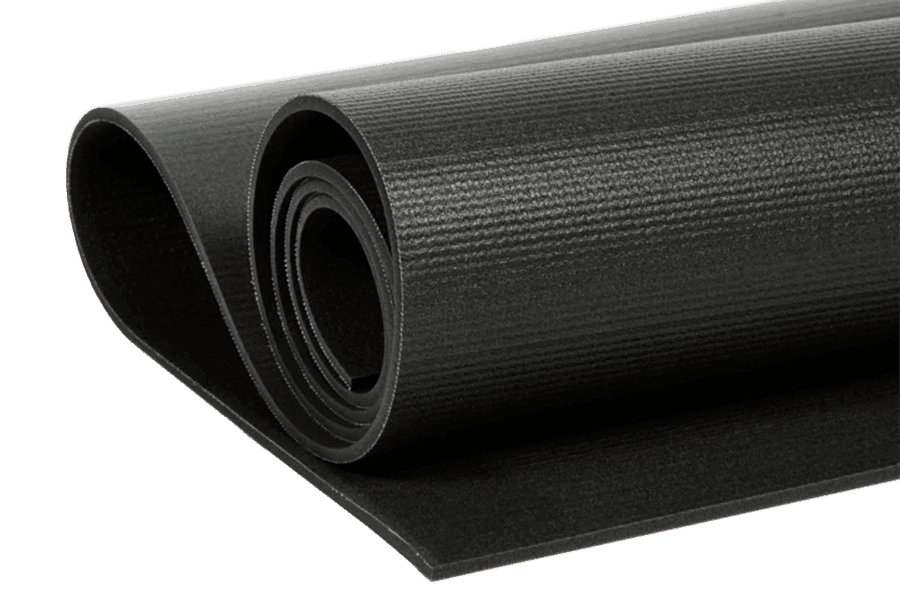
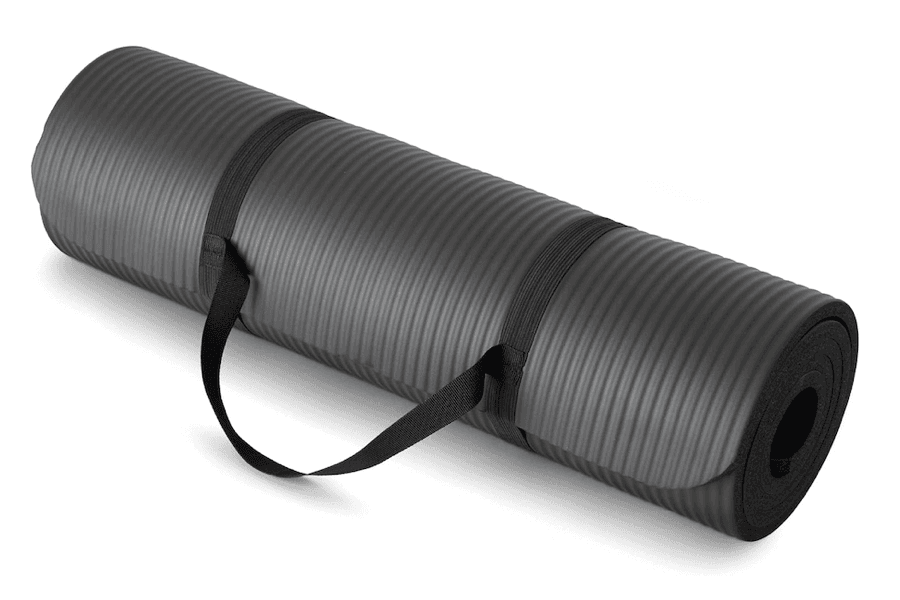
Price
The Amazon Basics lists for about $328 less.
$350
List price · check price at Amazon
$22.48
List price · check price at Amazon
Thickness
The Amazon Basics is 112% thicker.
6 mm0.24″
12.7 mm0.5″
Weight
The Amazon Basics is 23.8 lbs lighter.
26 lbs11.8 kg
2.2 lbs1 kg
Size
The Squared is 4″ longer; the Squared is 54″ wider.
Same on both
- Thicker than the standard 4 to 5 mm yoga mat
- Closed surfaces that wipe clean
- Neither absorbs sweat
Full specs
Dimensions
Materials & build
Buying
The $22 pad and the $350 floor
This is the largest price gap on this site, about $328, and the products at either end of it barely share a category. The Amazon Basics is a half-inch slab of soft NBR foam, 74″ × 24″, 2.2 pounds, with a carry strap, built for stretching and floor exercise. The PRO Squared is a 78 inch square of dense 6 mm PVC, 26 pounds, built to serve as a permanent home yoga floor for a decade or more.
The comparison is still worth doing carefully, because the spec sheet actively misleads here: the cheap mat is more than twice as thick as the expensive one, and that is precisely why it fails at yoga. The thickness number measures depth, and what standing practice needs is support.
Why 12.7 mm loses to 6
Cushioning under load is a density question. The Squared’s PVC barely compresses, so a knee or wrist pressing into it stays suspended above the floor, the property that earned the PRO construction a perfect comfort and support score at OutdoorGearLab. The Basics mat’s soft foam compresses completely under concentrated weight; press a knee in and it travels through most of that half inch before the floor catches it.
Spread your weight out and the foam wins honestly: lying on it is genuinely comfortable, CNN Underscored’s tester described it as almost buoyant, and for savasana or long stretching sessions it is the more pleasant surface. The question is what fraction of your floor time is spent lying flat versus bearing weight on points.
Standing work: firm surfaces or nothing
Half an inch of soft foam moves under a standing foot, and balance poses show it immediately: tree and warrior III wobble from the ankle down as the foam gives, lunges land vaguely, and jumps sink. It is the mattress problem at floor scale, and no price this low fixes it, because softness is the product.
The Squared is about as far toward the opposite pole as yoga surfaces go, dense enough to feel like sprung flooring and planted enough that nothing shifts mid-pose. If standing sequences are your practice, this section is the whole comparison, and the foam pad is not in it.
Grip: different flaws on each side
Neither surface is a grip benchmark. The Basics mat’s textured foam holds fine at stretching pace but turns slippery when damp, a steady theme in owner reviews. The Squared arrives slick and needs a few weeks of regular practice to break in, the PRO family’s standing complaint, though after that it grips well dry and improves with age. Since both surfaces shed rather than absorb moisture, a genuinely sweaty session defeats either one without a towel.
What a year does to each
Owners commonly report the Basics mat flattening noticeably within a year or two of frequent use, since soft foam loses a little loft with every compression, and NBR tears more easily than rubber or PVC. Amazon’s 1 year warranty, which is more than most budget mats offer, also tells you roughly when to expect the decline.
The Squared is the opposite investment curve: dense PVC that GearLab keeps finding in service after five to twenty years, with Manduka’s lifetime guarantee, roughly ten years of regular use and one replacement in the fine print, behind it. A Squared owner will never think about replacement; a Basics owner should assume it is part of the price.
Living with each: storage, smell, and setup
Day to day, the Basics is the easier object in every way: 2.2 pounds, rolls up with its strap, stows in a closet, and travels if you want it to. Its one recurring annoyance is a new-foam smell out of the box, which owner reviews say airs out within a few days. The Squared is a one-time installation: 26 pounds, unrolled once into a room it then occupies permanently, always flat and ready and never out of the way. Its PVC is made under OEKO-TEX Standard 100 certification, and odor complaints about it are rare.
The $22 answer and the $350 answer are both wrong for some readers
If you came here wanting yoga on a tight budget, neither mat is your buy. The Basics cannot hold standing practice, and the Squared is a room-sized commitment most practices do not need. A firm 5 to 6 mm mat in the $60 to $150 range, a Begin at $62, a Manduka X at $72, or a standard PRO at $144, does the actual job. Our PRO vs Amazon Basics comparison walks the portable version of this same decision.
Price and value
List prices are $350 for the Squared and about $22 for the Amazon Basics, whose price drifts the way all Amazon pricing does. Check the current price on the PRO Squared and the Amazon Basics mat before deciding.
Sixteen times the money does not buy sixteen times the mat; it buys a different product. Judged inside their own categories, both are good value: the Basics is one of the cheapest respectable exercise pads sold, and the Squared’s cost spread over a guaranteed decade of daily practice is unremarkable. The waste is only in crossing them, a foam pad asked to hold poses or a $350 floor bought for sit-ups.
Bottom line
Buy the Amazon Basics for what it is: a cheap, soft, comfortable pad for stretching, core work, physical therapy exercises, or insulating a cold floor. Replace it every couple of years without guilt. Do not ask it to hold a standing yoga practice, because soft foam cannot.
Buy the PRO Squared only if you run a real home yoga practice and can give it a room; then it is the most surface, the most stability, and the longest guarantee money currently buys. Households that do both kinds of floor work often sensibly end up with a Squared in the practice room and a foam pad in the closet, which settles the whole question for $22.
Amazon Basics 1/2 Inch Extra Thick
List price $22.48
Frequently Asked Questions
- Isn't 12.7 mm of cushioning better than 6 mm?
- Only lying down. Cushioning quality under load is about density, not depth: the Squared's PVC barely compresses, so a kneeling joint stays suspended above the floor, while the Basics' soft foam lets concentrated weight sink through until your knee finds the floor anyway. For savasana and stretching the foam genuinely feels better. For anything bearing weight on hands, knees, or one foot, the thinner mat protects more.
- Can you do yoga on the Amazon Basics mat?
- Seated, supine, and restorative work, yes, comfortably. Standing practice is where it fails: balance poses wobble from the ankle down as the foam shifts, the same reason you cannot stand steadily on a mattress, and lunges feel vague underfoot. Owner reviews also note the lightly textured surface gets slippery when damp. If standing poses are part of your practice, a firm mat at any price serves you better.
- What justifies a sixteen-times price difference?
- Mostly that they are different products. The Squared has about three and a half times the surface area, a material that survives decades instead of a couple of years, and a lifetime guarantee versus a 1 year warranty. None of that makes it sixteen times better at the Basics' own jobs; for floor exercise the $22 pad is simply the right purchase and the Squared is the wrong one.
- How long does each one last?
- The Basics' soft NBR foam compresses with use, and owners commonly report noticeable flattening within a year or two of frequent workouts; Amazon's 1 year warranty prices that expectation about right. The Squared's dense PVC is the most durable construction in yoga, with GearLab finding PRO-family mats still working after five to twenty years and Manduka guaranteeing roughly ten years of regular use with one replacement.
- Which is better for a home gym?
- For general floor exercise, the Basics; it is cheap, replaceable, comfortable, and rolls away between sessions. The Squared is a yoga floor first, and while it handles barefoot bodyweight work fine, we would not put shoes or dropped weights on a $350 fabric-finished mat. Many home setups reasonably end up with a foam pad for exercise and a proper mat for practice.
- Does the Amazon Basics mat smell when new?
- A new-foam odor is a recurring note in owner reviews, and airing the mat out for a few days is the standard fix; it fades rather than lingers. The Squared's PVC is made under OEKO-TEX Standard 100 certification, which tests for harmful substances in the materials, and strong odor is not a common complaint about it.
Related comparisons
- Amazon Basics 1/2 Inch Extra Thick vs Retrospec Solana 1/2"
- Amazon Basics 1/2 Inch Extra Thick vs Gaiam Essentials Fitness Mat 10mm
- Amazon Basics 1/2 Inch Extra Thick vs YogaAccessories Extra Thick Deluxe 1/4"
- Amazon Basics 1/2 Inch Extra Thick vs Gruper TPE 6mm
- Amazon Basics 1/2 Inch Extra Thick vs Gaiam Essentials 6mm
- Amazon Basics 1/2 Inch Extra Thick vs Gaiam Premium 6mm
- Amazon Basics 1/2 Inch Extra Thick vs Gaiam Classic Print 4mm
- Amazon Basics 1/2 Inch Extra Thick vs Gaiam Premium Reversible 6mm
- Manduka Begin vs Amazon Basics 1/2 Inch Extra Thick