Manduka PRO Long & Wide vs eKO: Which One Should You Buy?
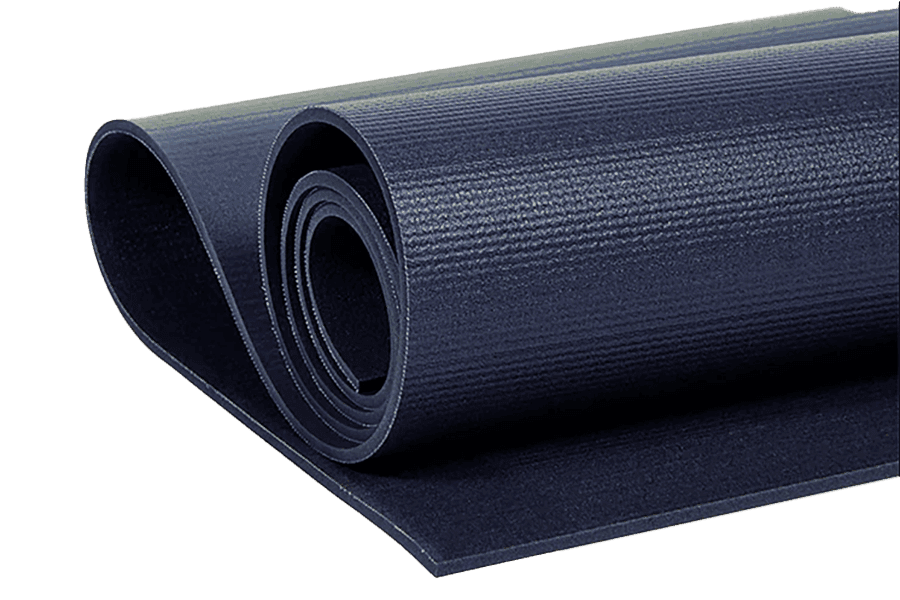
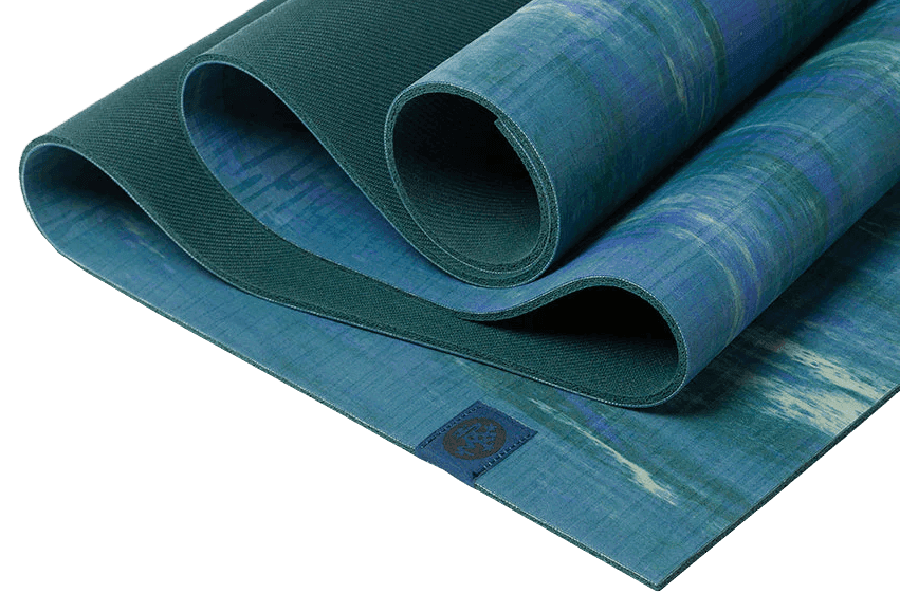
Manduka sells both of these, and the company treats them very differently. The PRO Long & Wide is the 79" x 52" PVC flagship: 22 pounds, $288, and a lifetime guarantee. The eKO is the natural rubber alternative in its standard 71" x 26" cut: grippy from the first practice, 7 pounds, $114, and no warranty at all beyond a 30 day return window. You are answering two questions here, one about material and one about size.
As an Amazon Associate, we earn from qualifying purchases made through links on this page. How this works
The quick answer
The eKO grips on day one, weighs 7 pounds, costs $174 less, and is the greener material. The Long & Wide needs weeks of break-in, weighs 22 pounds, and takes a permanent piece of your floor, but it gives you 52 inches of width, a slightly thicker 6 mm cushion, and a mat that should still be here in a decade. Manduka covers the PVC for a lifetime and gives the rubber no warranty at all, which lines up with how the two materials wear.
Most people should buy the eKO, or something like it. Buy the Long & Wide only if you have a dedicated home practice space and the width is the thing you are actually missing, because that is the one thing the eKO cannot give you.
Get the PRO Long & Wide if...
- You want room to sprawl, and you have the floor space for it
- You want a mat that lasts a decade, with a guarantee behind it
- You are taller than about six feet, which 71 inches will not fit
- A latex allergy rules out the rubber eKO
Get the eKO if...
- You want grip on day one, with no break-in
- You'd rather keep $174
- Your mat has to travel, so 7 pounds beats 22
- You want natural rubber and recycled content, not PVC
Side by side
Price
The eKO lists for $174 less.
$288
List price · check price at Amazon
$114
List price · check price at Amazon
Thickness
The Long & Wide is 20% thicker.
6 mm0.24″
5 mm0.2″
Weight
The eKO is 15 lbs lighter.
22 lbs10 kg
7 lbs3.2 kg
Size
The Long & Wide is 8″ longer; the Long & Wide is 26″ wider.
Same on both
- Made by Manduka
- Firm, dense feel rather than plush
- Closed-cell, so sweat sits on top
- Lies flat without curling
- Wipe-down cleaning
Full specs
Dimensions
Materials & build
Same brand, opposite ends of the catalog
Manduka makes both of these, and it treats them very differently. The PRO Long & Wide is the German-made PVC flagship at its largest: 79″ × 52″, 22 pounds, 6 mm thick, $288, covered by a lifetime guarantee. The eKO is the natural rubber alternative in its standard 71″ × 26″ cut: grippy from the first practice, 7 pounds, 5 mm thick, $114, and covered by nothing at all beyond a 30 day return window.
So there are two decisions tangled together here. One is about material, PVC or rubber. The other is about size, a standard mat or a home practice surface. If the material fight is what brought you here and size is not a factor, our standard PRO vs eKO comparison settles it at matching dimensions. This page is for the person also wondering whether they want the big mat at all.
Manduka guarantees one of these mats and not the other
This is the most useful fact on the page, so it goes early. The PRO Long & Wide carries Manduka’s lifetime guarantee: roughly ten years of regular use counts as a lifetime in the fine print, performance-affecting wear is covered while cosmetic wear is not, one replacement per purchase, and you need proof of purchase from an authorized seller. Amazon qualifies when the mat is sold and shipped by Amazon itself.
The eKO gets no warranty at all, just the standard 30 day return window. That is not an oversight. Natural rubber oxidizes, wears under vigorous daily practice, and degrades in sunlight, and owners do report surface wear on eKO mats after a few years of hard use. Manduka sells both materials and stands behind only one of them, and the coverage lines up with how each material actually behaves over time.
Dense PVC, meanwhile, barely wears. GearLab’s testers keep finding instructors’ PRO-family mats five to twenty years old and still in service. Care on the Manduka is a wipe-down, and hot cars and careless cleaning do not trouble it. The eKO wants shade and mild soap, because it is a plant product and behaves like one.
A standard mat against 52 inches of floor
The eKO is 71″ × 26″, which is 1,846 square inches and the shape almost every studio class in the world runs on. You aim your body at a strip: feet land on it, hands reach for it, wide-legged poses spill off it. Most people have never practiced any other way and are perfectly happy.
The Long & Wide is 4,108 square inches, about 2.2 times as much mat, and nearly all of that is width. At 52 inches it is slightly more than two standard mats laid side by side. On it the edge stops being something you track: floor work, sprawled hip openers, rolling from one side to the other, all of it stays on the mat. That is the one thing the eKO cannot give you at any price.
Length is worth a note too. At 71 inches the eKO fits practitioners to about five foot eleven; the Long & Wide’s 79 inches fits past six foot three. If you are tall and set on rubber, Manduka makes a 79″ eKO Long at $124, which is the more sensible cross-shop.
Grip: the eKO works on day one
The eKO’s textured natural rubber grips from the first practice, and the surface feels warmer and softer under the hands than the PRO’s fabric-like top. There is nothing to condition and nothing to wait out.
The Long & Wide ships slick, like every mat in the PRO family, and that remains the most common complaint about them. It needs a few weeks of consistent practice before the grip arrives; Manduka has retired its old salt-scrub advice and now simply says the slickness resolves with use. It does, and a broken-in PRO grips well for years, but the early weeks test your patience.
Sweat is closer to a draw than you might expect. Both surfaces are closed-cell, so moisture beads on top rather than soaking in, and Manduka itself hedges the eKO’s traction as reliable in dry conditions. Light sweat is fine on either. A dripping class wants a towel on both.
Weight: 7 pounds against 22
The eKO is no featherweight at 7 pounds, and it is heavier than most rubber mats its size. But it rolls into a normal bundle, fits a normal bag, and goes to a studio or into a car without any planning.
The Long & Wide is 22 pounds and rolls up closer to an area rug than to gear. No standard bag or strap will take it, and it wants a clear rectangle of roughly 6 feet 7 inches by 4 feet 4 inches of your home, permanently. It gets unrolled once in a committed spot and left flat, which closed-cell PVC is happy to do. If your mat travels at all, the eKO is the answer and the rest of this page is academic.
Cushioning: 6 mm against 5, both firm
The Long & Wide carries 6 mm of very dense PVC, the eKO 5 mm of natural rubber with a gentle rebound. Neither reads as soft. The PRO feels harder and more planted; the eKO is slightly springier and warmer. On wood floors they are closer than the spec sheet implies. On concrete or tile, the PRO’s extra millimeter and its density show up in kneeling work, which is part of why OutdoorGearLab’s testers gave the PRO construction a perfect comfort score.
If real cushioning is what you are after, neither of these is the mat. Both are firm by design, and you would want something around 8 mm thick instead.
The eco question and the latex caveat
The eKO is the cleaner material by any static measure: rubber tapped from trees, over 30% recycled content, no PVC. The Long & Wide’s counterargument is the one Manduka itself makes, that a mat serving twenty years can beat a rotation of shorter-lived rubber mats on total footprint, and it carries OEKO-TEX Standard 100 certification on its manufacturing. Both cases are fair, though 22 pounds of PVC is a large commitment to the longevity argument, and worth weighing if sourcing is what you care about.
One caution on the rubber side: Manduka says the eKO line is 99% latex free, which is not latex free. Anyone with a latex allergy should stay on the PVC side of this page.
Colors and sizes
The eKO comes in the standard 71″ × 26″ with around five colorways, plus the 79″ Long and the lighter eKO Lite and Superlite spin-offs if weight is a concern. The Long & Wide comes in Black or Midnight and nothing else; Manduka gives its oversized mats the studio-neutral treatment. If you want color choice from the PRO family, the standard 71″ PRO runs around 14 colorways at $144.
Price and value
List prices are $288 for the Long & Wide and $114 for the eKO, a gap of $174. Street prices drift by colorway, so check the current price on both the PRO Long & Wide and the eKO before deciding.
Per year of ownership the Manduka probably wins, because it runs a decade or more with a guarantee behind it while the eKO is a mat for years rather than decades with no coverage when it wears. But that comparison only counts if you wanted an oversized mat in the first place. For $174 less, the eKO gives you day-one grip, a renewable material, and something you can carry, and for most practices that is the more useful purchase.
Bottom line
Buy the eKO if you want a mat rather than a room feature. It grips immediately, it costs $174 less, it weighs 7 pounds instead of 22, and it is the better material story. Keep it out of the sun, clean it gently, and go in knowing Manduka does not warranty it.
Buy the PRO Long & Wide if you have a dedicated home practice space and 52 inches of width is what you are missing. Nothing else Manduka makes gives you that, and it should still be there in a decade. If the width appeals but the weight and the price do not, the PROlite Long & Wide at 79″ × 30″, $144, and 7 pounds keeps the lifetime guarantee and still travels, and it is the mat we would look at first.
Manduka eKO
List price $114
Frequently Asked Questions
- Why does the eKO have no warranty when the PRO does?
- Because the materials wear differently, and Manduka knows it. The PVC in the PRO family barely degrades, so the company backs it with a lifetime guarantee, roughly ten years of regular use with one replacement in the fine print. Natural rubber oxidizes, wears under vigorous daily practice, and degrades in sunlight, so the eKO gets only Manduka's standard 30 day return window. Manduka sells both materials and stands behind only one of them, which is worth taking seriously.
- Which one grips better?
- The eKO, immediately. Its textured natural rubber works from the first practice, and the surface feels warmer and softer under the hands. The Long & Wide ships slick, which is the most common complaint about the PRO line, and needs a few weeks of regular practice to come good; Manduka has retired its old salt-scrub advice and now says the slickness resolves with use. Sweat is closer to a draw: both are closed-cell, so moisture beads on top rather than soaking in, and a dripping class wants a towel on either.
- Is the eKO big enough?
- At 71" x 26" it is a standard mat, which fits practitioners to about five foot eleven and gives you the usual 26 inch strip to aim at. The Long & Wide is 79" x 52", roughly 2.2 times the surface, and almost all of that difference is width. If you are tall and want rubber, Manduka makes a 79" eKO Long at $124, which is the more sensible cross-shop.
- How much floor space does the PRO Long & Wide need?
- A clear rectangle of about 6 feet 7 inches by 4 feet 4 inches, permanently. At 22 pounds it rolls up like an area rug and no mat bag will take it, so it gets unrolled once in a committed spot and left flat. The eKO is 7 pounds, rolls into a normal bundle, and lives in a closet or a car between sessions.
- Which is better for the environment?
- The eKO, on materials: rubber tapped from trees, over 30% recycled content, and no PVC. The Long & Wide's counterargument is longevity, since one mat serving twenty years can beat a rotation of shorter-lived ones on total footprint, and it carries OEKO-TEX Standard 100 certification. Both cases are fair, though 22 pounds of PVC is a large commitment to the longevity argument. One caution on the rubber side: Manduka says the eKO is 99% latex free, which is not latex free, so a latex allergy points you to the PVC.
- Is the cushioning noticeably different?
- Not by much. The Long & Wide carries 6 mm of very dense PVC; the eKO carries 5 mm of natural rubber with a gentle rebound. Neither reads as soft. The PRO feels harder and more planted, the eKO slightly springier. On wood floors they are closer than the spec sheet suggests; on concrete or tile, the PRO's extra density shows up in kneeling work. If you want real cushioning, neither of these is the mat, and you should be looking at something 8 mm thick.
Related comparisons
- Manduka eKO vs Lululemon The (Big) Mat 5mm
- Lululemon The Mat 5mm vs Manduka eKO
- JadeYoga Harmony 74" vs Manduka eKO
- Manduka eKO vs Suga SugaMat
- JadeYoga Harmony 68" vs Manduka eKO
- Manduka eKO vs Yoga Design Lab Combo 3.5mm
- Manduka eKO vs b, halfmoon B Mat Everyday 4mm
- Manduka eKO vs Alo Warrior
- JadeYoga Harmony XW vs Manduka eKO