Manduka PRO Long & Wide vs Liforme Classic: Which One Should You Buy?
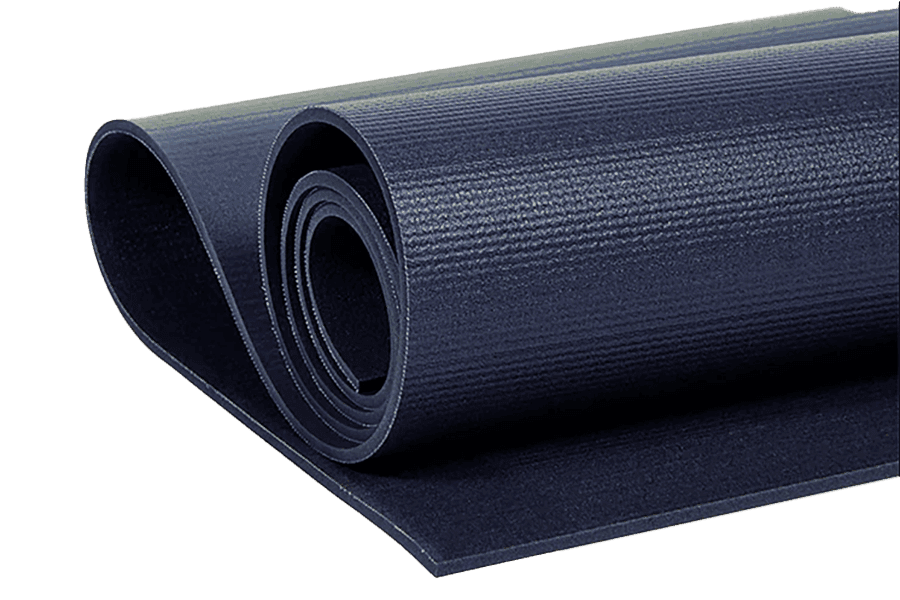
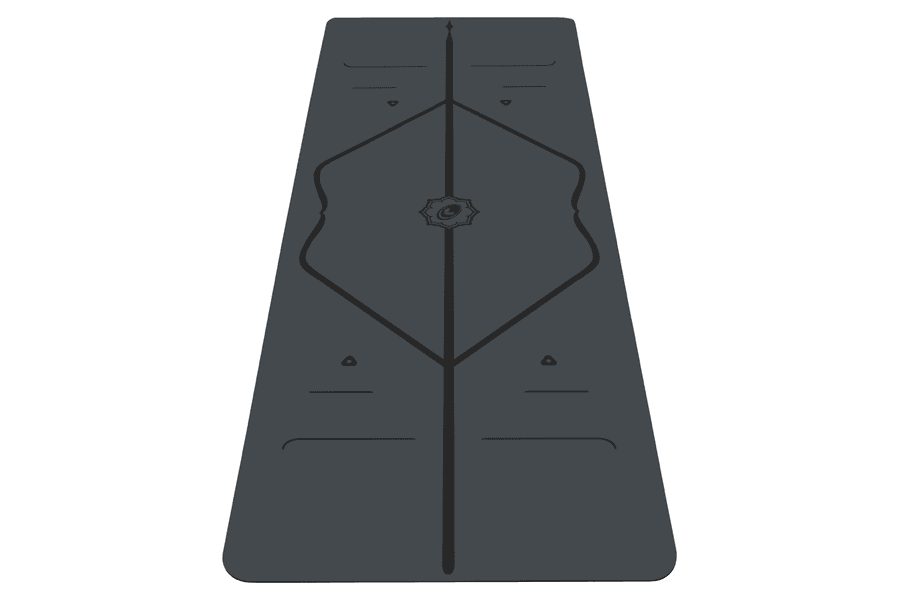
One of these is a surface you install in a room and the other is a mat built to travel. The Manduka PRO Long & Wide is 52 inches wide, 22 pounds, and made from PVC that routinely outlasts a decade of practice. The Liforme Classic is 5.5 pounds of polyurethane over rubber with alignment guides etched into the top, and it ships with a bag. Here's what each does better, because it isn't simply the more expensive one.
As an Amazon Associate, we earn from qualifying purchases made through links on this page. How this works
The quick answer
The Manduka is the longer-lived and far larger surface: 52 inches of width means you can move sideways through a flow, set up at any angle, or share the mat, and the lifetime guarantee is the only written coverage here. It also weighs 22 pounds, fits no bag, and ships slick enough that grip takes a few weeks to arrive. The Liforme grips immediately and holds when wet, GearLab rated its wet grip among the best in its test and named it the best mat for fine-tuning alignment, and it is the one you can actually carry. It comes with no warranty at all, only 30-day returns.
Get the Manduka if you have a dedicated space and want to buy once. Get the Liforme if you want day-one grip, the alignment guides, or a mat that leaves the house.
Get the PRO Long & Wide if...
- You have a room where a 79 by 52 inch mat can stay unrolled
- You want a decade-plus mat with a lifetime guarantee behind it
- You want the firmest, most stable surface for balance work
- You need a latex-free mat and want a premium one
Get the Liforme if...
- You want grip that works from day one, including when wet
- You would use the etched alignment guides while refining form
- You need a mat you can carry, at 5.5 pounds with a bag included
- You'd rather keep $123
Side by side
Price
The Liforme lists for $123 less.
$288
List price · check price at Amazon
$165
List price · check price at Amazon
Thickness
The Long & Wide is 43% thicker.
6 mm0.24″
4.2 mm0.17″
Weight
The Liforme is 16.5 lbs lighter.
22 lbs10 kg
5.5 lbs2.5 kg
Size
The Long & Wide is 6.2″ longer; the Long & Wide is 25.2″ wider.
Same on both
- Firm rather than plush underfoot
- Premium price tier
- Damp cloth cleaning only
- Wider than the old 24 inch standard
Full specs
Dimensions
Materials & build
A home studio floor against a portable teaching tool
The Manduka PRO Long & Wide is 79″ × 52″ and 22 pounds of German-made PVC, which makes it less a mat than a surface you install in a room. The Liforme Classic is 72.8″ × 26.8″ of polyurethane over rubber with alignment guides etched into the top, weighs 5.5 pounds, and comes with a bag because it is meant to travel.
At $288 against $165 these are not really competing products, and most people know within a paragraph which they are shopping for. The useful comparison is what each one does better, because it is not simply the more expensive mat.
Fifty-two inches against a normal footprint
The Liforme is generous for a standard mat, nearly three inches wider than the old 24 inch standard and long enough for most people up to about six feet. It behaves like a mat: roll it, carry it, store it in a closet.
The Manduka is a different category. Fifty-two inches of width is two standard mats side by side, so you can drift sideways through a flow, set up at any angle, or share the space with a partner or a kid. It is also 79 inches long. Nothing about your practice has to fit the mat, provided you have roughly a seven by four and a half foot clear area to give it.
Grip: day one against a few weeks in
The Liforme grips immediately and keeps gripping when wet. GearLab’s testers describe the surface as gecko-like and could not break its hold under deliberate force, and they rated its wet grip among the best in the test. Moisture wicks into a purpose-built top layer while a waterproof middle layer keeps the rubber base dry.
A new PRO surface ships slick and needs a few weeks of regular practice before the grip arrives. Manduka has retired its old salt-scrub advice and now says the slickness resolves with use, which it does, and GearLab rated the standard PRO 9 out of 10 for dry grip once broken in, the best in a 19-mat field. Sweat is the permanent limit: closed-cell PVC absorbs nothing, so moisture pools and wet palms slide. Heated practice on a PRO means a towel.
The alignment lines only some people use
The Liforme carries its etched AlignForMe system: a center line, placement markers and angled guides that give fixed references for hands, feet, stance width and centering. GearLab named it the best mat for fine-tuning alignment, and it is a big part of why traveling teachers carry one.
Be honest about whether you would use them. Practicing at home with nobody correcting your placement, or actively working on form, you will look down at those lines every session. With a settled practice, most people stop noticing them within a month. Manduka puts no lines on any mat in the PRO range.
Six millimeters of dense PVC against four of coated rubber
The PRO feels closer to a firm floor than to foam. Nothing sinks, nothing shifts under a standing balance, and GearLab gave the standard version a perfect 10 for comfort and support on the strength of that density. It is a feeling people either love or find punishing.
The Liforme is 4.2 mm and denser than it looks, firm rather than plush, with a slightly softer face where the polyurethane meets your palms. Neither mat is the answer for sore knees on hardwood; a folded blanket is cheaper than either.
Twenty-two pounds against five and a half
The PRO Long & Wide rolls into a cylinder over four feet long. No strap holds it, no bag fits it, and moving it between rooms takes two hands. Buy it for a space you already have.
The Liforme is a genuine carry at 5.5 pounds with a bag included, which is why it turns up in studios and hotel rooms. If the mat has to leave the house, this comparison is already over.
A decade of PVC against a coated top
Dense closed-cell PVC barely wears. GearLab’s testers have found PRO mats still in service after twenty years, and Manduka’s lifetime guarantee reads in the fine print as roughly ten years of regular use, one replacement, proof of purchase from an authorized seller, and on Amazon that means sold and shipped by Amazon itself.
The Liforme’s polyurethane top wears down with hard daily use, and the company is unusually direct that its materials are designed to biodegrade and lifespan depends on how you treat it. There is no warranty at all, only a 30-day money-back guarantee on purchases from its own site. The coverage matches how each material actually ages.
Price, materials and where to buy
List prices are $288 and $165. The Manduka comes in black or midnight at last count through manduka.com and Amazon, where the large sizes get discounted. The Liforme sells through liforme.com and Amazon in a wide spread of colorways.
On materials they part company completely. The PRO is OEKO-TEX certified PVC, which is latex-free and safe for a latex allergy but not biodegradable in any sense. The Liforme is PVC-free and built on natural rubber, designed to break down in one to five years under normal landfill conditions, and not safe with a latex allergy.
Bottom line
Buy the PRO Long & Wide if you have a dedicated space and want to buy once. It is the firmer, more stable, far longer-lived surface, the only one here with a written guarantee, and 52 inches of width is something no normal mat offers. Budget a few slick weeks and keep a towel handy if you sweat.
Buy the Liforme if you want grip that works immediately and in the wet, alignment guides while you refine your form, or a mat that travels. For the same decision at a normal size, our PRO vs Liforme page runs it at 71″ × 26″, and PRO vs PRO Long & Wide covers whether the width is worth it inside Manduka’s own range.
Liforme Classic
List price $165
Frequently Asked Questions
- How much floor does the PRO Long & Wide need?
- It is 79 by 52 inches, so you want roughly a seven by four and a half foot clear area to unroll it. That fits most living rooms and spare bedrooms and dominates them, and at 22 pounds it is not something you roll away between sessions. The Liforme at 72.8 by 26.8 inches behaves like a normal mat and stores anywhere.
- Which grips better?
- The Liforme, especially early on and when wet. GearLab's testers describe its surface as gecko-like and rated its wet grip among the best in the test, and moisture wicks into a purpose-built top layer while a waterproof middle layer keeps the rubber base dry. A new PRO is slick for a few weeks before its grip arrives, after which GearLab rated the standard version 9 out of 10 dry, the best in its field. The PRO never absorbs sweat, so heated practice on one means a towel.
- Are the Liforme alignment lines worth it?
- They are, for the right person. The etched AlignForMe system gives fixed references for hands, feet, stance width and centering, and GearLab named the Liforme the best mat for fine-tuning alignment. Practicing at home without a teacher correcting you, you will use them every session. With a settled practice, most people stop noticing them within a month. No mat in Manduka's PRO range offers anything comparable.
- Which one lasts longer?
- The Manduka, comfortably. Dense closed-cell PVC barely wears, GearLab's testers have found PRO mats still in service after twenty years, and the lifetime guarantee reads in the fine print as roughly ten years of regular use with one replacement from an authorized seller. The Liforme's polyurethane top wears down with hard daily use, and the company is unusually direct that its materials are designed to biodegrade and lifespan depends on care.
- Is either safe with a latex allergy?
- The Manduka is. The PRO line is OEKO-TEX certified PVC with no natural rubber in it, which makes it one of the few premium mats a latex-allergic practitioner can use. The Liforme is built on natural rubber under its polyurethane top and is not safe for a genuine latex allergy.
- Can the PRO Long & Wide travel at all?
- Not usefully. It rolls into a cylinder over four feet long, no strap holds it and no bag fits it, and moving it between rooms takes two hands. The Liforme is the opposite case: 5.5 pounds with a carrying bag included, which is why traveling teachers carry them. If the mat has to leave the house, this comparison is already settled.
Related comparisons
- JadeYoga Harmony XW vs Liforme Classic
- Liforme Classic vs Yoloha Unity Pro Cork
- Manduka PROlite Long & Wide vs Liforme Classic
- Alo Warrior vs Liforme Classic
- Manduka GRP Adapt 2.0 Long vs Liforme Classic
- Liforme Classic vs b, halfmoon B Mat Strong 6mm
- Manduka PRO Long vs Liforme Classic
- Manduka GRP Adapt 2.0 vs Liforme Classic
- Liforme Classic vs Manduka PRO Terra 6mm