Manduka PRO Long vs eKO Long: Which One Should You Buy?
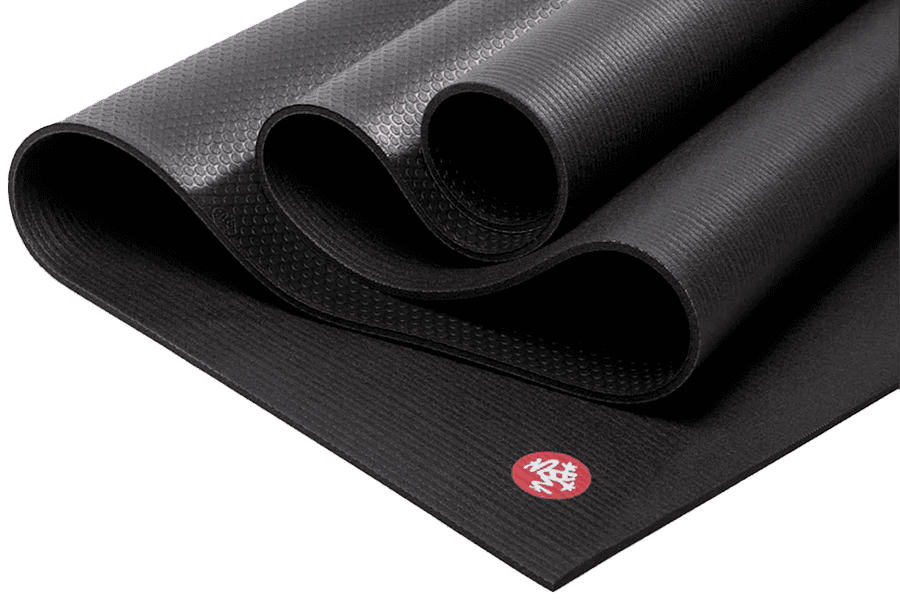
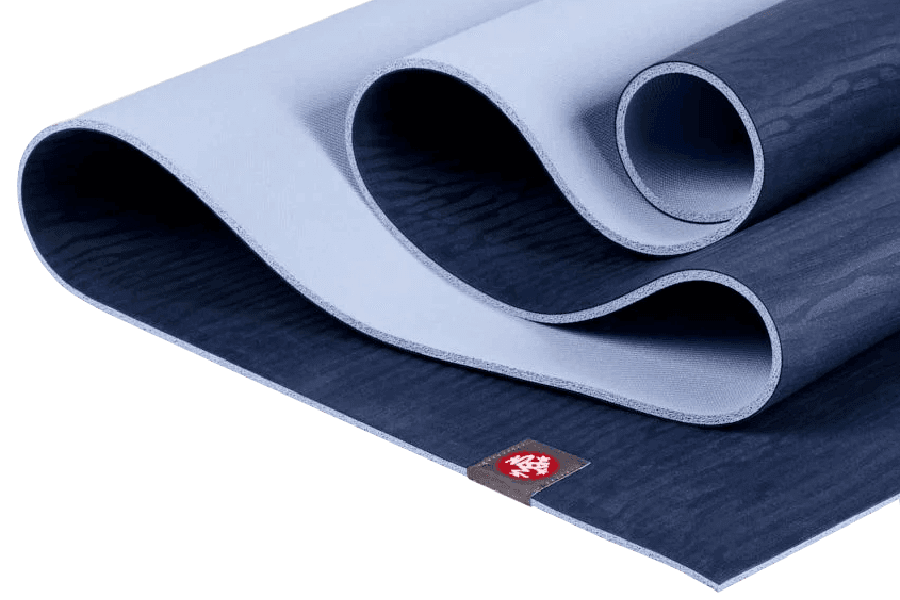
If you're tall and sold on Manduka, these are the two mats made for you, and they take opposite approaches. The PRO Long is 85" of dense German-made PVC: slick at first, essentially immortal, guaranteed for life. The eKO Long is 79" of Taiwan-made natural rubber: grippy from the first practice, $40 cheaper, and backed by nothing beyond a 30 day return window. Both are 26 inches wide with closed-cell surfaces; the material is the real difference.
As an Amazon Associate, we earn from qualifying purchases made through links on this page. How this works
The quick answer
The PRO Long is six inches longer, a millimeter thicker, 1.5 pounds heavier, and $40 more, and it starts out slippery but lasts decades with a lifetime guarantee behind it. The eKO Long grips well from day one and feels warmer under the hands, but natural rubber wears faster, the guarantee doesn't cover it, and it comes in exactly one color.
The PRO Long is the better long-term buy for a tall practitioner whose mat stays home, and it's the one we'd get. Choose the eKO Long if the break-in period or the PVC is a dealbreaker, or if $124 is the ceiling; 79 inches fits everyone up to about six foot four.
Get the PRO Long if...
- You're six foot four or taller and need the full 85 inches
- You want a mat that lasts decades, with the guarantee to match
- You want the thicker, firmer 6 mm cushion
- You want a choice of color (the eKO Long comes in one)
Get the eKO Long if...
- You want real traction on day one, no break-in
- You're under six foot four, so 79 inches already fits
- A renewable material with recycled content matters to you
- You'd rather keep the $40
Side by side
Price
The eKO Long lists for $40 less.
$164
List price · check price at Amazon
$124
List price · check price at Amazon
Thickness
The PRO Long is 20% thicker.
6 mm0.24″
5 mm0.2″
Weight
The eKO Long is 1.5 lbs lighter.
9.5 lbs4.3 kg
8 lbs3.6 kg
Size
The PRO Long is 6″ longer; same width.
Same on both
- Sized for taller practitioners
- Made by Manduka
- Same 26" width
- Closed-cell surface (sweat can't soak in)
- Heavy, stay-at-home weight class
- Lies flat without curling
Full specs
Dimensions
Materials & build
Buying
The tall practitioner’s materials fight
Manduka makes exactly two long mats for everyday practice, and they disagree about everything except width. The PRO Long is 85″ of dense German-made PVC: slick at first, essentially immortal, and covered by a lifetime guarantee. The eKO Long is 79″ of Taiwan-made natural rubber: grippy from the first practice, over 30% recycled content, $124 to the PRO Long’s $164, and covered by nothing beyond a 30 day return window.
This is the same PVC-versus-rubber argument we cover in the standard PRO vs eKO comparison, with the height question already settled and two wrinkles added: six inches of length and a one-color catalog. Both wrinkles matter more than you’d think.
Is 79″ enough, or do you need 85″?
Both mats clear the bar that sends people shopping for long mats in the first place: a six-footer lies flat on either with room to spare. The eKO Long’s 79″ covers practitioners up to about six foot four before Savasana gets snug. The PRO Long’s 85″ is effectively unlimited, with margin for the long low lunges and step-throughs that drift toward a mat’s ends.
So the length call reduces to your height, honestly assessed. Six feet to six-three, the eKO Long fits with change and the PRO Long’s extra six inches are a luxury. Six-four and up, the PRO Long stops being a luxury and becomes the only Manduka that truly fits you, which ends the comparison before the materials debate begins.
Grip: the eKO Long wins the first month
The eKO Long’s textured rubber has real traction from the first practice, with a warmer, softer feel under the hands than the PRO’s fabric-like finish. Nothing to break in, nothing to learn.
The PRO Long ships slick, and there’s no way around the early weeks. Manduka used to suggest a salt scrub to speed the break-in and now simply says the slickness resolves with use, which matches what owners report. Once broken in, the surface grips well and keeps improving for years, but the first month belongs to the rubber mat.
On sweat, neither has an edge. Both are closed-cell, so moisture pools on the surface instead of absorbing, and Manduka frames the eKO’s grip as reliable in dry conditions. Hot yoga regulars will want a towel over either. If you want a long mat that drinks sweat, that’s open-cell territory, and our PRO Long vs Jade Harmony 74″ comparison covers the best-known one.
Cushioning: 6 mm vs 5, advantage PRO on hard floors
The PRO Long is 6 mm of very dense PVC; the eKO Long is 5 mm of natural rubber with a slight spring. Both are firm, stable platforms, and on forgiving floors most people would need a side-by-side to rank them. Concrete and tile separate them: the PRO’s extra millimeter and density protect knees and tailbones in a way owners notice, and it’s the construction OutdoorGearLab scored perfect for comfort. If your practice space is a garage or a basement slab, that’s a real point for the PRO Long.
Weight: 9.5 vs 8, both stay home
The eKO Long weighs 8 pounds, the PRO Long 9.5, and at these numbers the difference stops mattering: neither is a mat you carry to class more than occasionally, and both roll into oversized cylinders that fight ordinary mat bags. The mass buys the same virtue on both, a mat that unrolls flat and never creeps mid-flow. If you need a long mat that commutes, that’s the 5.6 pound eKO Lite Long or the 5 pound PROlite Long, not either of these.
Durability: the warranty asymmetry says it all
The PRO Long lasts decades. GearLab found instructors’ PRO mats still in service after five to twenty years, and Manduka’s lifetime guarantee, roughly ten years of regular use with one replacement in the fine print, puts the company’s money on it.
The eKO Long gets no warranty, and that’s not an oversight. Natural rubber oxidizes, wears faster under vigorous daily practice, and degrades in direct sun; eKO owners report surface wear after a few years of hard use. Manduka makes both materials, knows exactly how long each lasts, and wrote its guarantee page accordingly. Care follows suit: the PRO tolerates neglect, while the eKO wants shade and mild soap.
The eco question
If the PRO Long has one honest weakness, it’s the PVC, which isn’t practically recyclable no matter how long the mat serves. The eKO Long answers with tree-tapped rubber and over 30% recycled content. The counterargument is longevity: one mat for twenty years may beat several rubber mats on total footprint. Both framings are fair. One health note before the green argument decides anything: Manduka calls the eKO’s rubber 99% latex free, which is not latex free, so latex allergies rule it out entirely.
Colors: the eKO Long comes in one
This is a genuine weakness on the rubber side. The eKO Long ships in Midnight only at last count, a dark blue, take it or leave it. The PRO Long offers around five muted colorways, which isn’t a color wall either but at least involves a choice. If palette matters and you don’t need the length, the standard 71″ eKO has around five colorways and the standard PRO around fourteen.
Price and value
List prices are $164 for the PRO Long and $124 for the eKO Long. Deals come and go by colorway, so check the current price on both the PRO Long and the eKO Long before you decide.
Stretched over a practice life, the $40 gap inverts. The PRO Long is the cheaper mat per year by a wide margin, because it lasts several times as long and gets replaced once under warranty if it doesn’t. The eKO Long earns its price a different way: it’s the cheapest long mat Manduka makes, and if $124 is the budget, it solves the height problem completely and grips from day one while doing it.
Bottom line
Get the PRO Long if your mat stays home and you’re buying for the decade: it’s thicker, longer, more durable, guaranteed, and available in more than one color. Six-four and up, it’s not even a choice; it’s the only Manduka that fits.
Get the eKO Long if day-one grip or the natural material is the priority, or if the budget stops at $124. It’s a genuinely good long mat with two honest asterisks: it will wear years sooner than the PRO, and it only comes in dark blue. If you can live with both, the $40 you keep is real money.
Manduka PRO Long
List price $164
Manduka eKO Long
List price $124
Frequently Asked Questions
- How much longer is the PRO Long than the eKO Long?
- Six inches: 85" versus 79". The practical difference is smaller than it sounds. At 79" the eKO Long comfortably fits practitioners up to about six foot four before Savasana gets snug. The PRO Long's 85" is effectively unlimited, with margin left for long lunges and step-throughs that drift toward the ends of the mat. Under six foot four, either length works; above it, the PRO Long is the only Manduka that truly fits.
- Does the eKO Long have Manduka's lifetime guarantee?
- No. The lifetime guarantee covers the PRO series only, and its fine print works out to roughly 10 years of regular use with one replacement and proof of purchase from an authorized seller. The eKO Long gets Manduka's standard 30 day return window and nothing after it. Manduka makes both mats and only stands behind one of them, which is worth factoring in.
- Which grips better, the PRO Long or the eKO Long?
- The eKO Long wins the first month. Its textured rubber grips from the first practice, while a new PRO Long ships slick and needs a few weeks of regular use to break in; Manduka has retired its old salt-scrub advice and says the film wears off with use. A broken-in PRO grips well for years. Both are closed-cell surfaces, so sweat pools on top of either, and heavy sweaters will want a towel regardless.
- What colors does the eKO Long come in?
- One: Midnight, a dark blue, at last count. The standard 71" eKO offers around five colorways, but stretching to the Long cut costs you the choice. The PRO Long comes in around five colorways, all muted. If color matters, the PRO Long is the only side of this page with options.
- Is either mat good for hot yoga?
- Neither is ideal. Both are closed-cell mats, so sweat beads on the surface instead of soaking in, and Manduka itself frames the eKO's traction as reliable in dry conditions. Light sweat is fine on either; a dripping class wants a towel on both. If you sweat heavily and want a surface that absorbs, an open-cell rubber mat like the Jade Harmony is the better direction.
- Which lasts longer, the PRO Long or the eKO Long?
- The PRO Long. Its dense PVC barely wears, and GearLab's testers found instructors' PRO mats still in service after five to twenty years. The eKO Long's natural rubber oxidizes over time, wears under vigorous daily practice, and degrades in direct sun; owners of eKO mats report surface wear after a few years of hard use. Manduka warranties one of these materials and not the other, which says plenty.
Related comparisons
- Manduka eKO Long vs Lululemon The (Big) Mat 5mm
- Manduka PRO Long vs Yoloha Unity Pro Cork
- Lululemon The Mat 5mm vs Manduka eKO Long
- Manduka eKO Long vs Alo Warrior
- JadeYoga Harmony 74" vs Manduka eKO Long
- Manduka PRO Long vs Alo Warrior
- Manduka eKO Long vs JadeYoga Harmony 2.0 68"
- JadeYoga Harmony XW vs Manduka eKO Long
- Manduka eKO Long vs b, halfmoon B Mat Everyday 4mm