Lululemon The Mat 5mm vs Manduka eKO Long: Which One Should You Buy?
These two cost within $6 of each other and take opposite approaches to the same problem. The eKO Long is 79 inches of natural rubber, eight inches more mat than most brands sell as standard. The Mat is 71 inches with a polyurethane face that soaks up sweat instead of letting it sit on the surface. The surprise is that the grip numbers do not go the way the marketing suggests.
As an Amazon Associate, we earn from qualifying purchases made through links on this page. How this works
The quick answer
GearLab put the eKO at 87 out of 100 with a perfect 10 for dry grip, the best of the 19 mats it tested, and 7 for wet grip. The Mat scored 81 with a perfect 10 for comfort and support but only 6.5 dry and 4.5 wet. Both of those tests used the standard 71 inch versions; the Long adds eight inches and about a pound to the eKO. So the cheaper-feeling advantage of the polyurethane top does not actually show up as better traction here.
Get the eKO Long if you are tall, or if slipping is the complaint that sent you shopping. Get The Mat if you have to carry it, since 8 pounds on a shoulder is a real cost and 5.2 is not, or if the mat is also doing duty for lifting and other floor work.
Get Lululemon The Mat if...
- You want 5.2 pounds to carry instead of 8
- You want a reversible mat with a drier rubber side
- The same mat handles yoga and other floor training
- 71 inches is plenty of length for you
Get the Manduka eKO Long if...
- You are tall enough that 71 inches runs short
- You want the best dry grip GearLab measured in 2026
- You would rather have plain natural rubber than a coated top
- You want to buy it on Amazon instead of from one brand
Side by side
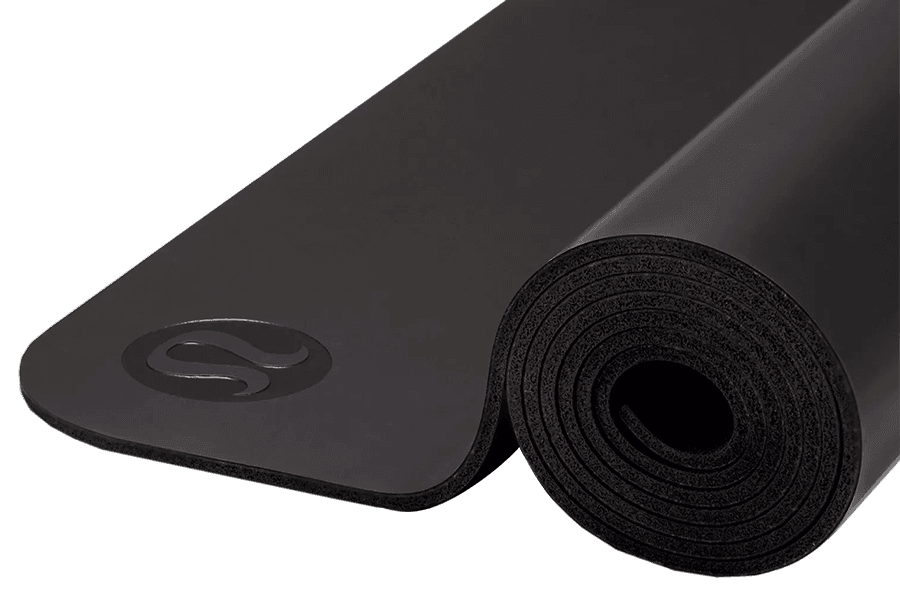
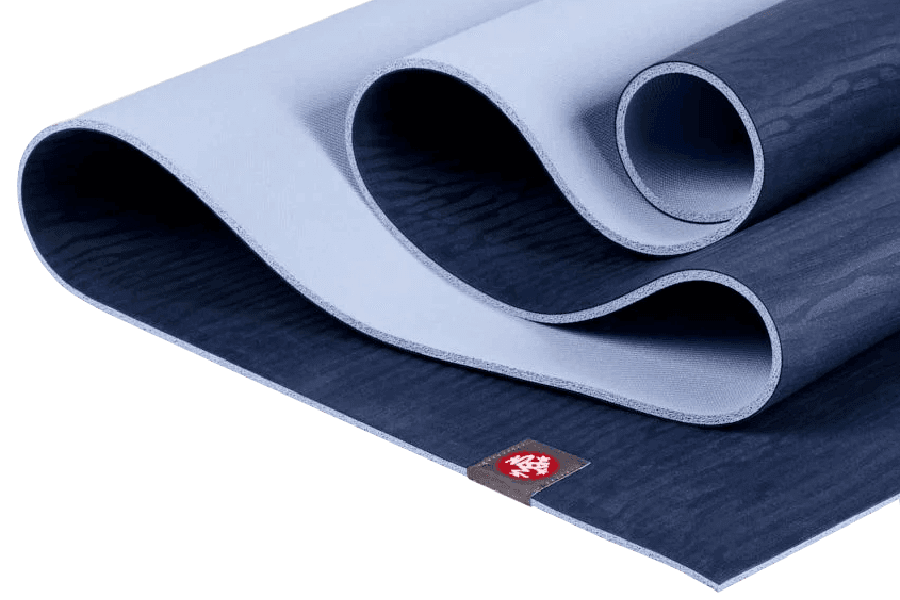
Price
The Mat lists for $6 less.
$118
List price · check price at lululemon.com
$124
List price · check price at Amazon
Thickness
Identical thickness.
5 mm0.2″
5 mm0.2″
Weight
The Mat is 2.8 lbs lighter.
5.2 lbs2.4 kg
8 lbs3.6 kg
Size
The eKO Long is 8″ longer; same width.
Same on both
- 5 mm thick
- 26 inches wide
- Natural rubber content, so neither suits a latex allergy
- Grippy from the first session, no break-in period
Full specs
Dimensions
Materials & build
Buying
Two ways to solve the same problem
Both of these mats exist because people slip. Lululemon’s answer is a polyurethane layer over natural rubber that takes moisture into the surface. Manduka’s answer on the eKO is to skip the coating and let the rubber do it, in a cut that runs 79″ long instead of the usual 71.
The prices land within six dollars of each other, $118 against $124, so nobody is buying up or down here. What separates them is grip, weight, and eight inches of floor.
Grip: the rubber mat wins both measurements
GearLab’s 2026 test of 19 mats measured the eKO at 10 out of 10 for dry grip, the highest score in the field, and 7 for wet. The Mat measured 6.5 dry and 4.5 wet. That is not the result most people expect from a coated premium surface against plain rubber, and it is the single most useful number on this page.
Both figures come from the standard 71″ versions of each mat. The Long is the same rubber compound in a longer cut, so we would expect the grip to track. Neither mat needs breaking in; both are usable from the first session, which is not true of Manduka’s own PRO.
Eight inches, and who actually needs them
The eKO Long is 79″ × 26″. The Mat is 71″ × 26″. Same width, eight inches of difference in length, which is the whole reason the Long exists.
If you are over about five foot ten, a 71″ mat leaves your heels or your head on the floor in savasana and your back foot walking off the edge in a long lunge. Below that height the extra length is weight and roll diameter you are carrying for nothing. Lululemon’s answer for tall practitioners is The (Big) Mat at 84″ × 28″, which costs more and weighs more again.
Weight is the eKO Long problem
8 pounds against 5.2. Natural rubber is dense, and adding eight inches to an already heavy mat gets you to a mat that plants itself beautifully and is genuinely unpleasant to walk anywhere with.
The Mat is not light either. At 5.2 pounds it surprises people who expect a 5 mm mat to feel like nothing. But nearly three pounds is the difference between a mat you carry to a class twice a week without thinking and one you start driving to the studio for.
What happens in a hot room
The Mat’s polyurethane top absorbs some moisture rather than letting it film over, which is a real mechanism and the reason Lululemon charges what it does. GearLab still only rated it 4.5 out of 10 when wet, which is mid-pack. The eKO’s closed-cell rubber does not absorb anything, and it measured 7.
So the eKO is the better wet mat by GearLab’s testing, but neither is the answer for a genuinely sweaty practice. That mat is Manduka’s GRP Adapt 2.0, which measured 8.5 wet and took the roundup’s hot yoga award. A towel over either of these mats is still the practical fix.
Materials, smell, and latex
The eKO is natural rubber made in Taiwan, and it smells like it for the first few weeks. That is the most common complaint owners raise, and it is why the mat carries 4.1 stars across roughly 694 Amazon ratings despite scoring 87 out of 100 with GearLab. Unroll it somewhere ventilated and it fades.
The Mat pairs an FSC certified natural rubber base with the polyurethane top, which mutes the rubber smell considerably. Both mats contain natural rubber, so neither is safe if you have a latex allergy. That rules out this whole page for some people, and it is worth checking before you spend $118.
Which one is still good in three years
The eKO, most likely. Plain rubber wears slowly and evenly, and the failure mode is gradual thinning rather than a surface letting go. The Mat’s polyurethane top is a coating, and owners commonly report flaking or peeling after a couple of years of heavy use, made worse by harsh cleaners or soaking.
Neither comes with meaningful coverage. Manduka’s lifetime guarantee applies to the PRO and PROlite lines only, so the eKO gets 30 day returns. Lululemon’s Quality Promise carries no stated term. Both mats also degrade in sunlight, so a car boot in August is the worst place either can live.
Where you can actually buy them
Lululemon sells The Mat through its own stores and website only. There is no Amazon listing, no marketplace sellers, and no discount to chase. The US list price is $118, and several review sites still quote $98, which is out of date. Check lululemon.com for the current number.
The eKO Long lists at $124 and you can check the current price at Amazon, where it does go on sale. It comes in Midnight and nothing else, while the standard 71″ eKO at $114 has about five colorways.
Bottom line
Buy the eKO Long if you are tall, or if slipping is the complaint that sent you shopping in the first place. It grips better than The Mat in both conditions GearLab measured, it costs six dollars more, and it will outlast the coated mat. The price of all that is 8 pounds and a few weeks of rubber smell.
Buy The Mat if you carry your mat, if 71 inches is enough for your height, or if the same surface is doing duty for lifting and other floor work. It is the more versatile of the two and the easier one to live with, and its rubber underside gives you a drier second surface on the days you want one.
Lululemon The Mat 5mm
List price $118
Manduka eKO Long
List price $124
Frequently Asked Questions
- Which one actually grips better?
- The eKO, by GearLab's numbers, and by more than most people expect. It measured 10 out of 10 dry, the highest score in a field of 19 mats, and 7 wet. The Mat measured 6.5 dry and 4.5 wet. Lululemon's polyurethane top does pull moisture off the surface, but the raw tack of Manduka's rubber beats it in both conditions.
- Does the eKO smell?
- Yes, and this is its most common complaint. Natural rubber has a strong smell out of the box, and the eKO carries 4.1 stars across roughly 694 Amazon ratings, low for a mat GearLab scored 87. Most of the criticism is the odor rather than the performance. It fades over a few weeks if you unroll the mat and leave it somewhere ventilated, but it does not vanish in a day.
- Is the eKO covered by Manduka's lifetime guarantee?
- No. That guarantee applies to the PRO and PROlite lines only. The eKO gets a 30 day return window and nothing after that. Lululemon's Quality Promise has no stated term either, so neither of these mats comes with a long warranty. Expect a few years of regular practice from both and treat anything more as a bonus.
- Can I buy The Mat on Amazon?
- No. Lululemon sells only through its own stores and website, so there is no Amazon listing and no third-party pricing to hunt. The US list price is $118. Several review sites still quote $98, which is out of date. The eKO Long is on Amazon at $124 list and does go on sale, which occasionally flips the price order of these two.
- How much difference do eight inches make?
- More than people expect if you are over about five foot ten. On a 71 inch mat a tall practitioner ends savasana with heels or head on the floor, and in a long lunge the back foot walks off the edge. At 79 inches the eKO Long removes that. If you are shorter than that, the eight inches are just extra weight and roll diameter.
- What if I want the shorter eKO?
- The standard eKO is 71 by 26 inches at $114, four dollars less than The Mat, and it comes in about five colorways against the Long's single Midnight. That is the more direct matchup on size, and it drops the mat to 7 pounds from 8. Neither number makes the eKO light.
Related comparisons
- Manduka eKO Long vs Lululemon The (Big) Mat 5mm
- JadeYoga Harmony 74" vs Lululemon The Mat 5mm
- Manduka PROlite Long vs Lululemon The Mat 5mm
- Manduka eKO Long vs Hugger Mugger Para Rubber 5mm
- Lululemon The Mat 5mm vs JadeYoga Harmony 2.0 68"
- Manduka PROlite vs Lululemon The Mat 5mm
- Lululemon The Mat 5mm vs Manduka GRP Adapt 2.0
- Lululemon The Mat 5mm vs Manduka eKO
- Manduka eKO Long vs Yoga Design Lab Infinity 5mm