Manduka eKO vs Gaiam Essentials Fitness Mat 10mm: Which One Should You Buy?
GearLab rated the Manduka eKO second of 19 mats, with the best dry grip in its test. The Gaiam Essentials Fitness Mat has never been tested by anyone we would cite, but it has about 46,800 Amazon ratings and costs $24.98. One is a natural rubber yoga mat; the other is a 10 mm foam exercise mat that people buy for yoga because it is thick and cheap. What the extra $89.02 buys is grip, width and stability, and what it costs you is cushion, portability and a guarantee.
As an Amazon Associate, we earn from qualifying purchases made through links on this page. How this works
The quick answer
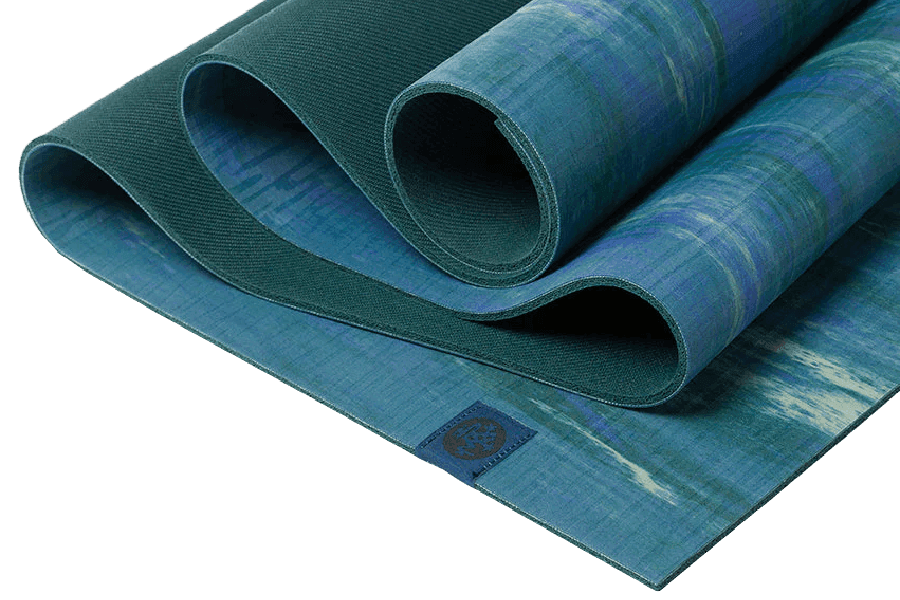
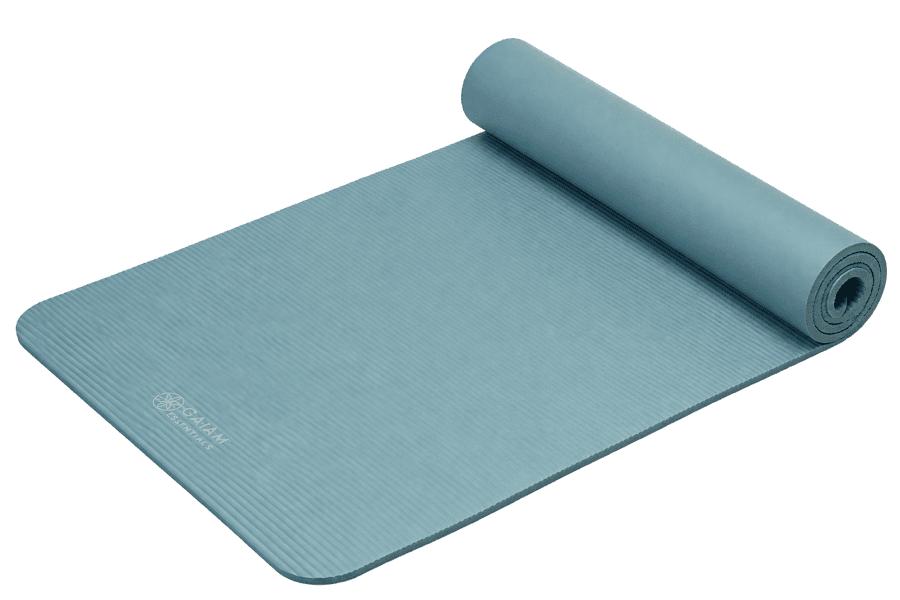
The eKO is 71 by 26 inches, 5 mm of natural rubber, 7 pounds and $114, with a 10 out of 10 for dry grip and a 9 for comfort and support from GearLab. The Fitness mat is 72 by 23.6 inches, 10 mm of soft NBR foam, under three pounds and $24.98 with a strap and a lifetime guarantee. Owners love the Gaiam's padding; its weak points in Amazon's review summary are durability, stability and smell.
If you practice regularly and want a mat that holds your hands and does not move under a standing foot, get the eKO. If your session is floor work, you are just starting, or the mat has to be cheap and light, get the Gaiam Essentials Fitness.
Get the Manduka eKO if...
- You want the best dry grip GearLab measured, tied at 10 out of 10
- You want 26 inches of width instead of 23.6
- You want natural rubber that owners get three to six years of daily use from
- You do balance poses and arm balances and need the surface to stay still
Get the Gaiam Essentials Fitness if...
- Your practice is mostly stretching, Pilates, core work or physio on the floor
- You carry your mat and would rather lift under three pounds than seven
- You need a mat without natural rubber or a strong rubber smell
- You want to spend $24.98 and get a strap and a guarantee with it
Side by side
Price
The Essentials Fitness 10mm lists for about $89 less.
$114
List price · check price at Amazon
$24.98
List price · check price at Amazon
Thickness
The Essentials Fitness 10mm is 100% thicker.
5 mm0.2″
10 mm0.39″
Weight
The Essentials Fitness 10mm is 4.2 lbs lighter.
7 lbs3.2 kg
2.8 lbs1.27 kg
Size
The Essentials Fitness 10mm is 1″ longer; the eKO is 2.4″ wider.
Same on both
- About 72 inches long
- Closed-cell, so sweat sits on the surface
- Both arrive with a smell that needs airing
- A damp cloth is all the cleaning either wants
- Neither should be stored in direct sun
Full specs
Dimensions
Materials & build
Buying
A tested rubber mat against the foam mat everyone buys
GearLab placed the Manduka eKO second of 19 mats at 87 out of 100, behind only the Manduka PRO. The Gaiam Essentials Fitness Mat has not been through any test we would cite, but it carries about 46,800 Amazon ratings across its colorways and was the top seller in the yoga mat category when we checked.
One is a 5 mm natural rubber yoga mat built around grip. The other is a 10 mm NBR exercise mat that people buy for yoga because it is thick and cheap. The $114 Manduka buys grip, width, stability and years; the $24.98 Gaiam gives you cushion, a strap, and a guarantee.
Grip: a perfect dry score against ridges
The eKO scored 10 out of 10 for dry grip in GearLab’s test, tied for best in the field, and 7 wet. Testers liked the tiger-stripe traction lines for arm balances and inversions.
The Fitness mat has molded ridges, and Gaiam’s copy is precise: the textured surface helps reduce slipping on most hard floors during dry workouts. That is a claim about the mat staying put, and owners are split even on that. Amazon’s review summary counts about 365 negative mentions of stability against 227 positive.
Both are closed-cell, so sweat sits on top. The eKO’s 7 wet is good for rubber without an absorbent top; Gaiam makes no wet grip claim at all. For heated classes the GRP Adapt 2.0 scored 8.5 wet in the same test; our eKO vs GRP Adapt 2.0 page covers it.
Cushion: twice as thick, yet the thinner mat scored 9
On a knee, a hip or a tailbone the Gaiam is plainly the softer mat, and Amazon’s review summary agrees by a wide margin: thickness runs about 1,100 positive mentions to 170, comfort about 1,000 to 80. If a hard floor is the problem, the Fitness mat solves it.
GearLab still gave the eKO 9 out of 10 for comfort and support, because rubber compresses a little and pushes back where soft foam compresses and stays down. GearLab recommends 3 to 5 mm for most practice unless you need extra cushion.
Balance poses are where 10 mm of soft NBR costs you. Load one foot and the foam under it sinks unevenly, the mat tilts, and the pose becomes about the mat. The eKO does not move under a standing foot.
Width is the eKO advantage you feel every class
The eKO is 71 by 26 inches; the Fitness mat is 72 by 23.6. The Gaiam is an inch longer, which you will not notice. The eKO is 2.4 inches wider, which you will: 23.6 inches is the narrowest mat we cover.
Manduka sells a 79 inch eKO Long for $124 for anyone over about six feet. The Gaiam comes in one size, and if 10 mm is more than you want, the Gaiam Essentials 6mm is 72 by 24 inches for about the same money.
Seven pounds and no strap against under three
Manduka lists the eKO at 7 pounds and GearLab measured 6.3. Either figure is more than double the Fitness mat, about 2.8 pounds by our numbers and lighter still by Amazon’s details table. The Gaiam includes an adjustable nylon strap; the eKO includes nothing.
If the mat rides a bike or a bus to class, this section decides it. The Gaiam goes over a shoulder, though its 10 mm roll is bulky and one Amazon reviewer found the strap hard to cinch around it. Manduka’s answer to the carry problem is the 4 mm eKO Lite at $96 and 5 pounds.
Durability: rubber that thins against foam that tears
GearLab spoke with practitioners who used an eKO for vigorous daily practice for three to six years before retiring it. Rubber does not last the way Manduka’s PVC does; it wears in parallel track lines where hands and feet rub, and sun speeds that up.
NBR ages faster. Durability is the one aspect where Amazon’s review summary runs clearly against the Fitness mat, about 660 negative mentions to 285 positive, with some owners reporting it easily tears and becomes damaged. Soft foam takes a set under knees and hands and the edges go first.
Four Fitness mats cost less than one eKO. A daily practitioner could plausibly go through that many in the years GearLab describes for the rubber, so the price gap narrows with daily use and stays wide for a weekly stretch.
The cheaper mat has the guarantee, on paper
Manduka’s lifetime guarantee covers its PVC mats, the PRO and PROlite. It does not cover the eKO. You get 30 day returns on an unused mat and nothing after.
Gaiam advertises a lifetime guarantee on the Fitness mat and publishes no terms for it. We read it as cover for defects rather than foam that has flattened or torn. If coverage matters, the Manduka that carries it is the PROlite, compared with this same Gaiam in our PROlite vs Gaiam Essentials Fitness page.
Both smell at first, and the eKO smells longer
The eKO’s rubber smell is the most common complaint in its Amazon reviews and a big part of why it sits at 4.1 stars across about 700 ratings despite its test results. Expect a couple of weeks unrolled in a ventilated room. It is natural rubber, so not for a latex allergy.
Gaiam calls the Fitness foam low-odor and then advises 24 to 48 hours of airing; owners are less charitable, with odor at about 355 negative mentions to 111 positive. NBR is synthetic rather than natural latex, though Gaiam makes no allergy claim and lists no certification. Care is the same for both: a damp cloth, no soaking, no direct sun.
Price, ratings and where to buy
The eKO lists at $114; check the current eKO price at Amazon. The Fitness mat lists for $24.98, sold on both gaiam.com and Amazon. The eKO comes in 5 colorways, the Gaiam in 11.
The ratings say what each mat is bought for. The Gaiam’s 4.6 stars is a floor-exercise verdict: praise for thickness and comfort, complaints about durability, stability and smell. The eKO’s 4.1 is mostly the smell.
Bottom line
Buy the Manduka eKO if you practice yoga regularly and want a mat that holds your hands where you put them. Tied best dry grip in GearLab’s test, 26 inches of width, three to six years of hard use. You carry 7 pounds with no strap, air it for two weeks, and get no guarantee.
Buy the Gaiam Essentials Fitness Mat if your session is on the floor, if you are trying yoga for the first time, or if the mat has to be cheap and light. Its limits are standing balance and sweat. For the Manduka that does carry a guarantee, see our PRO vs Gaiam Essentials Fitness comparison.
Manduka eKO
List price $114
Frequently Asked Questions
- Is the Manduka eKO grippier than the Gaiam Essentials Fitness Mat?
- Yes, by a wide margin when dry. GearLab scored the eKO 10 out of 10 for dry grip, tied for the best in a 19 mat test, and 7 out of 10 wet, and its testers liked the tiger-stripe texture for arm balances. The Fitness mat has molded ridges that Gaiam says help reduce slipping on hard floors during dry workouts, which is a claim about the mat staying put rather than your hands. Gaiam makes no wet grip claim for it, and stability is one of the aspects where owner complaints outnumber praise.
- Does the Manduka eKO smell?
- Yes, strongly, and it is the most common complaint in its Amazon reviews, which is a large part of why the mat sits at 4.1 stars despite testing second in the field. Natural rubber has a sharp odor out of the wrapper that fades over a couple of weeks unrolled in a ventilated room. The Gaiam Fitness mat smells too; Gaiam calls its foam low-odor and asks for 24 to 48 hours of airing, and owners still complain about the smell more often than they praise it.
- Can I use either mat for hot yoga?
- Neither is built for it. Both are closed-cell, so sweat sits on the surface rather than soaking in. The eKO's 7 out of 10 wet grip is respectable for a rubber mat without an absorbent top, and Manduka scopes its grip claim to dry conditions on purpose. Gaiam makes no hot yoga or wet grip claim at all for the Fitness mat. For heated classes, the Manduka GRP Adapt 2.0 scored 8.5 wet in the same GearLab test and is the mat to look at.
- Is the Manduka eKO covered by the lifetime guarantee?
- No. Manduka's lifetime guarantee covers its PVC mats, the PRO and PROlite, and the natural rubber eKO is left out; you get 30 day returns on an unused mat and nothing after. The Gaiam Essentials Fitness Mat advertises a lifetime guarantee, though Gaiam publishes no terms for it and we read it as cover for manufacturing defects rather than foam that has compressed or torn. If a real warranty matters, the PROlite is the Manduka that carries one.
- How much heavier is the eKO than the Gaiam Fitness mat?
- More than double. Manduka lists the eKO at 7 pounds and GearLab measured 6.3, against about 2.8 pounds by our figures for the Fitness mat, and Amazon's own details table lists it lighter still. The Gaiam also includes an adjustable nylon strap, while the eKO comes with nothing. If you carry your mat to class, Manduka's 4 mm eKO Lite at 5 pounds keeps the rubber and drops some of the weight.
- Which mat is safer for a latex allergy?
- Neither comes with a claim you can rely on. The eKO is natural rubber and is not suitable for anyone with a latex allergy. The Gaiam Fitness mat is NBR, a synthetic nitrile foam rather than natural latex, but Gaiam does not make a latex-free statement for it and lists no certification. If the allergy is serious, Gaiam's PVC Essentials 6mm is explicitly latex-free, and so is the Manduka PROlite.
Related comparisons
- Manduka eKO vs Lululemon The (Big) Mat 5mm
- Lululemon The Mat 5mm vs Manduka eKO
- Manduka eKO vs Hugger Mugger Para Rubber 5mm
- JadeYoga Harmony 74" vs Manduka eKO
- Manduka eKO vs Yoga Design Lab Infinity 5mm
- Manduka eKO vs JadeYoga Harmony 2.0 68"
- Manduka eKO vs Suga SugaMat
- Retrospec Solana 1/2" vs Gaiam Essentials Fitness Mat 10mm
- JadeYoga Harmony 68" vs Manduka eKO