Manduka eKO vs B Mat Strong: Which One Should You Buy?
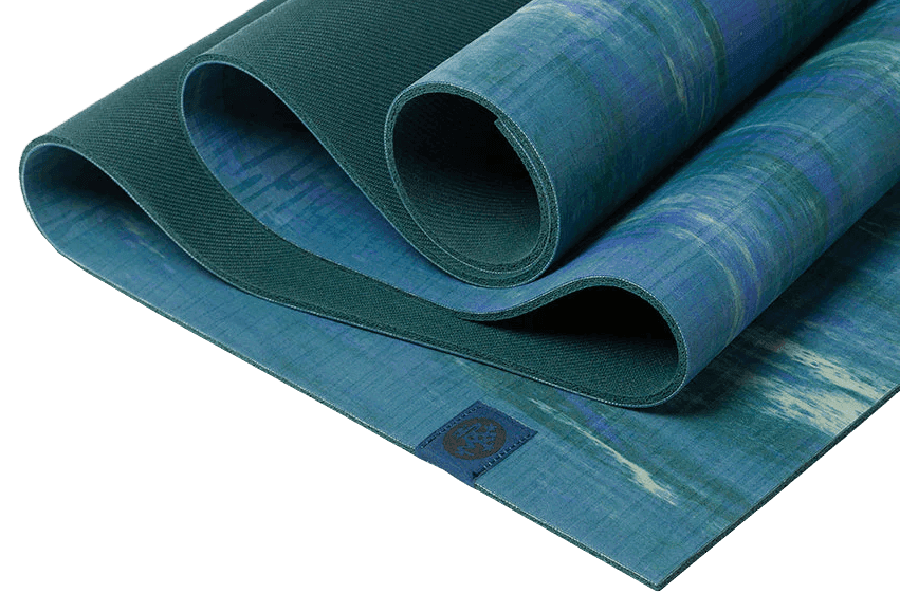
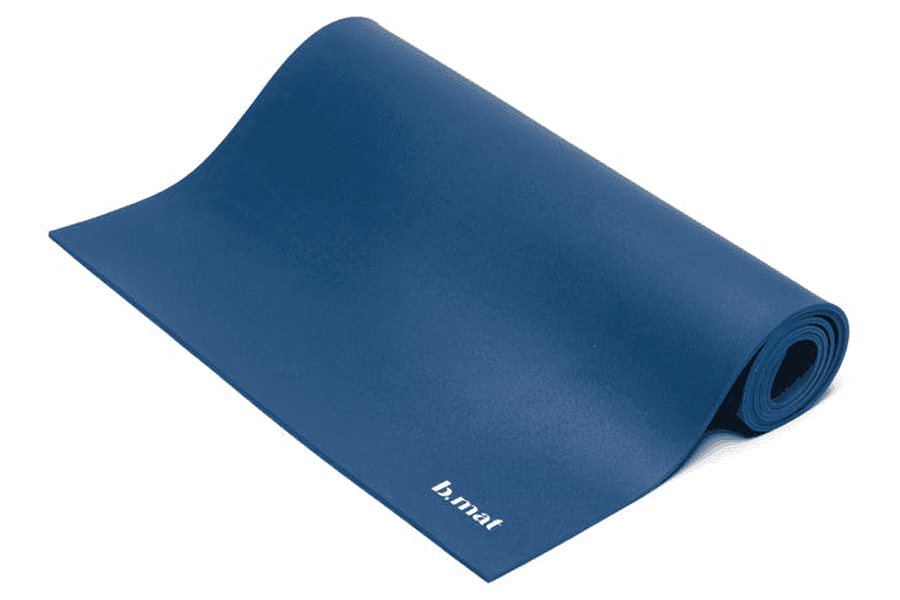
These two natural rubber mats cover the exact same 71 by 26 inch footprint and compete for the same practitioner: someone done with foam who wants real grip without a break-in period. The eKO is Manduka's dense, textured take at $114. The B Mat Strong is b, halfmoon's tacky 6 mm flagship at $144. The $30 gap buys a mat that keeps holding when your palms get wet, and that is most of the decision.
As an Amazon Associate, we earn from qualifying purchases made through links on this page. How this works
The quick answer
Both mats grip well from the first class with dry hands. The difference arrives with sweat: the eKO's sealed surface lets moisture bead on top and turn slick, while the B Mat's rubber keeps holding even with a wet patch under a palm. The B Mat is also thicker at 6 mm against 5, lighter at 5 pounds against 7, and carries a one-year warranty where Manduka offers only a 30-day return window.
If your palms stay mostly dry and you like buying on Amazon, get the eKO and keep the $30. If you sweat in class, carry your mat, or want more under your knees, get the B Mat Strong.
Get the Manduka eKO if...
- Your palms stay mostly dry in class; the textured rubber grips confidently dry
- You'd rather keep about $30, and more when the eKO goes on sale at Amazon
- You want the denser, more planted feel under standing balances
- You care about recycled content; the current eKO is over 30% recycled rubber
Get the B Mat Strong if...
- You sweat; the B Mat keeps gripping where the eKO turns slick
- You carry your mat to class, since 5 pounds beats 7 on a shoulder
- Your knees want the extra millimeter, 6 mm of rubber against 5
- You want a warranty and a certification: one year, OEKO-TEX Standard 100
Side by side
Price
The eKO lists for $30 less.
$114
List price · check price at Amazon
$144
List price · check price at bhalfmoon.com
Thickness
The B Mat Strong is 20% thicker.
5 mm0.2″
6 mm0.23″
Weight
The B Mat Strong is 2 lbs lighter.
7 lbs3.2 kg
5 lbs2.27 kg
Size
Same length; same width.
Same on both
- Identical 71″ × 26″ footprint
- Natural rubber grip with no break-in period
- Sweat stays on the surface instead of soaking in
- Not safe for a latex allergy
- Must live indoors, out of direct sun
Full specs
Dimensions
Materials & build
Buying
Two rubber mats on the exact same footprint
Line these two up and they cover the identical 71″ × 26″ of floor, both in natural rubber, both gripping from the first class with no break-in. From there they diverge fast. The eKO is Manduka’s dense, closed-cell take: 7 pounds of textured rubber that feels bolted to the ground. The B Mat Strong is b, halfmoon’s tacky flagship: a full 6 mm, two pounds lighter, with a surface that grabs skin on contact.
The $30 between them mostly buys one thing: grip that survives sweat. If your palms stay dry, the cheaper mat here is genuinely competitive. If they don’t, it isn’t.
Grip: even when dry, apart when wet
With dry hands, both surfaces hold well and feel nothing alike. The eKO’s woven texture grips a little harder the more you press into it, and Manduka describes its traction in exactly those dry-hands terms. The B Mat is tacky instead of textured; your palms stick to it on contact, strongly enough that GearLab’s testers on the 4 mm B Mat, which shares this rubber, stopped sliding between poses and stepped instead.
Add sweat and the tie breaks. The eKO’s sealed surface lets moisture bead on top, and wet palms slide on it; sweaty eKO owners end up practicing on a towel. The B Mat keeps holding through a wet patch, which GearLab confirmed with a puddle under a palm in a hot class. It rated the B Mat 9 out of 10 for traction and called it one of the grippiest mats it had used, wet or dry. If sweat is part of your practice, this section is the comparison.
Feel: dense and planted against thick and tacky
The weight numbers explain the feel. The eKO packs its 5 mm so densely that the mat hits 7 pounds, and that density reads as stability: it lies dead flat, never creeps on the floor, and gives standing balances a firm, grounded platform. Owners reliably describe it with words like planted.
The B Mat Strong is a millimeter thicker at 6 mm and noticeably springier, which is what kneeling poses want. Bone-on-floor positions, low lunges, and long floor sequences are more comfortable on the B Mat, and it is the thickest mat in b, halfmoon’s line for exactly that reason. Standing work is a touch crisper on the eKO. Neither is wrong; they prioritize different halves of the practice.
Weight: 7 pounds against 5
The eKO’s density has a bill, and you pay it at the door. Seven pounds rolls into a heavy, substantial tube that gets old on a shoulder strap if the mat commutes daily. The B Mat Strong’s 5 pounds is normal premium-rubber territory, an easy carry to class.
If weight is your sticking point on both, each brand sells a lighter sibling: Manduka’s 5-pound eKO Lite and b, halfmoon’s 4.1-pound B Mat Everyday, which trades this mat’s cushion for an easier carry.
Durability: a few years either way
Rubber grips because it is soft, and soft wears. eKO owners report the surface flaking after a few years of hard practice, and Manduka backs the mat with a 30-day return window rather than any warranty. b, halfmoon covers the B Mat for one year, says its mats are designed to support two or more years of practice when stored properly, and excludes the normal wear marks where hands and feet land; GearLab noted owner reports of the tacky top peeling in those high-contact spots.
So plan on a similar multi-year lifespan from either, shorter if you sweat heavily or leave them in sunlight, which degrades natural rubber faster than anything else you could do to it. If you want the mat that outlives the decade, that is dense PVC territory, and our Manduka PRO vs B Mat Strong page covers that trade.
Materials and eco claims
The eKO’s environmental story is recycled content: today’s version is made in Taiwan from natural rubber with over 30% recycled material, re-engineered enough that some retailers label it eKO 2.0. It carries no third-party certification. The B Mat is made in Spain, holds OEKO-TEX Standard 100 certification on the finished product, and comes from a certified B Corp. Both are PVC-free.
The shared rubber base carries a shared warning: natural rubber can hold trace latex proteins, so neither mat is safe for a genuine latex allergy. Both also arrive with a rubber smell that airs out over the first days; GearLab clocked the B Mat’s at about two days.
Care: same rules, one extra chore
The rubber rules apply to both: no direct sun, no hot cars, no harsh cleaners, damp cloth with mild soap only. The B Mat adds a quirk of tacky surfaces, collecting hair, lint, and dust from any floor it touches, which is why GearLab suggests storing it in a bag rather than loose in a trunk. b, halfmoon also tells owners to roll it with the logo facing out to prevent creasing.
The eKO’s sealed surface wipes clean easily and shrugs off lint, one of the small daily advantages of closed-cell rubber.
Sizes and colors
Both standard mats are 71″ × 26″, generously wider than the 24″ default. Tall practitioners get a long option on both sides: the 79″ eKO Long at $124, and an 85″ Strong Long from b, halfmoon at $154, which is the bigger stretch of the two.
Color runs about even: around 5 eKO colorways at last count against seven muted ones for the B Mat Strong.
Price and where to buy
The eKO lists at $114 and is the easy mat to buy: it sells through manduka.com and Amazon, discounts fairly often, and returns painlessly. Check the current eKO price at Amazon. The B Mat Strong lists at $144 and should be bought direct from b, halfmoon; its old Amazon listings have gone dead, and third-party sellers do not carry the warranty.
Since both mats are on similar replacement clocks, the $30 is not buying extra years. It is buying sweat-proof grip, a thicker platform, and a lighter carry today.
Bottom line
Get the Manduka eKO if your palms stay mostly dry and you want the most planted rubber mat $114 buys, with Amazon convenience and a better recycled-content story. It gives up nothing to the B Mat in a dry practice.
Get the B Mat Strong if you sweat, carry your mat, or kneel a lot. Grip that holds through moisture, an extra millimeter of cushion, and two fewer pounds on your shoulder are worth $30 to most people who practice hard. And if what you actually want is maximum sweat grip, a polyurethane-topped mat like the Manduka GRP Adapt beats both.
Manduka eKO
List price $114
B Mat Strong 6mm
List price $144
Frequently Asked Questions
- Which mat is better for hot yoga?
- The B Mat Strong, and it is not close. GearLab tested the same rubber in the 4 mm B Mat and found it held even with a puddle of sweat under a hand, rating it one of the grippiest mats it had used wet or dry. The eKO's closed surface grips well dry but lets sweat bead on top, and wet palms slide on it; Manduka itself describes the eKO's traction in dry-hands terms. Serious hot yoga practitioners usually skip both for a polyurethane-topped mat, but between these two the B Mat handles sweat and the eKO does not.
- Why is the eKO heavier when the B Mat Strong is thicker?
- Density. The eKO packs 5 mm of very dense closed-cell rubber into 7 pounds; the B Mat Strong spreads 6 mm of slightly springier rubber across 5 pounds on the same footprint. The eKO's density is what makes it feel so planted and grounded underfoot, and it is also what makes it a chore to carry every day. If the mat rides on your shoulder to class regularly, 2 pounds is a bigger difference than it sounds.
- How long does each mat last?
- Plan on a similar few-year lifespan either way; rubber grips because it is soft, and soft wears. eKO owners report surface flaking after a few years of heavy practice, and Manduka backs the mat with only a 30-day return window. b, halfmoon covers the B Mat for one year and says its mats are designed for two or more years of practice stored properly, and GearLab noted owner reports of the top layer peeling where hands and feet land. If you want a decade mat, that is dense PVC territory like the Manduka PRO, not either of these.
- Can I buy the B Mat Strong on Amazon?
- Not reliably. The B Mat's old Amazon listings have gone dead, and what remains is third-party sellers who don't carry the brand's warranty. Buy it direct from b, halfmoon. The eKO is the opposite: it sells through manduka.com and Amazon, discounts fairly often, and an Amazon return is painless if the mat isn't for you. Convenience of purchase is a genuine point in the eKO's favor.
- Is either mat safe for a latex allergy?
- No. Both are natural rubber products, and natural rubber can carry trace latex proteins, so neither is safe with a genuine latex allergy even though the surfaces feel nothing like a latex glove. If you need to avoid latex, look at PVC mats like the Manduka PRO or Gaiam's lines, or TPE mats, instead of anything in this comparison.
- Do these mats smell out of the box?
- Yes, both, because that is what fresh natural rubber does. The B Mat's odor is strong for the first couple of days; GearLab found it cleared after two days of airing out. The eKO ships with a similar rubber smell that fades over the first week or two. Unroll either in a ventilated room, not a closet, and the smell resolves on its own. It is a sign of the material, not a defect.
Related comparisons
- b, halfmoon B Mat Strong 6mm vs Manduka PRO Terra 6mm
- Manduka eKO vs Lululemon The (Big) Mat 5mm
- Lululemon The Mat 5mm vs Manduka eKO
- JadeYoga Harmony 74" vs Manduka eKO
- Manduka PRO vs b, halfmoon B Mat Strong 6mm
- Manduka eKO vs JadeYoga Harmony 2.0 68"
- Manduka PROlite Long & Wide vs b, halfmoon B Mat Strong 6mm
- Manduka GRP Adapt 2.0 Long vs b, halfmoon B Mat Strong 6mm
- Manduka eKO vs Suga SugaMat