Manduka eKO Superlite vs Alo Warrior: Which One Should You Buy?
Opposite ends of the shelf: a $54 travel mat that folds into a suitcase, and a $148 studio mat that OutdoorGearLab weighed at 8.1 pounds, the heaviest in its 19 mat test. The interesting part is that the cheap one graded higher for grip, wet and dry, in the same test. That does not mean it is the better mat, but it does mean the Alo is being bought for something other than traction.
As an Amazon Associate, we earn from qualifying purchases made through links on this page. How this works
The quick answer
GearLab rated the eKO Superlite 7.5 out of 10 for dry grip and 5 wet, and the Alo Warrior 7 dry and 4.5 wet, with super-slippery when wet, stains easily, heavy, and durability concerns in the Alo's cons. On grip alone the $54 mat is ahead. What the Alo has that the Superlite does not is a surface to practice on: 5 mm of cushion, 74.4 by 26.4 inches of space, and a soft polyurethane top that people genuinely love the feel of.
If you need a mat that packs, buy the Superlite. If you want a wide, plush, good-looking mat for a home studio and you do not practice hot, the Alo is a real mat with a real flaw. If you sweat, buy neither.
Get the eKO Superlite if...
- You need something that folds flat into a bag
- You already have a mat at home for cushion
- You want to spend $54 rather than $148
- You care more about grip than about how the mat looks
Get the Alo Warrior if...
- You want 74.4″ × 26.4″ of space and 5 mm of cushion
- The mat stays in one room and never gets carried
- You want the soft polyurethane feel underhand
- You want a mat heavy enough that it never slides on the floor
Side by side
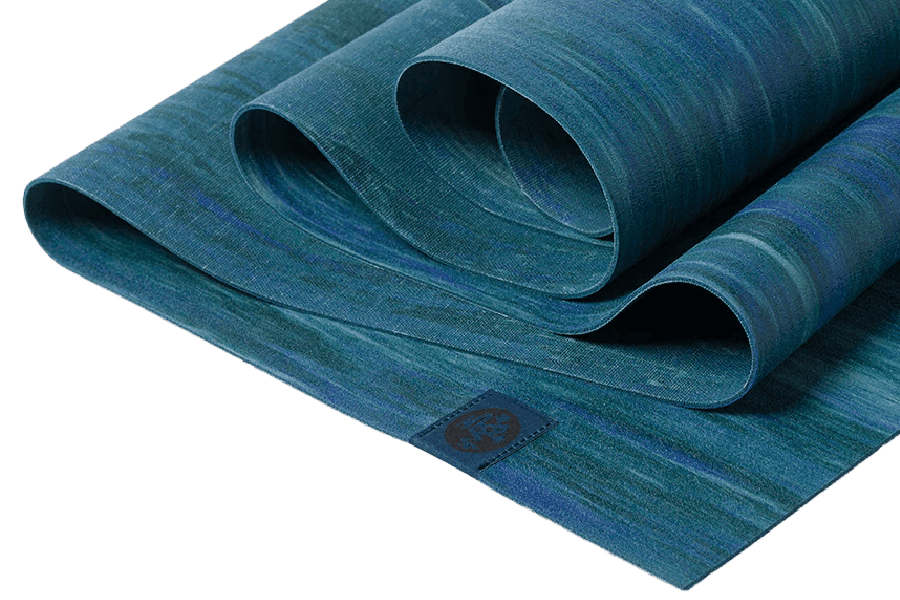
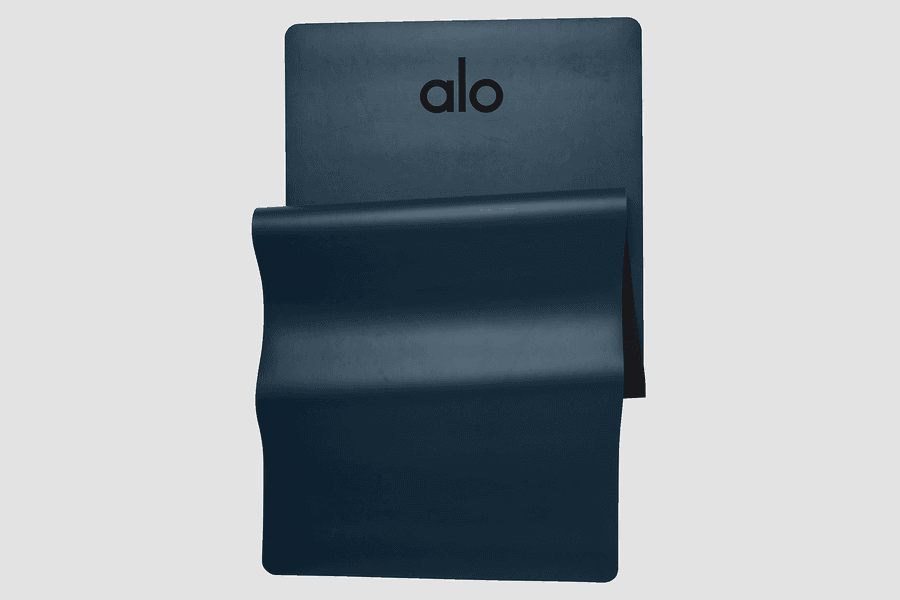
Price
The Superlite lists for $94 less.
$54
List price · check price at Amazon
$148
List price · check price at aloyoga.com
Thickness
The Warrior is 233% thicker.
1.5 mm0.06″
5 mm0.2″
Weight
The Superlite is 5.8 lbs lighter.
2.2 lbs1 kg
8 lbs3.6 kg
Size
The Warrior is 3.4″ longer; the Warrior is 2.4″ wider.
Same on both
- Natural rubber in the build, so neither suits a latex allergy
- 30 day returns and no warranty from either brand
- Both lose grip once your hands are properly wet
- Wipe-clean care and no machine washing
Full specs
Dimensions
Materials & build
Buying
Opposite ends of the shelf
A $54 travel mat that folds into a suitcase, and a $148 studio mat that OutdoorGearLab weighed at 8.1 pounds, the heaviest of the nineteen mats it tested. There is not much overlap in what these are for.
The reason to put them side by side is that the same test rated the cheaper mat higher for grip, both wet and dry. That does not make the Superlite the better mat, and the rest of this page is about where the Alo earns its money instead.
The $54 mat graded higher for grip
GearLab’s wet and dry grip ratings put the eKO Superlite at 7.5 dry and 5 wet, and the Alo Warrior at 7 dry and 4.5 wet. Its written verdict on the Alo calls it decent dry grip with a bit of a slip and slide when wet, and super-slippery when wet is the first item in its cons.
The Superlite is natural rubber, which is the material that grips best when dry, and there is not much else it can do at 1.5 mm. The Alo’s polyurethane leather top is soft and pleasant under dry hands and gives up faster than its price suggests once moisture arrives.
One test is one test. But it is the most careful side-by-side either mat has been through, and it points the opposite way to the price tags.
Where the Alo is worth the money
Space and cushion. The Warrior is 74.4″ × 26.4″ against the Superlite’s 71″ × 24″, which is a genuinely large practicing surface, and it is 5 mm against 1.5.
GearLab scored the Alo 7 out of 10 for comfort and support against the Superlite’s 2, and listed extra wide and soft surface among its pros. Practicing on it is a nicer experience than practicing on almost anything at this weight, which is the whole appeal.
Eight pounds, and what that means in practice
Alo lists the Warrior at 8 pounds and GearLab measured 8.1, heavier than the Manduka PRO. On the plus side it does not move on the floor, ever, which matters in a vigorous flow.
On the minus side it is not a mat you carry to class twice. The Superlite is 2.2 pounds and folds flat, and the two of them sit at the extreme ends of a category where most mats are between 3 and 6 pounds.
If you want a mat that both cushions and travels, neither of these is it. Something like the Manduka eKO Lite sits in that middle ground.
The Alo’s surface is a look as much as a material
The polyurethane leather top is a large part of why people buy this mat: matte, soft, and photographs well, mostly in black and a few muted colors. It feels expensive under dry hands.
It also stains. GearLab put stains easily in the cons alongside durability concerns, which is a hard thing to read on a $148 mat. Sweat and body oils go into the top layer, and pale colorways show it. Wipe it after sessions, dry it fully before rolling, keep it out of the sun.
The Superlite’s closed-cell rubber does not stain in the same way, though it collects dust and shows fold lines for the first session or two.
Neither is a hot yoga mat
This is worth stating plainly, because the Alo looks like one. A polyurethane top over rubber is the construction hot yoga mats use, but the execution matters more than the recipe, and GearLab’s testers found the Warrior slid under wet hands.
The Superlite is not the answer either: a 5 out of 10 wet score and no cushion to spare. If heated classes are your practice, the mats that have actually been tested for it are the ones to look at, and Manduka’s GRP Adapt 2.0 and the Liforme are where that conversation starts.
Coverage and how long each lasts
Neither brand offers a warranty. Alo gives 30 days to return; Manduka gives 30 days on the Superlite. Both mats are things you will replace rather than keep.
The Superlite’s thin rubber wears through at the hands and feet after a year or two of daily use, which is a reasonable outcome at $54. GearLab’s durability concerns note on the Alo is the more troubling one given what it costs.
Both are built on natural rubber, so neither is safe with a genuine latex allergy.
Prices and where to buy each
The Superlite sells on Amazon and manduka.com in around nineteen colorways, with a 79″ Long version for taller practitioners.
The Warrior sells through aloyoga.com and Alo stores rather than Amazon, at $148 list. Alo runs sales often enough that it is worth checking before paying full price, and there is a longer 84″ version if the standard size is short for you.
Bottom line
Get the eKO Superlite if you need a mat that packs, or a second mat to lay over a studio rental. It grips well, it costs $54, and it asks nothing of you. It is not a mat to practice on daily unless your floor is carpeted.
Get the Alo Warrior if you want a large, plush, good-looking mat that lives in one room and you practice unheated. Go in knowing that it is the heaviest mat in its class, that it stains, and that its wet grip tested below mats a third of the price. If those are dealbreakers, the money is better spent elsewhere.
Alo Warrior
List price $148
Frequently Asked Questions
- Does the $54 mat really grip better than the $148 one?
- In OutdoorGearLab's testing, yes, on both measures: the eKO Superlite scored 7.5 dry and 5 wet, the Alo Warrior 7 dry and 4.5 wet. GearLab's write-up on the Alo calls it decent dry grip with a bit of a slip and slide when wet, and lists super-slippery when wet first among its cons. That is one test rather than a law of physics, but it is the most careful side-by-side either mat has been through.
- So why would anyone buy the Alo Warrior?
- Space and feel. It is 74.4 by 26.4 inches against the Superlite's 71 by 24, which is noticeably more room for a wide stance, and 5 mm of cushion against 1.5. GearLab scored the Alo 7 out of 10 for comfort and support and the Superlite 2. The polyurethane leather top is soft in a way that photographs well and feels good under dry hands. Those are legitimate reasons; wet grip is not one.
- How heavy is the Alo Warrior really?
- Eight pounds by Alo's own spec, and GearLab measured 8.1, which made it the heaviest mat in a 19 mat test. That is more than the Manduka PRO. It does not budge on the floor, which is a genuine benefit, and it is not a mat you carry to class more than once before you buy a second one. The Superlite is 2.2 pounds and folds.
- Does the Alo Warrior stain?
- Yes, and GearLab flagged it. The absorbent polyurethane top takes on sweat and oils, and it is mostly sold in pale colorways where that shows. Wipe it down after sessions, let it dry fully before rolling, and keep it out of direct sun. The Superlite's closed-cell rubber does not stain in the same way, though it does pick up dust.
- Can either be used for hot yoga?
- Not without help. The Alo is the worse of the two for it despite looking like a hot yoga mat, and the Superlite has no cushion to spare and only a middling wet score of its own. If heated classes are your practice, look at mats built around absorbent tops that have actually been tested for it, such as Manduka's GRP Adapt 2.0, which holds GearLab's hot yoga award.
- How long will each one last?
- GearLab put durability concerns in the Alo's cons, which is a hard thing to read on a $148 mat, and thin rubber like the Superlite's will wear through at the hands and feet after a year or two of daily use. Neither brand offers a warranty beyond a 30 day return window. Treat both as mats you will replace rather than keep.
- Where do I buy each?
- The Superlite is on Amazon and manduka.com, in something like 19 colorways at last count. The Alo Warrior sells through aloyoga.com and Alo stores rather than Amazon, mostly in black and a few muted colors. Alo runs sales often enough that it is worth checking before paying full list.
Related comparisons
- Manduka eKO Superlite vs JadeYoga Voyager
- JadeYoga Harmony XW vs Alo Warrior
- Manduka PROlite Long & Wide vs Alo Warrior
- Manduka PRO vs Alo Warrior
- Manduka GRP Adapt 2.0 Long vs Alo Warrior
- Manduka eKO Long vs Alo Warrior
- Alo Warrior vs Lululemon The (Big) Mat 5mm
- Alo Warrior vs Yoloha Unity Pro Cork
- Alo Warrior vs b, halfmoon B Mat Strong 6mm