Manduka eKO vs Alo Warrior: Which One Should You Buy?
Both of these mats are built on natural rubber; the difference is what each brand put on top. Manduka leaves the eKO's rubber exposed and textured, so you practice on the material itself. Alo caps the Warrior with smooth polyurethane leather, which made it the most recognizable mat on studio Instagram. The Warrior costs $34 more and is bigger in every direction.
As an Amazon Associate, we earn from qualifying purchases made through links on this page. How this works
The quick answer
The eKO is the more practical buy: $34 cheaper, sold on Amazon, made with over 30% recycled content, and its textured rubber holds confidently as long as your palms stay dry. The Warrior counters with the better first impression and the better sweat story: a plush top that absorbs moisture rather than letting it bead, though reviewers split on how well its grip holds in a truly wet class, plus 3.4 more inches of length and a softer landing for knees. Both are heavy mats bound by rubber rules (no sun, no hot cars, gentle cleaners), and neither carries a warranty beyond a 30 day window.
Get the eKO if your palms stay mostly dry and you'd rather keep the $34. Get the Warrior if the plush feel and bigger footprint are worth paying for, and some of what you're buying is how the mat looks.
Get the eKO if...
- You'd rather keep the $34
- You like the grounded feel of textured rubber under dry palms
- Recycled content matters to you (the eKO is over 30% recycled)
- You want the mat you can actually buy on Amazon
Get the Warrior if...
- You want the plusher, softer feel under knees and hands
- You want the bigger surface (74.4 by 26.4 inches vs 71 by 26)
- Your practice runs sweaty and you want a top that absorbs it
- You prefer the Warrior's smooth matte look and muted colorways
Side by side
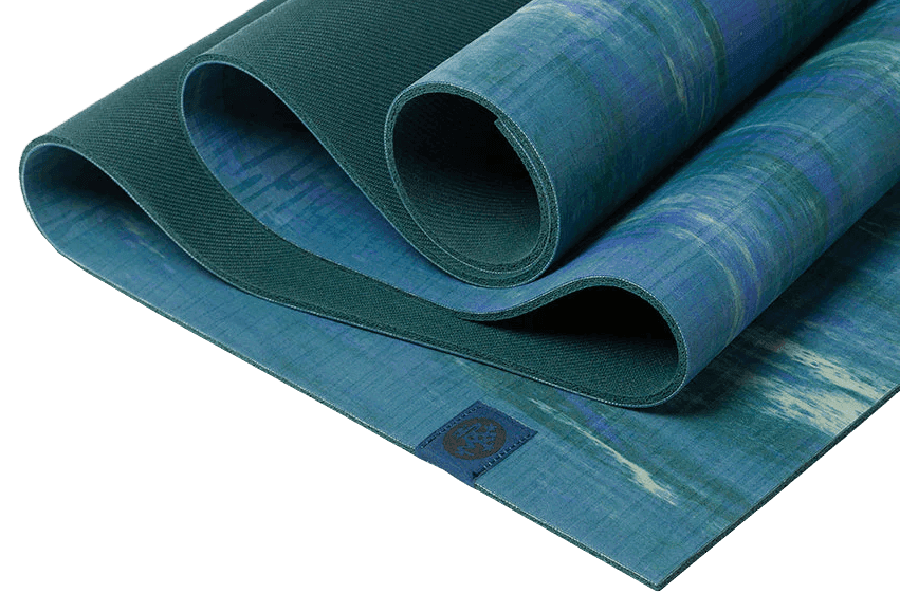
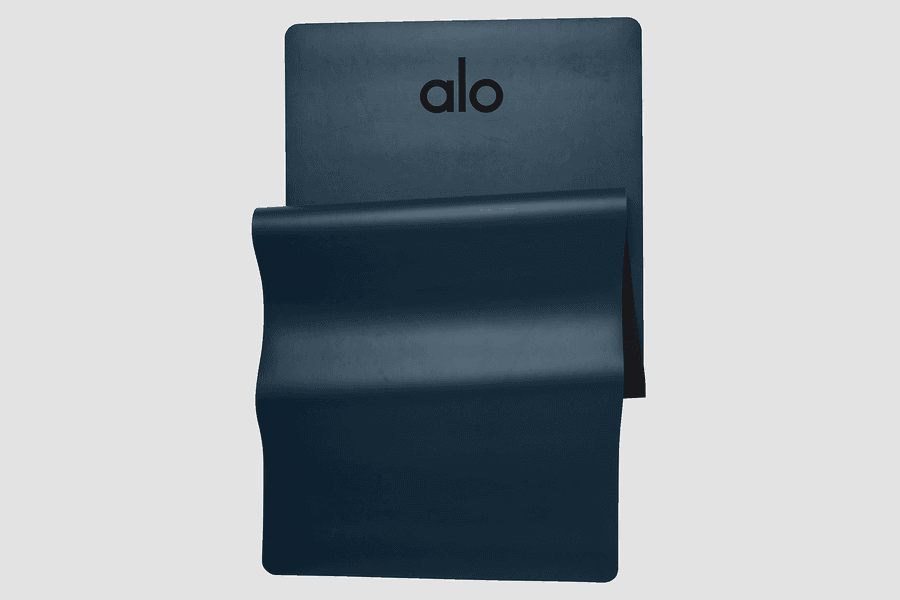
Price
The eKO lists for $34 less.
$114
List price · check price at Amazon
$148
List price · check price at aloyoga.com
Thickness
Identical thickness.
5 mm0.2″
5 mm0.2″
Weight
The eKO is 1 lbs lighter.
7 lbs3.2 kg
8 lbs3.6 kg
Size
The Warrior is 3.4″ longer; the Warrior is 0.4″ wider.
Same on both
- Natural rubber, so not for latex allergies
- A rubber smell out of the box that fades
- Must stay out of direct sun and hot cars
- No warranty beyond 30 day windows
- Heavy mats: 7 and roughly 8 pounds
Full specs
Dimensions
Materials & build
Buying
Same rubber base, very different tops
Strip these two mats down and they’re relatives: natural rubber bodies, closed to sweat underneath, heavy, and bound by the same rubber care rules. The difference is the surface you actually touch. Manduka leaves the eKO’s rubber exposed and textured, so your hands grip the material itself. Alo covers the Warrior in smooth polyurethane leather, a top that absorbs sweat and gave the mat its signature matte look.
The eKO lists at $114 and the Warrior at $148, so the Warrior needs to justify $34 plus its extra size and weight. Here’s how that case goes.
Grip: texture against absorption
Both mats grip well from the first class, no break-in required, which already separates them from Manduka’s PRO line. With dry palms the eKO’s textured rubber feels confident and a little grippier the harder you press, and Manduka describes its traction in exactly those dry-hands terms. The catch is moisture: the eKO’s surface is sealed, so sweat beads and sits on top.
The Warrior’s polyurethane top drinks sweat in instead. T3’s reviewer found it stayed planted through sweaty sessions, though GearLab’s wet-grip test rated it mediocre, so treat it as good with damp hands rather than proven in a downpour. For a normal unheated practice, call grip a tie. For sweaty practices, the Warrior is ahead, and dedicated hot-yoga mats beat both.
Feel: grounded against plush
The eKO is 5 mm of solid rubber, and it feels like it: dense, springy, and planted, the quality owners tend to describe as grounded. Balance work reads clearly through it, and it never wobbles the way soft foam does.
The Warrior is 5 mm too, but its layered build lands softer, with a spongy give T3 found comfortable under hands and knees through long sessions. Kneeling lunges and floor work are kinder on the Warrior; standing balances are a touch crisper on the eKO. This one is honest preference, and it’s the difference you’d feel within a single class.
Size and weight: the Warrior is bigger, and heavier still
The Warrior measures 74.4″ × 26.4″ against the eKO’s 71″ × 26″. The extra 3.4 inches of length is its clearest hard advantage, worth real money if you’re six feet or taller. Manduka answers with the 79″ eKO Long, and Alo sells an 84″ Long Warrior beyond that.
Neither is kind on a shoulder strap. The eKO weighs 7 pounds, and Alo lists the Warrior at approximately 8. At home the difference disappears; carried daily, both argue for their lighter siblings, the 5 pound eKO Lite on Manduka’s side and the Lightweight Warrior on Alo’s.
Durability and care: two ways to age
Neither of these is a decade mat, and they wear at different spots. The eKO’s exposed rubber slowly softens and can flake at the surface after a few years of hard practice, faster with sun exposure. The Warrior’s wear point is its polyurethane top, which scuffs, stains, and picks up dirt and lint easily, a complaint T3 noted even while recommending the mat.
The care rules are shared and non-negotiable: no direct sun, no hot cars, no harsh cleaners, damp cloth only, and let the Warrior’s absorbent top dry fully before rolling. Both brands stop backing their mats at roughly 30 days, which tells you how each expects these materials to age. Budget for replacement with either.
Materials: recycled content and the latex question
The eKO has the better environmental story: today’s version is made in Taiwan from natural rubber with over 30% recycled content, and Manduka has re-engineered the line enough that some retailers label it eKO 2.0. The Warrior is PVC-free and formaldehyde-free, but Alo publishes less about what’s actually in it beyond the polyurethane top and rubber base.
On allergies there’s no daylight between them: both are natural rubber products, and natural rubber can carry trace latex proteins. With a genuine latex allergy, skip both and shop PVC or TPE mats instead.
Price and where to buy
List prices are $114 for the eKO and $148 for the Warrior. The eKO is the easier mat to actually buy: it sells through manduka.com and on Amazon, where colorway pricing moves, so check the current eKO price at Amazon before paying list. The Warrior sells only through Alo’s site and Alo stores; Amazon listings are third-party resellers.
For the same construction as the Warrior at a lower price, Lululemon’s The Mat is the comparison worth reading before you decide; we cover it in The Mat vs Alo Warrior.
Bottom line
Get the eKO if your palms stay mostly dry and you’d rather keep the $34. It grips well, feels planted, has the better eco story, and buying and returning it through Amazon is painless. It’s the rational choice in this pair.
Get the Warrior if the plush feel, the extra length, and the sweat-absorbing top line up with how you practice, and you’re comfortable paying partly for how the mat looks. That’s not a criticism; it’s most of Alo’s business model, and the mat underneath the branding is genuinely good.
Manduka eKO
List price $114
Alo Warrior
List price $148
Frequently Asked Questions
- Which is better for hot yoga, the eKO or the Alo Warrior?
- The Warrior, with a caveat. Its polyurethane top absorbs sweat, and T3's reviewer found it stayed planted through sweaty sessions, though GearLab's wet-grip test rated it mediocre. The eKO is closed-cell rubber, so sweat beads on the surface, and Manduka itself describes the eKO's grip in terms of dry-hands traction. Neither is the mat we'd buy specifically for hot yoga; that's what Manduka's GRP Adapt line and the Liforme are for.
- Is either mat safe for a latex allergy?
- No. The eKO is solid natural rubber and the Warrior sits on a natural rubber base, and natural rubber can carry trace latex proteins. With a genuine latex allergy, look at PVC or TPE mats instead; Manduka's PRO series and Lululemon-style PU mats built on synthetic bases are the safer categories to shop.
- Do these mats smell?
- Both do at first. Fresh natural rubber has a distinct smell, and the eKO's exposed rubber surface carries it more strongly than the Warrior's covered top. It fades over a few weeks with airing out. Don't try to scrub it away with strong cleaners; harsh chemicals damage rubber and violate both brands' care guidance.
- Which mat lasts longer?
- Neither is a buy-once mat, and they wear differently. eKO owners report the rubber surface flaking after a few years of heavy practice, and sun exposure speeds that up. The Warrior's polyurethane top scuffs, stains, and collects dirt with use; T3 flagged exactly that. Both brands limit their backing to about 30 days, which is a fair signal of how they expect these materials to age. Budget for eventual replacement either way.
- How heavy are these mats to carry?
- Heavy. The eKO is 7 pounds, and Alo lists the Warrior at approximately 8. Both roll fat, and neither is pleasant on a shoulder strap across town. If you commute to class daily, Manduka's 5 pound eKO Lite covers the same construction at a friendlier weight, and Alo sells a Lightweight Warrior for the same reason.
- Where can I buy each mat?
- The eKO sells through manduka.com and Amazon, which makes price-checking and returns easy. The Warrior sells through aloyoga.com and Alo's retail stores; Alo doesn't list it on Amazon, so marketplace listings there are resellers. Both brands run frequent colorway rotations, so exact colors come and go.
Related comparisons
- JadeYoga Harmony XW vs Alo Warrior
- Manduka PROlite Long & Wide vs Alo Warrior
- Manduka eKO vs Lululemon The (Big) Mat 5mm
- Lululemon The Mat 5mm vs Manduka eKO
- JadeYoga Harmony 74" vs Manduka eKO
- Manduka PRO vs Alo Warrior
- Manduka GRP Adapt 2.0 Long vs Alo Warrior
- Manduka eKO Long vs Alo Warrior
- Alo Warrior vs Lululemon The (Big) Mat 5mm