Manduka Begin vs Amazon Basics 1/2 Inch: Which One Should You Buy?
Both of these get bought as a first yoga mat, and only one of them is a yoga mat. The Manduka Begin is 5 mm of stable TPE with a printed alignment stripe, built to teach a standing practice. The Amazon Basics 1/2 inch is a soft foam pad that feels wonderful under a kneeling body and unsteady under a standing one. The $40 between them matters less than the category difference.
As an Amazon Associate, we earn from qualifying purchases made through links on this page. How this works
The quick answer
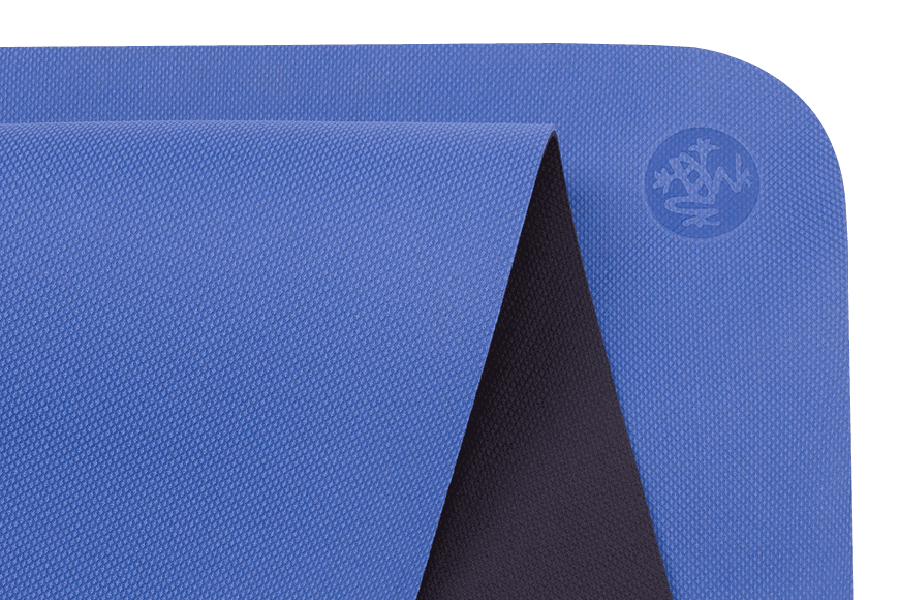
If yoga is the goal, the Begin is the right purchase even though it costs almost three times as much. Its firm 5 mm surface stays put under standing feet, the alignment stripe helps a new practitioner build symmetric habits, and the grip works from the first class. Half an inch of soft NBR foam does none of that; feet sink, balance poses wobble, and the padding that felt generous in child's pose becomes the problem in warrior two.
If what you actually want is comfortable padding for stretching, core work, or physical therapy movements, buy the Amazon Basics and keep the $40. It is honest about being an exercise pad; the confusion only starts when it gets asked to be a yoga mat.
Get the Begin if...
- You're learning yoga with standing and balance poses
- You want the alignment stripe while you build form
- You want a surface that grips from day one
- You'd rather buy from a yoga brand with 10 colorways
Get the Amazon Basics if...
- You need soft padding for floor exercise or PT work
- Kneeling and lying comfort is the whole point
- You're spending about $22, not $62
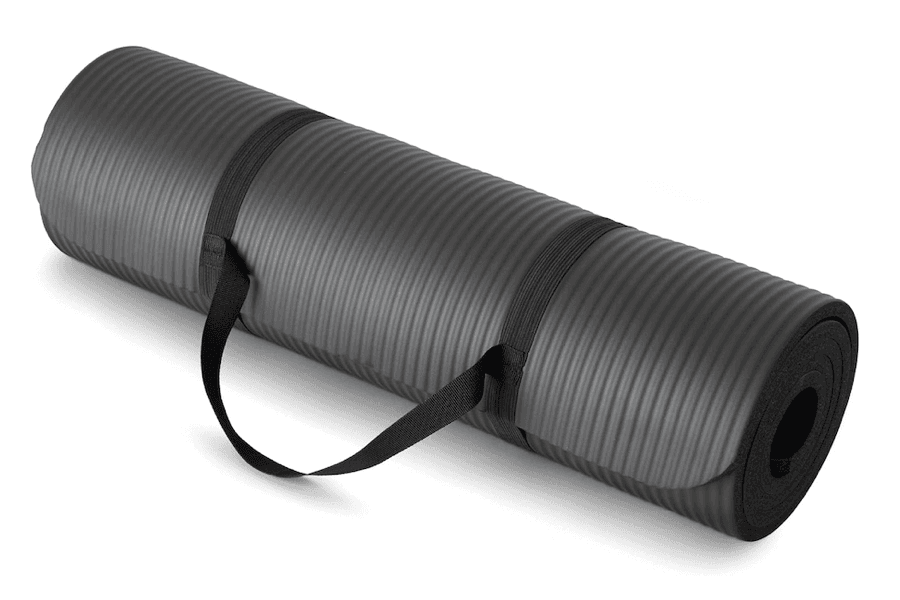
- You want the included carry strap and a longer 74" pad
Side by side
Price
The Amazon Basics lists for about $40 less.
$62
List price · check price at Amazon
$22.48
List price · check price at Amazon
Thickness
The Amazon Basics is 154% thicker.
5 mm0.2″
12.7 mm0.5″
Weight
The Amazon Basics is 0.3 lbs lighter.
2.5 lbs1.1 kg
2.2 lbs1 kg
Size
The Amazon Basics is 6″ longer; same width.
Same on both
- Same 24" width
- Light enough to carry anywhere
- Fine for stretching and gentle floor work
Full specs
Dimensions
Materials & build
Buying
Two first mats, only one yoga mat
Search for a beginner yoga mat and both of these show up, which is how a lot of people end up choosing between a $62 Manduka and a $22 pad without realizing they’re different product categories. The Begin is a firm 5 mm TPE mat with a printed alignment stripe, designed by a yoga company to teach a standing practice. The Amazon Basics 1/2 inch is soft NBR foam, designed to make a hard floor comfortable for a body lying on it.
Both are fine products. The trouble starts when the foam pad gets asked to do the Manduka’s job, so most of this page is about that boundary.
What happens when you stand up
Lying down, half an inch of soft foam feels like a small luxury. Standing, it becomes the problem. A foot pressed into soft foam sinks unevenly, so the ankle spends the whole pose making corrections, and balance work that should be teaching you stillness teaches you wobbling instead. New practitioners often assume they’re the shaky part; on this surface, the mat is.
The Begin’s 5 mm of firm TPE pushes back predictably. Tree pose is still hard, but it’s hard for the right reasons, and progress you make on it is real. If a standing practice is anywhere in your plans, this section is the whole comparison.
The alignment stripe is not a gimmick
The Begin’s printed center line sounds like packaging copy and turns out to be the most beginner-useful feature Manduka makes. Practicing symmetrically is genuinely hard to self-check; hands drift, feet angle, and nobody is watching. A line to square yourself against builds habits that stay after the mat wears out. The Begin is also reversible and comes in around 10 colorways, small things that make a starter mat feel less like a compromise.
Where the foam pad genuinely wins
Stretching on tile, physical therapy movements, core circuits, anything on knees or spine against a hard floor: this is what the Amazon Basics is for, and it’s good at it. Half an inch of foam is far more comfort than any yoga mat offers, it ships with a carry strap, and at about $22 it’s priced like the accessory it is. It’s also 74″ long, six inches more than the Begin, so tall bodies fit lying down with room to spare.
If your floor time is gentle and horizontal, you don’t need what the Begin charges for, and the foam is the better buy.
Grip: decent and decent, until sweat
Dry, both surfaces hold fine. The Begin’s soft-touch TPE grips bare skin from the first class with no break-in, and the foam’s texture keeps socks and shoes from sliding. Wet is another matter: sweat sits on top of both, and palms slide. Neither belongs in a heated class without a towel, and the foam compounds the problem by being unstable underneath the slipping. For an unheated beginner class, the Begin’s grip is comfortably enough.
Durability, and a warranty paradox
Here’s the odd part: the $22 mat has the better paper coverage. Amazon backs its foam for 1 year, while Manduka gives the Begin only a 30 day return window. In practice the order reverses. The Begin’s TPE handles a few years of regular practice, with the reversible surface adding time, while soft NBR foam flattens where it’s loaded most, and owner reviews report tears and shedding within a year or two of steady use.
Neither is a long-term mat. One just wears out slower, and it’s the one without the warranty.
Sizes, colors, and carrying
The Begin comes in one 68″ × 24″ size, 2.5 pounds, in around 10 colorways. The Amazon Basics runs 74″ × 24″, 2.2 pounds, in 3 colors, with a 1 inch sibling for people who want double the padding. Both carry easily; the foam rolls fatter but lighter. The Begin’s single short size is its honest weakness: above about five foot six it starts to feel small, and there’s no Long version to size into.
Price and value
List prices are $62 for the Begin and about $22.48 for the Amazon Basics, which drifts with Amazon’s pricing. Check current prices on the Begin and the Amazon Basics 1/2 inch.
Bought for their own jobs, both prices are fair. The trap is buying the foam as a cheaper yoga mat; a standing practice will expose it within weeks, and the $22 becomes a down payment on the mat you should have bought. If $62 is too much for a first yoga mat, the better economy is a firm budget mat like the Amazon Basics TPE, not a soft pad.
Bottom line
Learning yoga, or planning to? Get the Begin. The firm surface and the stripe are doing real instructional work, and nothing about the foam pad helps a standing practice.
Need comfortable padding for stretching, PT, or floor workouts? Get the Amazon Basics and enjoy the savings. It’s the better product for that job, and the Begin would be the overpriced one on that floor.
Manduka Begin
List price $62
Amazon Basics 1/2 Inch Extra Thick
List price $22.48
Frequently Asked Questions
- Can I learn yoga on the Amazon Basics 1/2 inch mat?
- Floor poses, yes. Standing sequences, not well. Half an inch of soft NBR foam compresses unevenly under a standing foot, which makes balance poses harder than they should be and puts ankles and wrists at odd angles. Beginners often blame themselves for wobbling that the surface is causing. A firm mat like the Begin makes the same poses noticeably easier to learn.
- Isn't thicker padding better for a beginner's knees?
- Only up to a point, and half an inch of soft foam is past it. Joint comfort comes from density more than depth: the Begin's firm 5 mm supports a kneeling joint, while soft foam lets it sink to the floor under concentrated weight. If your knees need more than the Begin offers, a folded blanket under the knee works better than practicing everything on thick foam.
- What does the Begin's alignment stripe actually do?
- It's a printed center line running the length of the mat. Squaring your hands, feet, and spine against it builds the habit of practicing symmetrically, which is surprisingly hard to self-check when you're new. It's the single most beginner-useful feature on any mat we compare, and the Amazon Basics has no equivalent.
- Which one lasts longer?
- Neither is a decade mat, but the Begin holds up better. Its TPE gives a few years of regular practice, with the reversible surface buying extra time. The soft NBR foam tends to flatten where it's used most, and owner reviews include tearing and surface shedding within a year or two. Oddly, the warranties run the other way: Amazon backs its mat for 1 year, while the Begin gets only Manduka's 30 day return window.
- I'm tall. Does that change the answer?
- It complicates it. The Amazon Basics is 74" long; the Begin comes in one 68" size, which gets snug above about five foot six and genuinely short above five foot ten. But buying an unstable pad because it's longer solves the wrong problem. Tall beginners are better served by a longer firm mat, like the 73.6" Amazon Basics 1/4 inch TPE or a 71" mat from Manduka's main lines.
- Does either mat smell out of the box?
- The Amazon Basics usually does; NBR foam ships with a rubbery chemical smell that owners report fading over days to a few weeks of airing out. The Begin's TPE is much milder, typically a faint scent that's gone quickly. Neither is harmful, but if you're sensitive to odors the foam mat will test your patience first.
Related comparisons
- Amazon Basics 1/2 Inch Extra Thick vs Retrospec Solana 1/2"
- Manduka Begin vs IUGA Eco Friendly Non Slip PU
- Manduka Begin vs Gaiam Performance Dry-Grip 5mm
- Manduka Begin vs Hugger Mugger Earth Elements 5mm
- Manduka Begin vs JadeYoga Level One
- Manduka Begin vs Gaiam Performance Dry-Grip Long & Wide
- Manduka Begin vs 42 Birds The Robin
- Manduka Begin vs Gaiam Premium Reversible 6mm
- Manduka Begin vs JadeYoga Travel 68"