Manduka Begin vs Amazon Basics 1/4 Inch TPE: Which One Should You Buy?
This is the fairest fight in our budget tier: two TPE yoga mats, both light, both grippy from the first class, both closed-cell, both destined to wear out in a few years rather than a few decades. The Manduka Begin costs $62 and brings an alignment stripe, a softer feel, and a yoga brand behind it. The Amazon Basics 1/4 inch costs about $26 and brings five and a half extra inches of length. The $36 gap is the whole conversation.
As an Amazon Associate, we earn from qualifying purchases made through links on this page. How this works
The quick answer
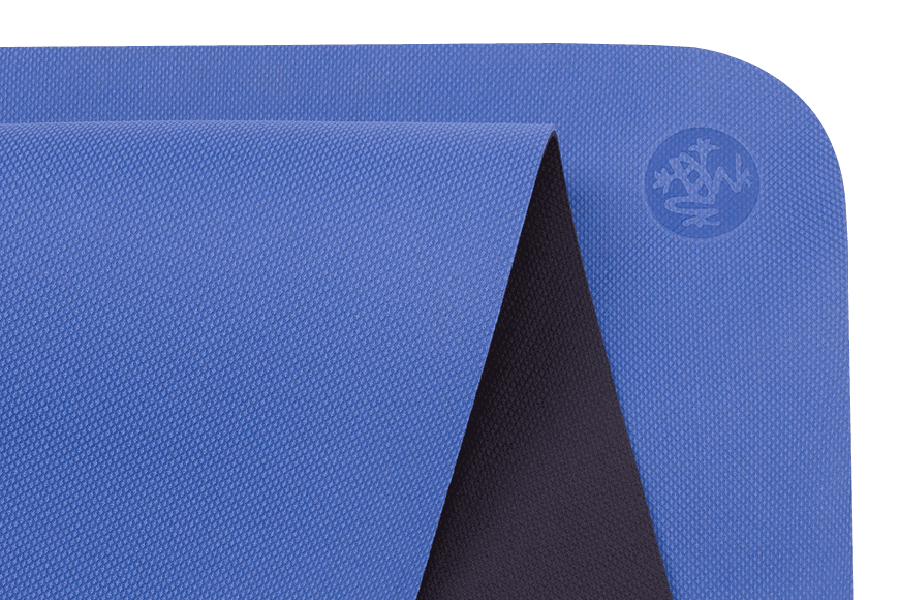
As pure function, they're closer than the prices suggest. Both grip well dry, both get slick when palms sweat, both cushion adequately at 5 to 6 mm, and neither carries a meaningful warranty story. The Begin's real advantages are the printed alignment stripe, which genuinely helps a beginner build symmetric form, a denser and more finished feel underfoot, and 10 colorways against 4. The Amazon Basics' advantages are the price and the length: 73.6" against the Begin's single 68" size.
If you're under about five foot six and want the best learning tool, the Begin is worth its premium. If you're taller, or you mainly want a cheap stable mat to find out whether yoga sticks, the Amazon Basics does the job for less than half the money.
Get the Begin if...
- You want the alignment stripe while you learn
- You prefer a denser, more finished surface feel
- You want 10 colorways and a reversible design
- You'd rather buy from a dedicated yoga brand
Get the Amazon Basics if...
- You want to spend about $26, not $62
- You're tall; 73.6" beats the Begin's 68" easily
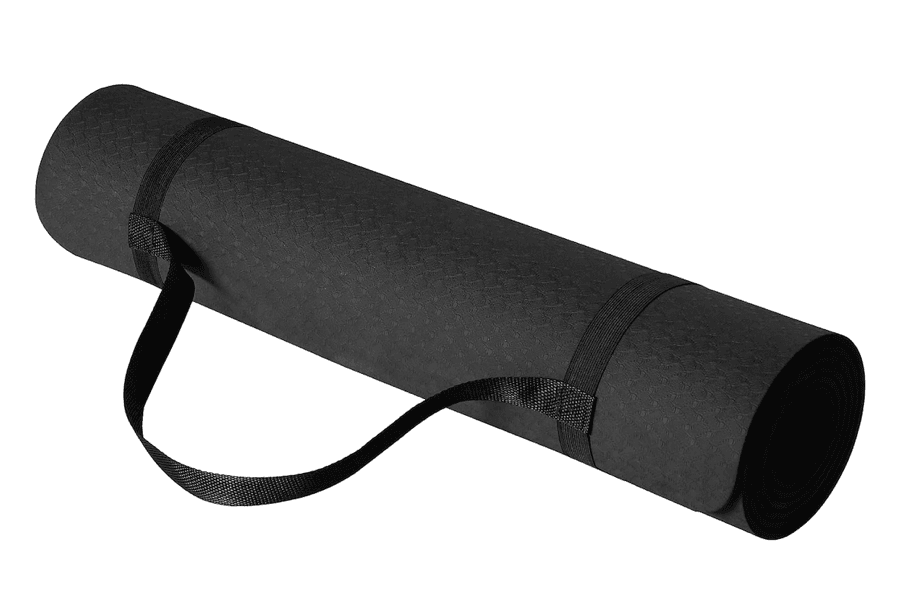
- You want the lightest option at about 2 pounds
- You're testing the yoga habit before investing
Side by side
Price
The Amazon Basics lists for about $36 less.
$62
List price · check price at Amazon
$26.36
List price · check price at Amazon
Thickness
The Amazon Basics is 20% thicker.
5 mm0.2″
6 mm0.24″
Weight
The Amazon Basics is 0.5 lbs lighter.
2.5 lbs1.1 kg
2 lbs0.9 kg
Size
The Amazon Basics is 5.6″ longer; same width.
Same on both
- TPE construction, light and easy to carry
- Same 24" width
- Closed-cell surface (sweat can't soak in)
- Good dry grip from the first practice
- A few years of regular use, not decades
Full specs
Dimensions
Materials & build
Buying
For once, a fair fight
Most budget-mat comparisons pit a yoga mat against something that isn’t one. Not here. The Manduka Begin and the Amazon Basics 1/4 inch TPE are the same kind of product: light closed-cell TPE mats that grip from the first class, cushion adequately at 5 to 6 mm, stay stable under standing feet, and wear out in years rather than decades. One costs $62 and one costs about $26.
That makes this the rare page where the question is simply whether the premium features are worth $36 to you, not which mat can actually do yoga. Both can.
Length: the Amazon Basics covers more bodies
The Begin comes in exactly one size, 68″ × 24″, and that’s its biggest limitation. Around five foot six it starts feeling snug in lying poses; taller than that and your head or heels are on the floor. The Amazon Basics runs 73.6″, nearly six extra inches, at the same 24″ width and a lighter 2 pounds. There’s no Long version of the Begin to size into, so for tall practitioners the cheaper mat is simply the better fit, full stop.
Feel and grip: closer than the prices
Side by side, the differences are real but small. The Begin feels slightly denser and more planted; the Amazon Basics is a touch springier, with a coarser dual-sided texture that holds bare feet predictably. Both grip well with dry hands from the very first practice, which is more than the premium PVC mats can say out of the box. Balance poses work fine on either, and knees on hard floors get honest support from both, with the Amazon Basics’ nominal 6 mm giving it a slight edge in pure cushion.
Neither survives a sweaty class
Both surfaces are closed-cell, so sweat has nowhere to go: it pools where your palms land, and grip goes with it. A towel over the mat patches either one for the occasional heated class. If hot yoga is your actual practice, this whole price tier is the wrong shelf, and an absorbent-top mat like the GRP Adapt 2.0 is the category to look at instead.
Lifespan: plan on years, not decades
TPE is the budget material for a reason. Expect a few years of regular practice from either mat before the surface scuffs, compresses, or sheds its texture; daily heavy use shortens that, and light use extends it. The Begin’s reversible design effectively gives it a second surface to wear through, which is the closest thing to a durability advantage on this page. At these prices, replacement is the maintenance plan, and neither brand pretends otherwise.
Price and value
List prices are $62 for the Begin and about $26.36 for the Amazon Basics, which moves with Amazon’s pricing. Check current prices on the Begin and the Amazon Basics TPE.
Since both wear out on roughly the same schedule, the value question is simple: you’re paying $36 for the stripe, the finish, and the colorways, not for extra years. For a committed beginner who’ll use the stripe daily, that’s defensible. For someone testing whether yoga sticks, the $26 mat answers the question just as well, and a practice that outgrows it usually skips this tier entirely on the next purchase, toward something like a PROlite-class mat.
Bottom line
Under five foot six, new to yoga, and want the best learning tool in the budget tier? The Begin justifies its price with the stripe and the nicer surface, and it’s the mat we’d hand a motivated beginner.
Taller than that, tighter budget, or just pragmatic? The Amazon Basics TPE does the same fundamental job for $26, fits more bodies, and loses nothing that affects an actual practice. It’s cheap with no catch that we could find.
Manduka Begin
List price $62
Amazon Basics 1/4 Inch Thick TPE
List price $26.36
Frequently Asked Questions
- What does the extra $36 for the Begin actually buy?
- Three real things: the printed alignment stripe, a denser and more consistent TPE that feels more like a finished yoga mat than a generic one, and Manduka's colorway range with a reversible second color. What it doesn't buy is longevity; both mats are TPE and both give a few years of regular use before wear shows.
- Which one should a tall person get?
- The Amazon Basics, without much debate. It runs 73.6" long against the Begin's 68", and the Begin has no Long version. Above about five foot six the Begin starts feeling short in lying poses; above five foot ten it plainly is. The Amazon Basics covers most heights comfortably at a lower price.
- Is either mat good for hot yoga?
- No. Both are closed-cell TPE, so sweat sits on the surface and both get slick once palms are wet. A towel over the mat patches the problem in an occasional heated class. If heated practice is your routine, an absorbent-top mat like Manduka's GRP Adapt line is the right category, at several times the price.
- How long do these mats last?
- Plan on a few years of regular practice from either, less with daily heavy use. TPE compresses and scuffs faster than PVC or rubber, and owners of both mats report surface wear as the usual end. The Begin's reversible design stretches its life somewhat. Warranty-wise the cheap mat oddly wins: Amazon covers 1 year, Manduka offers only 30 day returns on the Begin.
- Do they feel the same underfoot?
- Similar family, different polish. The Begin is 5 mm, slightly denser, with a smooth soft-touch finish. The Amazon Basics is nominally 6 mm but springier and a touch less consistent, with a coarser dual-sided texture. Both are stable enough for balance work, which is the line that separates real yoga mats from foam pads.
- Is the alignment stripe worth paying for?
- If you're genuinely new, it's the best argument for the Begin. Practicing symmetrically is hard to self-check, and a center line to square hands and feet against builds habits that outlast the mat. If you've practiced for a year or more, you've likely internalized what the stripe teaches, and the Amazon Basics' savings become hard to argue with.
Related comparisons
- Amazon Basics 1/4 Inch Thick TPE vs Gruper TPE 6mm
- Manduka Begin vs IUGA Eco Friendly Non Slip PU
- Amazon Basics 1/4 Inch Thick TPE vs Gaiam Premium 6mm
- Amazon Basics 1/4 Inch Thick TPE vs Gaiam Essentials 6mm
- Amazon Basics 1/4 Inch Thick TPE vs YogaAccessories Extra Thick Deluxe 1/4"
- Manduka Begin vs Gaiam Performance Dry-Grip 5mm
- Amazon Basics 1/4 Inch Thick TPE vs Gaiam Premium Reversible 6mm
- Manduka Begin vs Hugger Mugger Earth Elements 5mm
- Amazon Basics 1/4 Inch Thick TPE vs Gaiam Classic Print 4mm