Jade Harmony vs Yoga Design Lab Combo: Which One Should You Buy?
Two answers to the same problem, ten dollars apart. Jade's Harmony is open-cell natural rubber that grips by friction and absorbs light sweat into the mat itself. Yoga Design Lab's Combo bonds a recycled microfiber towel to a rubber base so the towel can never slide out from under you. The Harmony is the older, plainer, more proven of the two; the Combo is the one that goes in the washing machine.
As an Amazon Associate, we earn from qualifying purchases made through links on this page. How this works
The quick answer
On traction the Harmony has the stronger record. Jade's rubber is tacky from the first minute and holds with damp palms, and GearLab rated the closely related Harmony 2.0 at 9.5 out of 10 dry and 7 wet. It scored the Combo 4 out of 10 both ways, ranked it 17th of 19, and wrote that it was more slippery than they hoped for during practice.
The Combo answers with a printed design, a machine wash, a carry strap and slightly more length. Its owner reviews are far warmer than that test score, and the reason is real: microfiber grips once it is wet. Buy the Harmony for grip you can rely on, the Combo if laundering the mat solves a genuine problem.
Get the Jade Harmony if...
- You want tacky rubber grip that works whether or not you are sweating
- You want the thicker mat: about 4.8 mm against 3.5
- You want a written one-year warranty and USA-made rubber
- You want a tree planted for the purchase and no plastic in the build
Get the Combo if...
- You already practice on a towel and want it built into the mat
- You want to machine wash it on a gentle cycle
- You want one of 19 printed designs rather than a solid color
- You want two more inches of length and a carry strap included
Side by side
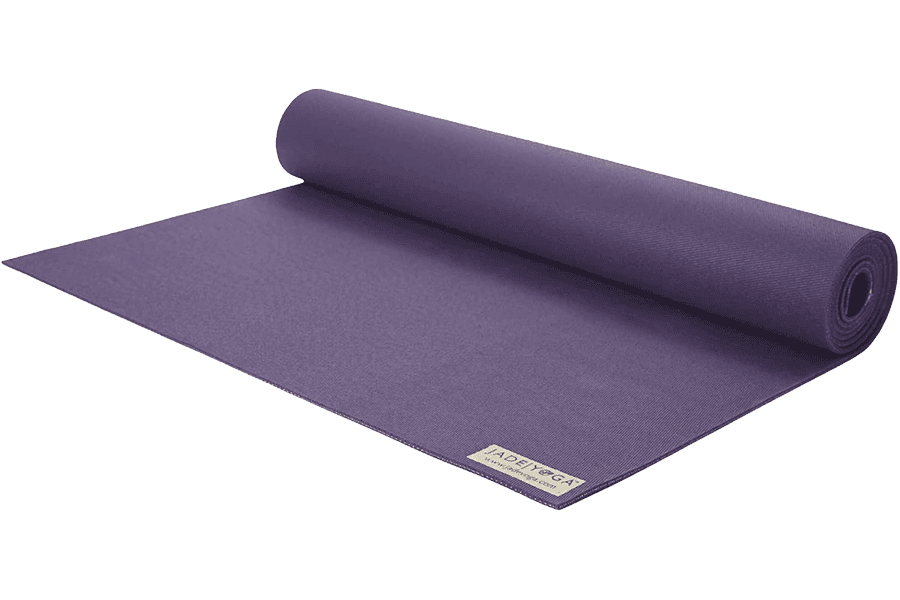
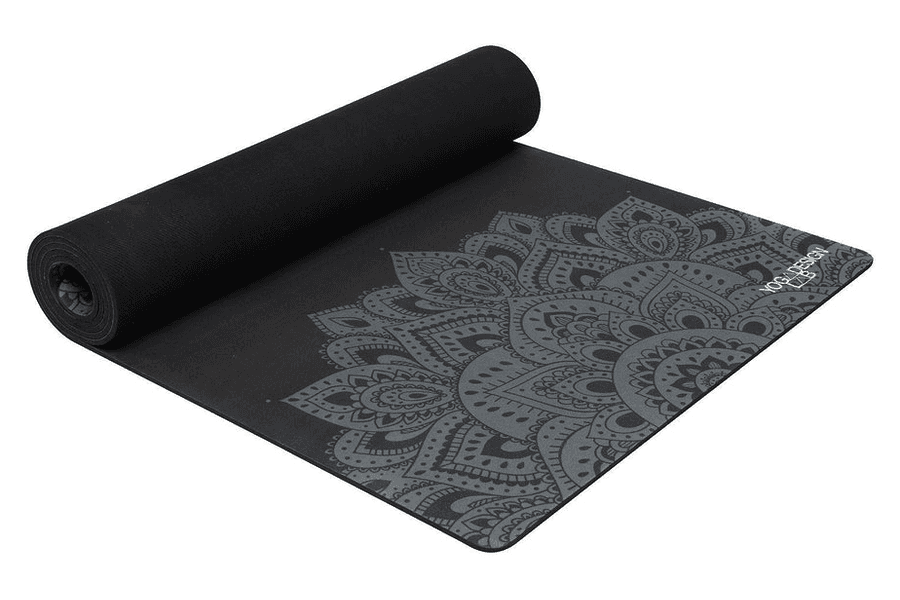
Price
The Harmony lists for about $17 less.
$99.95
List price · check price at Amazon
$117
List price · check price at Amazon
Thickness
The Harmony is 37% thicker.
4.8 mm0.19″
3.5 mm0.14″
Weight
The Harmony is 0.1 lbs lighter.
4.8 lbs2.2 kg
4.9 lbs2.2 kg
Size
The Combo is 2″ longer; same width.
Same on both
- Natural rubber base under a grippy top
- Grip from the first class with no break-in
- 24 inches wide, narrow by current standards
- Not safe for a latex allergy
- Both collect lint enthusiastically
Full specs
Dimensions
Materials & build
Buying
Two answers to sweat, seventeen dollars apart
Jade’s Harmony grips by friction. Its open-cell rubber is tacky the moment you unroll it and takes light sweat into the mat rather than letting it bead on top, which is the quality that made it the default studio mat for two decades.
The Yoga Design Lab Combo takes a different route entirely: bond a recycled microfiber towel to a rubber base so the towel can never slide out from under you, print it, and let the whole thing go in the wash. $99.95 against $117 means this is not a budget decision either way.
Grip: the Harmony works without conditions
Jade rubber is tacky dry, tacky damp, and needs no break-in. GearLab rated the closely related Harmony 2.0 at 9.5 out of 10 dry and 7 wet and gave it an award as an eco-friendly dry grip powerhouse, and Wirecutter credits the open-cell surface for traction in sweaty sessions.
The Combo depends on you. Dry microfiber slides; soaked microfiber grips. GearLab’s standardized testing scored it 4 out of 10 both wet and dry, ranked it 17th of 19, and the testers wrote that it was more slippery than they hoped for during practice. Yoga Design Lab’s own listings carry thousands of reviews averaging close to five stars, many from hot yoga practitioners who are describing genuine experience.
Both things are true. The difference is that the Harmony doesn’t need the room to be doing its part.
The Combo goes in the washing machine
Yoga Design Lab prefers hand washing to extend the mat’s life but allows a gentle cycle in a machine without a center agitator, using mild soap. That’s a real feature, and it’s the Combo’s strongest argument on this page.
The Harmony can’t go in a machine at all, and because it’s open-cell it actually needs more attention than a closed-surface mat: sweat goes into the rubber rather than sitting on it, so a mat wash and a cloth become a regular habit rather than an occasional one. Heavy sweaters should weigh that carefully.
Cushion and feel
The Harmony is 3/16 of an inch, about 4.8 mm of dense rubber: firm, springy, and supportive rather than soft. The Combo is 3.5 mm with a fabric layer on top, and GearLab rated its comfort 6 out of 10.
Texture is the bigger difference. Jade’s tack can catch a foot when you slide it forward between poses, and the Combo feels like practicing on a thin towel, because that’s what the top is. On tile or concrete both are thin under kneeling work; Yoga Design Lab sells the same Combo in 5.5 mm at $131 if that’s the sticking point, and Jade’s answer is the thicker Fusion.
Size and weight
The Combo is 70″ × 24″ and the Harmony 68″ × 24″, so the Combo gives you two more inches of length at the same width. Both are 24 inches wide, narrow by current standards, and GearLab listed narrowness among the Combo’s drawbacks.
Weights are close, 4.8 pounds against 4.9 listed, with a carry strap in the Combo’s box. If you want a genuinely bigger Jade, the 74″ Harmony or the 80″ × 28″ Harmony XW are the ones to look at.
How each one wears out
Natural rubber softens and sheds as it ages, faster with sweat and daily practice, and hard-practicing Harmony owners replace theirs every few years. Kept out of the sun and treated gently, CNN Underscored puts its ceiling around ten. Jade writes down a one-year warranty, excluding sun damage and harsh cleaners.
The Combo is a textile bonded to rubber, so it pills, fades and loses loft with washing, and it collects lint along the way; GearLab rated its materials 5 of 10. Yoga Design Lab takes back unused mats within 30 days and offers no warranty, so once you have practiced on it, it is yours.
One thing to check before you shop the Jade
Jade also sells a Harmony 2.0, and it’s a different mat: made in Spain rather than the USA, listing around $110, and carrying FSC and OEKO-TEX certifications the original doesn’t. It’s the version that holds the recent OutdoorGearLab award.
The mat on this page is the original 68 inch Harmony at $99.95. They grip similarly and share a name, but a review or award for one doesn’t automatically transfer to the other, and the listings don’t always make the distinction obvious.
Materials, looks, and buying
The Harmony is USA-made tree rubber with no PVC and no synthetic rubber in the build, and Jade plants a tree for every mat sold, past two million by its own count. The Combo prints recycled PET microfiber with water-based inks over a natural rubber base. Both are latex-bearing, so neither suits a genuine latex allergy.
On looks the Combo wins easily, with 19 designs in the 3.5 mm at last check against around 12 solid Harmony colorways. Both sell on Amazon: check the current Harmony price and the Combo price before paying list.
Bottom line
Get the Harmony if you want grip you can rely on regardless of how the class goes. It’s $17 less, thicker, backed by a written year, and it earned its two decades on studio floors. Accept that it collects lint, needs regular washing, and looks like a plain rubber mat.
Get the Combo if you already practice on a towel and want to stop managing two objects, or if laundering the mat solves a real hygiene problem. Go in knowing testers found it slippery when dry. If sweat is the whole problem, our GRP Adapt 2.0 vs Combo page covers the mat built specifically for heated rooms.
Jade Harmony
List price $99.95
Frequently Asked Questions
- Which one is better in a hot room?
- The Harmony, on the evidence available. Its open-cell rubber takes on light moisture and keeps its tack, which is the quality Wirecutter credits in sweaty sessions, and GearLab rated the Harmony 2.0's grip 9.5 dry and 7 wet. The Combo depends on being wet to work at all, and in standardized testing it scored 4 both ways. Its owners disagree loudly and are describing genuine experience; the difference is that the Harmony does not need conditions to be right.
- Is the Combo really machine washable?
- Yes, with conditions. Yoga Design Lab prefers hand washing to extend the mat's life but allows a gentle cycle in a machine without a center agitator, using mild soap. The Harmony cannot go in a machine at all, and because it is open-cell it actually needs more washing than a closed-surface mat, since sweat goes into the rubber rather than sitting on it. For a heavy sweater, that is the Combo's strongest argument.
- I have read that GearLab loves the Jade Harmony. Is that this mat?
- Not quite, and it is worth being careful. The award went to the Jade Harmony 2.0, a different product: made in Spain rather than the USA, listing around $110, and carrying FSC and OEKO-TEX certifications the original does not. The mat on this page is the original 68 inch Harmony at $99.95. They share a name and grip similarly, but reviews of one do not transfer automatically to the other.
- How much cushion does each give you?
- Not much, in both cases. The Harmony is 3/16 of an inch, about 4.8 mm of dense rubber, firm and supportive rather than soft. The Combo is 3.5 mm with a fabric layer on top, and GearLab rated its comfort 6 out of 10. On wood or carpet either is fine; on tile or concrete both are thin under kneeling poses. Yoga Design Lab sells the same Combo in 5.5 mm at $131 if that is your sticking point.
- Which one holds up longer?
- Neither is a long-term mat. Natural rubber softens and sheds as it wears, faster with sweat and daily practice, and hard-practicing Harmony owners replace theirs every few years; kept out of the sun, CNN Underscored puts its ceiling around ten. The Combo's top is fabric, and fabric flattens, fades and sheds fibres each time it goes through a wash cycle; GearLab put its materials at 5 of 10. Jade writes down a one-year warranty; Yoga Design Lab offers 30-day returns on unused mats and nothing more.
- Which looks better?
- A matter of taste and a legitimate reason to choose. The Combo is the expressive one: printed designs are Yoga Design Lab's entire identity, applied with water-based inks, with 19 patterns in the 3.5 mm at last check. The Harmony comes in around 12 solid colorways and looks like what it is, a studio mat that has been on floors for two decades.
Related comparisons
- JadeYoga Harmony 68" vs Suga SugaMat
- Yoga Design Lab Combo 3.5mm vs b, halfmoon B Mat Everyday 4mm
- JadeYoga Harmony 68" vs Manduka eKO Lite
- Manduka PROlite vs JadeYoga Harmony 68"
- JadeYoga Harmony 68" vs Manduka GRP Adapt 1.0
- JadeYoga Harmony 68" vs Manduka eKO Lite Long
- Lululemon The Mat 5mm vs Yoga Design Lab Combo 3.5mm
- Manduka PROlite vs Yoga Design Lab Combo 3.5mm
- Manduka PROlite Long vs Yoga Design Lab Combo 3.5mm