Jade Harmony vs IUGA PU Mat: Which One Should You Buy?
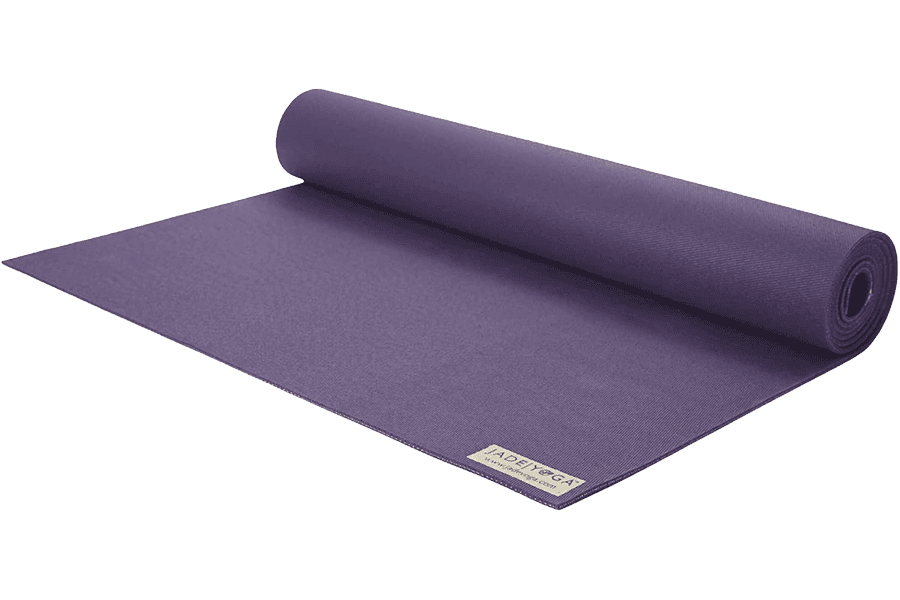
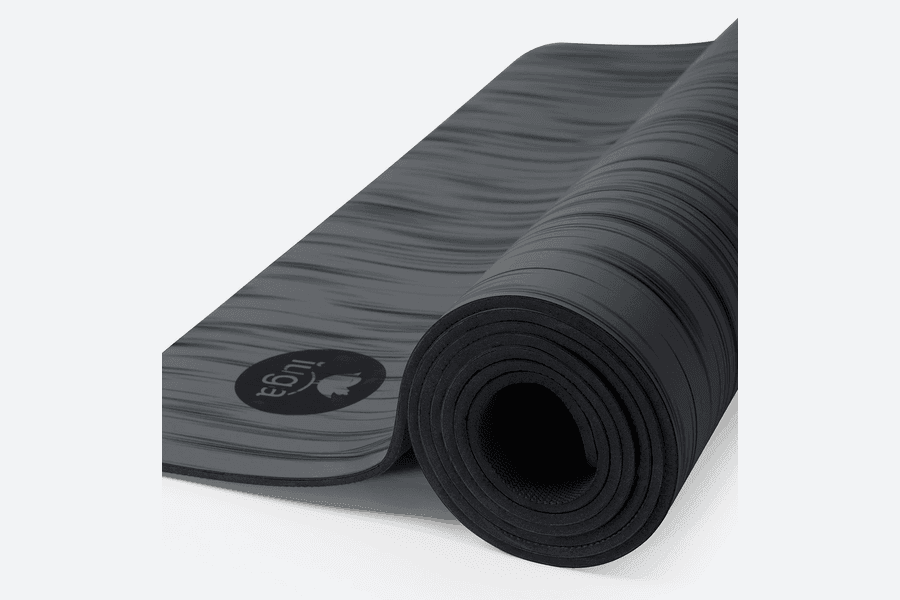
Both of these mats solve the slippery-mat problem, with opposite materials. The Jade Harmony is tacky open-cell rubber with decades of reputation behind it. The IUGA is a budget version of the smooth polyurethane-topped design that Liforme sells for $165, and it undercuts the Harmony on price while beating it on size and weight. The question is whether you trust the newer, cheaper construction to hold up.
As an Amazon Associate, we earn from qualifying purchases made through links on this page. How this works
The quick answer
The IUGA gives you a bigger mat (72 by 26 inches against 68 by 24) at less than half the weight (2.1 pounds against 4.8) for $33 less, and its sweat-absorbing polyurethane top grips damp hands the way far pricier PU mats do. That combination is why GearLab named it Best Value Upgrade. The Harmony counters with the tacky rubber surface Jade has built its name on, USA manufacturing, and a one-year warranty where IUGA offers only 45-day returns.
If you want the lightest, biggest, cheapest way to stop slipping, especially in sweaty classes, get the IUGA and treat it as a mat you may replace in a couple of years. If you want the proven surface and don't mind the weight, get the Harmony.
Get the Jade Harmony if...
- You prefer tacky rubber underhand to a smooth polyurethane surface
- You want the longer track record and a real one-year warranty
- A USA-made mat with a tree planted for it matters to you
- You practice at one place and rarely carry your mat
Get the IUGA if...
- You want to keep $33, and it often sells below list on Amazon
- You carry your mat around; 2.1 pounds is barely a carry at all
- You want the bigger 72″ × 26″ platform
- Your hands sweat and you like a smooth top that absorbs it
Side by side
Price
The IUGA lists for about $33 less.
$99.95
List price · check price at Amazon
$66.99
List price · check price at Amazon
Thickness
The IUGA is 4% thicker.
4.8 mm0.19″
5 mm0.2″
Weight
The IUGA is 2.7 lbs lighter.
4.8 lbs2.2 kg
2.1 lbs0.95 kg
Size
The IUGA is 4″ longer; the IUGA is 2″ wider.
Same on both
- Grippy from the first class, no break-in
- Natural rubber in the build, so neither suits a latex allergy
- Absorb sweat rather than repelling it
- Rubber bottoms that need to stay out of the sun
Full specs
Dimensions
Materials & build
Buying
An established name against a very good deal
The Jade Harmony has spent two decades as the default answer to a slippery mat. The IUGA is a much newer proposition: take the smooth polyurethane-top construction that Liforme sells for $165, build it to a $66.99 list price, and sell it on Amazon, where it routinely goes for less. GearLab named it Best Value Upgrade in its March 2026 roundup, which is exactly the role it plays here.
The IUGA is bigger than the Harmony, less than half its weight, and $33 cheaper before discounts. What the Harmony has is a longer track record, a tackier surface, and a company willing to warranty its product. Both solve slipping; they just come at it from different materials and different eras.
Grip: tacky rubber against smooth polyurethane
With dry hands, the two surfaces feel nothing alike and grip about equally well. The Harmony is tacky; hands stick to it on contact. The IUGA is smooth, almost soft, and holds by friction you notice only when you try to slide.
Sweat separates the mechanisms rather than the results. The Harmony’s open-cell rubber pulls moisture into the mat, the quality Wirecutter credits for its wet traction. The IUGA’s polyurethane layer absorbs sweat into the coating itself, the same trick as Liforme, and GearLab rated its wet grip highly for the price. Heavy sweaters do eventually saturate a PU top mid class, at which point a quick towel wipe resets it. Neither mat will let you slide; pick the feel you prefer.
Size and weight: the IUGA gives you more and asks less
The IUGA is 72″ × 26″, a real four extra inches of length and two of width over the Harmony’s 68″ × 24″. If you are tall or just like room, that is the difference between adjusting your down dog to the mat and not thinking about it.
It manages that while weighing 2.1 pounds to the Harmony’s 4.8. Less than half the weight on a bigger mat is the IUGA’s most startling spec, and it changes the ownership experience: this is a mat you take places without negotiating with yourself. Jade’s answer for more room is the Harmony 74 or the 80″ × 28″ Harmony XW, both heavier still.
Cushion and feel underfoot
On paper they are close: 5 mm for the IUGA, 4.8 for the Harmony (Jade specs 3/16 of an inch; retailers round up to 5 mm). Underfoot, the Harmony’s denser rubber feels more planted in standing poses, while the IUGA’s lighter build has a touch more give.
Neither is a knee-comfort specialist. If kneeling poses are your pain point, thickness is the spec to shop, and both of these lose to a 6 mm mat.
Durability: the question mark hangs over the IUGA
Polyurethane tops are the delicate part of every mat that has one, including the $165 ones: the coating can stain, wear smooth, or peel in high-contact spots after a year or two of heavy use, and owner reviews of PU mats at every price repeat the pattern. IUGA backs the mat with a 45-day return window and no warranty, which prices that risk honestly.
The Harmony wears too, in its own way: absorbed sweat ages open-cell rubber, sun destroys it, and Jade’s one-year warranty excludes both sun damage and harsh cleaners. But its failure mode is gradual and its track record is decades long. Expect several years from a cared-for Harmony; treat anything past two from the IUGA as a bonus on a $67 mat.
Materials and provenance
The Harmony is natural rubber, made in the USA, with a tree planted for every mat sold, over two million so far. IUGA states no country of manufacture and offers no comparable program; the mat is a polyurethane top over a natural rubber base, PVC-free like the Jade. Neither carries a third-party certification.
Both contain natural rubber, so neither is safe for a latex allergy. And both need the same storage rule: indoors, out of the sun, or the rubber pays for it.
Care: the IUGA is easier to live with
The IUGA’s smooth top wipes clean in seconds and does not absorb sweat into the mat body, so upkeep is a spray and a towel. The surface repels the lint and pet hair that tacky rubber collects.
The Harmony asks more: because sweat goes into the mat, it needs regular cleaning whether it looks dirty or not, with gentle soap only, since harsh cleaners void the warranty and damage the rubber. If low maintenance ranks high for you, this section is a point for the IUGA.
Price and where to buy
The Harmony lists at $99.95 and holds close to that at Jade’s store and most retailers; check the current price at Amazon. The IUGA lists at $66.99, but it is an Amazon-first brand whose prices cycle through discounts and coupons constantly, so check its current price rather than taking the list number at face value.
If you like the IUGA’s smooth-top formula and wonder what more money buys, the answer is mostly alignment markers and a warranty; we cover it in Liforme vs IUGA.
Bottom line
Get the IUGA if value, weight, or size lead your list. A bigger, lighter, cheaper mat with genuinely good wet grip is a hard argument to beat, and GearLab’s Best Value Upgrade award says the same thing. Accept the trade in writing: no warranty, and a polyurethane top that may not see year three of heavy use.
Get the Harmony if you want the surer thing: a tackier surface with twenty years of studio reputation, USA manufacture, a real warranty, and a company whose whole business is this material. You will carry more weight and clean it more often, and you will know exactly what you own.
Jade Harmony
List price $99.95
Frequently Asked Questions
- Which mat grips better?
- With dry hands, call it even; the surfaces just feel different, tacky rubber against smooth polyurethane. With sweaty hands both keep working, again differently: the Harmony's open-cell rubber pulls moisture in, which is what Wirecutter credits for its traction in sweaty practice, while the IUGA's polyurethane top absorbs sweat into the coating the way Liforme-style mats do. GearLab rated the IUGA's wet grip highly for the price. Pick by feel and budget, not by grip alone.
- How long does the IUGA's polyurethane top last?
- This is the honest risk. Polyurethane toppers are grippy but delicate as a category, and owners of PU mats at every price report the coating wearing, staining, or peeling in high-contact spots after a year or two of heavy use. IUGA backs the mat with 45-day returns and no warranty beyond that. At $67 that is an acceptable deal; just don't expect Manduka-style longevity.
- Is the IUGA really only about 2 pounds?
- Yes, and it changes how the mat fits into your life. At 2.1 pounds it weighs less than half the 4.8 pound Harmony while covering more floor, and it rolls light enough to hang off a shoulder bag. The trade is that a light mat has less mass holding it still; on slick studio floors the rubber underside does the work, and owners report it stays put fine.
- What warranty does each mat carry?
- The Harmony has a one-year warranty that excludes sun damage and harsh cleaners. The IUGA has no warranty, only a 45-day return window. That gap tells you how each company prices risk, and it is worth weighing if you expect a mat to last: Jade will stand behind a defect in month eleven, IUGA won't.
- Where are these mats made?
- The Harmony is made in the USA, and Jade plants a tree for every mat sold, over two million so far. IUGA doesn't state a country of manufacture on its listings. If supply-chain transparency matters to you, that difference is the whole answer; if it doesn't, the IUGA's price is partly a product of that opacity.
- Why does the IUGA sell for less than list price so often?
- IUGA is an Amazon-first brand, and its mats cycle through discounts and coupons constantly; the $66.99 list is best read as a ceiling. Check the current price rather than assuming either number. The Harmony, by contrast, holds close to $99.95 at Jade's own store and most retailers year-round.
Related comparisons
- JadeYoga Harmony 68" vs Suga SugaMat
- Manduka Begin vs IUGA Eco Friendly Non Slip PU
- JadeYoga Harmony 68" vs Manduka eKO Lite
- Manduka X vs IUGA Eco Friendly Non Slip PU
- Manduka PROlite vs JadeYoga Harmony 68"
- JadeYoga Harmony 68" vs Manduka GRP Adapt 1.0
- Gaiam Performance Dry-Grip 5mm vs IUGA Eco Friendly Non Slip PU
- JadeYoga Harmony 68" vs Manduka eKO Lite Long
- IUGA Eco Friendly Non Slip PU vs Hugger Mugger Earth Elements 5mm