Jade Fusion vs Manduka Begin: Which One Should You Buy?
The Begin is the mat Manduka sells to people who are not yet sure they will keep going. The Fusion is bought almost entirely by people whose knees or wrists have started objecting. That is a $113 gap, and it is worth being honest about which situation you are actually in.
As an Amazon Associate, we earn from qualifying purchases made through links on this page. How this works
The quick answer
The Begin is $62, weighs 2.5 pounds, has a center alignment stripe, and is closed-cell TPE that wipes clean in seconds. The Fusion is $174.95 and 8 pounds of open-cell natural rubber, grippy from the first unroll, and by some distance the more cushioned and more durable mat.
If you are new, unsure, or carrying the mat anywhere, buy the Begin. If you already know that hard floors hurt and the mat will stay put, buy the Fusion.
Get the Jade Fusion if...
- Hard floors already hurt your knees, wrists, or hips
- You practice in a warm room and need rubber grip
- The mat stays in one room
- You want a mat that lasts years rather than a season
Get the Manduka Begin if...
- You are new and not sure yet how often you'll practice
- You carry the mat to a studio, on foot or on transit
- The alignment stripe would help you set up poses at home
- You'd rather keep about $113
Side by side
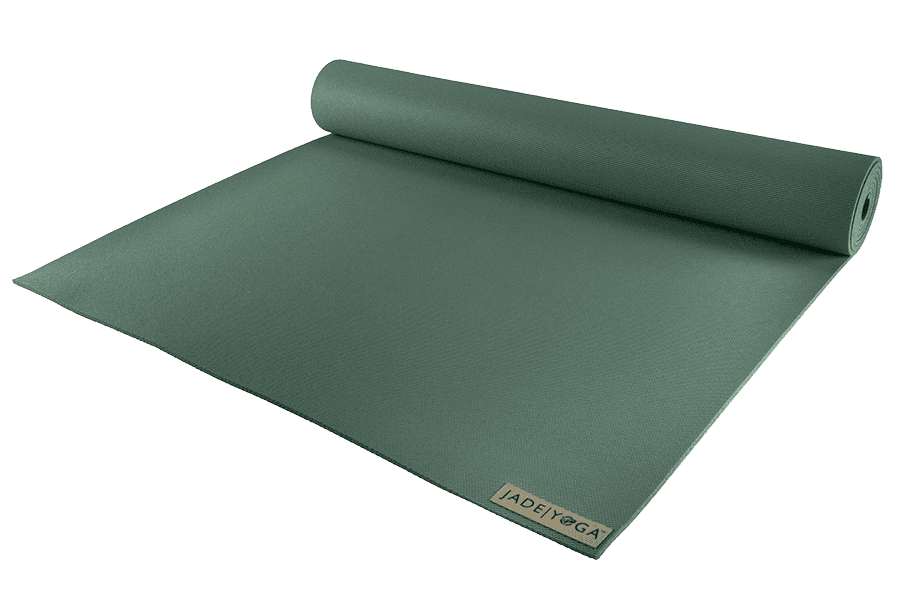
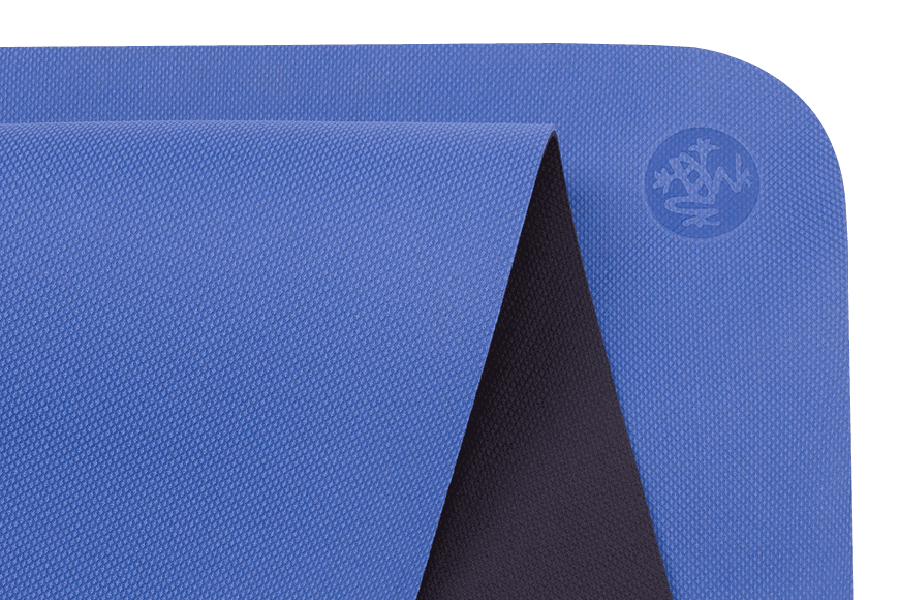
Price
The Begin lists for about $113 less.
$174.95
List price · check price at Amazon
$62
List price · check price at Amazon
Thickness
The Fusion is 60% thicker.
8 mm0.31″
5 mm0.2″
Weight
The Begin is 5.5 lbs lighter.
8 lbs3.6 kg
2.5 lbs1.1 kg
Size
Same length; same width.
Same on both
- Both are 68" × 24"
- Both lie flat without curling
- Neither ships with a carry strap
- Neither carries a third-party certification
Full specs
Dimensions
Materials & build
A first mat and a specialist mat
The Manduka Begin is $62, weighs 2.5 pounds, and has a stripe down the middle to help you line yourself up. It is the mat Manduka sells to people who are not yet sure they will keep going. The Jade Fusion is $174.95 and 8 pounds of 8 mm natural rubber, bought almost entirely by people whose knees, wrists, or hips have started objecting.
The gap is about $113. That is a lot to spend before you know whether you like yoga, and not much at all if you already know a hard floor hurts.
Cushioning: the reason the Fusion exists
Both mats claim to be comfortable, and they mean different things by it. The Begin is 5 mm of soft-touch TPE, which feels pleasant on the hand and squashes down under a kneecap. The Fusion is 8 mm of dense rubber that keeps giving you something to press into.
OutdoorGearLab’s standalone Fusion review gave it a perfect 10 for comfort and noted that it flattens uneven ground. That review is from 2013 and the Fusion is not in the current lineup, so treat the score as dated evidence, but eight millimeters of rubber is still eight millimeters. Nothing at $62 goes near it.
Grip: immediate tack against a soft-touch surface
Jade’s open-cell rubber grips from the first minute with no break-in period, and it takes on sweat rather than letting it pool. GearLab’s older review of the Fusion rated it 9 for dry traction and 9 for wet. Jade’s newer Harmony 2.0, which uses the same rubber family, scored 9.5 dry and 7 wet in the 2026 roundup, which is a fair sense of where this surface sits.
The Begin is closed-cell TPE with a soft finish. Dry hands are fine. Once there is moisture on it there is nowhere for that moisture to go, and owners describe it as slick in a heated room, which is typical for TPE at this price. If you sweat a lot, budget for a towel or skip the Begin.
Weight: 2.5 pounds against 8
The Begin is one of the lightest full-thickness mats anyone sells, at 2.5 pounds. If you are walking to a studio, taking the subway, or carrying it up three flights, that is genuinely the difference between using it and leaving it at home.
The Fusion is 8 pounds and rolls thick. GearLab scored its portability 3 of 10 and said plainly that it is not the mat for someone walking to class. It is a mat that lives in a room.
Durability: where the money actually goes
TPE at this price wears by compressing. The Begin will keep its shape through a few sessions a week for a year or two, then start showing flattened patches where your hands and feet land. Manduka does not warrant it beyond a 30 day return window.
The Fusion is denser and lasts longer with one caveat: natural rubber degrades in sunlight, and Jade’s one year warranty excludes sun damage and harsh cleaners for exactly that reason. Owners who store it indoors report years of use. Owners who leave it in a car report it crumbling. One $175 mat that runs five or six years costs less than replacing a $62 mat every eighteen months, but only if you keep practicing.
The alignment stripe, and whether it helps
The Begin’s center stripe is a real beginner feature. Lining your feet up to it in a warrior stance or checking that your hands are even in down dog is useful when nobody is watching you, and it costs nothing.
The Fusion is a plain surface. If you want alignment guidance in a premium mat, that is what Liforme sells and our Fusion against the Liforme Classic comparison covers it.
Size and colors
Both are 68″ × 24″, which is the standard short-and-narrow shape. If you are near six feet, both will run out under your hands or heels in a long down dog.
Jade sells a 74″ Fusion and an 80″ × 28″ Fusion XW for people who need more room. Manduka sells the Begin in one size and about ten colorways; Jade sells the Fusion in four.
Materials and cleaning
The Begin is TPE, closed-cell, made in Taiwan. Sweat stays on the surface, so a wipe after class is the whole routine and it never develops a smell. TPE is recyclable in principle in a way PVC largely is not, though the Begin carries no certification.
The Fusion is natural rubber tapped from sustainably farmed trees, made in the USA, and Jade plants a tree for every mat sold. It is 99 percent latex free rather than latex free, which rules it out for a latex allergy. Being open-cell, it absorbs sweat and oils and wants an occasional deep clean, and it is slow to dry afterwards.
Price and where to buy
$174.95 against $62. The Begin discounts by colorway on Manduka’s own site, where one shade has been running under $55, and it sells through Amazon too, so compare the current Manduka Begin price at Amazon with manduka.com.
The Fusion rarely moves off list. Check the current Jade Fusion price at Amazon against jadeyoga.com and take whichever is lower.
Bottom line
Buy the Begin if you are new, unsure, or carrying the mat anywhere. It is light, it is cheap, the stripe helps, and if you fall in love with the practice you will have learned exactly what you want from the next one. Do not buy it for hot yoga.
Buy the Fusion if you already know that hard floors hurt and the mat will stay put. Eight millimeters of tacky rubber is a specific fix for a specific complaint, and it is very good at it. If you want Jade rubber at a beginner price, the Jade Level One is the same surface at 4 mm for $66.50.
Jade Fusion
List price $174.95
Manduka Begin
List price $62
Frequently Asked Questions
- Is the Manduka Begin good enough for regular practice?
- For a few sessions a week on a wood floor, yes. It cushions adequately at 5 mm, it lies flat, and the alignment stripe genuinely helps when nobody is correcting you. TPE at this price wears by compressing, so expect flattened patches where your hands and feet land after a year or two of regular use. Manduka backs it with a 30 day return window and no warranty.
- Which is better for hot yoga?
- The Fusion, clearly. Jade's open-cell rubber takes on sweat rather than letting it pool, and GearLab's older standalone review of the Fusion rated it 9 dry and 9 wet. The Begin is closed-cell TPE with a soft finish, so moisture has nowhere to go, and owners describe it as slick in a heated room. If you sweat a lot, budget for a towel or skip the Begin.
- How much cushioning does the extra money buy?
- Eight millimeters against five, and denser material at that. The Begin is soft rather than supportive, so it squashes under a kneecap. The Fusion keeps giving you something to press into, and GearLab's 2013 review scored its comfort a perfect 10 while noting it flattens uneven ground. For restorative work or a practice on tile, that is a different experience.
- Is the Fusion worth almost three times the price?
- Only if you know you will use it. One $175 mat that runs five or six years costs less over that stretch than replacing a $62 mat every eighteen months, but that arithmetic only works if you keep practicing. If you are still deciding whether yoga is for you, the Begin is the sensible risk.
- Which is easier to clean?
- The Begin. Closed-cell TPE keeps sweat on the surface, so a wipe after class is the entire routine and it never develops a smell. The Fusion absorbs sweat and oils, so it wants an occasional deep clean and it is slow to dry afterwards. Jade's warranty also excludes harsh cleaners, so water and a cloth is the approved routine.
- Is there a cheaper Jade with the same grip?
- Yes. The Jade Level One is the same open-cell rubber from the same Pennsylvania factory at 4 mm and $66.50, weighing 4 pounds. You give up the Fusion's cushioning and keep the grip, which for a lot of people is the better trade.
Related comparisons
- Manduka Begin vs IUGA Eco Friendly Non Slip PU
- Manduka Begin vs Gaiam Performance Dry-Grip 5mm
- Manduka Begin vs Hugger Mugger Earth Elements 5mm
- Manduka Begin vs JadeYoga Level One
- Manduka Begin vs Gaiam Performance Dry-Grip Long & Wide
- Manduka Begin vs 42 Birds The Robin
- Manduka Begin vs Gaiam Premium Reversible 6mm
- Manduka PRO Long vs JadeYoga Fusion 68"
- Manduka Begin vs JadeYoga Travel 68"