Jade Fusion vs Liforme Classic: Which One Should You Buy?
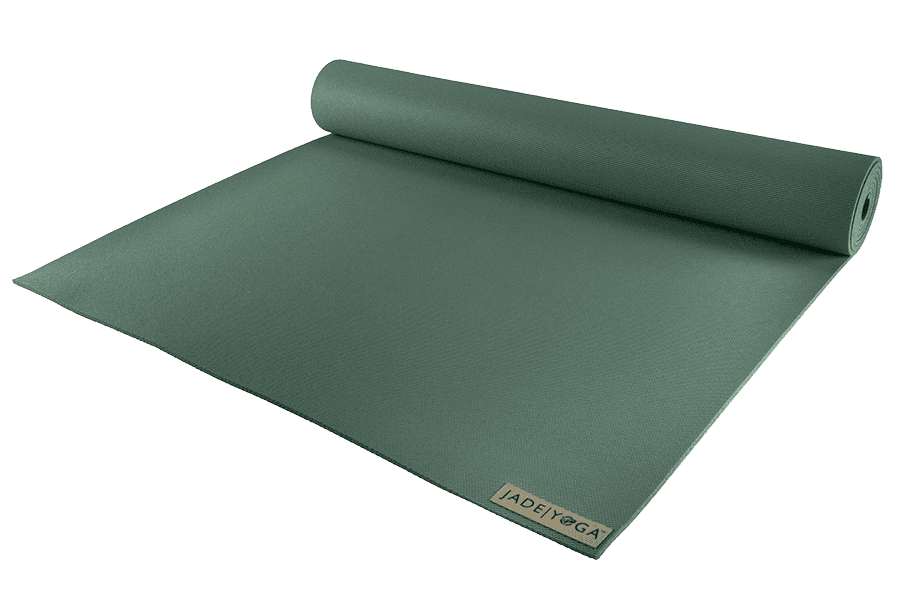
These two land within fifteen dollars of each other, so price barely enters the decision. The Fusion is nearly twice as thick; the Liforme is five inches longer, three inches wider, and printed with alignment markers. We'll walk through cushioning, grip, size, and durability so you know which one fits how you practice.
As an Amazon Associate, we earn from qualifying purchases made through links on this page. How this works
The quick answer
The Fusion is the more cushioned mat by a wide margin, 8 mm of open-cell natural rubber against the Liforme's 4.2 mm, and it grips from the first unroll. The Liforme is the bigger, lighter, better-travelling mat, and OutdoorGearLab rated it 9 of 10 dry and 7 wet while naming it Best for Fine-Tuning Alignment. GearLab also listed thin for sensitive joints as one of its two downsides.
If your knees are the reason you're shopping, get the Fusion. If you want the alignment guidance, the bigger footprint, or a mat you can actually carry, get the Liforme.
Get the Jade Fusion if...
- Your joints hurt on a hard floor and you want the most cushion available
- You want a mat made in the USA from natural rubber
- The mat is going to stay in one room
- You want grip that works from the first class with no break-in
Get the Liforme Classic if...
- You want a much bigger mat, 72.8" × 26.8" against 68" × 24"
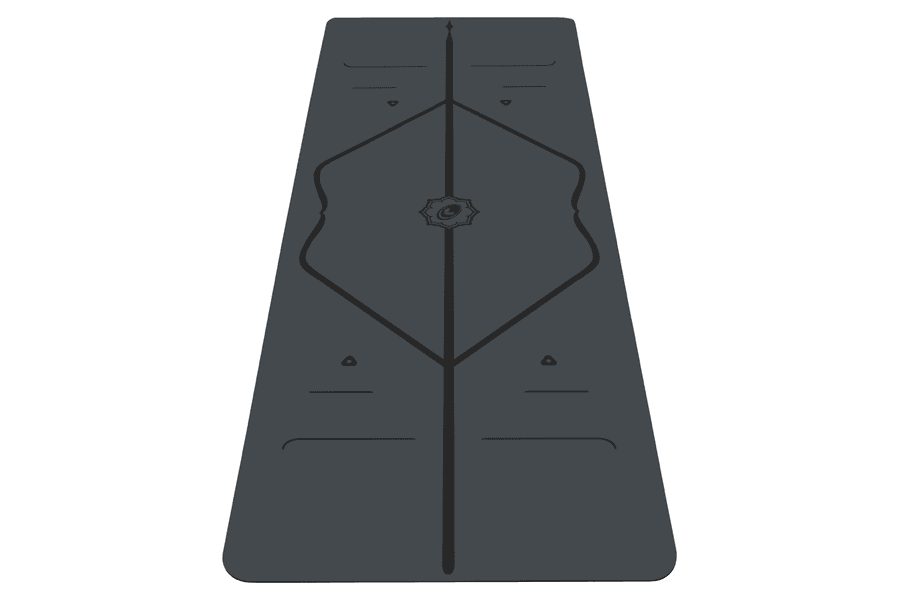
- You practice alone and want the etched alignment markers
- You need a premium mat you can carry, with a zippered bag included
- You want strong wet grip without eight pounds of rubber
Side by side
Price
The Liforme lists for about $10 less.
$174.95
List price · check price at Amazon
$165
List price · check price at Amazon
Thickness
The Fusion is 90% thicker.
8 mm0.31″
4.2 mm0.17″
Weight
The Liforme is 2.5 lbs lighter.
8 lbs3.6 kg
5.5 lbs2.5 kg
Size
The Liforme is 4.8″ longer; the Liforme is 2.8″ wider.
Same on both
- Both grip well without a break-in period
- Neither carries a third-party certification
- Both lie flat without curling
- Both are premium mats over $150
Full specs
Dimensions
Materials & build
Cushioning: the Fusion is in a different class
8 mm against 4.2 is not a close call. The Fusion is the mat people buy when kneeling hurts, when the practice happens on tile or concrete, or when a long yin hold is the part of class they dread. OutdoorGearLab’s standalone Fusion review gave it a perfect 10 for comfort and noted it flattens uneven ground, though that review dates from 2013 and the Fusion is not in the current lineup, so treat the score as old evidence rather than fresh.
The Liforme is on the thin side of normal. GearLab rated its comfort 7 of 10 in the 2026 roundup and listed “thin for sensitive joints” as one of its two stated downsides. That is not a flaw so much as a choice: the mat is built to keep you connected to the floor so the alignment work reads clearly. If your knees are the reason you are shopping, that choice is working against you.
Stability: thickness costs you something
The flip side of 8 mm is that a standing foot sinks before it finds ground. Jade’s rubber is dense enough that the Fusion never feels like cheap foam, but people who live in standing sequences and single-leg balances often notice the softness and prefer something firmer.
The Liforme is the firmer platform, and its extra width means a wide-legged stance actually lands on the mat. GearLab’s testers called out the balance of cushion and firmness as the reason it works for both studio and travel.
Grip: both are strong, in different conditions
GearLab rated the Liforme 9 of 10 for dry grip and 7 wet in the current roundup, describing the traction as gecko-like and putting it among the best mats they tested for wet or dry conditions. The polyurethane top absorbs sweat rather than repelling it, so it holds up in a heated room without a towel for most people.
The Fusion uses the same open-cell rubber as the rest of the Jade line, which is the surface that made Jade a studio fixture: tacky on contact with no break-in period. GearLab’s older Fusion review scored it 9 for dry traction and 9 for wet and described it as absorbing sweat like a sponge. Jade rubber does attract dust and lint, and it can feel abrasive when you drag a toe across it rather than lifting it.
Size: the Liforme is a much bigger mat
The Fusion is 68″ × 24″. The Liforme is 72.8″ × 26.8″, close to five inches longer and nearly three wider. For anyone near or over six feet, that is the difference between hands on rubber and hands on the floor in a long down dog.
Jade does sell the Fusion bigger. There is a 74″ Fusion and an 80″ × 28″ Fusion XW, and the 74″ costs $25 more. Liforme sells the Classic in one size only, which is fine because that size is already generous.
The alignment lines, and who actually uses them
The etched markers are the reason most people buy a Liforme. They give you a center line, foot placement guides, and angle references, and GearLab named the mat Best for Fine-Tuning Alignment on the strength of them. They help most if you practice alone at home and nobody is correcting your stance.
They also divide people. Some find the visual clutter distracting, and the geometry assumes a fairly standard body, so a very tall or very short practitioner may find the markers land in the wrong places. The Fusion is a plain surface with no guidance at all. If you have a teacher watching you three times a week, that is not a loss.
Weight and carrying
The Fusion is 8 pounds and it rolls thick. GearLab’s old review scored its portability 3 of 10 and said plainly that it is not a mat for the urban yogi walking ten blocks to class. Nothing about the mat has changed since.
Liforme lists the Classic at 2.5 kg, about 5.5 pounds, and GearLab weighed their sample at 6.2. Either way it is meaningfully lighter, it rolls tighter, and it ships with a zippered carry bag. GearLab liked it enough as a travel mat to recommend it for carry-on use.
Durability and care
Neither of these is a decade mat. Jade rubber degrades in sunlight and Jade’s one year warranty excludes sun damage and harsh cleaners for that reason. Owners who store a Fusion out of direct light report years of use; owners who leave one in a car report crumbling. GearLab scored the Fusion 4 of 10 for ease of care back in 2013 because open-cell rubber takes a long time to dry after a deep clean.
Liforme designs its mats to biodegrade in landfill conditions within one to five years, and GearLab flags the flip side of that: less durable than the other high performers, and quick to stain. Cleaning is easy, though, and the mat earned a 9 of 10 for care in the roundup. Coverage is thin on both sides here: one year from Jade, and a 30 day return window from Liforme.
Materials and eco claims
The Fusion is natural rubber tapped from sustainably farmed trees and manufactured in the USA, and Jade plants a tree for every mat sold, more than two million of them so far. It is also 99 percent latex free rather than latex free, which rules it out if you have a latex allergy.
The Liforme is an eco-polyurethane top over a natural rubber base, and Liforme does not state where it is made. Both are more considered than a PVC mat, neither carries a third-party certification, and both are things you will eventually throw away.
Price and where to buy
$174.95 against $165, so about ten dollars separates them and neither is a bargain. Jade sells the Fusion in four colorways and it turns up on Amazon, so it is worth comparing the current Jade Fusion price at Amazon against jadeyoga.com before ordering.
Liforme runs its own sales a few times a year and also lists on Amazon, so check the current Liforme Classic price at Amazon. One note on the name: Liforme renamed the Original to Classic, so older reviews of the Liforme Original describe this same mat.
Bottom line
Buy the Fusion if your joints are the reason you are shopping. Eight millimeters of rubber is the most cushioning any mainstream brand will sell you without moving into foam, the grip is immediate, and it will sit in one room and do that job well. Accept that it is eight pounds and that it wants to be stored out of the sun.
Buy the Liforme if you practice alone, want the alignment guidance, or need the bigger footprint. It grips better wet, weighs less, travels properly, and comes in a bag. If cushioning is the real issue but you want a Jade that carries, our Jade Harmony vs Jade Fusion comparison covers the thinner option in the same rubber.
Jade Fusion
List price $174.95
Liforme Classic
List price $165
Frequently Asked Questions
- Is the Jade Fusion too thick for balance poses?
- It can be. At 8 mm a standing foot presses into the rubber before it finds solid ground, and practitioners who spend most of their time in standing sequences and single-leg balances often prefer a firmer platform. Jade's rubber is dense enough that it never feels like cheap foam, but the Liforme is the steadier surface for balance work, and its extra width means a wide-legged stance actually lands on the mat.
- Which is better for hot yoga?
- The Liforme, mostly on the strength of current evidence. GearLab rated it 9 of 10 dry and 7 wet in the 2026 roundup and described the traction as gecko-like. The Fusion's open-cell rubber absorbs sweat rather than letting it pool, and GearLab's older standalone review scored it 9 dry and 9 wet, but that review dates from 2013. Both are good in a warm room; the Liforme is easier to clean afterwards.
- Do the alignment lines actually help?
- They help most if you practice alone at home with nobody correcting your stance. The markers give you a center line, foot placement guides, and angle references, and GearLab named the mat Best for Fine-Tuning Alignment on that basis. They also divide people: some find the visual clutter distracting, and the geometry assumes a fairly standard body, so a very tall or very short practitioner may find the markers land in the wrong places.
- How long does each mat last?
- Neither is a decade mat. Jade rubber degrades in sunlight and Jade's one year warranty excludes sun damage and harsh cleaners specifically, so a Fusion stored indoors lasts years and one left in a car crumbles. Liforme designs its mats to biodegrade in landfill conditions within one to five years, and GearLab flagged the flip side: less durable than the other high performers, and quick to stain. Liforme offers a 30 day return window rather than a warranty.
- Which is easier to carry?
- The Liforme, comfortably. Liforme lists it at 2.5 kg, about 5.5 pounds, and GearLab weighed their sample at 6.2. It rolls tight and ships with a zippered carry bag, and GearLab recommended it as a protective travel mat. The Fusion is 8 pounds and GearLab scored its portability 3 of 10, saying plainly it is a lot of weight for a ten block walk to a studio.
- Are either of these safe for a latex allergy?
- No. Jade describes its mats as 99 percent latex free, which is not the same as latex free, and the Liforme uses a natural rubber base under its polyurethane top. If you have a latex allergy, look at a PVC or TPE mat instead.
Related comparisons
- JadeYoga Harmony XW vs Liforme Classic
- Liforme Classic vs Yoloha Unity Pro Cork
- Manduka PROlite Long & Wide vs Liforme Classic
- Manduka PRO Long vs JadeYoga Fusion 68"
- Alo Warrior vs Liforme Classic
- Manduka GRP Adapt 2.0 Long vs Liforme Classic
- JadeYoga Fusion 68" vs Yoloha Unity Pro Cork
- Liforme Classic vs b, halfmoon B Mat Strong 6mm
- Manduka PRO Long vs Liforme Classic