IUGA vs Yoloha Unity Pro: Which One Should You Buy?
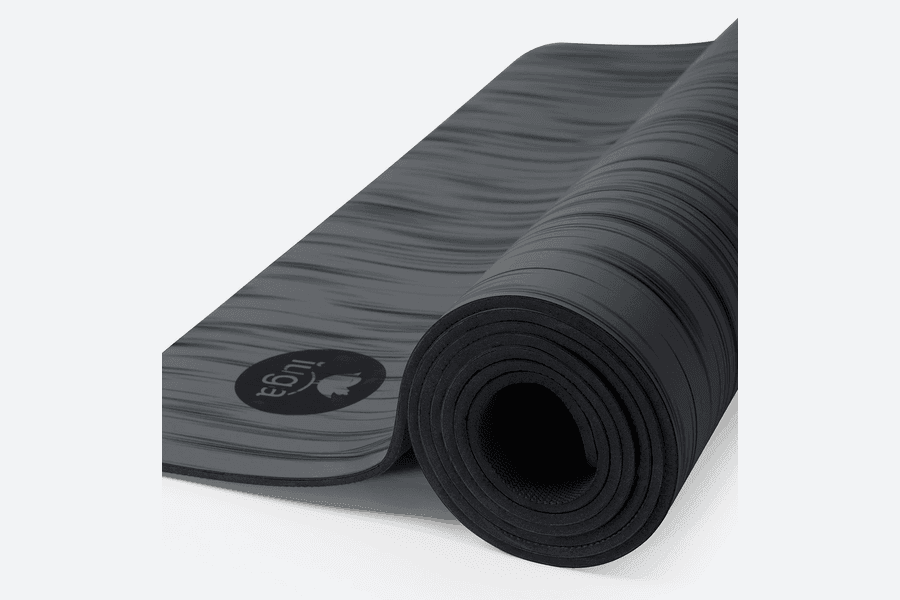
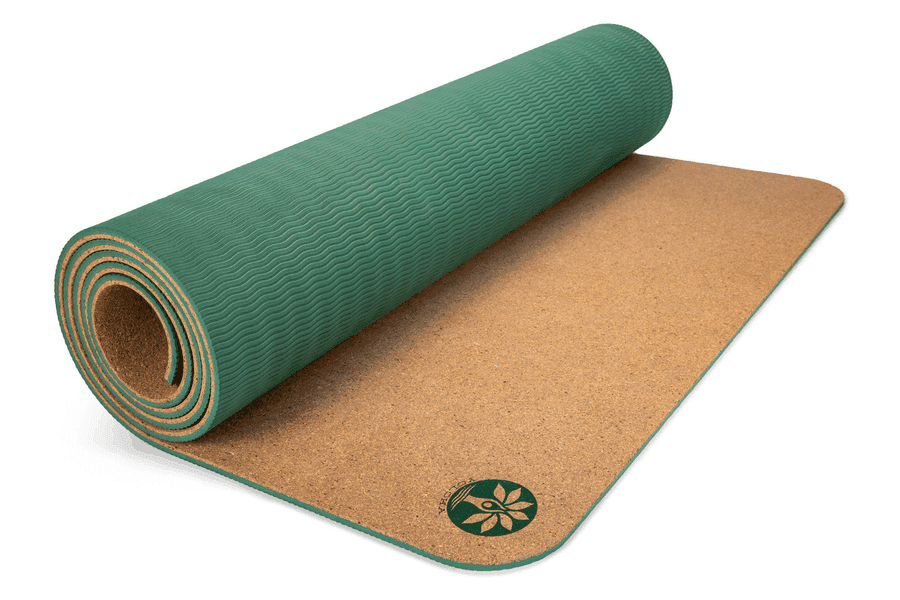
This is the budget overachiever against the artisan cork mat, and the test results run backwards from the prices. The IUGA is $66.99 of sweat-absorbing polyurethane over natural rubber, the construction premium grip mats use. The Yoloha Unity Pro is $159 of cork and rubber over plant foam, made in the USA. One of them holds a Best Value award; the other holds the better materials story and more than twice the price tag.
As an Amazon Associate, we earn from qualifying purchases made through links on this page. How this works
The quick answer
OutdoorGearLab scored the IUGA 75 of 100 with a Best Value award, praising a surface that performed exceptionally well when wet and calling it well suited to hot yoga; its grip scored 8 dry and 7 wet against the Yoloha's 7.5 and 6. The cork mat's measured answer is stability, ranked among the firmest and most stable in the test, plus a build the IUGA can't match: renewable materials, USA manufacture, and sizes up to 84 by 30 inches.
If grip per dollar is the question, the IUGA wins it plainly and keeps $92 in your pocket. Buy the Yoloha for what the money actually buys: cork underhand, a planted extra-firm platform, natural materials, and real size options. Buy the IUGA for everything else.
Get the IUGA if...
- You want the better wet-grip result and the Best Value award for $66.99
- A 2.1 pound mat with an included strap suits a commuting practice
- You'd rather bank the $92 toward classes than materials
- You want easy Amazon buying and a 45 day return window
Get the Yoloha Unity Pro if...
- Cork's feel and natural materials are the point of the purchase
- You want an extra-firm, stable platform that never wrinkles underfoot
- You need size: an 80″ Long or the 84″ × 30″ XL
- Made in the USA and a fully vegan build justify the premium for you
Side by side
Price
The IUGA lists for about $92 less.
$66.99
List price · check price at Amazon
$159
List price · check price at yolohayoga.com
Thickness
The Unity Pro is 20% thicker.
5 mm0.2″
6 mm0.24″
Weight
The IUGA is 4.9 lbs lighter.
2.1 lbs0.95 kg
7 lbs3.2 kg
Size
Same length; same width.
Same on both
- Both handle sweat far better than PVC or TPE mats
- Natural rubber content, so neither suits a latex allergy
- No warranty on either; return windows only
- Both need protection from hot cars and direct sun
Full specs
Dimensions
Materials & build
Buying
- Long80" × 26"
- XL84" × 30"
The comparison where the prices run upside down
Most mat comparisons let you assume the expensive one performs better. Not this one. The IUGA is $66.99 of sweat-absorbing polyurethane over natural rubber, the construction Lululemon and Liforme charge triple for, and OutdoorGearLab scored it 75 of 100 with a Best Value award. The Yoloha Unity Pro is $159 of cork and rubber over plant foam, made in the USA, and it finished at 66 in the same 19-mat test.
So the question here isn’t which mat tested better; that’s settled. It’s whether the things the Yoloha does that no test measures, materials, feel, stability, and sheer size, are worth $92 to you.
Grip: the budget mat wins on the merits
The IUGA’s top behaves like the premium sweat mats it imitates: GearLab found the surface performed exceptionally well when wet, called the mat well suited to hot yoga, and scored its grip 8 of 10 dry and 7 wet. There’s no break-in and no routine; it grips from the first class, damp or dry.
The Yoloha scored 7.5 and 6. Cork’s tack firms up with light moisture, helped by the water-spritz routine Yoloha itself recommends, but heavy sweat sits on the surface rather than absorbing, and testers kept a towel nearby once it pooled. That’s a workable hot-class mat, not a great one, and at these prices workable is worth saying plainly.
Feel and stability: where the cork earns its keep
Put your hands on both and the Yoloha starts arguing back. Its grainy cork surface feels like nothing else in the category, and its build is extra-firm, ranked by GearLab among the most stable mats it tested; balances sit on it like a floor. It weighs 7 solid pounds and never moves.
The IUGA is the opposite build: at 2.1 pounds it is one of the lightest mats we cover, which makes it a wonderful commuter and a slightly restless surface, with GearLab noticing small wrinkles forming mid-practice during vigorous sequences. It is firm enough for balances; it is not planted the way the cork is.
Size: one of these brands sells territory
Both standard cuts are a size up from ordinary mats, 72″ × 26″ each. The ranges differ completely: that is the only IUGA, while Yoloha sells an 80″ Long and an 84″ × 30″ XL, one of the biggest practice surfaces on the market. Tall or broad practitioners have a real option on only one side of this page.
One purchase note: Yoloha’s free return shipping covers its two smaller sizes, not the XL, so the big mat is a commitment in every sense.
Materials: brand trust against certified renewables
The Yoloha’s build is its pitch: cork and natural rubber over plant-based foam, 83 percent USDA-certified renewable materials by Yoloha’s count, fully vegan, no PVC or plasticizers, made in the USA. The IUGA is a polyurethane top on a natural rubber base with no stated country of origin and, despite odorless marketing, a strong out-of-box smell that takes a few days of airing to clear.
Both contain natural rubber, so neither suits a genuine latex allergy, and neither carries a third-party certification. If buying American-made from renewable materials is a real value for you, this section is most of the Yoloha’s $92 case.
Durability: no warranty either way
Neither brand writes a warranty. The IUGA offers a 45 day return window, the Yoloha about 30 days, and after that you own the outcome. The IUGA’s known long-term risk is its top flaking after several years of hard, sweaty practice, which GearLab flags. The Yoloha’s cork face came through testing intact and wipes clean easily, but sun and heat harden its materials, so it can’t live in a car or practice outdoors for long.
Realistically both are multi-year mats under normal care. The difference is that replacing a worn IUGA costs $67 and replacing a worn Yoloha costs $159, which is worth folding into the value math before you decide the cork is the long-term buy.
Price and where to buy
Check the current price of the IUGA at Amazon, where street prices drift below its $66.99 list and a carry strap comes in the box. The Yoloha sells direct through yolohayoga.com at $159 in natural cork, with printed art designs about $30 more at last check.
If you’re deciding how far up the sweat-mat ladder to climb, the IUGA’s construction also runs against the premium versions of itself on our Liforme vs IUGA page, and the cork faces the current hot yoga champion in GRP Adapt 2.0 vs Yoloha.
Bottom line
Get the IUGA unless the Yoloha’s specific virtues are the reason you’re shopping. It grips better wet and dry by independent measure, weighs a third as much, costs $92 less, and holds a Best Value award earned on exactly the performance both mats promise.
Get the Yoloha for what the money actually buys: cork underhand, an extra-firm platform that never shifts, certified-renewable materials made in the USA, and sizes up to 84″ × 30″. Those are real things, and no $67 mat offers them. Just buy it knowing the grip premium you might assume at $159 isn’t part of the package.
Yoloha Unity Pro Cork
List price $159
Frequently Asked Questions
- How does a $67 mat outscore a $159 mat?
- Because the IUGA uses the same construction as mats at twice its price: an absorbent polyurethane top over a natural rubber base. GearLab found the surface performed exceptionally well when wet, scored the mat 75 of 100, and gave it a Best Value award. The Yoloha's 66 reflects a firmer, less grippy surface; cork tops out at moderately grippy in testing, with a water-spritz routine recommended to wake it up. Price and performance simply are not the same axis in this category.
- Is the Yoloha worth $92 more than the IUGA?
- Only if the things the test can't measure are your things. The Yoloha is made in the USA from 83 percent USDA-certified renewable materials, feels like nothing else underhand, sits dead-stable in balances, and comes in genuinely large sizes. The IUGA is a mass-market mat that happens to perform brilliantly for the price, with a lighter build that GearLab noticed could wrinkle slightly mid-practice. Materials and feel are legitimate reasons to pay more; grip is not the reason here.
- Which is better for hot yoga?
- The IUGA, which GearLab called well suited to hot yoga on the strength of its wet-grip performance. The Yoloha manages a heated class with its spritz-to-activate routine, but testers kept a towel nearby once sweat pooled, and slickness when wet appears among its listed drawbacks. If hot classes are the main event and you want to spend more than the IUGA costs, the mat to consider is Manduka's GRP Adapt 2.0 rather than the cork.
- How do the sizes compare?
- The IUGA is 72 by 26 inches in its one size, already roomier than a standard mat. The Yoloha starts at 72 by 26 and scales up: an 80 inch Long and an 84 by 30 XL that is one of the biggest practice surfaces sold. Tall practitioners or anyone who wants maximum territory has only one real option between these two, though note Yoloha's free return shipping excludes the XL.
- What are the downsides of each?
- The IUGA ships with a strong smell despite odorless marketing, needs a few days airing out, is light enough to shift slightly during vigorous practice, and its polyurethane top can flake after several years of hard use. The Yoloha costs $159 with no warranty past 30 days, its cork texture divides opinion, and its grip tested mid-pack. Neither suits a latex allergy, and both need to stay out of hot cars and sun.
- Do these mats come with anything?
- The IUGA includes a carry strap in the box, a small touch that matters for a 2.1 pound mat that commutes well. The Yoloha ships bare in its standard size; its printed art-design versions cost about $30 more at last check. Neither includes a bag, and neither brand offers a written warranty, so what arrives in the box is the whole deal.
Related comparisons
- Manduka Begin vs IUGA Eco Friendly Non Slip PU
- Manduka X vs IUGA Eco Friendly Non Slip PU
- Gaiam Performance Dry-Grip 5mm vs IUGA Eco Friendly Non Slip PU
- IUGA Eco Friendly Non Slip PU vs Hugger Mugger Earth Elements 5mm
- Manduka PRO vs Yoloha Unity Pro Cork
- Manduka PRO Long vs Yoloha Unity Pro Cork
- JadeYoga Level One vs IUGA Eco Friendly Non Slip PU
- JadeYoga Harmony XW vs Yoloha Unity Pro Cork
- IUGA Eco Friendly Non Slip PU vs Gaiam Performance Dry-Grip Long & Wide