Gaiam Premium 6mm vs Retrospec Solana 1″: Which One Should You Buy?
The Solana is four times thicker than the Gaiam Premium and ten dollars more expensive, so the cheaper mat here is the one built for yoga. That flips the usual budget-mat argument. Once you know whether you spend more time standing on the mat or kneeling on it, this decision makes itself.
As an Amazon Associate, we earn from qualifying purchases made through links on this page. How this works
The quick answer
GearLab scored the Gaiam Premium 62 out of 100 and gave it a Best Buy award as the best first mat, with comfort 6.5, materials 6, care 8, and grip of 6 dry and 4 wet. Nothing there is good, and nothing is bad enough to spoil a beginner year in a cool room. The Solana has no equivalent number because GearLab does not test Retrospec at all.
Get the Gaiam if you are doing yoga: it is cheaper, it is measured, and 6 mm is the thickness the practice is designed around. Get the Solana if kneeling is what hurts and standing balance is not the point.
Get the Gaiam Premium if...
- You want a mat an independent lab has actually scored
- You do standing poses and want to feel the floor
- You would rather keep the ten dollars
- You want the lighter mat to carry to a class
Get the Solana 1″ if...
- Your knees hurt on anything thinner
- You want four inches more length
- The mat is mainly for stretching and floor work
- You want a choice of 13 colorways rather than four
Side by side
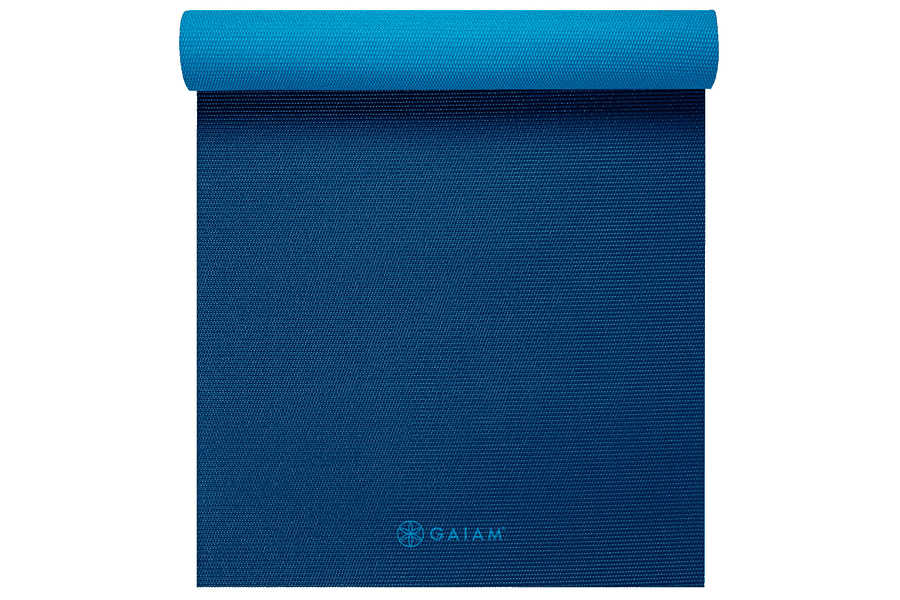
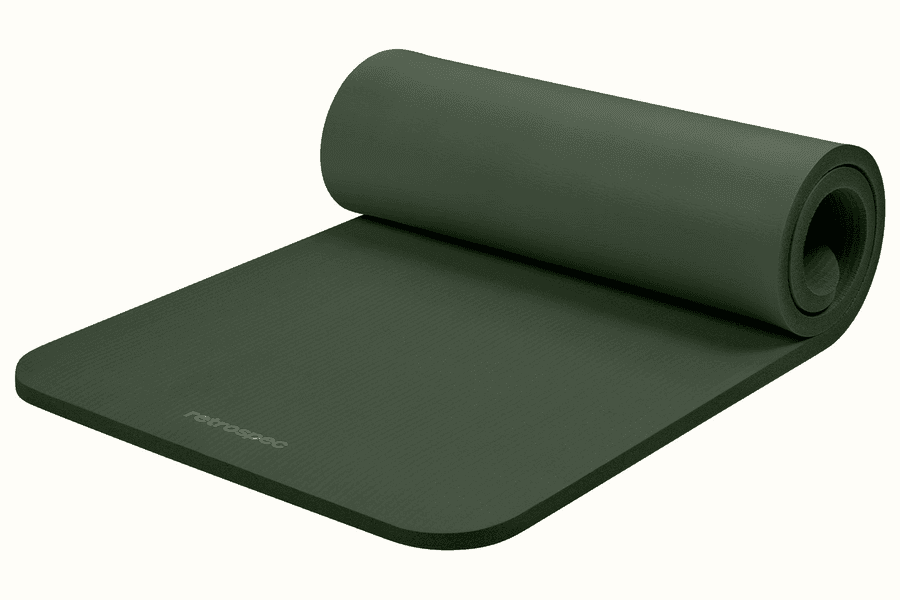
Price
The Gaiam Premium lists for about $10 less.
$29.98
List price · check price at Amazon
$39.99
List price · check price at Amazon
Thickness
The Solana 1" is 323% thicker.
6 mm0.24″
25.4 mm1″
Weight
The Gaiam Premium is 0.7 lbs lighter.
3.3 lbs1.5 kg
4 lbs1.81 kg
Size
The Solana 1" is 4″ longer; same width.
Same on both
- 24 inches wide
- Wipe-clean surfaces that do not absorb sweat
- Grip that works dry and fails when wet
- Under $40, and no third-party certifications
Full specs
Dimensions
Materials & build
Buying
A yoga mat against a foam pad
The Solana 1″ is four times thicker than the Gaiam Premium: 25.4 mm of NBR foam against 6 mm of PVC. It is also ten dollars more, at $39.99 against $29.98.
So the cheaper mat here is the one built for yoga and the pricier one is built for floor work. That flips the usual budget-mat argument, and it makes this a straightforward decision once you know what you actually do on a mat.
The Gaiam has a test result behind it
GearLab scored the Premium 6mm 62 out of 100 in its 2026 round of 19 mats and gave it the Best First Mat award. The sub-scores are worth reading rather than the headline: 6.5 for comfort and support, 6 for materials, 8 for care and cleaning, and grip of 6 dry and 4 wet.
None of that is good in absolute terms. What the award is saying is that nothing about the mat is bad enough to ruin a beginner year in a cool room, at a price where a lot of mats are.
GearLab does not test Retrospec at all, so the Solana has no equivalent number. That is not a mark against it, but it does mean everything below about the Solana comes from its material and from owner reports rather than from a lab.
Standing poses go to the thin mat
An inch of soft foam compresses under a heel and keeps moving while you try to hold still. On the Solana, tree and warrior three feel like balancing on a mattress, and that is not a flaw in the product so much as a consequence of buying an inch of foam.
The Gaiam at 6 mm sits close enough to the floor that your ankle gets honest feedback. Every studio mat we would recommend lives between 4 and 6 mm for exactly this reason.
Kneeling goes the other way
Six millimetres of PVC over a hardwood floor is still hard on a kneecap. It is better than 4 mm and much worse than an inch. If your knees are the reason you are shopping, the Gaiam will not solve them.
The Solana will. A full inch of NBR is genuinely comfortable kneeling, lying down, or doing anything on your elbows, and that is the whole case for it.
Grip: sticky PVC against ribbed foam
The Gaiam has a slightly tacky textured finish that holds a dry palm reasonably well. GearLab measured it 6 out of 10 dry and 4 wet, so a sweaty class is not its environment either.
The Solana grips through a ribbed pattern pressed into the foam, which is mechanical rather than tacky. It works dry and it stops working damp, the same as the Gaiam does, so neither is the mat to take to a heated room.
Four inches of length to the Solana
72″ against the Gaiam Premium’s 68″, both at 24″ wide. Sixty eight inches is short: it leaves anyone over about five foot eight with heels or a head off the end in savasana.
If length matters to you and you want the thinner mat anyway, the Gaiam Essentials is the same 6 mm at 72 inches for less money. It is the obvious answer to this specific complaint.
PVC against NBR foam
Neither material is a selling point. The Gaiam is PVC, latex-free and easy to clean, and also the material most environmental criticism of yoga mats is pointed at. GearLab gave it 6 out of 10 for materials and 8 for care and cleaning.
NBR is a nitrile foam, closed cell so sweat sits on top, light and soft and cheap to make. It is the standard material for gym and camping pads. Neither mat carries a third-party certification and neither claims one.
Different failure modes, both within a couple of years
The Gaiam’s sticky finish wears smooth where hands and feet land, and once it is smooth the grip is gone. Daily practice gets you somewhere between one and two years before that shows.
The Solana dents. Knees and elbows leave impressions that recover overnight at first and gradually stop recovering. Neither is a mat you will still be using in five years, and both are priced with that understood.
A lifetime guarantee that covers less than it sounds like
Gaiam puts a lifetime guarantee on the Premium. Retrospec gives the Solana 6 months against defects plus 30 days to return it.
Both cover manufacturing faults. Neither covers a topcoat worn smooth or foam that has taken a set, which are the two things that will actually end these mats. The longer promise sits on the cheaper product, and it does not change what either mat is worth.
Bottom line
Buy the Gaiam Premium if you are doing yoga. It is cheaper, it is the only one of the two with an independent test result, and 6 mm is the thickness the practice is designed around. Check the current price before you order; it moves by colorway.
Buy the Solana 1″ if kneeling is what hurts, or if the mat is really for stretching, physio and floor work with some yoga on top. Check its price here. Just do not expect to balance well on it.
Gaiam Premium 6mm
List price $29.98
Retrospec Solana 1"
List price $39.99
Frequently Asked Questions
- Why is the thinner mat cheaper?
- Because thickness is not what you pay for in a yoga mat. The Gaiam is 6 mm of PVC built for a practice; the Solana is an inch of NBR foam built for floor comfort, and foam is a cheap material sold by volume. The Gaiam costs $29.98 and the Solana $39.99, and the price gap says nothing about which is better for yoga.
- What does the Best First Mat award actually mean?
- That the Gaiam does enough of everything for someone starting out. It scored 62 out of 100 in a field of 19, with 6.5 for comfort and support, 6 for materials, 8 for care and cleaning, and grip of 6 dry and 4 wet. None of that is impressive on its own; the award is about what it delivers at thirty dollars.
- Can I balance on the Solana?
- Not comfortably. An inch of soft foam compresses under a heel and keeps adjusting while you try to hold still, so tree and warrior three feel like balancing on a mattress. That is a consequence of buying an inch of foam rather than a flaw in the product.
- Will the Gaiam help my knees?
- Not much. Six millimetres of PVC over a hardwood floor is still hard on a kneecap, better than 4 mm and far worse than an inch. If sore knees are the reason you are shopping, the Solana solves that and the Gaiam does not. A folded blanket under the knee is the cheap middle ground.
- Is the Gaiam long enough?
- At 68 inches it is short. It leaves anyone over about five foot eight with heels or a head off the end in savasana. The Solana is 72. If you want the thinner mat and more length, the Gaiam Essentials is the same 6 mm at 72 inches and costs less than the Premium.
- Which lasts longer?
- Neither lasts long. The Gaiam’s sticky finish wears smooth where hands and feet land, usually within one to two years of daily use, and once it is smooth the grip is gone. The Solana dents under knees and elbows. Gaiam’s lifetime guarantee and Retrospec’s 6 months both cover defects, not ordinary wear.
Related comparisons
- Amazon Basics 1 Inch Extra Thick vs Retrospec Solana 1"
- Gaiam Premium 6mm vs Gruper TPE 6mm
- Amazon Basics 1/4 Inch Thick TPE vs Gaiam Premium 6mm
- Gaiam Premium 6mm vs YogaAccessories Extra Thick Deluxe 1/4"
- Manduka Begin vs Gaiam Premium 6mm
- IUGA Eco Friendly Non Slip PU vs Gaiam Premium 6mm
- Manduka X vs Gaiam Premium 6mm
- JadeYoga Level One vs Gaiam Premium 6mm
- Hugger Mugger Earth Elements 5mm vs Gaiam Premium 6mm