Amazon Basics 1/2 Inch Extra Thick vs Gaiam Performance Dry-Grip: Which One Should You Buy?
The Amazon Basics 1/2 Inch Extra Thick is soft NBR foam sold on comfort. The Gaiam Performance Dry-Grip is firmer PVC sold on grip. The spec sheet makes the cheap one look generous and the independent testing goes somewhere most people wouldn't guess, so it's worth sorting out before you decide the half-inch mat is the obvious bargain.
As an Amazon Associate, we earn from qualifying purchases made through links on this page. How this works
The quick answer
For anything where a joint presses into the floor, half an inch of soft foam does something no thin mat can match at any price. But soft foam compresses unevenly under a standing foot, which makes balances harder, and GearLab scored the thinner Dry-Grip 8 out of 10 for comfort and support, calling its cushion ideal. The Dry-Grip is also the better dry surface by a wide margin.
Buy the Amazon Basics if your practice is mostly floor work, stretching and home workouts. Buy the Dry-Grip if you are doing standing, balancing, flowing yoga. Neither one grips once you sweat.
Get the Amazon Basics if...
- Your knees or hips are the reason you are shopping
- Most of your work happens on the floor
- You're tall enough to want the extra 6 inches of length
- You'd rather spend $22 than $70
Get the Dry-Grip if...
- You do standing poses and balances
- You want a firmer surface that stays put underfoot
- You want a lifetime guarantee rather than one year
- You want the better grip with dry hands
Side by side
Price
The Amazon Basics lists for about $48 less.
$22.48
List price · check price at Amazon
$69.98
List price · check price at Amazon
Thickness
The Amazon Basics is 154% thicker.
12.7 mm0.5″
5 mm0.2″
Weight
The Amazon Basics is 2 lbs lighter.
2.2 lbs1 kg
4.25 lbs1.9 kg
Size
The Amazon Basics is 6″ longer; same width.
Same on both
- Latex-free synthetic build
- Slippery once your hands are wet
- 24" width
- Noticeable smell out of the packaging
- Wipe-down cleaning
- No stated country of origin or certification
Full specs
Dimensions
Materials & build
Buying
A foam pad and a yoga mat, $47 apart
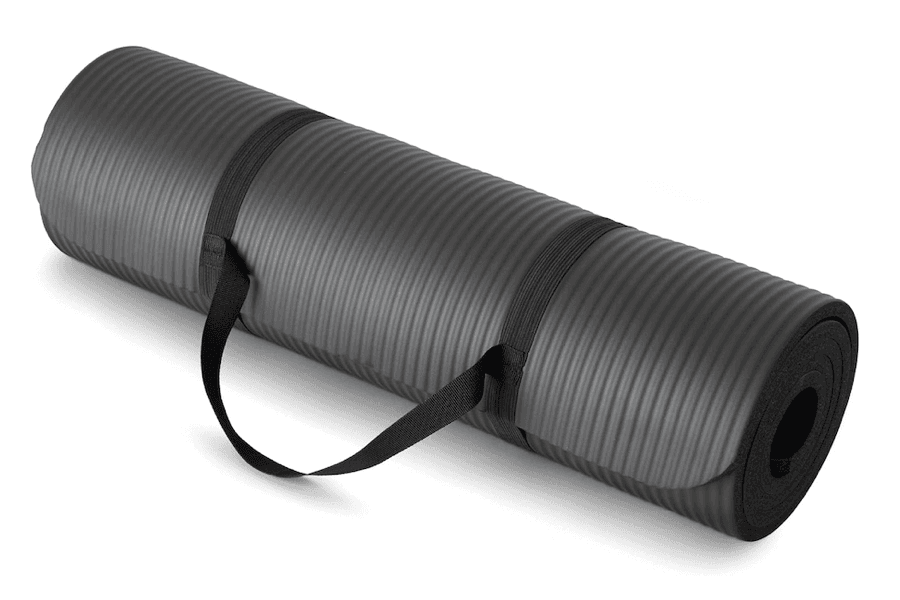
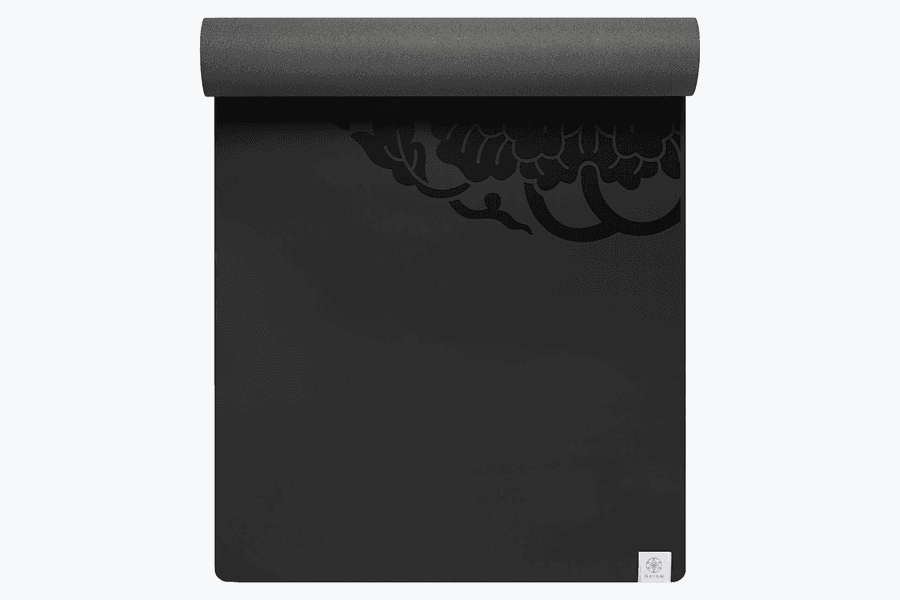
The Amazon Basics 1/2 Inch Extra Thick is 12.7 mm of soft NBR foam for $22.48. The Gaiam Performance Dry-Grip is 5 mm of PVC with a topcoat for $69.98. Those numbers make the cheap one sound like the generous one, and in one specific way it is.
But thickness and comfort are not the same measurement, and the independent testing on these two goes somewhere most people would not guess. Worth sorting out before you decide the half-inch mat is the obvious bargain.
Cushion: half an inch against five millimeters
Give the cheap mat its due first. For anything where a joint presses into the floor, half an inch of soft foam does something no thin mat can do at any price. Kneeling lunges on tile, long seated work, core exercises, physio: the Amazon Basics is simply more comfortable, and if that is why you are shopping you can stop reading.
The surprise is that GearLab scored the thinner Gaiam 8 out of 10 for comfort and support, calling its cushion ideal, easy on the joints, firm enough to stay supportive, and stable on the ground. Dense 5 mm cushions better than its number suggests, because density matters as much as depth. It is still not half an inch, and on a hard floor your knees will know.
Standing work is where the foam falls apart
Half an inch of soft foam has to go somewhere when you load it. Under a whole flat foot that is fine. Under the outside edge of one foot in a balance, the mat keeps giving way in the direction you are already tipping, and you spend the pose chasing it.
That reads as bad balance rather than a bad surface, which is why it is worth spelling out. The Dry-Grip is firm enough to stop moving as soon as your weight lands, so tree and warrior three settle instead of drifting. Neither behavior is a defect; exercise mats are meant to be soft and yoga mats are meant to be stable, and each of these is good at its own job.
Grip: mediocre and worse
Gaiam markets the Dry-Grip as a no-slip mat for hot yoga with a topcoat that wicks moisture as the class heats up. GearLab measured 6.5 out of 10 dry and 3.5 wet, and that wet figure is third from the bottom of a 19 mat lineup. Its own summary was gentler and just as clear: not the grippiest sticky mat, but a lovely choice for a stretch practice.
Textured NBR foam grips through friction rather than tack, which is enough for slow work with dry hands and gone the moment there is sweat on it. So the Dry-Grip is the better dry surface by a real margin, and neither mat is usable bare-handed in a heated room. If hot yoga is the plan, both of these are the wrong purchase and our Harmony vs GRP Adapt 2.0 comparison covers what actually works.
Size and weight: the cheap mat is longer and lighter
The Amazon Basics runs 74″ long against the Dry-Grip’s 68″, at the same 24″ width, so a tall practitioner is better served by the $22 mat. It also weighs 2.2 pounds against 4.25, despite being two and a half times thicker, because foam is mostly air.
The catch is bulk. Half an inch of foam rolls into a fat cylinder that is awkward on a shoulder and takes up real space in a closet, and it does not lie as flat as denser mats when you unroll it. Gaiam’s longer option is the 78″ × 26″ Dry-Grip Long & Wide, and Amazon Basics sells the same foam in a full 1 inch if comfort is the entire brief.
Durability and two warranties that do not mean much
Soft NBR foam compresses permanently where you stand and tears at the edges once the surface is nicked; a year or two of regular practice is a fair expectation, and the divots where your feet land in down dog show up well before that.
The Dry-Grip’s weak point is its topcoat, an extra wear layer it has to keep intact. GearLab scored its materials 4 out of 10, one of the two lowest results in its field, flagged limited long-term durability, and found the surface dye transferring onto clothing when the mat was new. Buff it with a damp towel before the first session. Amazon ratings track that: about 4.2 stars for the Dry-Grip against 4.5 for Gaiam’s cheaper Premium.
Gaiam’s lifetime guarantee and Amazon’s 1 year warranty both cover manufacturing defects, and the way these mats actually die, compression and surface wear, is neither. Read them as statements of confidence rather than insurance.
Materials, smell, and cleaning
Neither has an environmental story worth telling. NBR is nitrile foam, PVC is PVC, and neither mat carries a certification or a stated country of origin. Both off-gas noticeably out of the packaging; give either one two or three days unrolled in a ventilated room before you decide the smell is a problem.
Both are latex-free and synthetic through and through, which is genuinely useful if latex is a medical issue in your household, since most mats that grip well when wet are built on natural rubber. Cleaning is a wipe-down on both, though the open foam of the Amazon Basics holds onto sweat and odor more stubbornly over time.
Price and value
List prices are $22.48 and $69.98. The Dry-Grip is a perennial discount item at big-box retailers, so the real gap is often smaller than $47. Check the current price on the Amazon Basics and the Dry-Grip.
What the extra money buys is stability and a better dry surface, not grip in the sense the box implies and not cushion in the sense the spec sheet implies. That is a narrower purchase than $47 usually represents, and it is still the right one for anyone whose practice involves standing on one leg.
Bottom line
Buy the Amazon Basics if joints are the problem, your work is mostly on the floor, or you need something cheap for stretching and home workouts. It is a poor mat for standing yoga and a very good cheap cushion, and both of those are true at once.
Buy the Dry-Grip if you are actually doing yoga. It is firmer, more stable, rated 8 out of 10 for comfort by GearLab, which hasn’t tested the Amazon Basics, and it comes with a lifetime guarantee. Just ignore the name: it is a mat for slow, dry, unheated practice, and it will not save you when you sweat.
Amazon Basics 1/2 Inch Extra Thick
List price $22.48
Frequently Asked Questions
- Is a thicker yoga mat always more comfortable?
- No, and this pair is a good example. Density matters as much as depth. GearLab scored the 5 mm Dry-Grip 8 out of 10 for comfort and support, describing its cushion as ideal: easy on the joints, firm enough to stay supportive, and stable on the ground. Half an inch of soft foam is still kinder to a kneecap on tile, but it's also less stable, so it's more comfortable for floor work and less comfortable for standing practice.
- Why do balance poses feel harder on a thick foam mat?
- Because half an inch of soft foam has to go somewhere when you load it. Under a whole flat foot that is fine, but under the outside edge of one foot the mat keeps giving way in the direction you are already tipping, so you spend the pose chasing it. Most people read that as bad balance rather than a bad surface. The Dry-Grip is firm enough to stop moving as soon as your weight lands, so tree and warrior three settle instead of drifting.
- Does the Gaiam Dry-Grip work for hot yoga?
- Not bare-handed, despite the name. GearLab measured its grip at 6.5 out of 10 dry and 3.5 wet, the wet figure being second from the bottom of a 19 mat lineup, and described it as not the grippiest sticky mat but a lovely choice for a stretch practice. Textured NBR foam is worse still once damp. If hot yoga is the plan, both of these are the wrong purchase.
- Does the Gaiam Dry-Grip transfer dye onto clothes?
- It can when new. GearLab found the surface dye rubbing off during testing and recommends buffing the mat with a towel before the first use. Give it a damp-towel wipe and skip pale leggings for the first week. GearLab also scored its materials 4 out of 10, one of the two lowest results in its field, and flagged limited long-term durability.
- How long does a cheap foam yoga mat last?
- A year or two of regular practice is a fair expectation for soft NBR foam. It compresses permanently where you stand, so the divots under your feet in downward dog show up well before that, and it tears at the edges once the surface is nicked. Amazon Basics covers it for 1 year against defects, which is not the same as covering wear.
- Are either of these safe with a latex allergy?
- Both are. NBR is nitrile foam and the Dry-Grip is PVC, so neither contains latex. That is genuinely useful, because nearly every mat that grips well when wet is built on natural rubber, which leaves latex-allergic practitioners with a short list of options.
Related comparisons
- Manduka X vs Gaiam Performance Dry-Grip 5mm
- Amazon Basics 1/2 Inch Extra Thick vs Retrospec Solana 1/2"
- JadeYoga Level One vs Gaiam Performance Dry-Grip 5mm
- Gaiam Performance Dry-Grip 5mm vs IUGA Eco Friendly Non Slip PU
- Manduka Begin vs Gaiam Performance Dry-Grip 5mm
- Gaiam Performance Dry-Grip 5mm vs Hugger Mugger Earth Elements 5mm
- Manduka GRP Adapt 1.0 vs Gaiam Performance Dry-Grip 5mm
- Gaiam Performance Dry-Grip 5mm vs Suga SugaMat
- JadeYoga Harmony 68" vs Gaiam Performance Dry-Grip 5mm