Alo Warrior vs Gaiam Classic Print: Which One Should You Buy?
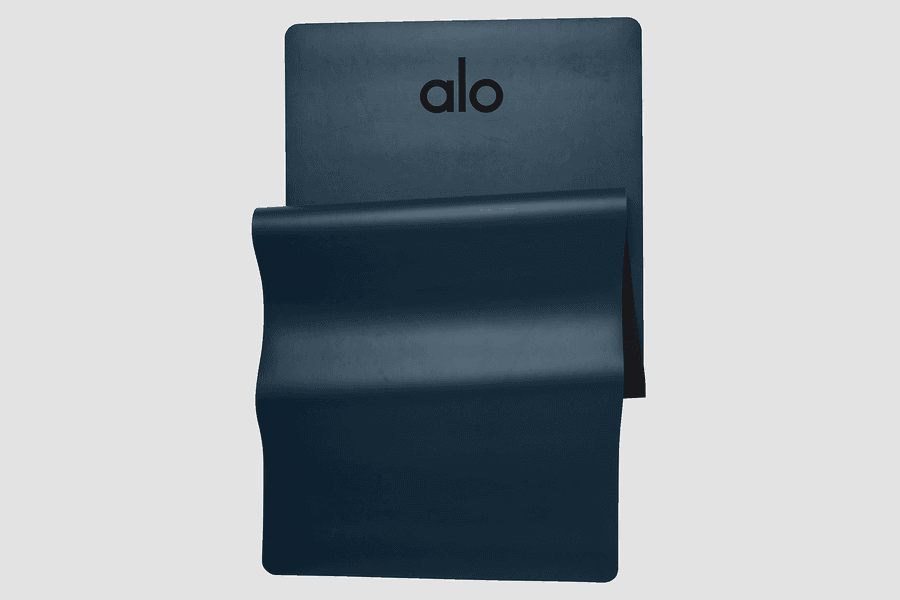
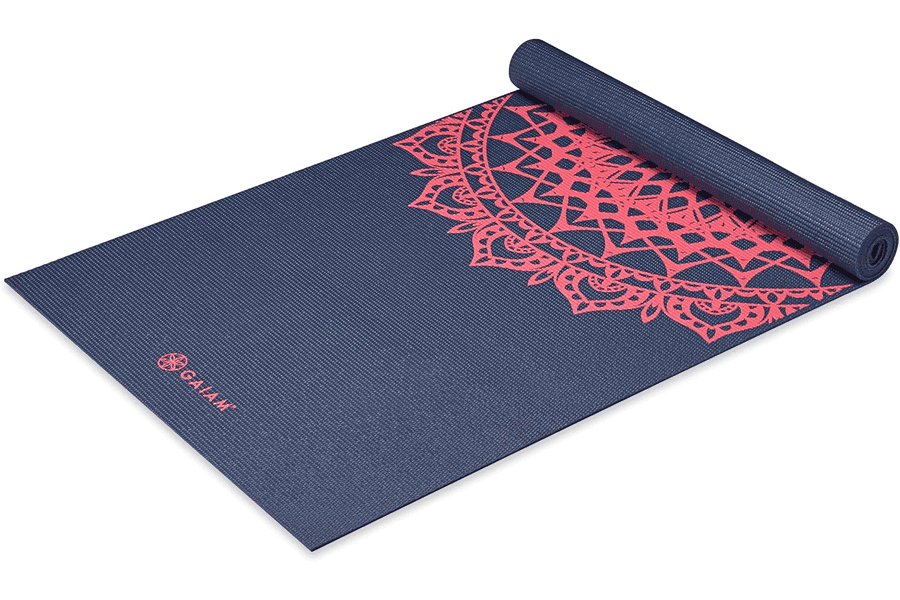
The Alo Warrior is the mat you have seen on Instagram: polyurethane leather over natural rubber, oversized, matte, $148. The Gaiam Classic Print is the printed sticky PVC mat that has been in every discount store for twenty years, at $24.98. Before assuming the gap buys six times the mat, it is worth knowing that OutdoorGearLab scored the Alo 62 out of 100, exactly what the $29.98 Gaiam Premium scored in the same test.
As an Amazon Associate, we earn from qualifying purchases made through links on this page. How this works
The quick answer
The Alo's price buys size, materials, and the way it looks, not measured performance. It is six and a half inches longer and nearly two and a half wider, the dense rubber base does not move on a floor, and the surface feels expensive. It also scored 5 out of 10 for grip, stains, weighs 8 pounds, and drew durability concerns, with no warranty behind it.
Buy the Gaiam Classic Print if you are starting out, if the mat travels, or if you would rather spend the difference on classes. Buy the Alo for the size and the look, from a sale, and go in knowing the grip and longevity are not what the price implies.
Get the Alo Warrior if...
- You want a genuinely oversized mat at 74.4 by 26.4 inches
- The mat lives in one room and never gets carried
- You want a surface that does not slide on a wooden floor
- How the mat looks is part of what you are buying
Get the Gaiam Classic Print if...
- You are starting out and $24.98 is the sensible experiment
- You carry your mat, where 2.1 pounds beats 8
- You want a printed design and a lifetime guarantee
- You'd rather put $123 toward classes or a mat that scored well
Side by side
Price
The Classic Print lists for about $123 less.
$148
List price · check price at aloyoga.com
$24.98
List price · check price at Amazon
Thickness
The Warrior is 25% thicker.
5 mm0.2″
4 mm0.16″
Weight
The Classic Print is 5.9 lbs lighter.
8 lbs3.6 kg
2.1 lbs0.95 kg
Size
The Warrior is 6.4″ longer; the Warrior is 2.4″ wider.
Same on both
- Grip competently with dry hands and give up once your palms are damp
- Neither is built for a heated room
- Both lie flat without curling at the corners
- Neither carries a third party material certification
Full specs
Dimensions
Materials & build
Buying
- Long84" × 26"
A $148 mat against a $25 one
The Alo Warrior is the mat you have seen on Instagram: polyurethane leather over natural rubber, oversized, matte black, $148. The Gaiam Classic Print is the printed sticky PVC mat that has been in every discount store for twenty years, at $24.98.
The gap is $123.02, which is about six Gaiams. Before you assume it buys six times the mat, it is worth knowing what happened when OutdoorGearLab tested the Alo.
What the Alo scored
62 out of 100, thirteenth of nineteen. Comfort and support 7, grip 5, materials 6, care and cleaning 7. Its pros were non slip dry grip, extra wide, soft surface, and doesn’t budge on the floor. Its cons were super slippery when wet, stains easily, heavy, and durability concerns.
For scale, the Gaiam Premium 6mm at $29.98 also scored 62 in the same test and took a Best Buy award. The Classic Print on this page was not tested, so we cannot give it a number, but it is the same company’s sticky PVC in a thinner cut.
That does not make the Alo a bad mat. It does mean the price is buying size, materials, and the way it looks, rather than measurable performance.
The Alo is much bigger, and that is the real difference
74.4″ × 26.4″ against 68″ × 24″. That is six and a half extra inches of length and nearly two and a half of width. Extra wide is in GearLab’s pros list for a reason.
The Gaiam is on the old 68 inch standard, which is short for anyone over about five foot ten, and 24 inches wide is where hands start finding the edge in a wide legged pose. If you have been practising on a standard mat and feeling boxed in, the Alo genuinely fixes that. Alo also sells an 84 inch version.
Two very different surfaces underhand
The Alo’s top is a smooth matte polyurethane leather bonded to a dense rubber base. It feels expensive, it is quiet under a hand, and it does not move on a wooden floor at all, which GearLab listed as a pro. Soft surface was another.
The Gaiam is textured sticky PVC, 4 mm thin, and it feels like what it is. At that thickness it is firmer than the thicker Gaiams and closer to the floor, which some people prefer for standing work and nobody prefers for kneeling.
The Alo is 5 mm, so it has a millimetre of padding on the Gaiam plus a much denser base under it. Comfort is a clear win for the Alo, just not a $123 one.
Both are fine dry and neither survives sweat
GearLab measured the Alo at 7 out of 10 dry and 4.5 wet, and its summary called it decent dry grip with a bit of a slip and slide when wet. Super slippery when wet leads its cons. A polyurethane leather face looks like it belongs in a heated room and does not behave like one.
The Gaiam’s sticky PVC does what sticky PVC does: it grips barefoot with dry hands and turns unhelpful the moment your palms are damp. That has been true of that surface for decades and no amount of texture changes it.
So for hot yoga, neither. Only two mats in the whole test held 7 or better once wet: the Manduka GRP Adapt 2.0 and the Liforme Classic at 7.
Eight pounds against two
The Alo is 8 pounds on Alo’s spec and GearLab measured 8.1, which made it the heaviest of the nineteen mats it weighed. The Gaiam Classic Print is 2.1 pounds.
Four times the weight is not a footnote. The Alo is a mat you set up in a room, and heavy is in its cons list. The Gaiam goes under an arm and you stop noticing it. If you carry a mat to a studio several times a week, this is the difference between the two that you will feel most often.
The expensive one stains
Stains easily is in the Alo’s cons and the reason is structural: its top layer absorbs, so sweat and body oils go into the mat rather than sitting on it. Wipe it down after every session, let it dry fully flat before rolling, and keep it out of direct sun. Even done properly, the surface marks over time.
The Gaiam is sealed PVC. Nothing soaks in, a damp cloth handles it, and there is nothing else to know. The print is under the surface rather than on it, so it does not rub off.
Durability concerns is also in the Alo’s cons, and Alo offers 30 day returns with no warranty. Gaiam covers the Classic Print with a lifetime guarantee, which is worth what a lifetime guarantee on a $25 mat is worth, and is still more than Alo offers.
The Alo has a rubber base
The Warrior is polyurethane leather over 100 percent natural rubber, so a genuine latex allergy rules it out. The Gaiam Classic Print is latex free PVC.
If that is your constraint and you want something better than a $25 mat, the Manduka X in TPE and the Manduka PROlite in dense PVC are the two obvious steps up that stay latex free.
Who each one is actually right for
The Alo makes sense if you want a large, good looking mat that stays in one room, you practise in a cool studio or at home, and the way a mat looks is part of what you are buying. That is a real reason and it is worth saying plainly rather than pretending the scores justify it.
The Gaiam makes sense if you are starting out, if the mat travels, if it is a spare for guests, or if you would rather spend the difference on classes. Check it on Amazon, where the print selection rotates constantly.
If you have $148 and want performance for it, the better use of the money is a mat that scored well: the Manduka PRO at 91, the eKO at 87, or Lululemon’s mats at 81.
Bottom line
The Gaiam Classic Print is the sensible purchase and the Alo Warrior is the one people want. Both of those things are true. The Gaiam grips about as well, weighs a quarter as much, cleans more easily, carries a longer guarantee, and costs $123.02 less.
Buy the Alo for the size and the look, from aloyoga.com rather than Amazon, and wait for a sale, because it discounts often enough that full list is avoidable. Just do not buy it expecting the grip or the longevity that the price implies, because the testing says it is not there.
Alo Warrior
List price $148
Gaiam Classic Print 4mm
List price $24.98
Frequently Asked Questions
- Is the Alo Warrior worth $148?
- For size and looks, it can be. For performance, the testing says no. OutdoorGearLab scored it 62 out of 100, thirteenth of nineteen, which is exactly what the $29.98 Gaiam Premium scored in the same test. Its cons were super slippery when wet, stains easily, heavy, and durability concerns. If you want performance at that price, the Manduka PRO scored 91 and the Manduka eKO 87.
- How much bigger is the Alo?
- Substantially. It is 74.4 by 26.4 inches against the Gaiam's 68 by 24, so six and a half extra inches of length and nearly two and a half of width, and extra wide is in GearLab's pros for it. The Gaiam is on the old 68 inch standard, which is short for anyone over about five foot ten. Alo also sells an 84 inch version if the standard cut still runs short.
- Does the Alo Warrior work for hot yoga?
- No. GearLab measured it at 7 out of 10 dry and 4.5 wet and described it as decent dry grip with a bit of a slip and slide when wet, with super slippery when wet leading its cons. Polyurethane leather looks like a hot yoga surface and does not behave like one. The Gaiam's sticky PVC is no better. For a heated practice you want an absorbent top: the Manduka GRP Adapt 2.0 measured 8.5 wet, the best in the test.
- Does the Alo mat stain?
- Yes, and stains easily is in GearLab's cons for it. Its top layer absorbs, so sweat and body oils go into the mat rather than sitting on it, and lighter colorways show it. Wipe it after every session, let it dry fully flat before rolling, and keep it out of direct sun. The Gaiam is sealed PVC, so nothing soaks in and the print is under the surface rather than on it.
- How much heavier is the Alo?
- About four times. Alo lists 8 pounds and GearLab measured 8.1, which made it the heaviest of the nineteen mats it weighed, with heavy in its cons. The Gaiam Classic Print is 2.1 pounds. If you carry a mat to a studio several times a week, this is the difference between them you will feel most often.
- Can I use the Alo Warrior with a latex allergy?
- No. The Warrior is polyurethane leather over 100% natural rubber, and natural rubber is latex. The Gaiam Classic Print is latex free PVC. If you need latex free and want something better than a $25 mat, the Manduka X in TPE and the Manduka PROlite in dense PVC are the two obvious steps up.
Related comparisons
- JadeYoga Harmony XW vs Alo Warrior
- Manduka PROlite Long & Wide vs Alo Warrior
- Manduka PRO vs Alo Warrior
- Alo Warrior vs Manduka PRO Terra 6mm
- Manduka GRP Adapt 2.0 Long vs Alo Warrior
- Amazon Basics 1/4 Inch Thick TPE vs Gaiam Classic Print 4mm
- Manduka eKO Long vs Alo Warrior
- Alo Warrior vs Lululemon The (Big) Mat 5mm
- Gruper TPE 6mm vs Gaiam Classic Print 4mm