Liforme Classic vs Gaiam Classic Print: Which One Should You Buy?
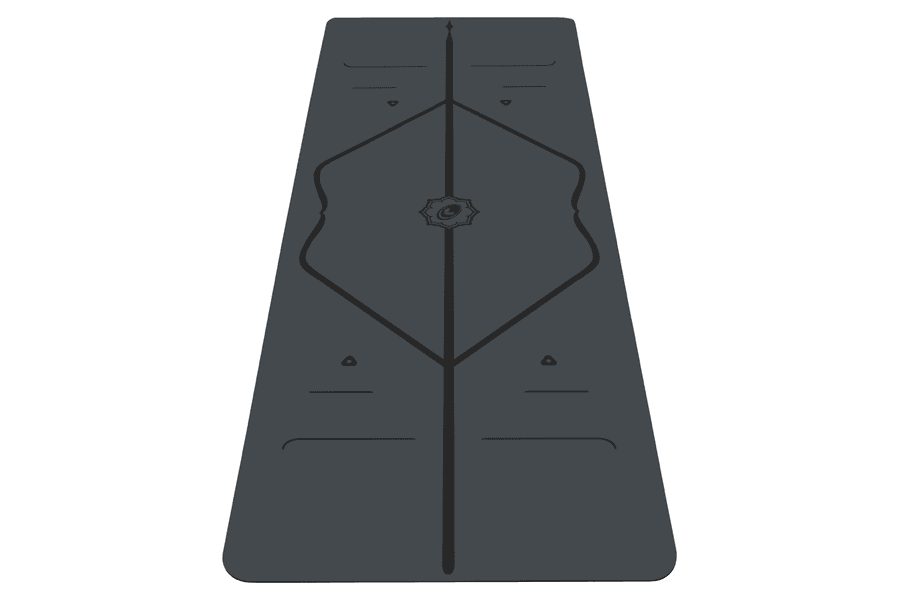
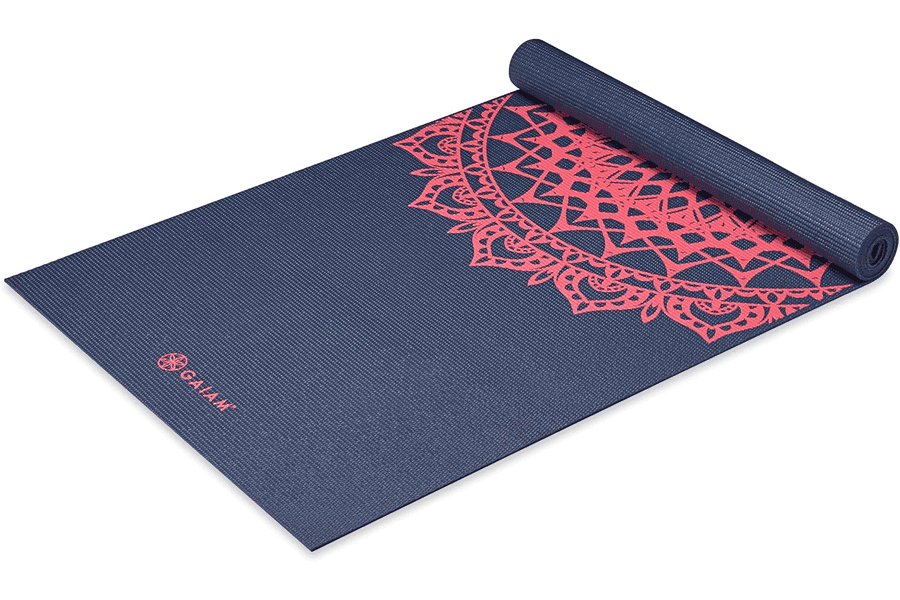
These two are within a fifth of a millimeter of each other, 4.2 mm against 4, so cushion is not what separates them. The Liforme Classic is eco-polyurethane bonded to natural rubber with an alignment grid etched into the surface, and OutdoorGearLab scored it 76 out of 100. The Gaiam Classic Print is printed sticky PVC that weighs 2.1 pounds and costs $24.98. Everything that matters here is surface, size, and what happens when your hands get wet.
As an Amazon Associate, we earn from qualifying purchases made through links on this page. How this works
The quick answer
The Liforme is the better mat by every measure that has been tested, and it costs six and a half times as much. What you get for the money is grip that holds when you sweat, an etched alignment grid GearLab rated best in its test, a surface nearly five inches longer and almost three inches wider, and a carry bag. What you do not get is more cushion, a lighter mat, or a warranty.
The Gaiam is a real mat for a gentle practice and weighs less than half as much. If you practice occasionally in a cool room, it is enough. If you flow, sweat, or want the alignment feedback, the Liforme earns the gap and you will notice it in the first week.
Get the Liforme Classic if...
- You would use etched alignment lines to check your placement
- Your hands get damp and you want traction anyway
- You want the bigger surface at 72.8″ × 26.8″
- You want a mat that stays dense rather than packing flat
Get the Gaiam Classic Print if...
- You want a working mat for $24.98
- You carry your mat and 2.1 pounds beats 5.5
- You have a latex allergy; the Liforme is built on rubber
- You want to wipe it down and never think about care
Side by side
Price
The Classic Print lists for about $140 less.
$165
List price · check price at Amazon
$24.98
List price · check price at Amazon
Thickness
The Liforme is 5% thicker.
4.2 mm0.17″
4 mm0.16″
Weight
The Classic Print is 3.4 lbs lighter.
5.5 lbs2.5 kg
2.1 lbs0.95 kg
Size
The Liforme is 4.8″ longer; the Liforme is 2.8″ wider.
Same on both
- Almost identical thickness, 4.2 mm against 4
- Both grip from the first session with no break-in
- Both are firm rather than plush
- Neither is machine washable
Full specs
Dimensions
Materials & build
Buying
Same thickness, opposite everything else
Start with the number that does not separate them. The Liforme is 4.2 mm and the Gaiam Classic Print is 4. A fifth of a millimeter apart, which means cushion plays almost no part in this decision even though it usually does the heavy lifting in a comparison at this price gap.
What separates them is what those millimeters are made of. The Liforme is eco-polyurethane bonded to natural rubber, with an alignment grid etched into the top, and OutdoorGearLab scored it 76 out of 100. The Gaiam is printed sticky PVC, weighs 2.1 pounds, and costs $24.98.
Six and a half times the price, so the question is narrow: what does the surface do that a $25 mat does not?
What 4.2 mm of polyurethane over rubber feels like
Heavier and springier than you expect from a thin mat. The rubber underneath gives the Liforme mass, so it lies down flat and stays put, and the polyurethane on top has a slight give that reads as grip rather than softness. It feels planted.
The Gaiam at the same thickness feels like a sheet on the floor. Light PVC foam gives more easily under a hand, and it keeps giving as it compresses over months of use, so the spots where your palms and heels land get thinner while the rest stays put. That is the normal way a foam mat ends, not a defect.
Neither is a cushioned mat. If your knees are what sent you shopping, both are too thin and a 6 mm foam mat is the honest answer.
Grip is where the money goes
The Liforme’s top layer absorbs moisture instead of letting it bead, which is the one thing sticky PVC cannot do at any price. GearLab rated it 9 out of 10 dry and 7 wet and listed excellent wet and dry grip among its pros.
The Gaiam grips well enough with dry hands and stops the moment a film of sweat forms. That is not Gaiam being careless; it is what the material does. Every sticky mat behaves this way and no amount of wiping between poses changes it.
So the size of this advantage depends entirely on you. Gentle practice in a cool room, and you may never reach the point where the Gaiam gives up. Vinyasa, a warm studio, or hands that sweat, and it is the first thing you will notice.
The etched grid
An etched center line, markers for hands and feet, and angled guides for stance direction. Etched rather than printed, so they will not fade off the way a printed stripe does, and quiet enough that they stop reading as a diagram once you are moving.
They answer questions in the moment. Is the back foot at the angle you meant. Are your hips square or has the left one drifted. Are your hands actually symmetrical about the middle. GearLab named the Liforme its best mat for fine-tuning alignment on the strength of it.
If you have practiced for years and your placement is automatic, this is a feature you will stop seeing, and a large part of the price is going toward it.
The Liforme is a noticeably bigger mat
72.8″ × 26.8″ against 68″ × 24″. That is nearly five inches of length and almost three of width, which stops your hands hanging off the edge in a wide down dog and keeps your head on the mat when you lie down.
It also ships with a full-length carry bag rather than a strap. The Gaiam comes in one size and no bag, which at $24.98 is a fair trade.
The cheap mat wins the walk to class
2.1 pounds against 5.5. The Gaiam is one of the lightest full-size mats made, and the Liforme is more than twice it with a longer roll.
The carry bag takes some of the sting out, and 5.5 pounds is not heavy by the standards of a category where 8 pound mats exist. But if you walk or take transit to a studio four times a week, this is a real cost and it runs against everything else on this page.
Wear, staining, and a warranty that runs backwards
Liforme offers no warranty, just a 30 day return window, on a $165 mat. Gaiam advertises a lifetime guarantee on a $24.98 one. Neither will help you, because both mats wear out rather than break, and wear is not a defect anyone replaces.
The Liforme’s polyurethane scuffs and takes on marks where hands and feet land, and GearLab noted it is not as durable as other high performers in the test. Liforme also states its materials are designed to biodegrade. Plan on a few years of regular practice, and fewer from the Gaiam, whose foam thins first.
Care is not symmetrical either. The Liforme wants water or very diluted mild soap, a full dry before rolling, no hot cars, no direct sun, and no strong cleaners. GearLab still gave it 9 out of 10 for care and cleaning, the joint best in the test. The Gaiam takes a wipe and no thought at all.
Rubber rules the Liforme out for some buyers
The Liforme is built on a natural rubber base, so a genuine latex allergy takes it off the table regardless of how good the surface is. The Gaiam Classic Print is latex-free PVC.
If that is your situation, the useful question is which PVC mat to buy rather than whether to spend more, and the Manduka PROlite is the upgrade path that stays rubber-free.
Prices, colors, and where to buy
The Liforme sells on liforme.com and Amazon, in gray, blue, purple and several more colorways, carry bag included either way. The Gaiam is on Amazon and gaiam.com in a rotating set of printed designs, discounted often enough that paying the full $24.98 is rarely necessary.
If the Liforme’s surface appeals but $165 does not, the same polyurethane-over-rubber build costs less elsewhere; we compared it against Manduka’s hot yoga mat at $32 under.
Bottom line
Buy the Gaiam Classic Print if you practice gently and occasionally, carry your mat, need latex-free, or simply are not spending $165 on this. It grips fine dry, weighs almost nothing, and does not ask to be looked after.
Buy the Liforme Classic if you sweat, if you would use the alignment grid, or if you want the bigger surface. Go in knowing there is no warranty, that it will show its age in a few years, and that you are not buying extra cushion, because at 4.2 mm against 4 there is none to buy.
Liforme Classic
List price $165
Gaiam Classic Print 4mm
List price $24.98
Frequently Asked Questions
- Is a Liforme worth six times a Gaiam?
- If you practice regularly, we think so, and the reason is not prestige. Its polyurethane top absorbs moisture instead of letting it bead, so it keeps working when your palms are damp, and GearLab rated it 9 out of 10 dry and 7 wet with excellent wet and dry grip in its pros. The Gaiam's sticky PVC has no answer to sweat. Add the etched grid and a surface nearly five inches longer, and the money buys real things. If you stretch twice a month in a cold room, none of it reaches you.
- These are almost the same thickness. Do they feel the same?
- Not at all, and that surprises people. 4.2 mm of polyurethane over dense natural rubber has weight and spring to it; 4 mm of light PVC foam gives more easily and keeps giving as it compresses over months of use. The Liforme feels planted underfoot and the Gaiam feels like a sheet on the floor. Neither is a cushioned mat, so if joints are your problem, buy a 6 mm foam mat instead of either.
- Are the alignment lines actually useful?
- For most people, yes. The etched center line, hand and foot markers, and angled guides give fixed references for stance width, foot angle, and whether your hips are square, which is the feedback a teacher would otherwise provide. GearLab named the Liforme its best mat for fine-tuning alignment. They are etched rather than printed, so they do not fade. If you already practice without looking down, you would be paying for something you will not use.
- Which one lasts longer?
- The Liforme, though not by as much as the price suggests, and the paperwork runs backwards. Liforme offers no warranty at all, just a 30 day return window, while Gaiam advertises a lifetime guarantee on the Classic Print. In use, the Liforme's polyurethane top scuffs and stains where hands and feet land, and GearLab noted it is not as durable as other high performers. The Gaiam's foam thins faster still. Neither guarantee covers the way either mat actually ends.
- Which is better if I carry my mat?
- The Gaiam, easily: 2.1 pounds against 5.5, and it is the shorter roll. The Liforme does come with a full-length carry bag rather than a strap, which makes the weight more manageable than it sounds, but it is still more than twice the load. For a daily walking commute to a studio, that gap is worth taking seriously.
- Can I use either for hot yoga?
- The Liforme, yes, that is what its top layer is for. The Gaiam, no. Sticky PVC turns slick as soon as a film of sweat sits on it, and no amount of wiping between poses fixes it. Heavy sweaters will eventually want a towel even on the Liforme, but it is the right category of mat for a heated room and the Gaiam is not.
- Is either safe with a latex allergy?
- The Gaiam is; it is latex-free PVC. The Liforme is built on a natural rubber base, so a genuine latex allergy rules it out. If that is your situation and you still want a serious mat, look at dense PVC options like the Manduka PROlite rather than paying up for polyurethane over rubber.
Related comparisons
- Amazon Basics 1/4 Inch Thick TPE vs Gaiam Classic Print 4mm
- Gruper TPE 6mm vs Gaiam Classic Print 4mm
- JadeYoga Harmony XW vs Liforme Classic
- Liforme Classic vs Yoloha Unity Pro Cork
- YogaAccessories Extra Thick Deluxe 1/4" vs Gaiam Classic Print 4mm
- Manduka PROlite Long & Wide vs Liforme Classic
- Alo Warrior vs Liforme Classic
- Manduka GRP Adapt 2.0 Long vs Liforme Classic
- Liforme Classic vs b, halfmoon B Mat Strong 6mm