Yoloha Unity Pro Cork vs Manduka PRO Travel: Which One Should You Buy?
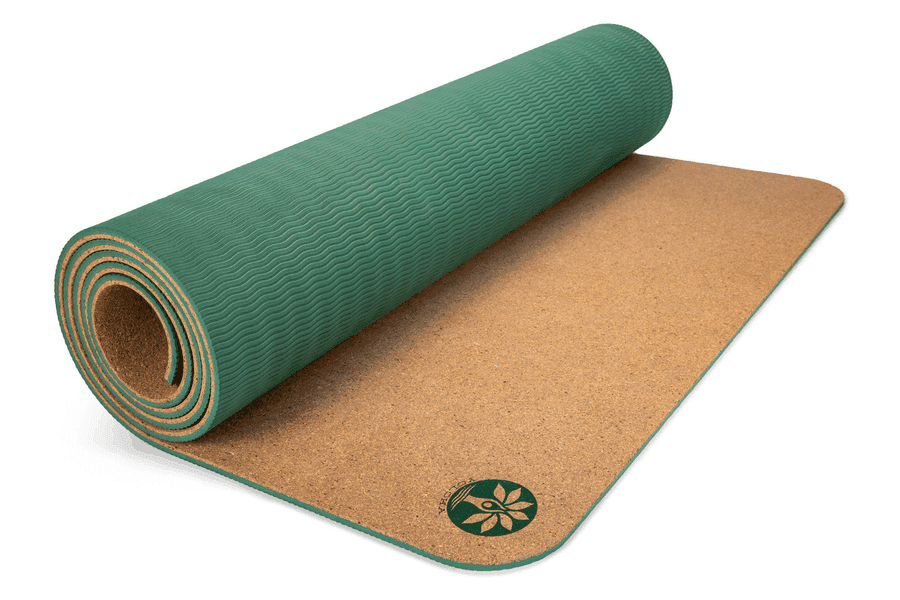
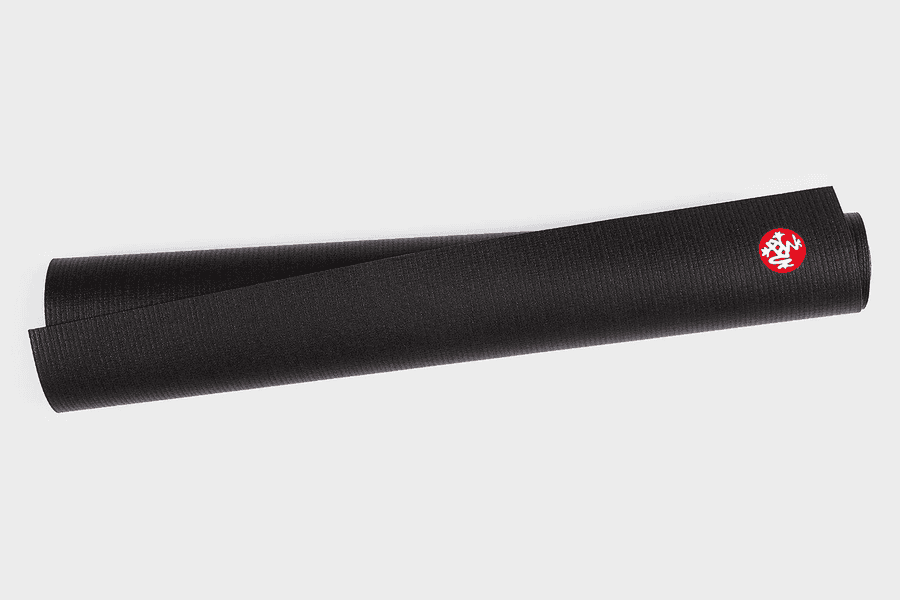
The Yoloha Unity Pro is a cork and natural rubber top over a plant-based foam base, 6 mm thick and made in the USA. The Manduka PRO Travel is 2 mm of dense German PVC that folds flat. They are $85 apart and doing different jobs, and the cork is the more interesting of the two, because how it grips is unlike anything else we cover.
As an Amazon Associate, we earn from qualifying purchases made through links on this page. How this works
The quick answer
Cork gets grippier as it gets damp, which is the opposite of what closed-cell PVC does. GearLab measured the Yoloha at 7.5 out of 10 dry and 6 wet, placing it tenth of 19 mats with 66 points and no award, and scored its care and cleaning 5, the lowest in the group. It is also 7 pounds, sold with 30 days of returns and no warranty, for $159. The PRO Travel is thin, narrow and slick until broken in, and it folds into a carry-on and is covered for life.
Buy the Yoloha if you want a cork mat and you practice at home. Buy the PRO Travel if the mat has to fold, or if you want the cheapest durable second mat available.
Get the Yoloha if...
- You want a cork surface that improves as you sweat
- You want 6 mm of cushioning
- You want renewable materials made in the USA
- You want sizes up to 84 by 30 inches
Get the PRO Travel if...
- You want a mat that folds flat into luggage
- You'd rather keep $85
- You want a lifetime guarantee rather than 30-day returns
- You want a mat you can wipe clean in seconds
Side by side
Price
The PRO Travel lists for $85 less.
$159
List price · check price at yolohayoga.com
$74
List price · check price at Amazon
Thickness
The Unity Pro is 200% thicker.
6 mm0.24″
2 mm0.08″
Weight
The PRO Travel is 4.1 lbs lighter.
7 lbs3.2 kg
2.9 lbs1.3 kg
Size
The Unity Pro is 1″ longer; the Unity Pro is 2″ wider.
Same on both
- Natural rubber in the build
- Sweat is not absorbed into the mat body
- Roll or fold flat rather than machine wash
Full specs
Dimensions
Materials & build
Buying
- Long80" × 26"
- XL84" × 30"
- Long79" × 24"
Cork against dense PVC
The Yoloha Unity Pro is a cork mat: a cork and natural rubber top over a plant-based foam base, 6 mm thick, 72″ × 26″, 7 pounds, made in the USA, $159. The Manduka PRO Travel is 2 mm of dense German PVC that folds flat at 2.9 pounds, $74.
They are $85 apart and doing different jobs, and the cork is the more interesting mat of the two to talk about, because how it grips is unlike anything else we cover.
How cork grip actually works
Cork gets grippier as it gets damp. Dry, the surface is grainy and merely adequate; with a little moisture on your palms the texture comes alive. Yoloha’s own product page describes an unmatched non-slip surface in wet or dry conditions with no towel needed, and that is the brand talking rather than a test result.
GearLab’s numbers are more measured: 7.5 out of 10 dry and 6 wet, which places the Yoloha mid-pack, tenth of 19 mats overall with 66 points and no award. Good, not exceptional, and if you sweat heavily the Manduka GRP Adapt 2.0 measured 8.5 wet.
The Manduka needs weeks, then holds dry hands only
The PRO Travel uses the PRO surface, which ships slick and comes good after a few weeks of regular practice. Manduka retired its old salt-scrub advice and now says the slickness resolves with use.
Closed-cell PVC absorbs nothing, so sweat pools on top and wet palms slide. Where cork improves as you sweat, the PRO Travel gets worse, and that is the sharpest contrast on this page. In a heated room the Yoloha is the better surface even at 6 wet.
Six millimeters against two
The Yoloha is a proper full-thickness mat and GearLab scored its comfort and support 7 out of 10. The plant-foam base gives it a different feel from a rubber mat: slightly softer, with a little more sink underfoot than dense rubber at the same thickness.
The PRO Travel is firm 2 mm and Manduka sells it on stability rather than padding. Over carpet or on top of a studio mat it is stable and good. On tile, kneeling is close to unpadded, which is the trade for folding into a bag.
Seven pounds against under three
GearLab weighed the Yoloha at 7 pounds, heavier than everything in its lineup except the Manduka PRO and the Alo Warrior. Cork and foam are not light materials, and this is a mat you set down in a room rather than carry.
The PRO Travel folds flat at 2.9 pounds and lies against the back of a carry-on, with fold lines that flatten within a couple of weeks of use. Cork does not fold at all, so there is no packable version of the Yoloha to consider.
Cork is the harder mat to look after
This is the Yoloha’s weakest row by some distance. GearLab scored its care and cleaning 5 out of 10, the lowest of the 19 mats it tested. Cork does not want to be soaked, spray cleaners can leave marks, and the surface takes longer to dry than a sealed one. It also shows wear as the cork grain smooths at the hands and feet.
The PRO Travel is the opposite: nothing soaks into closed-cell PVC and a damp cloth handles it in seconds. On a hotel floor or a shared studio surface that is worth more than it sounds.
Sizes and materials
The Yoloha is 72″ × 26″, with an 80″ × 26″ version at $179 and an 84″ × 30″ XL at $219, which is the widest mat we cover. The PRO Travel is 71″ × 24″, with a 79 inch Long at $84 and nothing wider.
On materials the two make opposite arguments. Yoloha’s is renewable: harvested cork, natural rubber and a plant-based foam, made in the USA. Manduka’s is longevity plus certification: PVC made in Germany and certified OEKO-TEX Standard 100, which speaks to what is not in the mat rather than what happens to it afterwards.
Price, coverage and where to buy
$159 against $74. Yoloha sells through yolohayoga.com rather than Amazon, with 30 days of returns and no warranty. The Manduka is on manduka.com and Amazon: check the PRO Travel at Amazon.
The PRO Travel carries the PRO series lifetime guarantee, which reads as roughly ten years of regular use, one replacement, and proof of purchase from an authorized seller. Paying twice as much for a mat with a month of coverage, against half as much for one covered for a decade, is worth sitting with before you buy.
Bottom line
Buy the Yoloha if you want a cork mat and you practice at home. It is thick, it grips better as you warm up, it is made from renewable materials in the USA, and it comes in sizes nobody else offers. You are accepting seven pounds, fiddly cleaning, no warranty, and a mid-pack test result for $159.
Buy the PRO Travel if the mat has to fold, or if you want the cheapest durable second mat available. If cork is the appeal but the weight is not, our PRO vs Yoloha page compares it against a full-size mat instead.
Yoloha Unity Pro Cork
List price $159
Frequently Asked Questions
- How good is cork grip really?
- Better as you sweat, and not the best available. Cork's texture comes alive with a little moisture, and Yoloha's own product page claims an unmatched non-slip surface in wet or dry conditions with no towel needed, which is the brand talking rather than a test result. GearLab measured 7.5 out of 10 dry and 6 wet, mid-pack. For heavy sweating the Manduka GRP Adapt 2.0 measured 8.5 wet, the best in the group.
- Is cork hard to clean?
- It is the Yoloha's weakest row. GearLab scored its care and cleaning 5 out of 10, the lowest of the 19 mats it tested. Cork does not want to be soaked, spray cleaners can leave marks, and the surface takes longer to dry than a sealed one. The PRO Travel is closed-cell PVC, so nothing soaks in and a damp cloth handles it in seconds.
- How heavy is the Yoloha?
- GearLab weighed it at 7 pounds, heavier than everything in its lineup except the Manduka PRO and the Alo Warrior. Cork and foam are not light materials. It is a mat you set down in a room. Cork also does not fold, so there is no packable version of the Yoloha to consider.
- What sizes does the Yoloha come in?
- 72 by 26 inches at $159, 80 by 26 at $179, and an 84 by 30 XL at $219, which is the widest mat we cover. The PRO Travel is 71 by 24 with a 79 inch Long at $84 and nothing wider. If floor space is what you want, the Yoloha XL has no real competition.
- What coverage do they have?
- Yoloha sells with 30 days of returns and no warranty. The PRO Travel carries Manduka's PRO series lifetime guarantee: roughly ten years of regular use in the fine print, one replacement, and proof of purchase from an authorized seller. Paying more than twice as much for a mat with a month of coverage is worth sitting with before you buy.
- Where do you buy them?
- Yoloha sells through yolohayoga.com rather than Amazon. The PRO Travel is on manduka.com and Amazon, where colorway pricing moves below list. Buy the Manduka sold and shipped by Amazon if the guarantee is part of what you are paying for.
Related comparisons
- JadeYoga Travel 68" vs Manduka PRO Travel
- Manduka PRO vs Yoloha Unity Pro Cork
- Yoloha Unity Pro Cork vs Manduka PRO Terra 6mm
- Manduka PRO Long vs Yoloha Unity Pro Cork
- JadeYoga Harmony XW vs Yoloha Unity Pro Cork
- Alo Warrior vs Yoloha Unity Pro Cork
- Yoloha Unity Pro Cork vs b, halfmoon B Mat Strong 6mm
- Manduka PROlite Long & Wide vs Yoloha Unity Pro Cork
- Liforme Classic vs Yoloha Unity Pro Cork