Yoloha Unity Pro Cork vs Gaiam Premium Reversible: Which One Should You Buy?
These two are the same thickness and both sell partly on looks, but one is $39.98 of printed PVC and the other is $159 of cork and natural rubber. GearLab tested both and put 12 points between them, most of it grip. The decision is whether that grip lead, a bigger footprint and a firmer feel are worth $119.02 more and 7 pounds on your shoulder.
As an Amazon Associate, we earn from qualifying purchases made through links on this page. How this works
The quick answer
The Yoloha is the better mat: GearLab scored it 66 to the Reversible's 54, with a clear lead in grip and a firmer, far steadier surface, and it's bigger at 72 by 26 inches. The Reversible is cheap, soft, light, latex-free and backed by a lifetime guarantee, but GearLab found its grip and cushion weak for regular practice, and its most common owner complaint is the smell.
For occasional stretching, a first mat or a latex-free home, buy the Reversible and air it out first. Buy the Yoloha if you practice often, want a firm, stable surface or more room, and want cork enough to pay $119.02 more and carry 7 pounds.
Get the Yoloha Unity Pro Cork if...
- You want the better grip scores, 7.5 dry and 6 wet against 5 and 5 in GearLab's table
- You want a firm, stable surface for standing and balance poses
- You need a 26 inch width or a Long or XL size
- You don't mind carrying 7 pounds
Get the Gaiam Premium Reversible if...
- You mostly stretch or practice occasionally
- You need a latex-free mat
- You want a light 3.3 pound mat with a lifetime guarantee
- You'd rather keep $119.02
Side by side
Price
The Gaiam Reversible lists for about $119 less.
$159
List price · check price at yolohayoga.com
$39.98
List price · check price at Amazon
Thickness
Identical thickness.
6 mm0.24″
6 mm0.24″
Weight
The Gaiam Reversible is 3.7 lbs lighter.
7 lbs3.2 kg
3.3 lbs1.5 kg
Size
The Unity Pro is 4″ longer; the Unity Pro is 2″ wider.
Same on both
- 6 mm thick
- Available with printed designs
- Neither surface soaks up sweat
Full specs
Dimensions
Materials & build
Buying
- Long80" × 26"
- XL84" × 30"
GearLab liked the looks of both
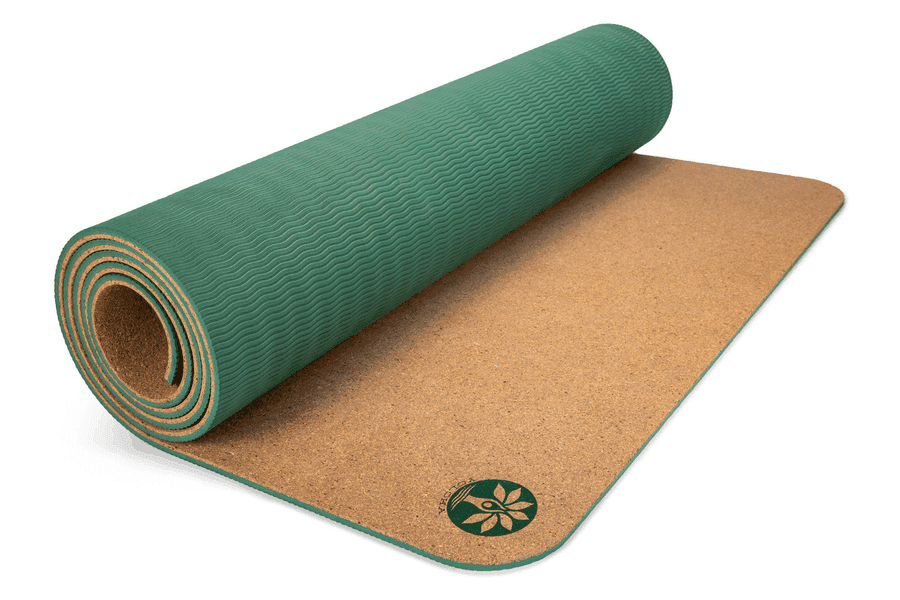
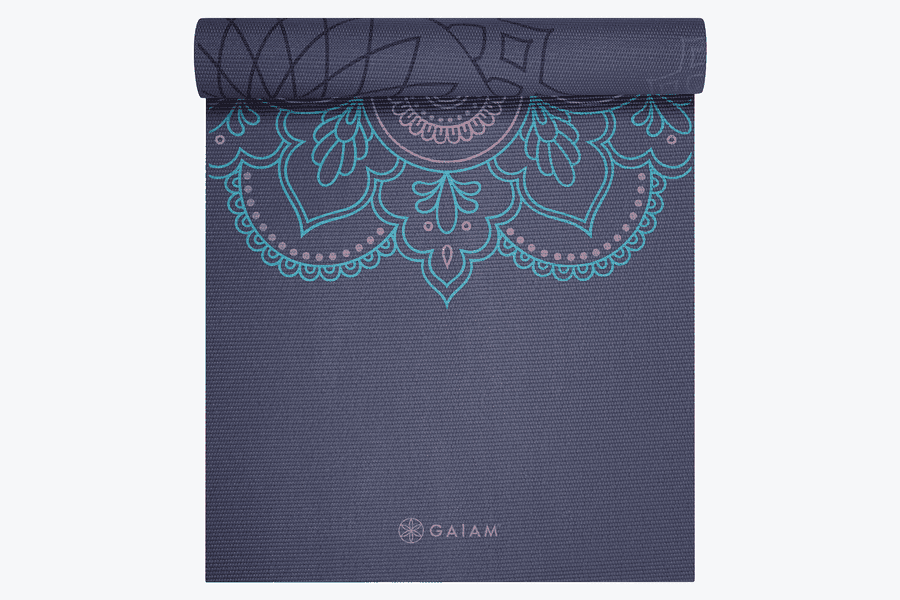
GearLab’s pros for the Yoloha Unity Pro Cork include attractive designs, and its pros for the Gaiam Premium Reversible start with beautiful patterns. The overlap ends there. The Yoloha is 6 mm, cork and natural rubber over a plant foam base, made in the USA, weighing 7 pounds, for $159. The Gaiam is 6 mm of latex-free PVC printed on both sides, a different design on each, weighing 3.3 pounds, for $39.98.
That’s $119.02 more for the same thickness. Both went through GearLab’s March 2026 roundup: the Yoloha finished 10th of 19 on 66 points and the Reversible 15th on 54.
What the Reversible lost points on
GearLab’s bottom line praises the Reversible’s patterns and faults its grip and cushion for anyone who practices regularly. Its category scores bear that out: 6 for comfort and support against the Yoloha’s 7, 4 for grip against 7, and 5 for materials against 6.5.
Care and cleaning is the one category it won, 7 to 5. Grip carries 30% of GearLab’s total, so that category alone explains about nine of the twelve points between these mats.
The cork leads by more on dry hands than wet
GearLab’s separate wet and dry table splits it differently. It gives the Yoloha 7.5 dry and 6 wet and the Reversible 5 for both, so the cork’s lead is two and a half points with dry palms and only one point once they’re wet.
The Gaiam’s two measures don’t fully agree. Its grip category score of 4 is among the lowest of the 19 and its dry 5 isn’t much better, but its wet 5 ties for 10th of the 18 mats in the table, right in the middle. Amazon owners split 293 to 251 on its grip.
Yoloha markets a surface that stays non-slip wet or dry with no towel. GearLab found it moderately grippy either way, suggests misting it before practice, and still put slick when wet among its cons. For a mat that holds through pooled sweat, our Reversible vs B Mat Everyday page covers tacky rubber.
Six millimeters each, nothing alike underfoot
GearLab puts the Unity Pro in its firm camp: extra-firm, very stable and grounding, with a 7 for comfort and support.
The Reversible scored 6, with poor cushion on its cons list despite the 6 mm. GearLab’s buying advice likens a dense mat to six inches of memory foam and a soft one to six inches of feathers, which squash down to the floor when you kneel. Owners are more generous. In Amazon’s review summary, cushioning draws 226 positive mentions to 32 negative, and thickness 434 to 79.
For standing and balance work the cork is the steadier surface. For stretching on your back, the soft PVC is comfortable enough.
More than twice the weight, and more floor
GearLab weighed the two at 7.0 and 3.2 pounds. Heavy and bulky made the Yoloha’s cons list, and it rolls to a 5 inch diameter, per Yoloha. The Gaiam is an easy carry. Gaiam’s own page doesn’t list a strap, though the Amazon listing title now mentions one.
The Yoloha covers 72″ × 26″ against the Gaiam’s 68″ × 24″. The Gaiam’s length suits people up to about five foot eight, and Gaiam sells it in one size. Yoloha goes bigger with 80″ × 26″ and 84″ × 30″ versions at $179 and $219.
The cheaper mat scored higher on care
The Yoloha’s care score of 5 was the lowest of the 19. GearLab’s text doesn’t fault the cork itself, calling it antimicrobial and in need of nothing more than a spray, a wipe and an air dry. The category also rates portability, and seven pounds is where the Yoloha likely lost ground.
Gaiam’s instructions are spot cleaning (damp cloth, cold water, mild detergent) and keeping it out of long sun, which can fade it and make it brittle. Yoloha says to spray it lightly after use and lay it flat to dry.
Smell, ink and cork dust
Odor is the Reversible’s most common complaint: Amazon’s review summary counts 553 mentions, 451 of them negative. According to Gaiam’s care notes, a new printed mat smells very strong when unrolled; Gaiam calls the odor harmless and suggests airing it for two to three days. GearLab also lists can stain clothing among its cons, so dark leggings make sense early on.
Yoloha claims no smells and no break-in period. One owner on Yoloha’s site says theirs smelled a little weird and shed some debris, and Yoloha replied that new cork can give off light dust that settles with use and a damp wipe.
PVC, or cork with rubber in it
The Reversible is PVC, latex-free per Gaiam, and Gaiam doesn’t say where it’s made. It’s the only one of the pair that’s safe with a latex allergy.
The Unity Pro has natural rubber worked into its cork surface. Yoloha puts the USDA-certified renewable share at 83%, from cork, natural rubber and sugarcane, with no PVC. GearLab scored materials 6.5 against the Gaiam’s 5, and its materials score favors mats that hold up through years of practice.
Coverage, returns and where to buy
Gaiam’s lifetime guarantee on the Reversible comes without published terms, so we’d treat it as defect cover. gaiam.com accepts returns inside 30 days, but only unopened and unused. It comes in about ten printed designs; check the Reversible’s price at Amazon (about 15,600 ratings, averaging 4.6 stars).
The Unity Pro is $159 at yolohayoga.com only, and has been $139 on sale. It has no warranty, and the 30-day return window requires a mat free of dirt and marks. For Gaiam’s plain two-color version, GearLab’s Best First Yoga Mat at 62 points, see our Yoloha vs Gaiam Premium 6mm comparison.
Bottom line
Get the Reversible if you want a cheap, soft, pretty mat for stretching or occasional practice, you fit on a 68 inch mat, or latex rules out rubber. At $39.98 with a lifetime guarantee it’s a reasonable first mat. Air it out before the first class, and expect it to slide once your hands are damp.
Get the Yoloha if you want a firm, stable, bigger surface with better grip, and the mat won’t travel much. It beat the Gaiam by twelve points in the same test, mostly on grip. That’s a lot of money for the difference, so the cork itself should be part of the appeal.
Yoloha Unity Pro Cork
List price $159
Gaiam Premium Reversible 6mm
List price $39.98
Frequently Asked Questions
- Is the Yoloha worth $119.02 more than the Gaiam Premium Reversible?
- If you practice often and want cork, it can be. GearLab scored the Yoloha 66 and the Reversible 54, and about nine of those twelve points come from grip. The Yoloha is also firmer, steadier and bigger. It weighs more than twice as much, though, scored lower on care, and its wet grip was only a point ahead of the Gaiam's in GearLab's table. For occasional stretching, the Reversible does the job for far less.
- Which has better grip when you sweat?
- The Yoloha, narrowly. GearLab's wet and dry table gives it 6 wet against the Reversible's 5, and 7.5 dry against 5, so the cork's advantage is bigger with dry hands. GearLab listed slippery or slick when wet as a con for both, and cork and PVC both leave sweat sitting on the surface, so plan on a towel for sweaty classes either way.
- Does the Gaiam Premium Reversible smell?
- Often, yes. Odor is its most common complaint in Amazon's review summary, with 451 of 553 mentions negative. Gaiam says new printed mats give off a very strong but harmless odor and suggests airing the mat out for two to three days. Yoloha claims its cork mat has no smell.
- Which is better for bad knees?
- It depends on what you need. Owners describe the Reversible as soft, and most Amazon cushioning mentions are positive, but GearLab listed poor cushion among its cons, because soft PVC compresses under a kneeling knee. The Yoloha is extra-firm and scored 7 for comfort and support to the Gaiam's 6. For long kneeling holds on a hard floor, add a folded blanket to either.
- Is the Yoloha latex free?
- No. The Yoloha blends natural rubber into its cork surface, so it isn't suitable for a latex allergy. The Gaiam Premium Reversible is latex-free PVC, which makes it the safer choice of the two.
- What warranty and returns come with each?
- Gaiam covers the Reversible with a lifetime guarantee but doesn't publish the terms, so we'd treat it as defect cover, and gaiam.com takes returns within 30 days only on unopened, unused mats. Yoloha offers no warranty; its 30-day return window requires a mat free of damage, dirt and marks, and it deducts $10 if the original packaging is missing. Amazon orders follow Amazon's policy.
Related comparisons
- Gaiam Premium Reversible 6mm vs Gruper TPE 6mm
- Manduka PRO vs Yoloha Unity Pro Cork
- Manduka PRO Long vs Yoloha Unity Pro Cork
- Amazon Basics 1/4 Inch Thick TPE vs Gaiam Premium Reversible 6mm
- Gaiam Premium Reversible 6mm vs YogaAccessories Extra Thick Deluxe 1/4"
- JadeYoga Harmony XW vs Yoloha Unity Pro Cork
- Alo Warrior vs Yoloha Unity Pro Cork
- Yoloha Unity Pro Cork vs b, halfmoon B Mat Strong 6mm
- Manduka PROlite Long & Wide vs Yoloha Unity Pro Cork